How to Build a Weekly Operations Rhythm That Scales

If your trucking operation feels like organized chaos, you’re not alone. One truck becomes two, then three, and before you know it, your phone’s ringing nonstop, your drivers are texting about breakdowns, and you’re booking loads with no strategy—just survival. Sound familiar?

That’s exactly why small carriers hit a wall when they try to grow. It’s not because they can’t find freight or buy trucks—it’s because they don’t have an operating rhythm that keeps everything moving in sync, week after week.

Let’s be clear: a growing fleet without a weekly operations rhythm is like a football team with no game plan. You might have talent. You might even score sometimes. But you won’t win consistently—and you sure won’t scale for the long term.

In this article, we are laying out exactly how to build a weekly operations rhythm that’s built for growth. This isn’t a theory. It’s the system used with fleets of 1 truck and fleets of 50. Because growth doesn’t come from grinding harder—it comes from planning smarter.

Start With the Weekly Anchor Meeting

The foundation of your rhythm is one non-negotiable: a Weekly Anchor Meeting.

When: Same day, same time, every week (ideally Monday morning or Friday afternoon).
Who: Admin(s), driver manager (if you have one), owner, ops lead—anyone with decision-making power.
Length: 30–60 minutes max.
Purpose: Align on goals, review last week, and set this week’s game plan.

Here’s the structure:

  1. Last Week Review
    • Weekly revenue per truck
    • On-time percentage
    • Deadhead %
    • Driver issues, maintenance delays
    • Customer feedback or complaints
  2. What’s Working, What’s Not
    • Which lanes performed?
    • Any equipment downtime?
    • Which brokers or shippers caused friction?
  3. This Week’s Objectives
    • Target revenue per truck
    • New lanes or broker targets
    • Scheduled maintenance
    • Direct shipper outreach

Why it matters: Without this meeting, your week is reactive. With it, your team stays focused, aligned, and ahead of problems instead of chasing fires.

Lock in a 3-Day Planning Window

Many dispatchers book loads the night before—or worse, the same morning. That works with one truck. Try it with five? You’re toast.

You need a rolling 3-day freight plan.

Here’s how it looks:

  • Day 1: Loads already booked and confirmed
  • Day 2: Loads identified, pending confirmation
  • Day 3: Actively prospecting (load boards, broker relationships, direct shipper calls)

This gives your operation breathing room. It lets you think strategically about reloads, backhauls, and avoiding deadhead—not just grabbing the first thing available.

Pro Tip: Every Friday, your team should be booking Monday and Tuesday freight. Every Wednesday, they should be working on Thursday and Friday. Keep that rhythm tight and consistent.

Schedule Recurring Maintenance Reviews

Waiting until a truck breaks down to think about maintenance is a guaranteed profit killer.

Build maintenance into your weekly rhythm.

Here’s how:

  • Weekly Preventive Maintenance Check-In
    Create a 15-minute meeting or calendar review each Friday. Ask:
    • Any trucks due for PM?
    • Any tire issues?
    • Any engine lights or recurring faults?
  • Driver Vehicle Condition Reports (DVIRs):
    Review flagged items with dispatch and the shop team. This shouldn’t be a surprise after something fails on the road.

Bonus Tip: Tie maintenance schedules into dispatch. Don’t book a long-haul load on a truck that’s due for service. A rhythm helps you plan loads around maintenance instead of reacting to it.

Use a Central Dashboard to Track KPIs

You can’t fix what you don’t measure. And you can’t scale what you don’t track.

Part of your weekly rhythm should include updating and reviewing your Operations KPI Dashboard.

Key KPIs to review weekly:

  • Revenue per truck
  • Revenue per mile (loaded and all miles)
  • On-time delivery %
  • Deadhead %
  • Dwell time per load
  • Load board vs. direct freight %

Make this visible. Use a whiteboard, Excel sheet, or digital dashboard. The tool doesn’t matter—the consistency does.

Pro Tip: Share the scoreboard in the Weekly Anchor Meeting. Let the team see the numbers. It builds accountability and focus.

Set Driver Check-Ins on a Weekly Rhythm

Driver communication can’t be random. If you only hear from a driver when something goes wrong, you’re already too late.

Establish a driver check-in rhythm.

  • Weekly 10-minute calls with each driver
    Ask:
    • How was last week?
    • Any equipment issues?
    • Any delays or load issues?
    • Are you getting home on schedule?
  • Midweek performance pulse check:
    Let dispatch send a quick “check-in” text or call Wednesday to see how the week’s going.

Why it works: Drivers feel heard, issues get caught early, and you build trust—critical if you want to retain good drivers as you grow.

Plan Admin Time Into the Week

Don’t let paperwork pile up and slow your operations. Billing delays, missing rate cons, BOLs, unpaid invoices—it all adds up and slows you down.

Build Admin Time into your weekly rhythm:

  • Daily 30-minute billing check (morning or late afternoon)
    Verify rate cons, BOLs, PODs, invoices. Don’t let it snowball into chaos on Friday.
  • Friday audit sweep:
    Review unbilled loads, unpaid invoices, and check aging reports. Stay ahead of cash flow problems.
  • Payroll rhythm:
    Set clear deadlines for driver pay submission (by noon Friday, for example) and process at the same time each week.

Admin isn’t sexy, but it’s the glue that keeps operations moving clean.

Don’t Skip the Weekly Debrief

Too many small fleets end the week with no reflection. That’s a mistake.

Friday Debrief = Your Growth Catalyst

  • What went well?
  • What broke?
  • What surprised us?
  • What do we need to fix next week?

Make it short, honest, and tactical. You’ll get better every week just by making space to reflect.

If you skip this step, you repeat the same problems. If you build it in, you improve fast.

Final Word

You don’t need a million-dollar TMS or a 20-person staff to run like a professional fleet. What you need is a rhythm—a repeatable, consistent cadence that keeps your operation tight and scalable.

One weekly anchor meeting. A rolling freight plan. Scheduled check-ins. KPI reviews. Driver feedback loops.

This is how you build a business that doesn’t fall apart when you add trucks. This is how you stop surviving and start scaling with purpose.

Don’t wait until chaos hits to build structure. Put your rhythm in place now—and you’ll grow faster, smoother, and with way less stress.

CPKC paces all railroad freight gains in latest quarter

Canadian Pacific Kansas City was the fastest-growing railroad in the second quarter, with its overall volume up 6%.

CPKC’s (NYSE: CP) industry-leading growth was due to double-digit increases in intermodal (14%), grain (16%), and coal (10%), according to data from the Association of American Railroads.

Union Pacific (NYSE: UNP) ranked second for the quarter, with its volume up 4% overall, led by a 31% increase in coal traffic and a 16% bump in grain volume.

Norfolk Southern (NYSE: NSC) was third, with 3% growth for the quarter. Total 4% growth in merchandise traffic and a 13% gain in coal volume propelled NS’s gains.

BNSF Railway saw a 1.6% gain for the quarter. Coal volume was up 12%, leading all major traffic groups for the quarter.

CSX (NASDAQ: CSX) eked out a 0.5% volume gain, with intermodal up 2%, coal up 3.3%, and merchandise down 2%.

Canadian National’s (CN.TO) overall volume declined 1% for the quarter despite a 26% increase in grain traffic. Merchandise traffic sagged 4%, while coal volume was flat, and intermodal was up 1%.

Union Pacific (1%) and Norfolk Southern (4%) were the only Class I railroads to show growth in merchandise traffic.

Except for CPKC, intermodal growth was anemic: CSX and UP up 2%, CN and NS up 1%, and BNSF up 0.4%.

Four of the six systems also saw their coal traffic grow by double-digits during the quarter.

Overall, North American rail volume was up 3% for the quarter, with intermodal up 2%, merchandise down 1%, and coal and grain both up 6%.

Subscribe to FreightWaves’ Rail e-newsletter and get the latest insights on rail freight right in your inbox.

Related coverage:

U.S. intermodal rail narrowly down

This new LA-NY passenger train will carry long-haul trucks, too

UK investor sees not one, but two, pathways to rail mergers

Drug busts at border ports in US, Canada top $31M; rail theft surging

The KPI Breakdown Every Dispatcher Should Know

As a carrier with enough units that you hire an internal dispatch team, understanding how to measure their performance is critical. If your dispatcher is only focused on picking loads and calling drivers, you’ve got a major blind spot in your operation. Because in today’s market, dispatch isn’t just about movement—it’s about measurement. And if your dispatcher doesn’t understand the right KPIs, you’re flying blind while the wheels turn.

Too many small carriers overlook this. They hire dispatchers to keep trucks moving but never train them to measure what actually matters. That’s why you can run 2,000 miles a week and still lose money. Or think you’re doing great—until that breakdown or late delivery costs you a contract.

Whether you’re dispatching for yourself or managing a small team, this article breaks down the KPIs every dispatcher should know cold. Not just because it’s good business, but because if you want to scale, you’ve got to manage by the numbers—not by gut feel.

Let’s break it down.

KPI #1 – Revenue Per Mile (RPM)

This is the foundation. Revenue Per Mile is the most basic performance indicator in dispatch—and the most misused.

Most dispatchers will tell you they’re getting “$2.50 a mile,” but they’re looking at gross rate—not net. And they’re often including empty miles without even realizing it.

The Fix:
Track loaded revenue per loaded mile, not total miles. Then track total revenue per all miles. Why? Because both tell a different story.

If your loaded RPM is $2.50 but your all-mile RPM is $1.85, you’ve got a deadhead issue. That’s a dispatch problem.

Target RPM (All Miles):

  • Dry Van: $2.00+
  • Reefer: $2.30+
  • Flatbed: $2.50+
  • Hotshot: $2.00–$2.20

KPI #2 – Deadhead Percentage

If your dispatcher isn’t watching deadhead like a hawk, you’re burning diesel and losing margin.

Every empty mile is a silent killer. You’re wearing down equipment, paying for fuel, and losing hours—without earning a dime.

The KPI:
Deadhead % = (Empty Miles ÷ Total Miles) × 100

Ideal Target: Under 12%
If you’re above 15%, it’s time to have a serious conversation about routing and planning.

Real-world Example:
We had a fleet running Texas to Atlanta. The dispatcher kept booking returns out of Savannah—because it paid “better.” But the deadhead to Savannah wiped out the profit. Once we tightened the outbound strategy and aligned reloads closer to Atlanta, profit jumped 14%.

KPI #3 – On-Time Performance

Shippers don’t care about how far you drove—they care if you were on time.

Yet many dispatchers don’t track arrival times consistently. Or worse, they rely on drivers to “check in” without confirming timestamps.

The KPI:
On-Time % = (On-Time Loads ÷ Total Loads) × 100

Target: 98% or better
And yes, 95% is not good enough if you want direct freight.

Pro Tip:
Build a habit of documenting delivery ETA vs. actual time on every load. If a driver hits traffic, logs out late, or stops for an unscheduled break—track it. Over time, you’ll spot patterns that help fix service issues before they cost you a customer.

KPI #4 – Dwell Time per Load

Dwell time kills your hours, clogs up your day, and wrecks driver morale. If your dispatcher isn’t tracking how long trucks sit at each shipper or receiver, they’re leaving time—and money—on the table.

The KPI:
Dwell Time = Time at facility (from check-in to check-out)

Why It Matters:

  • You can start negotiating detention with evidence.
  • You can identify problem customers.
  • You can coach drivers on check-in/check-out habits.

Target: Under 2 hours
Longer than that? Start documenting, charging, and rerouting away from poor-performing facilities.

KPI #5 – Cost Per Mile (CPM)

Now here’s where dispatch and accounting collide. Your dispatcher might not be paying the bills—but they influence almost every cost decision with the loads they choose.

Fuel, tolls, time, route, idle—all affected by dispatch.

Your Role:
Even if the dispatcher isn’t doing the math, they need to know the target. For example:

  • If your fleet’s breakeven CPM is $1.70, then taking a $2.00/mile load with 150 deadhead miles is a bad move.
  • If a load has NYC tolls and drivers unload, the “rate” better reflects that—otherwise it’s a loss.

Pro Tip:
Include your dispatcher in monthly cost reviews. Let them see the numbers they influence. That turns them into business thinkers—not just load planners.

KPI #6 – Loaded Utilization

This one tells you how much of the driver’s available hours are actually being used to generate revenue. Dispatchers must understand that time is your #1 asset—and unused time is expensive.

The KPI:
Loaded Utilization % = (Loaded Hours ÷ Available Hours) × 100

If a truck has 60 driving hours but only 30 were spent loading and moving freight, you’ve got a utilization issue.

Target: 80% or higher

Fixes:

  • Better load timing
  • Tight reload windows
  • Avoiding “wait for tomorrow” dead time

KPI #7 – Driver Turn Time

This metric tracks how fast a driver is turned from delivery to next pickup. It’s especially critical in power-only, reefer, and expedited freight.

The KPI:
Turn Time = Time between delivery and next pickup

Target: Under 12 hours for OTR
The tighter this number, the better your dispatcher is planning. Long delays? That’s poor forecasting or bad reload strategy.

KPI #8 – Weekly Revenue Per Truck

The gold standard. This is the scoreboard that wraps up everything your dispatcher does.

If the dispatcher is killing every other KPI, it should show up here.

Target Revenue (Ranges by trailer type):

  • Dry Van: $5,500–$6,500/week
  • Reefer: $6,000–$7,000/week
  • Flatbed: $6,500–$8,000/week
  • Hotshot: $4,000–$5,500/week

If you’re consistently under these ranges, revisit the load planning, deadhead, and utilization numbers. That’s where the leak starts.

Bonus KPI – Load Board Dependence %

Not a traditional KPI, but one I make every dispatcher track.

The KPI:
% of weekly freight booked off load boards

Target: Under 40%
If your dispatcher is pulling 80–90% of freight from the board every week, that’s not a dispatcher—it’s a gambler. Load boards should be backup, not your foundation.

Encourage your team to build relationships with brokers, target dedicated lanes, and support direct shipper outreach.

Final Word

Your dispatcher is the nerve center of your operation. But if they’re not watching the numbers, they’re flying the plane with no instruments.

KPIs aren’t just paperwork—they’re the pulse of your business. Train your dispatch team to live by them. Review them weekly. And tie performance goals to them. Because when your dispatcher knows the numbers, they stop reacting—and start driving results.

The Profit Test Before You Grow – One Truck, One Lane, One Year

Everybody wants to scale. Get more trucks. Add more drivers. Land bigger contracts. But here’s the truth nobody wants to say out loud—if you can’t make one truck profitable on one lane for one year, you’ve got no business growing.

Expansion doesn’t fix broken math. It magnifies it. It’s why so many small fleets go from one truck to five, then right back to one—or worse, completely out of business.

Before you even think about growing, you need to pass the profit test. One truck. One lane. One year. If you can’t win there, you won’t win anywhere.

Let’s break down exactly what this test looks like and why it’s the make-or-break checkpoint for sustainable growth.

Why One Truck Is Your Real MVP

Too many carriers get their authority, run for a few months, and already start thinking about hiring drivers or financing a second truck. That’s hustle—but it’s a dangerous hustle if you haven’t proven your business model works yet.

One truck is your test subject.
It tells you whether your rate targets are realistic. Whether your cost controls are tight. Whether your driver (maybe it’s you) can deliver consistent service. It exposes every strength—and every hole.

If you can’t squeeze margin from one truck, what makes you think adding two more will solve that?

Real example:
A carrier in Georgia ran reefer out of Atlanta. Added two trucks within six months, thinking more volume meant more money. By month eight, he was robbing Peter to pay Paul—bleeding on fuel, getting hit on detention charges, and running paper logs. All three trucks parked by month ten. Why? He never proved the model worked with just one.

One Lane – The Discipline Play

You can’t test profitability if you’re all over the map. The spot market tricks you into thinking busy equals profitable. But random loads to random places with no round trip plan? That’s not a strategy. That’s chaos.

One lane forces you to operate with intention.
It helps you learn seasonality. Know which customers pay detention. Understand tolls, fuel stops, and where your truck burns money. You build lane intelligence—and that’s bankable data.

Tactical move:
Pick one regional lane you can run 2–3 times a week. Preferably under 500 miles. Study it. Build broker relationships on that lane. Research local shippers. Map your fuel costs. This is your proving ground.

Pro tip:
If you’re not making money on the same 500-mile route twice a week, you won’t make money running 800-mile mystery loads five states away.

One Year – Because Freight Isn’t Always Fair

You can’t evaluate a business in one good month. You need 12. Full cycle. That’s how you know whether you can survive fuel spikes, rate dips, bad brokers, maintenance blows, and downtime.

One year shows if your systems are built to last.
Anyone can run hot for 30 days. But what happens when your truck goes down in month three? When you hit a slow season in month five? When your best-paying broker ghosts you in month eight?

This isn’t just about surviving—it’s about tracking. Are you capturing revenue per mile? Are you tracking fuel economy, out-of-pocket repairs, downtime days, and net profit per week?

If you can do that over 52 weeks and still come out profitable? That’s proof. That’s growth-ready.

The Real Metrics of the Profit Test

Let’s be clear. This isn’t about how many loads you ran. It’s about what you kept after running them. Here’s what you should be tracking during your Profit Test year:

1. Cost Per Mile (All-In)

Everything: fuel, insurance, maintenance, IFTA, subscriptions, factoring, tolls, and tires. Know this number to the penny. It tells you whether you’re pricing your freight correctly—or just running in circles.

Benchmark: Under $1.70/mile is ideal for most dry van ops.

2. Gross to Net Ratio

What percentage of your gross revenue hits your bank account after all expenses?

If you’re grossing $20,000/month and keeping $1,500, you don’t have a business. You have a job with stress.

Target at least 20–25% net margin. That’s how you grow without borrowing from your future.

3. Maintenance Predictability

Did you plan for that $3,000 turbo? Or did it break you? One year tells you if your maintenance plan is proactive—or just reactionary.

Start a monthly maintenance reserve, even if it’s $0.10/mile. If you can’t afford to do that with one truck, don’t add a second.

4. Rate Consistency on Your Lane

What’s your average rate per mile on your primary lane? Can you command consistency? Or are you still praying the load board has something decent?

If rates on that lane dip, how low can you go before you lose money? You need this answer before expansion.

5. Customer Feedback and Service Scores

Did you build trust? Were you on time? Did you communicate issues proactively? You’re not just testing your numbers—you’re testing your reputation. Because people are what make scaling possible.

The Red Flags That Mean You’re Not Ready

  • You don’t know your cost per mile without logging into QuickBooks
  • You rely on fuel advances to stay afloat
  • Your factoring company knows your weekly margin better than you do
  • You haven’t talked to a shipper directly in over 90 days
  • You’re still running paper logs and texting dispatch updates

If that’s you, slow down. Growth without structure is a shortcut to shutdown.

What to Fix Before Scaling

1. Tighten Your Lane Strategy
Stop chasing every high-paying load. Build one lane that works, week in and week out.

2. Build a Real Maintenance Fund
No fund, no fleet. It’s that simple.

3. Automate Your Numbers
Use TMS software. Use QuickBooks. Know your weekly P&L. Set alerts. No more guesswork.

4. Train Before You Hire
Thinking about adding a driver? Have a training and onboarding plan ready. If you don’t have a manual, don’t recruit.

5. Get Direct Freight Ready
Start now with outreach. You won’t land contracts overnight. Build those shipper relationships before you scale.

Final Word

The Profit Test isn’t glamorous. It’s not the stuff that makes headlines or viral Instagram clips. But it’s the real work. The stuff that makes or breaks your next five years.

If you can’t win with one truck, one lane, and one year—you’re not ready to scale. And that’s not failure. That’s the focus.

Dial in your operation. Master your systems. Prove your numbers. Then grow from a place of confidence—not desperation.

Because when the foundation’s strong, adding trucks doesn’t feel like a risk—it feels like multiplication.

One truck. One lane. One year. That’s the test. Pass it. Then build something real.

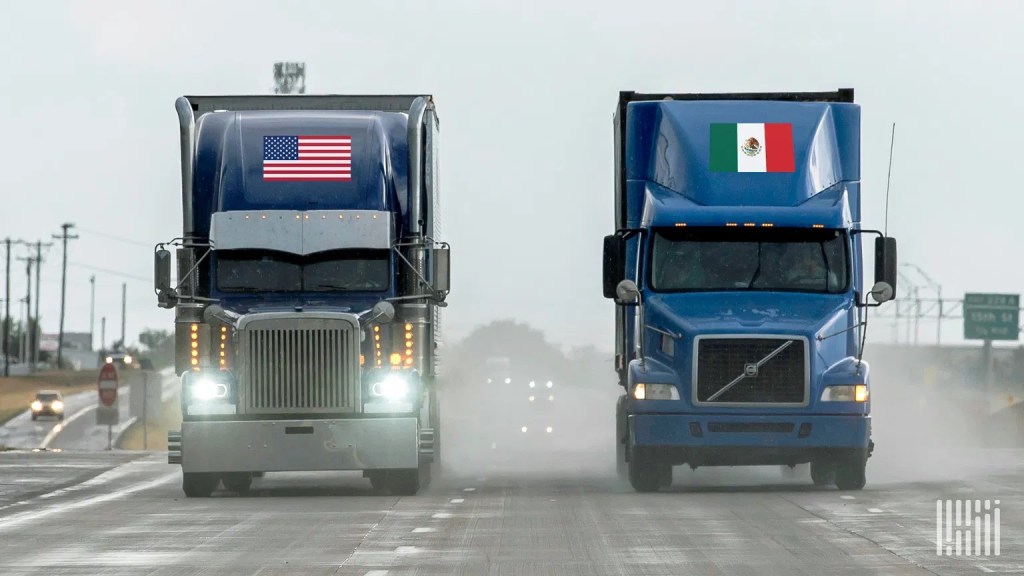
Borderlands Mexico: DP World sees big logistics opportunities across Latin America

Borderlands Mexico is a weekly rundown of developments in the world of United States-Mexico cross-border trucking and trade. This week: DP World sees big logistics opportunities across Latin America; Aerospace manufacturer plans $120M expansion in Texas; and Third-party logistics provider plans warehouse near Houston.

DP World sees big logistics opportunities across Latin America

Ports and logistics operator DP World recently opened a freight forwarding hub in Mexico City to support rising demand for cross-border logistics services between Mexico and the U.S.

DP World’s investment in Mexico is a response to accelerating nearshoring trends in the country and shifting global trade dynamics, Terry Donohoe, senior vice president of freight forwarding at DP World Americas, said.

“As more companies relocate manufacturing closer to North American end markets, Mexico has emerged as a vital logistics hub, particularly for industries like automotive, electronics, and consumer goods,” Donohoe told FreightWaves in an email. “Mexico represents both a high-growth market and a natural extension of our end-to-end logistics strategy in the Americas”

Headquartered in Dubai, United Arab Emirates, DP World is one of the world’s largest container terminal operators, with 108,100 employees in 74 countries on six continents. The company also provides logistics solutions, maritime services and free trade zones.

DP World currently has a workforce of nearly 800 logistics and freight forwarding professionals in Mexico.

Donohoe said they are seeing demand for logistics services for both northbound and southbound freight between Mexico and the U.S. 

“We’re seeing strong and sustained demand from shippers for logistics services between Mexico and the U.S. — in both directions,” Donohoe said. “Cross-border freight volumes hit record highs in early 2025, with Mexico exports to the U.S. fueling a significant portion of that growth.”

Donohoe said manufacturers in Mexico across sectors such as automotive, electronics, and industrial goods have been ramping up exports to the U.S. in recent months

“This has led to a surge in need for cross-border freight forwarding, customs brokerage, and multimodal transport solutions,” Donohoe said. “This corridor … is experiencing long-term, structural growth as companies reconfigure supply chains around resilience, regionalization, and speed to market.”

As of Thursday, the SONAR Inbound Ocean TEUs Volume Index shows that import container bookings from China to Mexico (IOTI.CHNMEX) are up 26% since May 12, but down 16% compared to the same period in 2024.

SONAR’s Inbound Ocean TEUs Indices (IOTI) measure bookings of twenty-foot equivalent units on a 14-day rolling average based on departure date from the port of lading. They are representative of maritime shipping container demand and a leading indicator of surface transportation demand.

While it is nearly impossible to say definitively what is driving the container growth from China to Mexico, nearshoring trends can be seen across the Americas, Donohoe said.

“The Americas is one of our fastest-growing and high-priority regions,” Donohoe said.

SONAR’s Inbound Ocean TEUs Volume Index from China to Mexico (IOTI.CHNMEX) shows container freight has been surging since May 12. To learn more about SONAR, click here.

In September, The Wall Street Journal reported that DP World was in talks with the Mexican government about establishing a large industrial complex in the country, including combining a port and industrial park to streamline cargo bound for the U.S.

While DP World does not operate any U.S. ports currently, the company has been investing in Canadian terminals and U.S. inland logistics businesses. 

Donohoe declined to specifically address whether DP World plans to invest in or operate a port in Mexico.

“Right now, we are very focused on strengthening our inland logistics capabilities in Mexico,” Donohoe said. “Our priorities include freight forwarding, contract logistics, warehousing, and multimodal transport solutions that serve the vital Mexico-U.S. trade corridor.”

In addition to opening a freight hub in Mexico City, DP World has been expanding its presence across Latin America and the Caribbean, particularly in the freight forwarding sector. 

Over the past two years, DP World has opened more than 35 freight forwarding offices across the Americas, with recent additions in Curitiba, Brazil, as well as Toronto.

In May, DP World announced plans for $760 million expansion of the Dominican Republic’s Port of Caucedo and its free trade zone.

“We recently signed a multi-million-dollar MOU with the Dominican Republic to expand cargo capacity and manufacturing operations at the Port of Caucedo and its adjacent special economic zone,” Donohoe said. “This investment will fill a critical demand from global businesses for alternative trade and manufacturing hubs to serve their major American markets.”

Aerospace manufacturer plans $120M expansion in Texas

Germany-based MTU Maintenance plans to invest $120 million to upgrade its 462,847-square-feet facility at Perot Field Fort Worth Alliance Airport in Fort Worth, Texas.

The expansion will create 1,200 direct jobs to the region and up to 2,000 indirect jobs in services, logistics and infrastructure, according to a news release.

MTU will be adding engine maintenance, repair and overhaul services for its clients CFM International and GE Aerospace at the facility. 

“These agreements will see MTU’s site in Fort Worth develop from an on-site service center to full disassembly, assembly and test facility,” the company stated. 

The facility will be renamed MTU Maintenance Fort Worth. Officials did not provide a timeline for the facility’s expansion.

MTU Maintenance operates a global network of service centers, including locations in Germany, Canada, Serbia, China, Brazil, Australia and the U.S. The company is a subsidiary of Munich-based MTU Aero Engines AG.

Third-party logistics provider plans warehouse near Houston

Houston-based Texas Logistic and Fulfillment Services LLC said it is taking over a former Amazon logistics warehouse in Sugar Land, Texas.

The 300,000-square-foot facility is being converted into one of the largest HVAC-enabled third-party logistics hubs in the Houston area, according to a news release.

“This expansion will unlock major service bottlenecks and support the fast-growing demand for climate-controlled logistics — especially for electronics and temperature-sensitive goods arriving through Port Houston. It also enables us to handle the increasing volume of lithium battery containers flowing into Texas,” Omri Shafran, CEO of Texas Logistic and Fulfillment, said in a statement.

Texas Logistic and Fulfillment Services provides warehousing, logistics and fulfillment services to customers such as Best Buy, CVS, Academy and Costco.

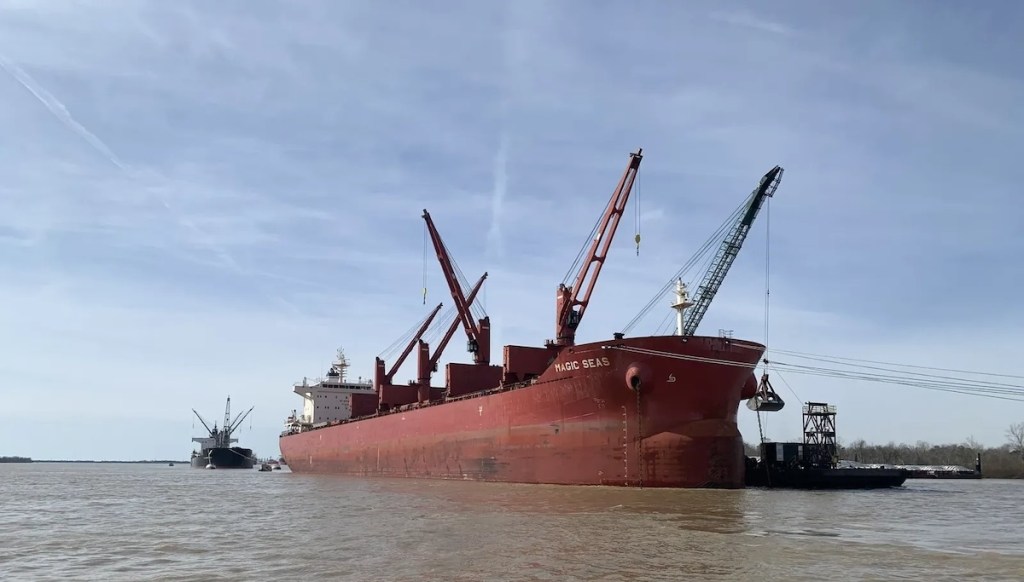
Merchant vessel attacked in Red Sea

The United Kingdom Maritime Trade Operations monitor on Sunday said that it received a report that light vessels had opened fire with small arms and self-propelled grenades.

Published reports identified the vessel as the Magic Seas, a Liberian-flagged bulk tanker, and that the crew of 23 was abandoning ship after it was set afire by the attacks and sinking.

The UKMTO said that armed security aboard the merchant vessel returned fire during the attack, which occurred 51 nautical miles southwest of Hudaydah, Yemen.

Houthi rebels based in Yemen from 2023-2024 carried out attacks on merchant ships they claimed were connected to Israel, sinking two ships and killing four sailors. 

The attacks greatly reduced shipping through the Suez Canal-Red Sea route as major container carriers elected to divert vessels away from the region and on longer voyages around Africa’s Cape of Good Hope.

France’s CMA CGM in late June became the first carrier to return to the Suez Canal with an ultra-large container ship, the 15,536-TEU CMA CGM Osiris. 

Houthi media and the U.S. armed forces were aware of the attack but offered no details.

The incident comes just after the Trump administration said it backed ceasefire negotiations in the Gaza war between Israel and Hamas.

The U.S. earlier this year mounted an intense bombing campaign against Houthi targets inside Yemen. No vessels were targeted in that time, but the Houthis have continued to launch missiles directly at Israel. 

This article was updated July 6 to correct that the U.S. is backing ceasefire talks between Hamas and Israel.

Find more articles by Stuart Chirls here.

Related coverage:

US container import tariffs averaging 21%, says Maersk

China trade outlook improves, container rates — not so much

Why 44% fewer cancelled sailings could be [blanking] bad news for SoCal trucking

US maritime chief ‘not a big fan’ of ocean carriers’ ‘approach’ as agency reviews antitrust immunity

Trump immigration crackdowns could crunch trucking capacity

New immigration restrictions could curb driver availability, trigger a massive capacity crunch, and pull the trucking industry out of The Great Freight Recession. The Trump administration’s English Language Proficiency (ELP) mandate, effective June 2025, is already limiting the 3.5 million driver pool, particularly impacting immigrants, who according to the BLS account for at least 20% of the workforce (a figure FreightWaves believes is much larger).

H.R. 1, the “One Big Beautiful Bill Act,” signed into law by President Trump on July 4, 2025, escalates the impact with stringent immigration measures within a broader package of border security, tax cuts, and deregulation. By cutting tens of thousands of drivers, these policies could end trucking’s overcapacity, boosting rates for a sharp market rebound.

ELP Mandate Kicks Off Driver Reductions

The ELP mandate, launched June 25, 2025, began the capacity squeeze. The Commercial Vehicle Safety Alliance’s rule to place drivers failing English proficiency standards out of service could sideline 40,000 to 60,000 interstate CDL holders. Many are immigrants from Mexico, Eastern Europe, or South Asia, often with smaller fleets or as owner-operators, facing stricter weigh station checks and non-domiciled CDL reviews.

The mandate requires clear communication with inspectors, but enforcement may exclude drivers with functional but non-fluent English. This targets high-turnover roles (turnover nears 90% for long-haul), cutting capacity. Domestic replacements are constrained by the job’s grueling conditions and a tight labor market.

H.R. 1: Immigration Reforms Slash Driver Availability

Building on the ELP mandate, H.R. 1, signed into law on July 4, 2025, anchors Trump’s second-term agenda, blending immigration controls with $146.3 billion in border security, permanent 2017 tax cut extensions, and regulatory streamlining. Its immigration provisions could significantly reduce driver availability:

  • Parole Program Termination: H.R. 1 orders the Department of Homeland Security to end parole programs (for example, for Cubans, Haitians, Nicaraguans, Venezuelans, Ukrainians), a source of drivers. Ending these could contribute to losses within the broader EAD restrictions.
  • EAD Restrictions: The bill blocks Employment Authorization Documents (EADs) for parolees, Temporary Protected Status holders, and asylum seekers unless legally mandated, potentially affecting 40,000 to 80,000 drivers, including parolees, who rely on EADs. Non-compliance risks fines up to $4,473 per worker.
  • Asylum Barriers: A $50 asylum application fee and port-of-entry filing rules could deter 2,000 to 5,000 potential new drivers annually, limiting future hiring.
  • Expedited Removal: Migrants caught within 100 miles of the border face immediate deportation, potentially deterring 8,000 to 15,000 drivers in border states, key for cross-border trade.

The Bureau of Labor Statistics estimates 20% of drivers (700,000) are immigrants, but we believe that number is conservative, largely due to underreporting by small fleets. H.R. 1’s immigration measures could sideline 50,000 to 100,000 drivers (1.4 to 2.9% of the total), primarily through EAD restrictions, with asylum and border measures contributing smaller, partially overlapping impacts.

Enforcement: The Critical Factor

The big question is whether these rules do get enforced. H.R. 1 provides $37 billion in funding to ICE and to reform immigration. This is up from $9.4 billion in 2024. To put this in perspective, if ICE were a military, it would be the 16th most funded military in the world, roughly the size of Canada’s armed forces or 20% above Israel’s IDF. This significant investment signals robust enforcement, with ICE audits targeting fleets employing EAD-dependent drivers, weigh station checks intensifying for non-domiciled CDLs, and warehouse inspections by ICE agents.

The ELP mandate’s enforcement, already underway, could bench thousands of drivers monthly.

Additional Immigration Enforcement Measures

Other administration policies could further limit drivers through immigration restrictions:

  • Non-Domiciled CDL Scrutiny: An FMCSA review of non-domiciled CDLs, driven by immigration compliance, may bench 5,000 to 10,000 foreign drivers, mainly from Mexico and Canada.
  • Workplace Enforcement: ICE audits, backed by H.R. 1’s enforcement funds, could deter hiring of 8,000 to 12,000 EAD-dependent drivers, as fleets avoid penalties.
  • Border Enforcement Focus: Prioritizing border security over highway funding (for example, stalled FAST Act) tightens immigration checks at weigh stations, indirectly cutting 2,000 to 3,000 drivers’ worth of capacity through delays.

Total driver losses could reach 3 to 5% (105,000 to 175,000 drivers), combining ELP (40,000 to 60,000), H.R. 1’s immigration provisions (50,000 to 100,000), and other measures (15,000 to 25,000).

Policy Context and Industry Impacts

H.R. 1, Trump’s signature policy, combines immigration reform with border security, tax cuts, and deregulation to reshape the economy. The ELP mandate enforces language standards for safety. These immigration changes could disrupt operations, particularly in border regions handling 30% of U.S. freight, and raise fleet costs for compliance, including I-9 audits and E-Verify implementation.

From Overcapacity to Great Freight Recession Recovery

Since 2022, trucking has been mired in overcapacity, with excess trucks and soft demand driving spot rates to $2.28 per mile on July 1, 2025, per SONAR data, down from $3.53 per mile on January 9, 2022. Negative margins have crushed small carriers and strained giants like J.B. Hunt ($12 billion revenue). Losing 105,000 to 175,000 drivers would trigger a massive capacity crunch, ending this glut and fueling a recovery from The Great Freight Recession:

  • Rate Surge: The massive capacity crunch could make it hard to find capacity, leaving shippers and brokers to pay high truckload rates approaching COVID-era extremes, according to SONAR data.
  • Pricing Leverage: The massive capacity crunch could put carriers in the driver’s seat once again, especially for cross-border or high-demand routes.

Risks include compliance costs and potential inflation from higher freight rates.

The Bottom Line

The ELP mandate is likely already cutting driver numbers, and H.R. 1’s immigration reforms, signed into law on July 4, 2025, could remove tens of thousands more, depending on enforcement rigor. By triggering a massive capacity crunch, Trump’s policies could end trucking’s overcapacity, pulling the industry from The Great Freight Recession with soaring rates and swinging the market pendulum towards motor carriers. Shippers and brokers would be wise to lock in higher contract freight rates for guaranteed capacity, avoiding a COVID-like crunch in the fourth-quarter.

July Market Recap – What Small Carriers Did Right (and Wrong)

July didn’t pull any punches. Volatile rates. Tightening capacity. Diesel spikes that tested everyone’s cash flow. For small carriers, it was either a month of smart moves—or hard lessons. What separated those who protected margins from those who scrambled to survive? Discipline. Strategy. Execution.

In this recap, we break down what small carriers got right, where they went wrong, and how to use July’s market as a launchpad for smarter, leaner operations heading into peak season.

What Small Carriers Got Right

1. They Focused on Home Turf

The carriers who won in July didn’t chase freight across five states. They stayed close to home, worked repeat lanes, and locked in consistent power-only or short-haul freight that kept wheels moving and fuel costs manageable.

Real example:
One 6-truck fleet in Tennessee turned down 800-mile loads in favor of a tight 250-mile triangle. By week three, they had locked in a daily run with a regional food distributor—high frequency, predictable rates, and lower maintenance risk.

2. They Used the Downtime to Strengthen Relationships

Rates weren’t great, but downtime was gold for carriers who used it wisely. July was when smart owners picked up the phone—not just for loads, but to follow up with brokers, check in with old shippers, and build actual relationships.

Tactical move:
Carriers that updated their shipper list, ran lane reports, and scheduled two weekly prospecting hours are already seeing better offers roll in.

3. They Made Coaching a Priority

July’s heat didn’t just test engines—it tested drivers too. Smart carriers saw an uptick in harsh braking, speeding violations, and HOS mistakes. But instead of punishing, they coached.

Winning script:
“Let’s review your last roadside. That 68 in a 55 dinged our CSA—next time, ease it down through that construction zone. If we drop that unsafe driving score, we qualify for a better contract I’m bidding on now. You’re key to that.”

Small tweaks in conversation led to real results. Fewer violations. Stronger scores.

4. They Watched Their Numbers Like a Hawk

Gross doesn’t mean anything if the net ain’t right. Carriers that tracked cost-per-mile daily in July were able to spot trouble early—especially when diesel jumped mid-month.

One carrier insight:
“We noticed we were spending $0.12 more per mile after switching fuel cards. We swapped vendors mid-cycle and got back on track before the damage got worse.”

The lesson: eyeball every line item. Especially when rates are thin.

5. They Took Tech Seriously

The ones who finally ditched Excel and stopped printing BOLs from the truck stop? They ran tighter ops, tracked KPIs weekly, and didn’t wait until invoicing to know how much they made.

If you’re still writing odometer readings by hand, July exposed you.
Carriers who cleaned up dispatch and billing with real TMS tools didn’t just move freight—they moved forward.

Where Small Carriers Dropped the Ball

1. They Reacted Instead of Planning

Many carriers jumped on cheap freight thinking “at least we’re moving.” But they didn’t map out round-trip profitability. They didn’t calculate true cost after tolls, fuel, or layover risk. And they got burned.

Reminder: A load that pays $3.50/mile out but nothing back is a trap—especially in July.

2. They Ignored Safety Coaching

You don’t fix CSA scores in court—you fix them in the cab. The carriers who skipped safety meetings or waited for violations to add up are now looking at inspections that cost them business.

Harsh but true:
If you haven’t talked CSA with your drivers in the last 30 days, you’re already behind.

3. They Didn’t Prospect for Direct Business

If you spent July refreshing the load board instead of making at least five new shipper contacts a week, you wasted a golden window. Brokers were overloaded. Shippers needed help. But they only awarded contracts to carriers who showed up.

Missed opportunity:
Small carriers who emailed lane data, FMCSA snapshots, and insurance certs to local shippers? They got callbacks.

4. They Let Emotions Drive Rates

Some carriers panicked when they saw market softening and took anything above $2.00/mile—even if it wrecked their week. Others got greedy on hot lanes and sat empty while better offers passed them by.

Truth: Strategy beats emotion. Always.

5. They Didn’t Budget for Fuel Swings

The diesel spike in late July shouldn’t have surprised anyone—but many small carriers got caught off guard, especially those who skipped monthly fuel projections.

One owner’s mistake:
“I budgeted off spring fuel prices and didn’t re-forecast. We were $6,000 short by the 20th of the month.”

What to Do Now: Turning July Lessons Into August Strategy

  • Audit every mile you drove: Where did you run hot? Where did you lose?
  • Schedule weekly safety talks: Make CSA part of the culture, not a reaction.
  • Build a Q3 shipper list: You need 25 contacts minimum. Reach out weekly.
  • Re-run your cost per mile: Adjust for July fuel trends and overhead spikes.
  • Block time for outreach: Minimum 2 hours/week cold calling or emailing.

Final Word

July gave small carriers a choice—adjust or absorb the damage. Some leveled up their back office, coached their drivers, and trimmed the fat from their lanes. Others spun their wheels, hoping for a rate bounce that never came.

Don’t let the next month catch you with the same bad habits. Take the wins, fix the misses, and make August your best-run month yet. This market ain’t easy—but with the right systems, the right mindset, and the right action, it’s still winnable.

Driver Coaching Scripts That Actually Improve CSA Scores

Many small fleets don’t have a safety problem—they have a communication problem. Unsafe driving, HOS violations, maintenance issues—those don’t happen in a vacuum. They happen when expectations aren’t clear, coaching is inconsistent, and drivers feel like they’re being scolded, not supported.

If you want to improve your CSA scores, it’s not about throwing another training module at your team. It’s about coaching with purpose. It’s about having real conversations that drivers actually respond to—conversations rooted in clarity, accountability, and respect.

You don’t need a safety department the size of FedEx to make this work. You need leadership. You need systems. And most importantly, you need a script that doesn’t just recite violations—but actually helps drivers fix them.

Let’s break down exactly what those coaching scripts look like, how to deliver them, and how they drive real results across your safety scores.

Why Most Safety Talks Fall Flat

Here’s the problem: too many safety talks sound like this—

“You’ve got to stop speeding.”
“Your logs were off again.”
“This truck should’ve never gone out with that violation.”

That’s not coaching. That’s criticism.

When drivers feel attacked, they shut down. When they feel like they’re just being written up, they focus on staying off your radar—not actually fixing behavior.

Good coaching does three things:

  1. Acknowledges the issue
  2. Breaks down the root cause
  3. Offers a clear plan to correct and prevent it

If your safety scores aren’t where they should be, look at your conversations first. Because coaching—done right—is the fastest way to close the gap between performance and expectation.

Start with the Right Coaching Framework

Before we dive into the actual scripts, let’s get something straight.

Every coaching conversation should follow this basic framework:

  1. Connect – Open the conversation without judgment. Build trust first.
  2. Observe – Bring up the issue clearly and factually.
  3. Ask – Give the driver space to explain. Don’t assume.
  4. Educate – Tie the behavior to its consequences (CSA, downtime, legal exposure).
  5. Commit – End with a clear, mutual action step.

Think of it as the COACH model—Connect, Observe, Ask, Clarify, Help.

Now let’s look at how to apply this in real conversations that actually improve behavior and move the needle on your CSA profile.

Coaching Script #1 – Unsafe Driving BASIC: Speeding Violations

The Situation: Your driver was cited for speeding in a 55 mph zone during a roadside inspection.

The Wrong Way:

“You can’t be speeding like that. That violation hit our CSA score hard. It’s unacceptable.”

The Right Way:

“Hey [Driver Name], I wanted to check in about that inspection last week. I saw the officer clocked you at 68 in a 55. Before we jump in, how’s everything going on that route? Anything unusual happened that day?”

[Let them talk. Then continue.]

“Thanks for sharing that. Look, I know you’ve been solid on most runs, and I appreciate that. But this violation puts points on our Unsafe Driving BASIC—and it stays there for two years. That impacts our insurance, our ability to land new freight, and our inspections moving forward.”

“I want to make sure we’re both on the same page. Can you walk me through what happened in that moment? Was it signage, time pressure, something else?”

“Going forward, let’s make a habit of setting that cruise at 5 under the limit in known inspection zones. I’ll get you a map of hot spots we’ve seen violations pop up in. Let’s knock this down together.”

Why It Works: You’re not lecturing—you’re collaborating. You show awareness of the issue, open the door to feedback, and tie the behavior directly to operational outcomes.

Coaching Script #2 – HOS BASIC: Form and Manner/Log Violations

The Situation: Your driver had several logbook errors flagged—missing location entries and off-duty gaps.

The Wrong Way:

“You’ve got to clean up your logs. This is basic stuff. I can’t keep getting dinged for this.”

The Right Way:

“Hey [Driver Name], I noticed a few things on your logs from last week—some missing location data and an off-duty segment that didn’t match up. I wanted to see if we could take five minutes to look at it together.”

[Open the logbook together and review.]

“I know the ELDs can be a pain, and they’re not always intuitive. But this stuff impacts our HOS score—and that’s one of the first things DOT checks during an inspection.”

“What’s been your process lately when changing duty status or taking breaks? Are you using the app on your phone or the tablet in the cab?”

“Let’s set a quick routine. Before you go off-duty, take 10 seconds to double-check your status and log a location. I’ll send out a cheat sheet today just as a reminder. It’s small stuff—but it adds up fast.”

Why It Works: You’re teaching, not blaming. You ask about their process, offer support, and introduce a repeatable habit. That’s how you reduce violations over time.

Coaching Script #3 – Vehicle Maintenance BASIC: OOS Violations

The Situation: A roadside inspection took your truck out of service for a worn tire and a faulty light.

The Wrong Way:

“This should’ve been caught on your pre-trip. Are you even doing your inspections?”

The Right Way:

“Hey [Driver Name], I wanted to circle back to the roadside inspection from last Thursday. We got hit with two violations—tread depth and a marker light. Can we talk through your pre-trip that morning?”

[Let them explain.]

“I know you’ve got a lot on your plate, and we’re all trying to get rolling early, but these issues put us out of service. That costs time, money, and hurts our Maintenance BASIC.”

“Let’s do this: starting this week, I want you to snap a photo of your tires during your pre-trip and text it in. Same thing if you find a light issue. That way, we have a visual record—and we can catch things before DOT does.”

“I’m not coming down on you. I just want to make sure we’re both doing everything we can to keep those trucks rolling clean.”

Why It Works: You reinforce expectations without accusation. You introduce a simple accountability system that benefits everyone. And you keep it team-oriented.

Coaching Script #4 – Crash Indicator BASIC: Minor Fender Bender

The Situation: A backing accident at a customer yard. No injuries, minor damage, but still DOT reportable.

The Wrong Way:

“You’ve got to be more careful. This kind of stuff is unacceptable.”

The Right Way:

“Hey [Driver Name], I appreciate you reporting the incident last night. First off, are you okay? I know even small accidents can shake you up.”

[Let them speak. Acknowledge.]

“Thanks for walking me through that. Backing at that location has been tight for years—I’ve seen other drivers struggle there too.”

“Still, every crash puts a mark on our record. It hits our Crash Indicator score and can trigger more inspections—even if it wasn’t entirely your fault.”

“Let’s work together on a checklist for tight docks. Maybe we set a policy—if the space is blindside or below a certain width, you call dispatch and we walk it out together over the phone before backing.”

“The goal isn’t to point fingers. The goal is to protect you, the truck, and our record. You with me?”

Why It Works: You focus on the driver’s well-being, acknowledge the challenge, then co-create a solution. That’s real leadership.

Final Tips for Successful Coaching

  • Be consistent. Don’t wait for violations to coach—have monthly performance check-ins.
  • Track trends. If multiple drivers are making the same mistake, your process is broken—not the driver.
  • Document the conversation. Not for punishment—but for improvement tracking and legal protection.
  • Follow up. Check back in after two weeks. “Hey, how’s that new log process working for you?”

When drivers know you’re invested in their success—not just their mistakes—you build a safety culture that lasts.

Final Word

Your CSA score isn’t just a number—it’s a reflection of your leadership. And leadership shows up in how you coach your drivers when things go wrong.

Don’t lead with blame. Lead with purpose. Use every violation as an opportunity to teach, support, and strengthen your team.Because when coaching is done right, it doesn’t just fix problems.
It prevents them.

How to Sell Your Safety Record to a Direct Shipper


Let’s get something straight—many shippers don’t just buy capacity anymore. They buy consistency. They buy professionalism. And most of all, they buy risk reduction. You can have the cleanest trucks, the most reliable drivers, and the best on-time percentage in your market, but if you can’t sell your safety record in a way that builds confidence and earns trust, you’ll keep getting passed over for the guy with flashier marketing or deeper pockets.

Your safety record isn’t just a DOT requirement—it’s potentially your sales weapon. It’s your reputation on paper. And in a world where shippers are trying to protect their freight, avoid claims, and keep their own risk profile low, safety performance can be the edge that gets you the meeting—and the contract.

But many small carriers don’t know how to sell it. They bury it. Or worse, they assume shippers will just “see it” on their SMS profile and figure it out.

Let me be clear—that’s not how this works. You’ve got to frame it, package it, and present it. Let’s talk about how.

First—Understand Why Shippers Care So Much About Safety

Shippers rely on you to handle the insurance, but they’re still on the hook for problems. They’re thinking about missed deliveries, damaged loads, and—most importantly—liability. If one of your drivers rear-ends someone while hauling their freight, guess who else potentially gets named in the lawsuit? That shipper.

They may not know the ins and outs of DOT regulations, but they know enough to be worried. So when they’re vetting carriers, safety isn’t a formality—it’s a filter. They’re asking:

  • Do you have the right insurance coverage?
  • Are your drivers properly trained?
  • Are you maintaining your equipment consistently?
  • Can I trust you not to cost me money or reputation?

That’s why safety sells. But only when you know how to present it the right way.

Step 1: Know Your Safety Numbers Inside and Out

Before you ever pitch a shipper, you better know your own data.

Go into your FMCSA SMS portal and pull the following:

  • BASIC scores (especially Unsafe Driving, HOS Compliance, and Vehicle Maintenance)
  • Inspection count (how many inspections you’ve had in the past 24 months)
  • Violation trends (any patterns?)
  • Crash indicators (even non-fault ones matter)

Don’t assume the shipper won’t look you up—they may. And if they ask about a violation and you’re fumbling for answers, you just lost credibility.

Now, this part is key: if your numbers are strong, highlight them proudly. If they’re a work in progress, own it and show the progress.

You don’t have to be perfect. You just have to be transparent, accountable, and improving.

Step 2: Package Your Safety Performance into a One-Pager

Your safety record shouldn’t just live on DOT websites. It should live in your sales material.

Build a one-page Safety Profile PDF that includes:

  • Company Safety Mission Statement
    Example: “At [Your Company], safety isn’t just compliance—it’s culture. Our drivers, dispatchers, and maintenance team are aligned around one mission: zero incidents, on-time every time.”
  • Key Safety Metrics
    Out-of-Service Rate: 0% in the past 12 months
    Vehicle Inspections Passed: 17/18 clean inspections this year
    No DOT-recordable crashes in 24 months
    Driver CSA scores well below threshold
  • Preventive Maintenance Overview
    Briefly explain your PM schedule, how you track it, and what tech/tools you use (e.g., Fleetio, KeepTruckin Maintenance, etc.).
  • Driver Training Commitment
    Mention if you run quarterly safety refreshers, do pre-trip training, or utilize safety tech like dash cams and lane assist.

Make it visual. Use icons, clean text, bold metrics. Think of it like your carrier résumé.

This document should be attached to every direct shipper intro email, printed in every meeting, and kept updated monthly.

Step 3: Use Safety as a Conversation Starter

Let’s say you finally get the shipper on the phone. What do you lead with?

Most carriers go straight to price. That’s a mistake.

Instead, start with value and risk mitigation.

Example:

“We specialize in temperature-controlled freight out of the Atlanta market, but what really sets us apart is our safety-first culture. We’ve had 23 inspections this year with only one violation—and that was corrected on-site. I’d love to show you how we’ve structured our maintenance and training programs to protect our customers’ freight and reputation.”

You’re positioning yourself as a safe pair of hands—not just another truck.

Step 4: Bring Safety Up Before They Ask

One of the smartest moves you can make in a shipper meeting is to proactively bring up your safety performance. Most shippers will get to it eventually—but if you lead with it, you own the narrative.

Let them know:

  • You track your BASIC scores monthly
  • You coach your drivers on roadside performance
  • You’ve invested in technology that improves safety (ELDs, dash cams, speed governors)
  • You’re enrolled in compliance monitoring services like Carrier Assure or SaferWatch

Even better—show them proof. Bring inspection reports. Share screenshots. Show how you audit logs. Don’t talk about safety—demonstrate it.

Step 5: Address Safety Shortcomings Head-On

Now, what if your record isn’t squeaky clean?

You’ve got two options:

  1. Dodge and deflect (not recommended)
  2. Acknowledge and improve (this earns trust)

Let’s say your Vehicle Maintenance BASIC is above threshold. You could say:

“We had some challenges early last year with a few roadside maintenance issues, so we overhauled our PM process and brought in Fleetio to track inspections. Since then, our out-of-service rate has dropped by 65%, and we’ve passed our last 8 inspections.”

That’s ownership and progress—two things shippers respect.

Never try to hide a blemish. They’ll find it. Be real, show your fix, and move forward.

Step 6: Connect Safety to Shipper Outcomes

Here’s where most carriers miss the mark.

They talk about safety like it’s a checkbox. You need to show how it affects the shipper’s business.

Help them understand that:

  • Fewer incidents = fewer claims
  • Strong maintenance = less breakdown risk
  • Clean safety scores = fewer headaches from their customers
  • Consistent drivers = reliable service windows

When you connect the dots for them, safety becomes a business advantage—not just a DOT metric.

Real-World Example from a Small Carrier

Recently, a 4-truck reefer operation out of Illinois, had never pitched direct shippers before. But they had a rock-solid safety record: zero crashes, high inspection pass rate, and a tight PM schedule.

They built a Safety One-Pager. We cleaned up their SMS profile. Then picked a produce distributor and scheduled an in-person visit.

They didn’t talk about truck rates during the first 15 minutes. They talked safely and product security. They showed their driver scorecards. They explained their maintenance cycle. They even brought a folder with roadside inspection reports.

Guess what? That shipper had just let go of a larger outfit that racked up two cargo claims and a missed delivery window.

That small fleet landed a weekly dedicated lane—and they’ve had it ever since.

Final Word

Your safety record is more than a compliance report—it’s your competitive edge in the fight for direct shipper freight. In a world full of fly-by-night carriers and undertrained drivers, professionalism stands out. Clean numbers stand out. Preparation stands out.

But none of it matters if you don’t present it with purpose.

Know your numbers. Package them smart. Show your commitment. And never let a shipper leave a meeting without knowing exactly why your trucks are the safest bet they can make.

Because in trucking, you don’t just move freight—you protect it.
And when you can sell that truth with confidence, the doors start to open.