
Navigating change in the trucking industry

truck on the highway
EROAD logo

Change is a constant in the transportation industry. Technological advancements, regulatory developments, environmental considerations and more require trucking businesses to continually adapt to an ever-evolving operational landscape.

Staying informed is crucial to navigating change and thriving amid uncertainty. To that end, FreightWaves spoke to Sarah Wicker, EVP Sales and Marketing for telematics provider EROAD, about the challenges that trucking businesses are facing in 2024 and the solutions that are available to help them achieve success.

FREIGHTWAVES: What’s the 2024 outlook for the trucking industry?

WICKER: There are many factors shaping the 2024 industry outlook, of course. There’s the economy, regulation and, increasingly, the demand for greater sustainability, among many others.

The effects of COVID, supply chain disruption, inflation and related issues are still rippling through the economy, and the economic challenges of 2023 have carried over into this year. However, industry analysts are forecasting at least a modest recovery later in 2024. When it comes to regulation, there is a lot to keep an eye on this year, including enforcement modernization, electronic roadside inspections, a final decision on compliance, safety and accountability system improvements, updates to the DataQs system and Crash Preventability Determination Program, and more. Finally, there is the growing emphasis on sustainability, which is being driven by federal and state emissions goals, economic factors, and evolving consumer demand.

When you combine the unknowns of the economy, changing regulations and environmental considerations — along with perennial industry issues like fuel costs, the driver shortage and lawsuit abuse — an overarching theme of uncertainty emerges. However, the good news is that there are plenty of tools available that can help carriers not only successfully navigate that uncertainty but also gain a competitive edge and thrive.

FREIGHTWAVES: How is EROAD helping fleets address these challenges?

WICKER: Fundamental to solving a problem is understanding it. That’s where EROAD starts; we understand the challenges that fleets face. We work closely with clients and industry partners to develop solutions that are purpose-built to overcome those specific challenges while delivering added value and return on investment and setting the course for operational excellence.

While something like ensuring regulatory compliance is a core function of telematics, the technology has evolved to do so much more — and there are exciting developments on the horizon. More and more, the ability to collect, understand and apply data intelligence from vehicles and other assets will mean the difference between operations as usual and operational transformation. Simply put, businesses that embrace the growing data revolution in the transportation industry position themselves for success; those that don’t are at risk of being left behind.

EROAD offers much more than just off-the-shelf telematics. Our solutions deliver actionable insights to improve fleet performance. We empower transformation by helping fleets increase efficiency and productivity, manage safety and compliance, and measure sustainability.

Finally, we believe technology should solve problems, not cause headaches. That’s why ease of use — for all stakeholders — is a driving principle when we develop solutions.
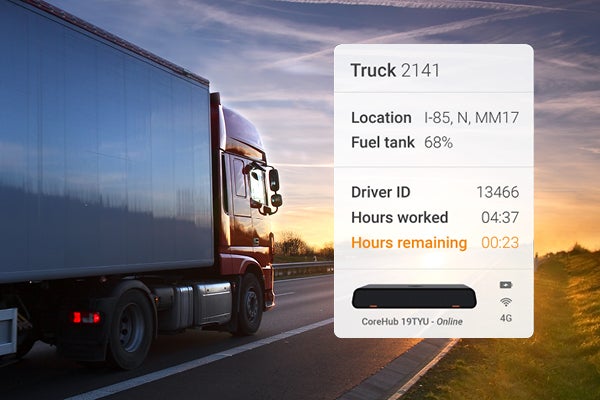
(Image: EROAD)

FREIGHTWAVES: What should businesses consider when selecting a technology partner?

WICKER: First off, it’s important that fleets seek a true partner, rather than just a vendor. A vendor ships a product and cashes your check. A partner, on the other hand, truly seeks to understand your business challenges and provides solutions to specifically address them.

In addition, fleets should consider the full breadth of a provider’s solutions. Let’s say that you find a technology provider that has a specific solution that you’re looking to implement immediately. Before you make a final decision, it’s important to look beyond that specific solution and determine whether the provider has the full range of solutions that you may ultimately want to implement.

For instance, does that ELD provider also have video telematics, trailer tracking, door sensors and so on? And, if so, do they do a good job on all of them? Technology should simplify things so you can focus on your core business. Working with multiple technology providers and systems can quickly get complicated, creating new operational headaches.

Innovation is another key consideration when looking at fleet technology providers. Are they forward-looking? Do they have their finger on the pulse of the industry? Do they stay abreast of the changing regulations? In trucking, the business and regulatory landscape is always evolving, and your challenges and needs shift accordingly. It is crucial to partner with a technology provider that is proactive and responsive to support your success today and in the uncertain future.

Finally, selecting a provider with a robust and growing integration network is key to getting the full benefit of any technology solution. You want solutions that interact and play well with the larger fleet technology ecosystem — from TMS and dispatch software to freight visibility, fuel cards and more.  

FREIGHTWAVES: Is there anything else fleets should know about adopting new technology?

WICKER: It’s important for fleets to understand that they don’t have to do it all at once. A targeted — or incremental — approach to technology adoption can help businesses address their biggest challenges first while still managing costs, streamlining implementation and setting a course for overall operational transformation.

Click here to further explore how technology can help fleets thrive during challenging times.
Click here to learn more about EROAD.
Fleet electrification does not have to break the bank

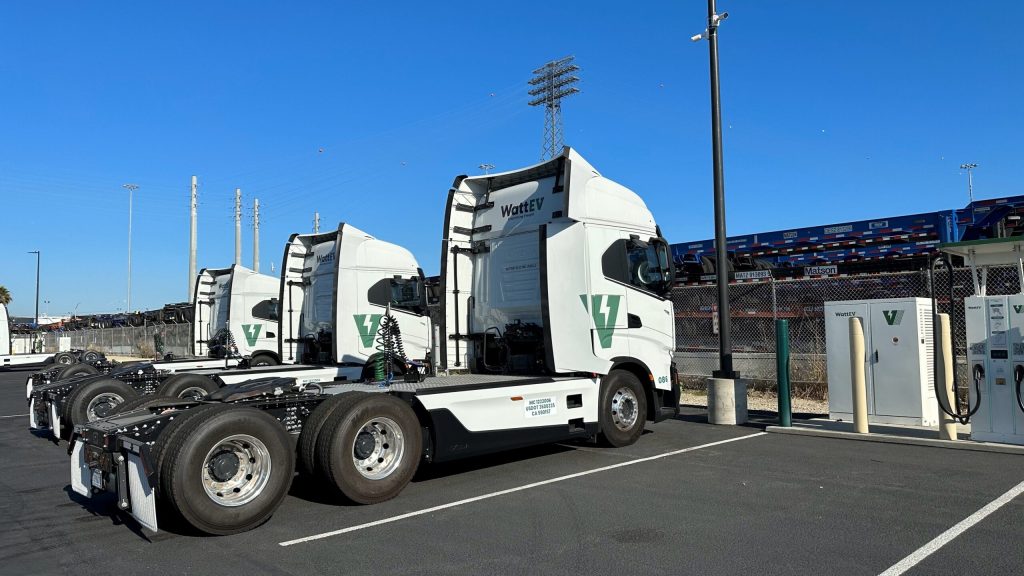
Nikola Tre batteryy-electric trucks at Watt EV chargers in Long Beach, California

Electrifying truck freight transport to meet regulatory requirements and voluntary sustainability goals can be expensive and time consuming. One California company has figured out a way to get it done faster and at less cost than once thought possible. 

Sustainability is a hot topic across the logistics industry. In addition, freight movement has been identified as a major contributor to both greenhouse gas and criteria pollutants. Tapping into this dynamic, legislators across the nation have introduced a slew of rules and regulations aimed at reducing emissions caused by commercial trucks. Many of these policies — especially those coming out of California — focus on cleaning up the trucking sector.

With reduced- and zero-emission compliance deadlines looming, fleets are considering their electric truck adoption options. While some carriers are excited about the environmental and cost-savings opportunities associated with electric trucks, the financial burden that comes with that adoption can be difficult to overcome.

To help fleets comply with emerging emissions regulations, several state governments provide a number of financial incentives. While California leads the pack in both legislative regulations and incentive programs, many states offer some kind of incentive for electrification. Additionally, multiple federal programs — such as a significant tax credit included in the Inflation Reduction Act — are designed to absorb some of the financial burden associated with electric truck adoption.

Government incentives can make electrification more attainable, but it is not always enough to help the average carrier get a fleet of electric trucks on the road. WattEV has set out to bridge the gap between carriers and incentive programs.

WattEV uses a combination of state incentives for truck buys, volume purchasing plans for electricity and productivity improvement measures to make the cost of electric freight transport competitive with diesel.  While the company focuses the bulk of its efforts on California routes where it has built reliable charging facilities, it’s making headway in expanding its charging network into Oregon and Washington State as well.

Systematically reducing electric truck charging time is one of the most forward-thinking ways WattEV plans to increase productivity.

“From its inception, WattEV has considered cost competitiveness, advancement in technology and innovation as critical elements to increased adoption,” said Salim Youssefzadeh, WattEV CEO and co-founder. “Top among these are reduction in charge time by moving towards megawatt charging and affordable energy cost by moving towards on-site energy generation.”

To further its mission, WattEV plans to launch its first of many solar-operated charging depots with megawatt charging capabilities in May, adding a third truck depot to grid-connected charging depots near the Port of Long Beach and in San Bernardino to the east. The Bakersfield depot is intended to demonstrate that innovative charging infrastructure is ready and available, aimed at encouraging truck manufacturers to accelerate delivery of trucks with megawatt charging capability.

By making electrification more affordable and accessible, WattEV is making it possible for more carriers to take advantage of the perks associated with electric trucks. While regulatory compliance is top of mind in the current legislative environment, it is not the only benefit carriers stand to gain.

Aside from addressing sustainability compliance concerns, drivers who use electric trucks often find them easier to operate, providing a higher level of comfort and ease of operation. Prioritizing driver job satisfaction is crucial for carriers working to improve recruitment and retention efforts in a difficult labor market.

Current regulatory efforts focus largely on carriers, but shippers are becoming increasingly interested in the environmental impact of their transportation partners. End consumers are more invested in the sustainability profiles of their favorite brands than ever before. 

As a result, many shippers have publicly issued specific and deadlined sustainability goals, most of which focus on their transportation strategies. Now, they need to meet those deadlines.

In addition to meeting their own sustainability goals, shippers can access serious cost savings through the adoption of electric trucks.

“The cost of regulated electricity is far more stable than diesel fuel,” said Youssefzadeh of WattEV. “Shippers interested in long-term price stability have the benefit of entering into long-term freight contracts with zero-emission carriers in order to avoid future price escalation due to increases in fuel prices.” 

WattEV is prepared to help both shippers and carriers access the full suite of benefits electrification has to offer.

“We provide a one-stop solution to shippers and carriers through a vertically integrated operation so they can transition to zero-emission freight affordably, with least impact to their existing workflow,” said Youssefzadeh.

Click here to learn more about WattEV.

Baltimore bridge strike aftermath; project44’s Jett McCandless; road tests – WTT

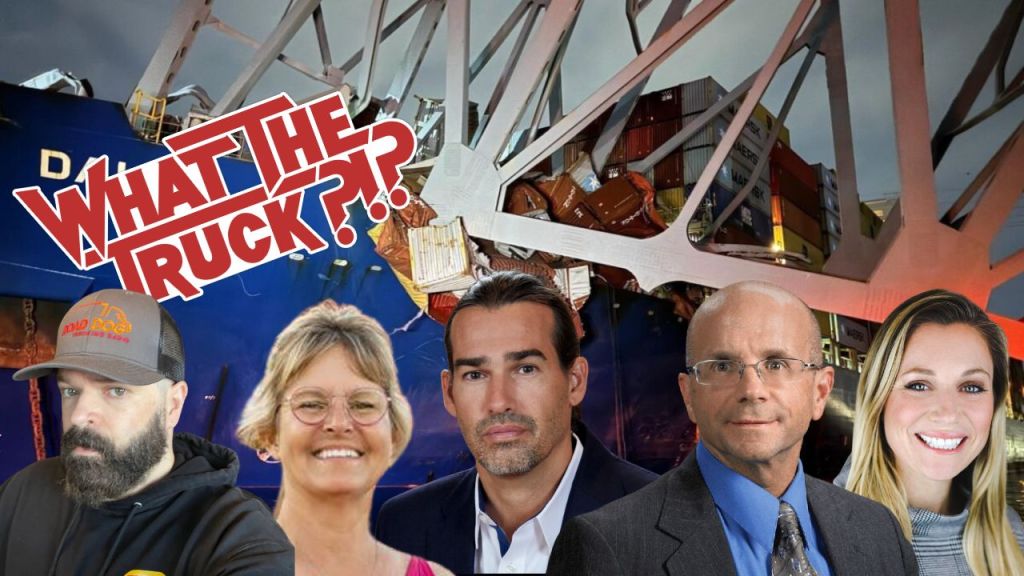
On Episode 698 of WHAT THE TRUCK?!?, Dooner is talking to project44 CEO and founder Jett McCandless about the bridge strike in Baltimore. What happens in the aftermath of the Francis Scott Key Bridge’s collapse? We’ll also look at what’s new with project44 and what 2024 holds for the visibility space.

J.J. Keller’s Mark Schedler is talking about road tests and driver screening. We’ll find out how to filter out the bad apples and how to make sure you’re not putting your fleet and your clients at risk.

Shell Rotella SuperRigs winner Theresa DeSantis talks about how she won the SuperRigs title, what she’s learned as a female trucker and what advice she has for ladies looking toward life over the road.

Echo Global Logistics’ Molly Mangan is talking about insurtech for LTL shipments.

Plus, raised-back trucks; tiny trucking chapels; menacing turkeys; and more.

Watch on YouTube

Subscribe to the WTT newsletter

Apple Podcasts

Spotify

More FreightWaves Podcasts

White Paper: How Do Shippers Plan to Navigate Current Air Cargo Conditions?

Companies across sectors have struggled to find efficient, predictable and affordable transportation options over the past year. This is especially true for companies with a global footprint, as they often find themselves moving goods between continents. Many global shippers rely heavily on air cargo to move goods quickly. Recently, however, these companies have felt the pinch of rate fluctuations, leading to increased difficulty managing costs. During the same time frame, a lot of these companies also experienced a decreased level of airfreight schedule reliability and longer than expected transit times.

Maersk teamed up with FreightWaves to better understand how shippers are navigating the current air cargo environment. The duo surveyed representatives of a wide range of companies about their experience over the past year, as well as their expectations about the future.

Results made it clear that shippers have felt the impact of recent market conditions, including rate fluctuations. Complete the form below to read the report with more insights.

6 workers missing in Francis Scott Key Bridge collapse presumed dead

Editor’s note: This story was updated at 1 p.m. on March 27 to reflect new information.

The six missing people who plunged into the water after the collapse of the Francis Scott Key Bridge are presumed dead. Authorities were working to recover their bodies Wednesday morning.

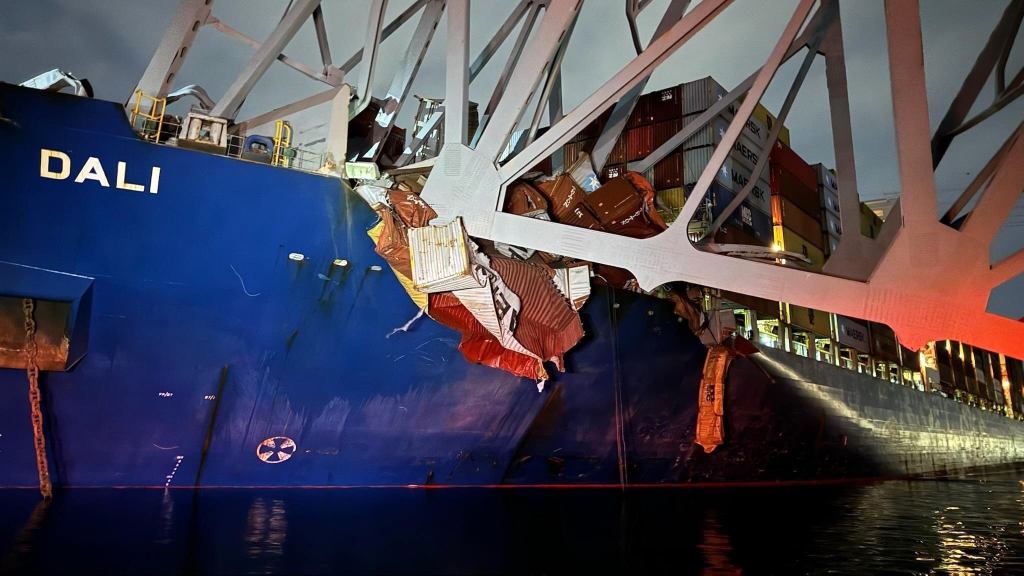
The disaster occurred early Tuesday when the Dali, a Singapore-flagged ship, crashed into a piling around 1:30 a.m., bringing down the Baltimore bridge in seconds. A construction crew was filling potholes on the bridge when it tumbled into the Patapsco River.

Two people were rescued by authorities, and one was in critical condition Tuesday.

Here’s what to know about the bridge collapse as authorities piece together how the tragedy unfolded.

Coast Guard switches to recovery

The U.S. Coast Guard on Tuesday searched the chilly Patapsco River waters by boat, air and diving in hopes of finding those who fell in the water. The river feeds into the Baltimore Harbor area, then to Chesapeake Bay and the Atlantic Ocean. 

Water was 50-feet deep where the bridge collapsed, said Maryland Transportation Secretary Paul Wiedefeld. 

The Coast Guard, the Maryland State Police and the Baltimore City Fire Department announced Tuesday night they were switching from search and rescue to a recovery mission on Wednesday.

Coast Guard Rear Adm. Shannon Gilreath said Tuesday night that the low water temperatures paired with the length of time the workers were in the water led officials to believe the victims didn’t survive. The conditions also pose a safety risk to recovery divers, due to the temperature and the currents moving pieces of the fallen bridge.

Maryland State Police Lt. Col. Roland Butler Jr. said it was possible another vehicle was on the bridge when it collapsed.

“As unfortunate as it may be, it’s a distinct possibility. However, we don’t have any information to support that,” he said.

Guatemala’s Ministry of Foreign Affairs said two of the workers were Guatemalans:  a 26-year-old from the Petén region and a 35-year-old from the Chiquimula area. Their names were not released. The ministry said it is believed other workers were from Mexico, Honduras and El Salvador.

The consul general of Guatemala in Maryland spoke on the phone with the brothers of the missing Guatemalans.

CASA, which provides services to immigrants and working-class families, identified Miguel Luna as one of the victims presumed dead. Luna, from El Salvador, left for work at 6:30 p.m. Monday. He lived in Maryland for 19 years and was a husband and father of three.

“In the aftermath of the tragic collapse of the Francis Scott Key Bridge, our hearts ache for the families of the victims and all those impacted by this horrific accident,” said CASA Executive Director Gustavo Torres. “Sadly, we discovered that one of the construction workers involved was a longtime member of our CASA family, adding an even deeper layer of sorrow to this already grievous situation.” 

Gov. Wes Moore said Wednesday on “Today” that he met with the victims’ families and made a commitment “to put every possible resource” into recovering their loved ones.

“They were fathers. They were sons. They were husbands. They were people who their families relied on,” he said.

“What happened here at our port is a tragedy that no one could ever imagine,” said Baltimore Mayor Brandon Scott. “Our focus now is recovering the victims, so their loved ones get the closure they deserve.”

The owners and managers of the Dali said Wednesday that all of the ship’s 22-person crew and the two pilots were accounted for with one minor injury reported. The injured crew member was treated and released from a hospital. 

Baltimore Fire Department Chief James Wallace said at a news conference Tuesday that authorities detected vehicles in the water by using sonar. Wiedefeld said authorities don’t believe anyone is trapped in vehicles in the water.

How did the ship crash into the bridge?

Officials haven’t yet released a cause, but Gov. Wes Moore said Tuesday that it was an accident.

A video shared on social media shows the ship losing and regaining power at least twice. Smoke appears to plume out of the ship as it inches toward the 1.6-mile bridge, which vehicles were using, seemingly oblivious to what was occurring below them on the water.

The Dali was traveling at 8 knots, about 9 mph, when it struck the bridge, Moore said.

The ship’s crew notified authorities of a power issue and sent a mayday before the collision. The distress signal enabled authorities to begin halting traffic, keeping “many vehicles” off the bridge when it collapsed, the governor said.

Audio from the Maryland Transportation Authority reveals how police responded in the moments leading up to the collapse. An officer can be heard directing police over the radio to hold traffic because “there’s a ship approaching that just lost their steering.”

An officer raised concerns over a “crew working on the bridge right now” and discussed notifying the crew’s foreman to have the workers evacuate. But within moments, another officer on the radio exclaimed, “The whole bridge just fell down!”

“Start — whoever — everybody — the whole bridge just collapsed!” the officer said.

U.S. Secretary of Transportation Pete Buttigieg said Wednesday on “Good Morning America” that “the force of this ship is almost unimaginable.”

“This is a vessel that was about 100,000 tons carrying its load,” he said. “So, 200 million pounds went into this bridge all at once, which is why you had the almost instant catastrophic result. … It is difficult to overstate the level of physical force that hit this bridge all at once.”

The National Transportation Safety Board is investigating the incident. NTSB Chair Jennifer Homendy said she had a team of 24 people on the ground investigating the collapse. They included nautical operations experts, bridge experts and structural engineers.

According to the website Marine Traffic, which provides real-time information on ships, the Dali had departed the Port of Baltimore at 1 a.m. and was just 30 minutes into its route to Colombo, Sri Lanka, when it hit the bridge. It was due to arrive in Colombo on April 22.

The Dali is nearly 984 feet long and about 157 feet wide, the website said. Two pilots were on board the ship, which is owned by Grace Ocean Private Ltd., Synergy Marine Group said. The ship was chartered by Maersk and was carrying Maersk customer cargo, the company said in a statement Tuesday.

How does collapse affect the port and freight? 

The Francis Scott Key Bridge plays an important role in commercial shipping access to the Port of Baltimore, a hub for vehicles including light trucks, as well as various bulk goods.

The bridge, built in 1977, crosses the Patapsco River and was part of Interstate 695, serving as the final link of the Baltimore Beltway. Some 35,000 people use the bridge daily as a major commute route, Wiedefeld said. They will have to seek alternative routes for the foreseeable future. 

The Baltimore Department of Transportation urged truck drivers to consult an online map to find the best route for deliveries.

Shipping in and out of the Port of Baltimore is suspended until further notice, officials said. 

The Bureau of Transportation Statistics said as of noon Tuesday, three bulk carriers, one vehicle carrier, two general cargo ships, one oil/chemical tanker and three logistics naval vessels were stuck behind the fallen bridge in the port. One vehicle carrier was in the port but outside the bridge, and nine bulk carriers, one vehicle carrier and two general cargo vessels were anchored.

The port was listed as the 20th-biggest port in the country by the Bureau of Transportation Statistics. Moore in February touted the port’s success as “one of the largest economic generators in Maryland” after its private terminals handled a record 52.3 million tons of foreign cargo in 2023.

The Port of Baltimore generates some 15,300 jobs, and nearly 140,000 jobs are linked to port activities, the governor previously announced. It is the top U.S. port for volume of autos and light trucks, roll-on/roll-off heavy farm and construction machinery, imported sugar, and imported gypsum.

“It’s critically important to our economy,” U.S. Sen. Ben Cardin of Maryland said at a news conference Tuesday. “It affects many, many jobs. It affects not only jobs in Maryland but around the country and world. Our next priority is to make sure we get that channel open.”

It’s unclear when the bridge will be rebuilt, but Moore said it will be a “long-term build.” The Port of Baltimore serves as “a key component in Maryland’s transportation network,” Wiedefeld previously said. Port of Baltimore officials said although vessel traffic is suspended, trucks are still being processed inside terminals.

Moore said Wednesday that the economic consequences of the bridge collapse “cannot be overstated.” 

“Not just for the state of Maryland – we’re talking about what this means for the entire country,” he said. “We’re talking about a port that brings in more cars, more light trucks, more agricultural equipment than any other port in this country. So, this isn’t only going to impact Maryland. We’re talking about farmers in Kentucky, we’re talking about auto dealers in Michigan, who are all going to deal with the consequences of this.”

Buttigieg on Wednesday stressed the port’s importance in America’s economy. He said the Port of Baltimore “had some unique capabilities” and ocean shippers, other ports and cargo owners were working to divert ships that were heading to Baltimore.

“It is going to lead to a lot of complications for our supply chain,” he said. 

President Joe Biden vowed a rapid rebuilding effort.

“As I told Gov. Moore, I directed my team to move heaven and earth to reopen the port and rebuild the bridge as soon as humanly possible,” he said. “It’s my intention that the federal government will pay for the entire cost of reconstructing that bridge.”

Baltimore port closure puts truck drivers who haul autos in a bind

With the closure of the Port of Baltimore for the foreseeable future, the question of which truck drivers are most affected inevitably focuses first on drayage.

But Baltimore is not a major intermodal port, with estimates that its share of U.S. intermodal traffic is in the low single digits.

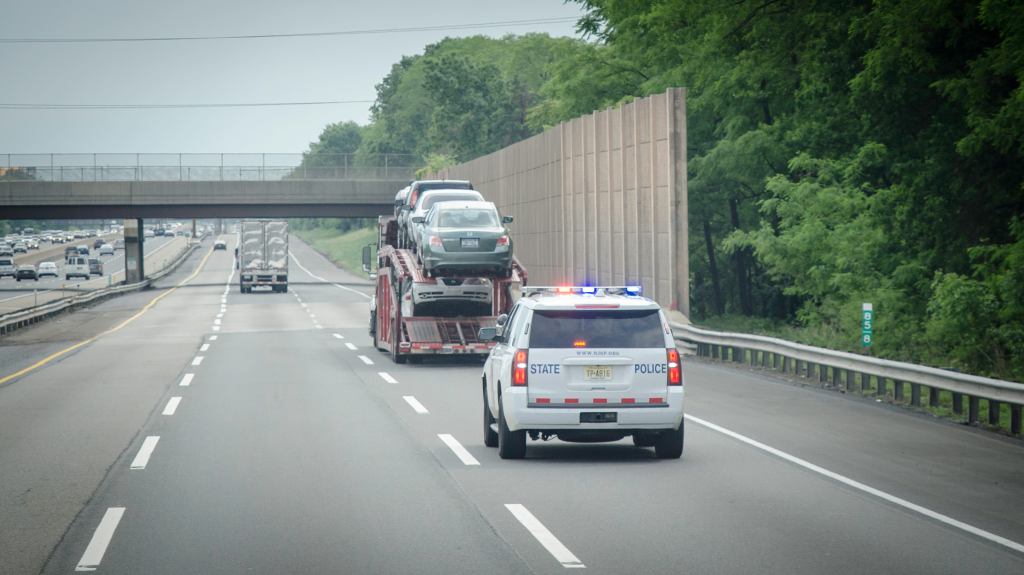
What the Port of Baltimore is, however, is a huge gateway for automobile imports and, to a lesser extent, car exports. And that fact is likely to shake up the niche truck segment of auto haulers.

Guy Young is the general manager of the Auto Haulers Association of America. Reached by phone Monday, the day of the Francis Scott Key Bridge collapse, he assessed his members’ industry as it suddenly deals with the loss of its biggest import point.

“What car haulers need that not necessarily any of the other types of container shippers need are places to store the cars until the auto haul trucks come in and pick them up,” Young said.

That means parking lots — big ones — and not every port has them. And if they do, there is not necessarily spare capacity beyond what they are utilizing now.

“Containers require a space to put them, too, but you can stack them,” Young said. That obviously isn’t possible with cars.

He noted that the East Coast also has a significant auto import site at the Port of Brunswick, Georgia, not far from Savannah.

In an article published in Forbes, Ken Roberts, who analyzes trade data, said he believed that the Georgia port would be the best location to take in auto carriers diverted from Baltimore. In the article, Roberts said the leading import partners at Brunswick “align most closely with those of the Port of Baltimore.”

Movin’ out?

But that raises a question. Drivers of auto haulers who are located in the Baltimore region to service that port would need to move their base of operations at least temporarily to Brunswick or other ports — Roberts and Young both mentioned Newark, New Jersey, and Jacksonville, Florida, as leading car import sites — to make the increased operations there work. Will they make that move?

Most auto haulers are home at night, Young said. Companies that specialize in auto hauling “probably have drivers that are based in Baltimore or live close by. You can’t necessarily just send them out anywhere because they don’t have a home to get back to.”

Auto hauling is “not really like over-the-road driving,” Young said. “It’s more regional.”

If the drivers who move autos out of Baltimore to the mid-Atlantic or Northeast are doing so in a day’s time, and now will have to tack on additional over-the-road hours to get cars out of a port like Brunswick, “that’s going to affect hours of service,” Young said.

Possible HOS waiver looms

And online chatter Monday was focusing on the possibility of a more generalized HOS waiver from the Federal Motor Carrier Safety Administration. 

Governors have the  power to declare states of emergency that include state waivers of HOS for a certain period of time, but ultimately, a federal waiver is needed. Maryland Gov. Wes Moore did declare a general state of emergency, but the wording has no specific reference to hours of service.

Auto import data for Baltimore is described in terms of tonnage. In January, according to Maryland data, auto imports were 56,332 tons. The monthly average for 2023 was 68,871 tons. A year earlier it was 71,332 tons. And in 2013, it was 91,191 tons. Specific port by port data was not immediately available, but Baltimore has been described as the largest auto port by several sources. 

Auto exports were 5,064 tons in January, averaged 8,883 tons per month in 2023 and averaged 19,783 tons in 2013. 

The impact on the number of drayage carriers now staring into a demand for their services is impossible to quantify precisely but is undoubtedly huge.

But Louis Campion, the president and CEO of the Maryland Motor Truck Association, told FreightWaves in an email that his organization has about 75 companies that provide intermodal services to Baltimore’s port.

Although the port is technically open to service freight on the docks and in the terminals, the collapsed bridge serves as a barrier for entry and exit from those facilities, which are all inside the site of the catastrophe.

Campion noted that activity can continue at terminals. “However, unless the waterways are reopened, it will serve as a blockade to the Port and effectively choke off economic activity,” he said. “If the waterways are not cleared so that ships can continue to access the Port, we would see the impact in literally a few days.  It may already be difficult as some shippers will most certainly start to re-route to other ports.”

News reports have noted shipping officials who are already rerouting freight.

Drayage drivers would face the same dilemma as the auto haulers Young discussed: They can possibly move their trucks to other ports to service diverted freight, but what becomes their home base? 

Campion’s group issued a statement on the bridge collapse that discussed some of the numbers affected by its fallout.

“We know that the Port itself is responsible for 20,000 direct jobs, and thousands of other indirect jobs it creates in industries like trucking,” the statement said. “The Key Bridge is a critical route for trucking into and out of the Port of Baltimore. In 2022 the Bridge carried over 4,800 trucks per day.”

Traffic that had crossed the bridge has three alternative routes. Two are through tunnels that cross under the Port of Baltimore, one on Interstate 95 and the other on Interstate 895, but hazardous materials cannot travel through either tunnel.

The second is the western side of the 695 loop around Baltimore. The eastern side of 695 includes the Key Bridge.

Limited intermodal impact

An irony in the bridge collapse is that it was caused by a container ship, though Baltimore is not a significant intermodal port.

In a commentary about the impact of the bridge collapse on East Coast railroad CSX, the transportation team at Deutsche Bank led by Amit Mehrotra said Baltimore last year handled about 300,000 inbound twenty-foot equivalent units, far fewer than New York/New Jersey (2.4 million) and more than 900,000 in Norfolk, Virginia. However, it was more than the 240,000 units handled in Philadelphia, which has been spoken of as a possible alternate destination for cargo routed away from Baltimore.

That small amount of intermodal service is one reason why the Key Bridge collapse is not viewed as a significant incident for the rail intermodal industry, though it could have more impact on coal traffic. Baltimore is a key export site for coal.

“The temporarily displaced imports should be able to easily reroute to nearby ports of entry,” Deutsche Bank wrote. “There is also plenty of available outbound capacity to divert the 200k+ loaded exports that leave Baltimore each year.”

The bank added that the coal slowdown could impact CSX. (NASDAQ: CSX). The Curtis Bay Coal Piers has export capacity of 14 million tons of coal. “At full capacity this would account for about one third of CSX’s annual export (metallurgical) coal volume (40 million tons), though we estimate the actual volume is much less than this,” Deutsche Bank wrote. “The bottom line is CSX’s weekly coal volumes are likely to be down a lot in the coming weeks; if we assume an impact for 2 months, we see max potential for about 30k lower coal carloads.”

On the energy front, recent records show Baltimore importing minor amounts of petroleum. In December, it was one shipment of asphalt and one shipment of biomass-based diesel, which could be either renewable diesel or biodiesel.

The liquefied natural gas export port at Cove Point, Maryland, is outside the port and is not affected by the collapse, according to a spokesman for the facility.

More articles by John Kingston

RXO gets negative outlook from Moody’s but keeps investment-grade rating

Vote on insurgent effort at Norfolk Southern set for May 9

Further appeals to block AB5 from California trucking seen as a long shot

How Bestpass drives fleet happiness

In a recent interview with FreightWaves on the Loaded and Rolling Podcast, Cindy Ellers, chief customer officer at Bestpass, talked about challenges fleets and owner-operators face in 2024 and highlighted recent partnerships and acquisitions by Bestpass.

Bestpass got its start helping clients consolidate all their toll bills in one place and be proactive due to the complexities of dealing with various tolling agencies. But as the freight market changed, customer feedback prompted the company to examine new ways to provide value.

One of the biggest challenges for its fleet customers was cost savings. “Just like everything else in the market, toll rates are increasing. We’re seeing new [tolling] gantries pop up,” said Ellers. But these impacts were being felt differently between large fleets, smaller fleets and owner-operators.

On the for-hire side, small to large fleets want to make sure they can allocate the toll to trips so they can bill it back or price it into their loads. In order to bill back the customer, receiving toll data faster can mean the difference between being reimbursed and eating the cost.

Ellers adds, “If you don’t get the transactions in time, you can miss a window to bill back a customer, or worse, if you price with your toll included and not knowing those costs ahead of time, it can make the difference between a profitable load or ‘paying somebody to haul their stuff’.”

To share some of the scale that tolling costs have for larger fleets, Ellers notes that some are spending hundreds of millions of dollars in tolls. “It’s not the same as two cars in a driveway going through a toll here and there; these [fleets] are traveling coast to coast hitting tolls all over the country, and can make a big difference if not properly managed.” 

For owner-operators, keeping track of a toll could mean the difference between having a business or not, especially with current compressed margins and higher rates of fuel and driver salaries. Ellers notes that owner-operators continue to cite higher costs, but lower freight rates over the past 18 months are compounding their cost worries.

Compared to large fleets, owner-operators struggle with bulk savings programs that some tolling agencies offer. Bestpass, which hit around $1.6 billion dollars of tolls processed through its platform in 2023, is able to pass through the discounts that larger fleets receive to owner-operators who use their platform.

Paying agencies on time and especially not missing payments are other benefits Bestpass notes. “Keeping your toll program in compliance generally results in 85% to 95% reductions in violations,” said Ellers. She notes, for example, that a $2 toll violation that isn’t paid could result in an extra $50 fee tacked on to the total.

“Some customers when they’re signing on with us have thousands or even millions of dollars worth of outstanding tolls with individual agencies … especially if you’re running decentralized versus having all your vehicles registered in one place that is receiving all the [toll] notices each day.” Losing track of the notices can cause the late fees and added expenses to spiral out of control. Ellers says one recently onboarded fleet, which owed around $200,000 worth of tolls to an agency, ended up owing more than $1.2 million after various administrative and late fees were applied.

For Bestpass, toll management and customer feedback created opportunities for more features from either partnerships or acquisitions. In February, Bestpass announced a new integration with Geotab, a telematics and transportation solutions platform, to give customers access to toll data and reporting from within their Geotab account.

Last November, Bestpass acquired Fleetworthy Solutions, which provides fleet safety, compliance and risk management solutions. Ellers notes the addition included CPSuite, a platform that combines asset and driver compliance plus tax data that is now augmented with Bestpass’ toll and citations data.

The focus on improving technology and product did not go unnoticed in the FreightTech community. At the 2023 F3 Future of Freight Festival in Chattanooga, Tennessee, Bestpass was a winner of the 2024 FreightTech 25 award and ranked No. 4 overall. The recognition honors innovators and disruptors in the industry.

Ellers notes a big reason behind Bestpass’ success revolves around customer feedback. “It all starts with our customers, So I couldn’t have done it without all of the feedback and great relationships we’ve built with them.”

To learn more, visit www.bestpass.com.

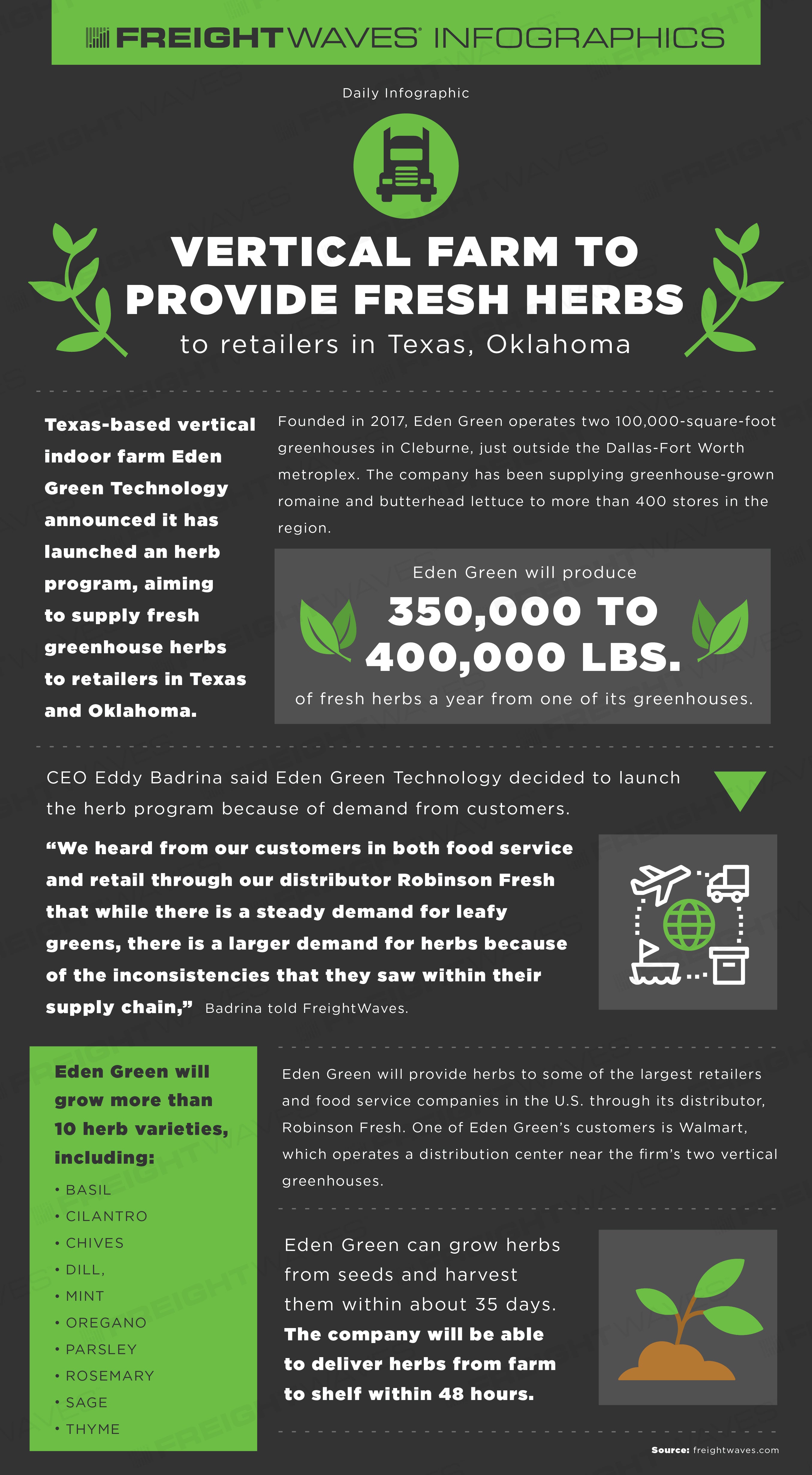
Daily Infographic: Vertical farm to provide fresh herbs to retailers in Texas, Oklahoma


To view more FreightWaves infographics, click here

FedEx pilots pick third union chairman since last summer

The board of the FedEx pilots’ union has elected its third chairman in eight months as the group tries to overcome internal divisions that have hampered efforts to achieve an updated labor contract.

The FedEx Master Executive Council voted for Captain Jose Nieves, a Boeing 757 pilot who has been at FedEx (NYSE: FDX) for 28 years, to lead the union’s 5,800 members, the Air Line Pilots Association announced late Tuesday.

Nieves replaces Captain Billy Wilson, who was elected Oct. 30, 2023 for an interim term through March 2025 but was voted out this month in the face of growing opposition. A large subset of disenchanted pilots willing to take a more aggressive stance versus FedEx management pushed the vote. 

Wilson took the helm when predecessor Christopher Norman resigned in the wake of last summer’s union rejection of a tentative agreement that leadership endorsed as delivering industry-leading improvements on pay, retirement and work-life balance.

Nieves’ term will run through March 31, 2025.

“FedEx pilots are facing challenges unlike any in recent years, and I believe this is a critical time in our union’s history,” said Capt. Nieves, in a news release. “At the top of that list of challenges is standing up to a company that has explicitly demonstrated a failure to value its pilots and employees. . .“Our pilots grow more unhappy with FedEx management by the day. It is past time for management to come to the table with a contract that recognizes our value. This is my primary focus, and the work begins today.”

Both sides have been negotiating a new labor agreement for three years and have been under the supervision of the federal National Mediation Board since October 2022. On March 8, the Air Line Pilots Association asked the NMB to declare an impasse and release the parties from mediation, the first step necessary to launch a strike action.

The new MEC leadership, responding to supporters who felt the previous board was too willing to make concessions, has made clear its willingness to take the gloves off and use any means available under the Railway Labor Act to press FedEx for better benefits. The union says it believes FedEx is not willing to change its bottom line from the deal agreed to last summer.

FedEx Corp. last week reported adjusted earnings of $3.86 per diluted share, well above analysts’ estimates of $3.45 per share, with operating income up 19% in the third quarter. Operating profit for the Express segment, which is responsible for the air network, nearly doubled after the company idled more aircraft, reduced flight activity and pared other costs. The lower flying levels also mean less pay for pilots.

FedEx has not invoked language in the existing contract that allows the airline to go below minimum guarantee pay for a four-week period when available flying time falls below certain thresholds, according to a message from a pilot who asked to remain anonymous to protect job security. FreightWaves reported early this year that such a move was possible because of the sluggish demand. But domestic flight activity subsequently picked up, according to research by Morgan Stanley.

FedEx stock increased 6% on Tuesday, reaching a three-year high of $288.99 per share.

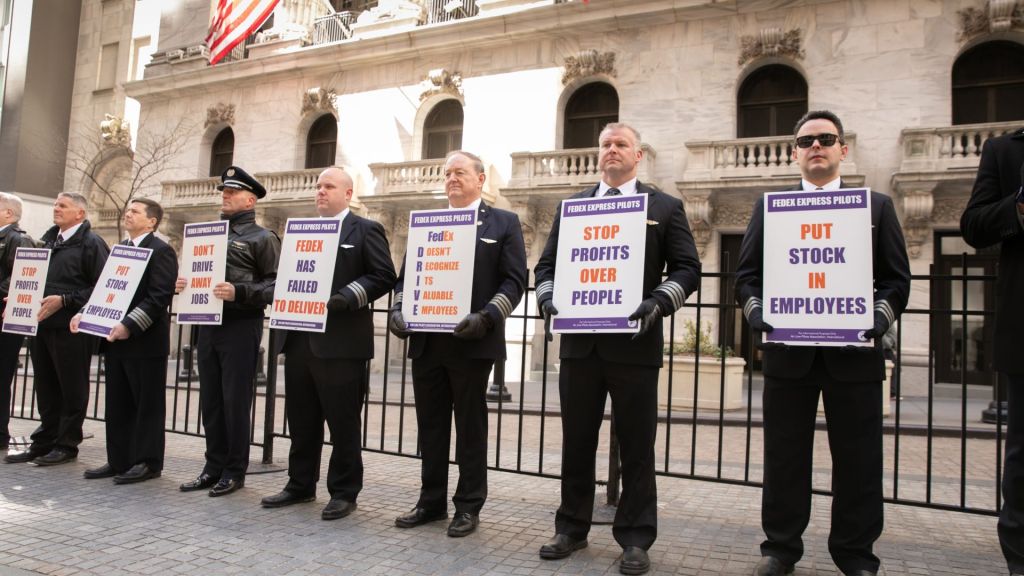
The pilots union says FedEx’s improved performance demonstrates the company can afford a better compensation package. It took umbrage with FedEx announcing another $5 billion share buyback program. A group of pilots conducted an information picket outside the New York Stock Exchange when FedEx reported its earnings on Thursday to draw attention to their agenda.

The FedEx pilots, who once were near the top of the pay heap, want a contract similar to ones won by counterparts at American Airlines, Delta Air Lines, Southwest Airlines and United Airlines. Even pilots at Hawaiian Airlines and Alaska Airlines achieved sizable raises last year. 

Cockpit crews appear to have lost leverage since airfreight and parcel demand began falling in mid-2022. FedEx also faces the strong possibility of losing some, or all, of its U.S. Postal business later this year. But the pendulum is slowly swinging back to growth, with global air cargo volumes up more than 10% for the first 2.5 months compared to the same period last year and the small package market projected by some to grow about 4% per annum over the next three years.

(Correction: The date for Capt. Nieves’ term was off by a few days in an earlier version and has been updated.)

Click here for more FreightWaves/American Shipper stories by Eric Kulisch.

RECOMMENDED READING: 

Power struggle within FedEx pilots union upsets contract talks

FedEx braces for 50% cut in Postal Service air contract

FedEx pilots face pay cuts, buyouts as contract talks resume

Court dismisses Yellow’s $137M lawsuit against Teamsters

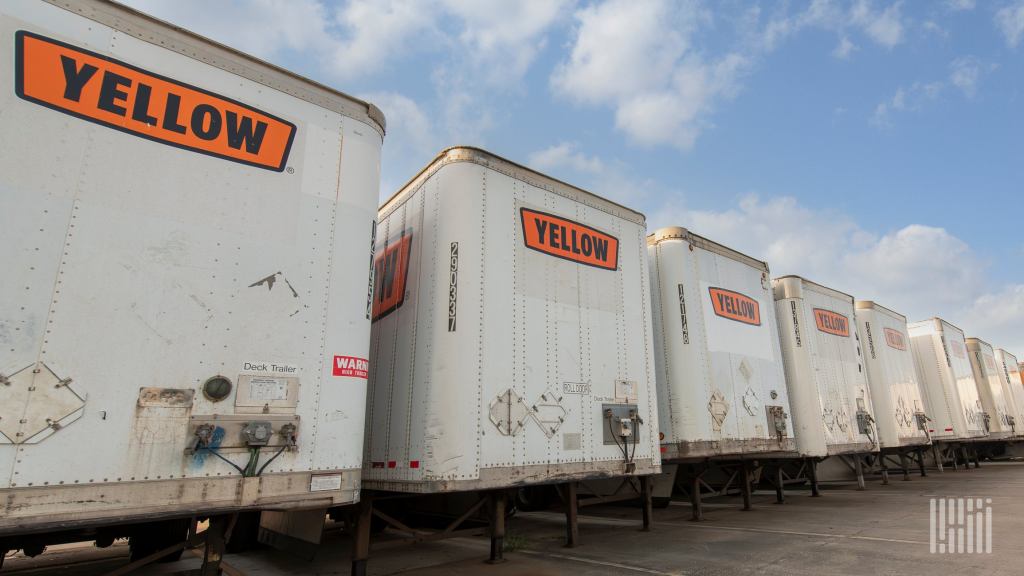
Yellow trailers parked at a terminal in Houston

A federal court in Kansas has dismissed defunct Yellow Corp.’s $137 million breach-of-contract lawsuit against the Teamsters union and its negotiating arm. The court cited the company’s failure to exhaust the grievance process established under its collective bargaining agreement with the union as the reason for closing the case.

“The Court is guided by the language of the NMFA [National Master Freight Agreement]. Article 8, Section 1(a) is clear that ‘all’ factual grievances, or questions of interpretation, arising under the NMFA or supplemental agreements must first go through the grievance process of the applicable supplemental agreement. This provision applies to all parties,” a Monday order from the U.S. District Court for the District of Kansas stated.

In its suit, Yellow (OTC: YELLQ) alleged the Teamsters union had breached the collective bargaining agreement by not approving a second phase of operational changes, and by trying to tie any approval of the change of operations to wage increases.

The less-than-truckload carrier told the union last year that a second round of changes, which included the consolidation of its four LTL operating companies, closing redundant terminals and redefining work rules for some drivers, would be required for the company to survive. In the lawsuit, it claimed the union didn’t have the authority to reject the changes and that it “knowingly and intentionally triggered a death spiral for Yellow” by refusing to comply.

The union rejected Yellow’s proposed changes one year ago after agreeing to a similar plan in the Western portion of the carrier’s network in 2022. It said the employees it represented at the company had already given billions in wage, benefits and pension concessions in prior years and that it wouldn’t go along with another bailout.

Yellow ceased operations on July 30 and filed for bankruptcy a week later.

In the lawsuit against the Teamsters, Yellow said it wasn’t required to go through with the normal grievance process because its claims didn’t involve a work stoppage and because it was seeking monetary damages. It also described the grievance process as “futile,” even if fully exhausted, as it didn’t expect the Teamsters to participate and it didn’t think it could get a “final and binding decision.”

The court’s ruling said NMFA interpretations, disputes and grievances are to be directed to a regional joint area committee, which then can be immediately referred to the national grievance committee.

The court also denied a request from Yellow to amend its pleading should the court rule to dismiss the case. Yellow previously tried to have the case moved to the Delaware bankruptcy court overseeing its Chapter 11 liquidation.

The Teamsters union on Tuesday called the lawsuit “frivolous” and an abuse of the legal system.

“After years of corporate mismanagement, Yellow still never misses an opportunity to embarrass itself or bring further shame to what used to be one of America’s strongest freight carriers. As the Teamsters expected, the court saw right through Yellow’s PR stunt of a lawsuit,” stated Sean O’Brien, Teamsters general president.

The bankruptcy court is soon expected to rule on a venue for hearing billions of dollars in withdrawal liability claims from pension funds. The pension funds have asked that the dispute be settled through arbitration while Yellow is hoping to keep the matter before the bankruptcy court. A Monday filing from Yellow asked the court to disallow $257 million of such claims from the Western Conference of Teamsters. It said the claims are invalid and that it had never been notified of the liability since withdrawing from the fund in 2009.

Representatives from Yellow had not responded to a request for comment by the time of this publication.

More FreightWaves articles by Todd Maiden