Baltimore bridge collapse may cost billions, dramatically disrupt supply chains

The collapse of Maryland’s Francis Scott Key Bridge Tuesday after it was struck by a cargo ship continues to block access to the Port of Baltimore and could disrupt shipping flows across the U.S.

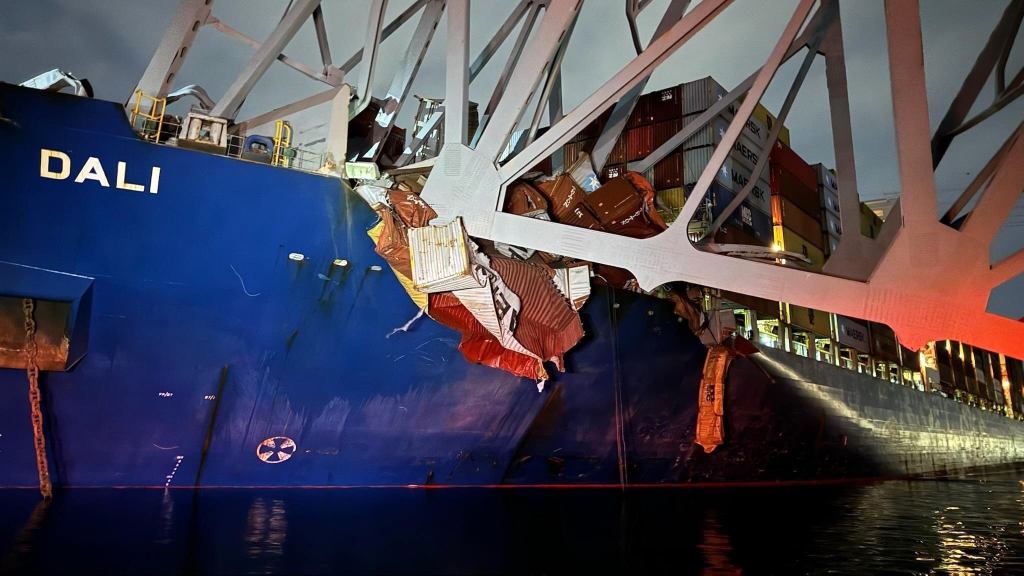
The Singapore-flagged MV Dali container ship collided with the bridge around 1:35 a.m. on Tuesday. At least six people remain unaccounted for, CNN reports. With rescue and recovery operations ongoing, it’s unclear how long debris from the bridge will block the Patapsco River, which leads to the Port of Baltimore.

For the shipping community, the accident will affect maritime lanes as carriers must seek alternative ports of call while the collapsed bridge continues to block the river, experts said.

“Are any container vessels currently trapped in the bay? That is question No. 1,” Sanne Manders, president of international at Flexport, told FreightWaves. “Right now, there are two vessels trapped: the ship that caused the collision and another general cargo container vessel that is currently trapped.”

The Port of Baltimore is the deepest harbor in Maryland’s Chesapeake Bay, with five public and 12 private terminals. The port administration did not immediately respond to a request for comment. Port officials posted on social media that they do not know how long ship traffic in and out of the port will be suspended, although trucks are still being processed.

The Francis Scott Key Bridge collapsed early Tuesday morning after being struck by the MV Dali container ship. (Photo: Baltimore City Fire Department Rescue Team 1)

Manders said another important consideration is the scores of commercial vessels that regularly call at the Port of Baltimore.

“In the next few weeks, 107 vessels will not be able to call that port and will have to divert to other ports,” Manders said. “The question is, are other ports able to absorb that capacity? The reality is that Baltimore is an important port, but for containerized trade, it is relatively small.”

In 2023, the Port of Baltimore handled $80.8 billion in trade, including 1.1 million twenty-foot equivalent units, 1.3 million tons of roll-on/roll-off farm and construction machinery, 11.7 million tons of general cargo, and 847,158 shipments of cars and light trucks.

A number of major companies have distribution warehouses and other facilities at or near the port, including Amazon, FedEx and BMW.

In Maryland, most of the freight is regional, with about 36% of trucking tender volume staying in the state. An additional 22% goes to Pennsylvania and 15% goes to Virginia.

Rachel Shames, vice president of pricing and procurement for CV International, a Norfolk, Virginia-based international logistics and transportation company, wrote in a market update that the collision is expected to create a temporary increase in cargo volume at other East Coast ports.

“The full impacts of this disaster are not yet known, but it’s likely that nearby East Coast ports, including Norfolk, Philadelphia, New York and others will absorb cargo traffic from Baltimore in the short term,” Shames wrote. “This sudden increase in volume may strain operations at other ports.”
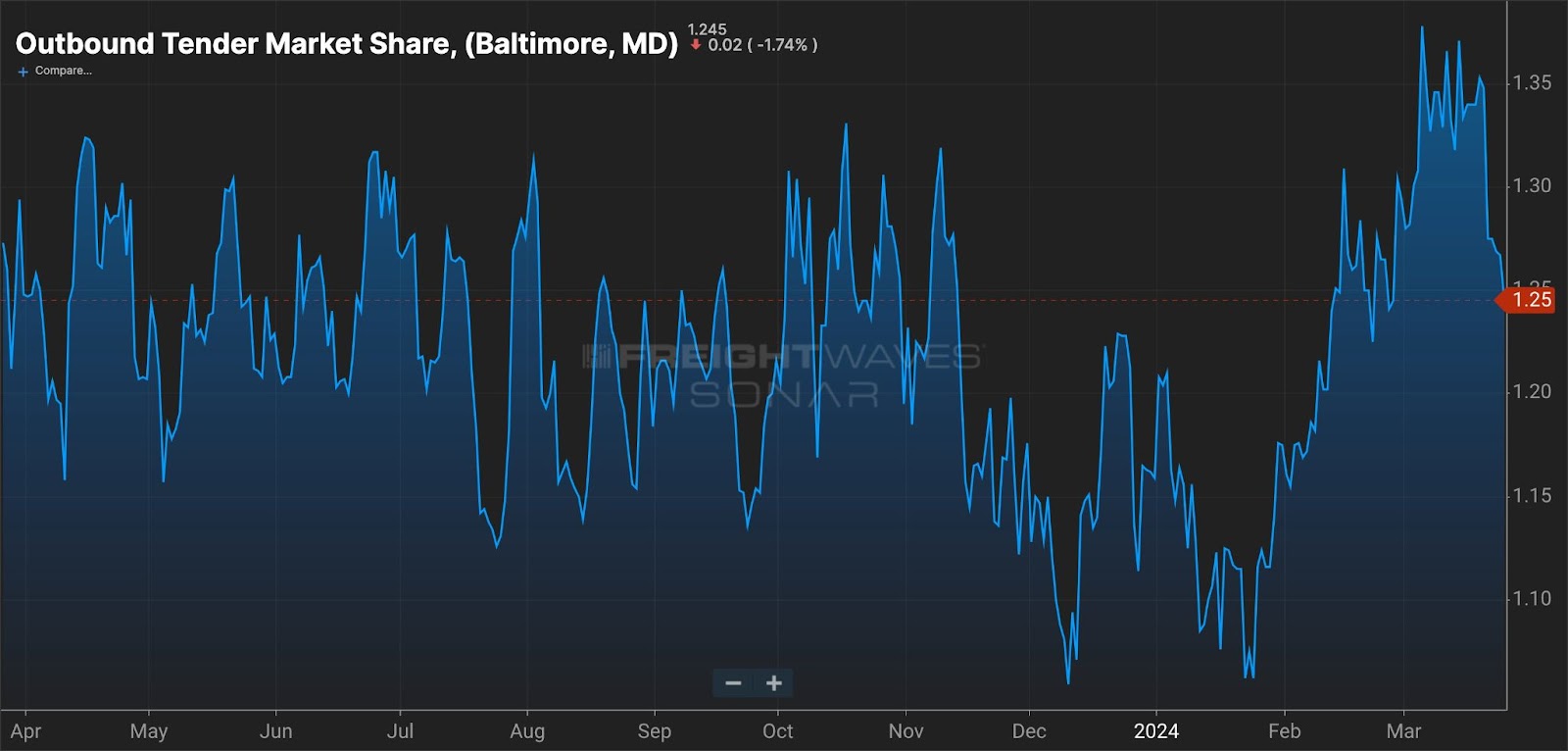
Baltimore is the 24th-largest outbound trucking market in the U.S., currently totaling about 1.24% of all tractor-trailers, according to FreightWaves SONAR’s Outbound Tender Market Share Index (OTMS.BWI).

Manders said what makes the Port of Baltimore unique is the volume of roll-on/roll-off cargo it handles, such as passenger vehicles, along with agricultural and industrial equipment.

“Then you’re also getting into agricultural exports — rice, sugar, fertilizers, forestry products. It’s pretty big in Baltimore. Then there’s also a big paper industry there and construction materials,” Manders said. “I do think in other commodities and cars, this will have a major impact. There are also some metal exchange warehouses for nickel, tin and copper in Baltimore. Now those can also be moved to other ports, but those are bulky materials, and they don’t move them very easily.”

Jeff Leppert, executive vice president of modal operations at Redwood Logistics, said some of the company’s shipper customers have several ships currently stuck at the port.

“Other impacts include the Port of Baltimore’s fueling depot, which is currently unable to take fueling shipments for the near future,” Leppert told FreightWaves. “The stretch of I-695 that collapsed with the bridge is the only hazmat-approved bridge in the area, so those shipments will have a large diversion in the region and beyond.”

He said all deep-water ships, vessels with a controlling depth of 50 feet, will have to be diverted to ports such as Norfolk and New York/NewJersey.

“We are currently working with all of our shipping customers to find solutions now and for the coming months,” Leppert said.

The Mediterranean Shipping Co. and Zim Integrated Shipping Services Ltd. are two of the Port of Baltimore’s largest shipping lines. Neither company immediately responded to a request for comment from FreightWaves.

Paul Brashier, vice president of drayage and intermodal at ITS Logistics, said the priority right now is to ensure clients are making plans for containers that were originally routed to Baltimore.

“These shipments will be discharged to other ports on the Eastern Seaboard,” Brashier said. “This also means that we must prepare trucking and transload capacity to be able to transport the impacted freight to the appropriate initial location.”

More articles by Noi Mahoney

State of Freight: Reasons to be bullish on second half of 2024

Echo Global Logistics grows cross-border footprint

Cargo thefts spiked 68% in Q4, led by food and beverage freight
Biden: US will pay to rebuild Francis Scott Key Bridge

President Joe Biden

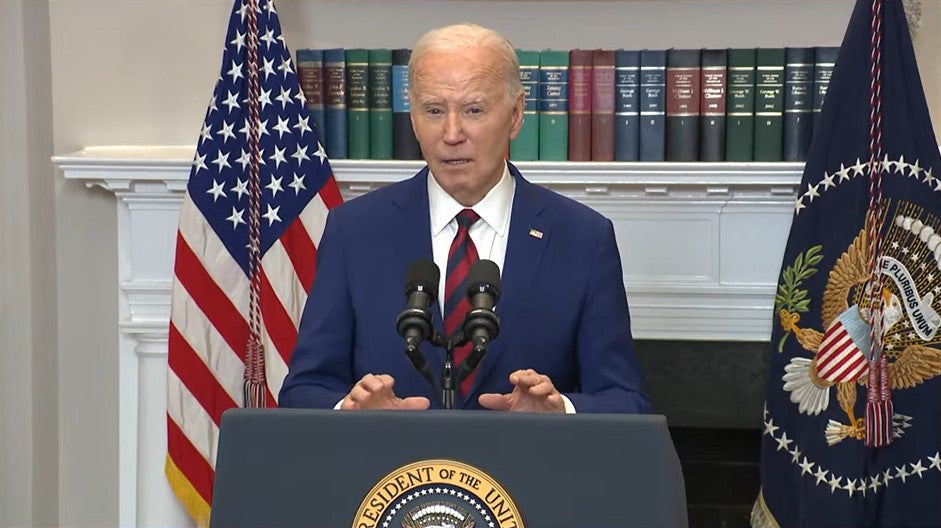
WASHINGTON — President Joe Biden on Tuesday called for an all-out federal effort to respond to the Francis Scott Key Bridge collapse in Baltimore, including paying to get it rebuilt.

“It’s my intention that the federal government will pay for the entire cost of reconstructing that bridge, and I expect Congress to support my effort,” he said at a White House media briefing. “This is going to take some time; we’re not leaving until this job is done.”

Asked if companies affiliated with the ship that caused the collapse — the Singapore-flagged Dali — should be responsible for the repairs, Biden responded, “That could be, but we’re not going to wait for that — we’re going to pay to get the bridge rebuilt and opened.” The containership is managed by Synergy Marine Group and chartered by Maersk. 

The U.S. Coast Guard is leading the response effort alongside officials from the Federal Highway Administration, the FBI, the U.S. Department of Transportation and Maryland state agencies. The U.S. Army Corps of Engineers will help lead the effort to clear the channel.

“Search-and-rescue operations are our top priority, and ship traffic has been suspended until further notice,” Biden said. “We’ll need to clear that channel before that ship traffic can resume.”

Biden, who said he had been on the bridge “many times” while commuting from Delaware while a member of Congress, stressed the economic significance of the disaster. He pointed out that Baltimore is one of the nation’s largest shipping hubs, handling a record amount of cargo last year as the top port for U.S. imports and exports of autos and light trucks.

“Around 850,000 vehicles [are handled] every year, and 15,000 jobs depend on that port. “We’re going to do everything we can to protect those jobs and help those workers.”

House Transportation and Infrastructure Committee Chairman Sam Graves, R-Mo., said in a statement that his committee is in touch with federal agencies responding to and investigating the incident, including the National Transportation Safety Board.

“At this stage, we need to make sure we’re not getting ahead of the facts, but as we continue to learn more, we will ensure that members of Congress have all available information,” he said.

Baltimore bridge collapse disrupts traffic, port operations after ship collision 

Click for more FreightWaves articles by John Gallagher.

RXO gets negative outlook from Moody’s but keeps investment-grade rating

RXO has carried an investment-grade rating from Moody’s Investors Service since the fall of 2022, when the 3PL was spun off from XPO (NYSE: XPO)

But it is now under threat as Moody’s has changed its outlook on RXO (NYSE: RXO) to negative from stable.

At the same time, Moody’s affirmed that initial investment-grade rating of Baa3 given in 2022. The Moody’s rating is particularly notable — and valuable — to RXO because the company’s rating at competing ratings agency S&P Global (NYSE: SPGI) is BB+, one notch below investment grade.

The report by Moody’s (NYSE: MCO) attributes the weaker outlook directly to the state of the freight market. “The negative outlook reflects Moody’s view that RXO’s credit metrics will be weak through the remainder of 2024 given the prolonged weakness in the freight transportation sector that will not improve materially until the second half of 2024,” the ratings agency writes.

A key metric for the ratings agencies is debt to earnings before interest, taxes, depreciation and amortization. Moody’s said it believes that ratio at RXO will remain above 2.5X for the next 12 months.

In discussing the possibility of upgrading the Baa3 rating, the agency said it would need to see the 3PL “sustaining debt-to-EBITDA below 2.0X.”

But the rating could be downgraded if the 2.5X ratio is “sustained” for an unspecified period of time. A downgrade would put the Moody’s rating into non-investment-grade territory.

The report reflected the pessimism that would be expected given the lowering of the outlook to negative.

“Moody’s believes that increasing freight volumes in the second half of 2024 will result in improvements in both leverage and liquidity given the highly variable cost structure of RXO,” it wrote. “However, any delay in a turnaround in the transport market will keep RXO’s metrics outside of its downgrade factors until early 2025 and limit the company’s ability to absorb negative developments at the current rating level.”

When RXO announced its earnings for the first quarter of 2023, it posted numbers that seemed to defy a weak freight market that was hitting the bottom line of both carriers and 3PLs. But its earnings in the fourth quarter of the year reflected the same challenging freight market as other companies facing tough market conditions.

RXO’s stock in the past 52 weeks is up 12.52%, though in the most recent three months it is down 13.2%. That has far outpaced peer company C.H. Robinson (NASDAQ: CHRW), which in the past year is down 22.4% and in the most recent three months is down 15.1%.

C.H. Robinson has an investment-grade BBB+ rating from S&P Global and a negative outlook. Moody’s rating of C.H. Robinson is Baa2 with a stable outlook. Baa2 is also investment grade but is considered a notch down from the BBB+ rating of S&P.

(The investment-grade credit rating at C.H. Robinson, which has been in place for several years, is important enough to the company that it has been brought up by management on earnings calls with analysts several times in the recent past. In November, discussing third-quarter earnings at C.H. Robinson, CFO Mike Zechmeister said “our capital allocation strategy is grounded in maintaining investment grade credit rating which allows us to optimize our weighted average cost of capital.”)

Asked to comment on the report, a spokesperson for RXO said, “The entire industry continues to feel the effects of the prolonged soft freight market. RXO maintains an investment-grade rating with Moody’s and is well-positioned to continue to outperform and deliver rapid earnings growth when the market turns. “

The weak market has affected covenants with some of RXO’s lenders, Moody’s said. Its failure to reach net leverage covenants has limited its access to its $600 million revolving credit facility, Moody’s said, with access to only about $160 million. However, Moody’s also noted that RXO generally doesn’t rely on its revolver to fund operations.

Moody’s sees RXO’s management as tackling its issues but confronting macroeconomic issues that it can’t control. “There are several actions that management is taking that will improve profitability in 2024 that don’t rely on an improvement in market fundamentals,” Moody’s wrote. “However, a shrinking of excess carrier capacity and an improvement in brokerage volume will ultimately be necessary to return to growth in profitability.”

And in an unusual reference to the relatively brief history of RXO, Moody’s said in discussing the possibility of an upgrade of the 3PL’s credit rating: “Moody’s will be looking for the company to have a longer track record as a standalone entity and evidence in its ability to maintain performance through all points in the cycle.”

More articles by John Kingston

Flat sequential performance at 3PL RXO leaves Wall Street unimpressed

RXO exec at UBS conference says 3PL’s market share still rising

Vote on insurgent effort at Norfolk Southern set for May 9

Weekly Fuel Report: March 26, 2024


Learn more at SONAR.FreightWaves.com

What to know about Francis Scott Key Bridge collapse in Baltimore

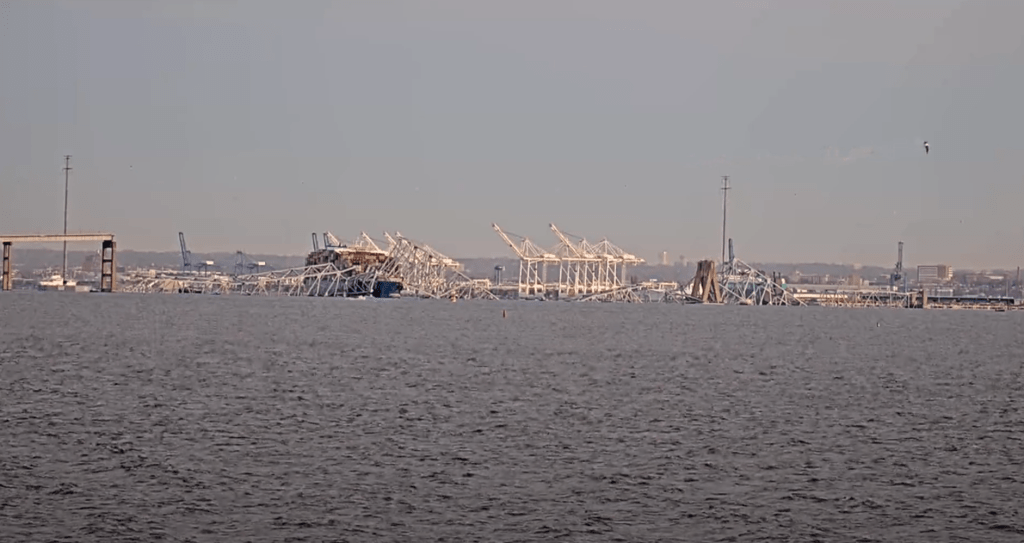
The collapsed section of the Francis Scott Key Bridge in Baltimore is seen more clearly after daybreak. (Photo: StreamTime Live/YouTube)

Editor’s note: This story was updated at 4 p.m. March 26 to reflect new information.

The Francis Scott Key Bridge in Baltimore collapsed early Tuesday morning after a container ship collided with it, sending people into the water and creating a tense scene as search-and-rescue crews attempted to locate them.

The bridge plays an important role in commercial shipping access to the Port of Baltimore, a hub for vehicles, light trucks and various bulk goods. The collapse occurred before the morning commute, sparing countless lives.

Images show a mangled mass of steel collapsed on the cargo ship and pieces of the snapped-off bridge protruding from the chilly 50-foot deep waters.

Here’s what to know about the collapse.

What happened?

Around 1:30 a.m. Tuesday, the Dali, a Singapore-flagged ship, smashed into a bridge pillar as it was leaving the port. It’s unclear why the ship, which was carrying around 4,900 containers, collided with the bridge. The ship was under pilotage when the incident occurred.

A video shared on social media appears to show the ship losing and regaining power at least twice. Smoke appears to plume out of the ship as it inches toward the 1.6-mile bridge, which vehicles were using, seemingly oblivious to what was occurring below them on the water.

The Dali crashed into the bridge, and within seconds, it collapsed with alarming speed.

“The preliminary investigation points to an accident. We haven’t seen any credible evidence of a terrorist attack,” said Maryland Gov. Wes Moore at a news conference.

Were there any deaths?

Search-and-rescue operations were underway Tuesday afternoon. No injuries or deaths were reported by authorities, early on. National Transportation Safety Board Chair Jennifer Homendy refused to address deaths or injuries during a news conference Tuesday afternoon, saying local authorities would share that information.

Officials said construction workers were repairing potholes on the bridge when it collapsed. Maryland Transportation Secretary Paul Wiedefeld said authorities searched for eight people, believed to be involved with the construction work. Two people were rescued while six remain missing, authorities said. One person was hospitalized in critical condition Tuesday, President Joe Biden said. Search and rescue was called off Tuesday night and the six remaining missing are presumed dead.

The owners and managers of the Dali said Tuesday in a statement that all of the ship’s 22-person crew and the two pilots have been accounted for with no injuries. 

Baltimore Fire Department Chief James Wallace said at a news conference that authorities detected vehicles in the water by using sonar. Wiedefeld said authorities don’t believe anyone is trapped in vehicles in the water.

“All of our hearts are broken. We feel your loss. We’re thinking about you, and we will always be thinking of you. We pray for the construction workers who were on the Key Bridge and we pray for everyone who has been touched by this tragedy, and their families and all of their loved ones,” Moore said to victims and their families.

Baltimore Mayor Brandon Scott called the collapse “an unspeakable tragedy.” 

“This is a tragedy you can never imagine,” Scott said. “Never would you think you could see, physically see, the Key Bridge tumble down. It was like something out of an action movie.” 
U.S. Coast Guard Lt. Cmdr. Erin Palmer said the agency had deployed multiple small boats, an 87-foot patrol boat and a helicopter to aid in search-and-rescue efforts.

How did the collision occur?

It’s unclear what led to the collision, but the Dali was traveling at 8 knots, about 9 mph, when it struck the bridge, Moore said.

Homendy shared limited information Tuesday afternoon about the collapse. She said she had a team of 24 people on the ground investigating the collapse, including nautical operations experts, bridge experts and structural engineers.
NTSB officials didn’t board the vessel Tuesday, but Homendy said her team hopes to recover records on the ship, which will be critical to the investigation and understanding what occurred.

According to the website Marine Traffic, which provides real-time information on ships, the Dali had departed the Port of Baltimore at 1 a.m. and was just 30 minutes into its route to Colombo, Sri Lanka, when it hit the bridge. It was due to arrive in Colombo on April 22.
The Dali is nearly 984 feet long and about 157 feet wide, the website said. Two pilots were on board the ship, which is owned by Grace Ocean Private Ltd, Synergy Marine Group said.

The ship’s crew notified authorities of a power issue and a mayday was issued before the collision, the governor said. The distress signal enabled authorities to begin halting traffic, keeping “many vehicles” off the bridge when it collapsed, the governor said.

The bridge was fully up to code didn’t appear to have structural issues, officials said. Engineers are on-site.

How does this affect commuters and cargo? 

The bridge, built in 1977, crosses the Patapsco River and was part of Interstate 695, serving as the final link of the Baltimore Beltway. Some 35,000 people use the bridge daily as a major commute route, Wiedefeld said. They will have to seek alternative routes for the foreseeable future.

“This is a place that is a normal commute route for over 30,000 Marylanders every single day,” Moore said, adding that he’s used the bridge countless times. “And so to hear the words that the Key Bridge has collapsed, it’s shocking and heartbreaking.”

Shipping in and out of the Port of Baltimore is suspended until further notice, officials said. In January, more than 940,000 general cargo tons went through the port. 

The port was listed as the 20th-biggest port in the country by the Bureau of Transportation Statistics. Moore in February touted the port’s success as “one of the largest economic generators in Maryland” after its private terminals handled a record 52.3 million tons of foreign cargo in 2023.

The Port of Baltimore generates some 15,300 jobs and nearly 140,000 jobs are linked to port activities, the governor previously announced. It is the top U.S. port for volume of autos and light trucks, roll-on/roll-off heavy farm and construction machinery, imported sugar, and imported gypsum. The bridge collapse and suspension of shipping will undoubtedly be a blow to the state’s economy.

“It’s critically important to our economy,” U.S. Sen. Ben Cardin of Maryland said at a news conference. “It affects many, many jobs. It affects not only jobs in Maryland but around the country and world. Our next priority is to make sure we get that channel open.”

According to Marine Traffic, 50 vessels were in port and 39 were expected to arrive Tuesday. The website reported that 68 vessels had departed and 55 had arrived in the past 24 hours. Port of Baltimore officials said although vessel traffic is suspended, trucks are still being processed inside terminals.

Cruises also depart from the Port of Baltimore. 

It’s unclear when shipping could resume because “our exclusive effort is on saving lives,” Moore said. The Port of Baltimore serves as “a key component in Maryland’s transportation network,” Wiedefeld previously said.

Biden vowed a rapid rebuilding effort.

“As I told Gov. Moore, I directed my team to move heaven and earth to reopen the port and rebuild the bridge as soon as humanly possible,” he said. “It’s my intention that the federal government will pay for the entire cost of reconstructing that bridge.”

U.S. Secretary of Transportation Pete Buttigieg called the Francis Scott Key Bridge “one of the cathedrals of American infrastructure.” 

“It has been part of the skyline of this region for longer than many of us have been alive, so the path to normalcy will not be easy, it will not be quick, it will not be inexpensive, but we will rebuild together,” he said.

The closure of the port will damage the supply chain, according to Buttigieg: “There is no question that this will have a major and protracted impact to supply chains,” he said.

How are officials and authorities responding?

Federal, state and local agencies are working together to investigate and respond to the collapse. Moore said agencies began coordinating “immediately” in the wee hours of the morning after the collapse.

“We’ve been staying together every step of the way, from our county leadership, to our city leadership, to our state leadership, to our federal leadership,” he said.

Homendy said her counterpart in Singapore was sending personnel to Baltimore on Wednesday.  

Nonprofit Behavioral Health System Baltimore is offering free counseling available by phone call and text message at 988 around the clock. Mental health services are also on-site at the bridge Tuesday offering services for community members and first responders, Scott said.

In his remarks Tuesday about the tragedy, Biden said he had used the bridge “many, many times” commuting to Delaware. He said he had spoken to officials and U.S. Transportation Secretary Pete Buttigieg was on the scene in Baltimore.

“I told them we were going to send all of the federal resources they need as we respond to this emergency. I mean all the federal resources,” Biden said. “We’re going to rebuild that port together.”

The Army Corps of Engineers is leading the effort to clear the channel, he said.

The FBI is investigating the collapse and has supplied linguists, victim specialists and divers to assist in the operation.

The FAA announced flight restrictions for drones. Baltimore Mayor Brandon Scott declared a state of emergency. Moore also declared a state of emergency. 

Weekly NTI Update: March 26, 2024


Learn more at SONAR.FreightWaves.com

Uber Freight takes innovative approach to drop and hook with Powerloop

Drop-and-hook services have become increasingly sought-after, meeting the evolving needs of shippers for flexible transportation solutions while also offering carriers enhanced efficiency and earning potential. Uber Freight’s drop-and-hook capacity solution, Powerloop, has seen explosive growth, with more than 10,000 carriers servicing more than 220,000 loads to date. In 2023 alone, the capacity program experienced a 30% increase in load volume. 

FreightWaves recently sat down with Uber Freight Vice President of Operations Alyssa Correale. Correale discussed her background in beverage manufacturing and how it influenced her to innovate the power-only program at Uber Freight, as well as what Powerloop has in store for shippers and carriers.

FREIGHTWAVES: What is Powerloop? 

CORREALE: Powerloop is Uber Freight’s drop-and-hook capacity solution. With Powerloop, carriers can book power-only loads to serve some of the world’s largest shippers’ drop and live freight. They can book one Powerloop load at a time or multiple loads bundled across Uber Freight’s network and grow their business by providing shippers with committed drop and live capacity on a weekly basis or dedicated capacity on an ongoing basis. Powerloop trailers are now equipped with state-of-the-art GPS, cargo sensors, door sensors and 24/7 monitoring cameras. This advanced technology provides real-time visibility into trailer location and capacity, and will soon provide alerts against cargo theft, offering peace of mind to carriers and shippers. Data generated from smart trailers is seamlessly integrated into Uber Freight’s TMS via API, enabling seamless tracing, tracking and proactive risk mitigation.

FREIGHTWAVES: Can you tell us about your background and journey from being a shipper at Niagara to leading the Powerloop team at Uber Freight?

CORREALE: Oh, it’s been quite the journey! Back in 2006, I joined Niagara when it was just a tight-knit group of dedicated individuals. Those early days were all about rolling up our sleeves and getting hands-on with every aspect of the supply chain. From spending three years at the Allentown, Pennsylvania, plant, tackling everything from materials and production planning to warehousing and shipping, I gained invaluable experience that shaped my approach to logistics. As I progressed through roles at Niagara, including leading carrier relations and procurement, I honed a strategy centered on fostering deep partnerships and implementing innovative procurement practices. This blend allowed me to strike a balance between the needs of carriers, customers and bottling plants, fostering efficiency and collaboration every step of the way. My journey continued at Molson Coors in 2014, where I expanded my horizons to encompass other modes and asset management responsibilities. But my true passion has always been at the intersection of technology and partnership, leveraging creativity to drive impactful solutions. In 2020, I found my perfect fit at Uber Freight, where I could channel that passion into action. Joining the Powerloop team in January 2023 was a turning point. It’s been an incredible opportunity to redefine our vision and mission, shaping the fleet of my dreams with an amazing team and cutting-edge technology at our disposal. Every day, I’m inspired by the possibilities we’re unlocking at Uber Freight, and I couldn’t be more excited about the journey ahead!

FREIGHTWAVES: How has your experience as a shipper influenced your approach to developing and leading the Powerloop program? 

CORREALE: Being on the front lines as a shipper gave me a firsthand look at the challenges and opportunities in the world of logistics. I felt the pain points and saw the potential for improvement, which ignited my drive to build something better. You see, shippers aren’t trying to be inefficient — far from it! There’s a whole world of complexity within the four walls of their facilities, and getting a load out on time is no small feat. As carriers, it’s crucial that we understand these intricacies intimately and craft solutions that can adapt and evolve alongside them. That’s why, with Powerloop, my goal is to create a resilient network that adds tangible value to both shippers and carriers alike. It’s about more than just moving freight — it’s about building relationships, fostering collaboration and ultimately driving efficiency across the board. And let me tell you, it’s been one heck of a journey turning those insights into action!

FREIGHTWAVES: What inspired you to transition from being a shipper to working on the carrier side of the industry?

CORREALE: As a shipper, I found myself yearning to make a broader impact — to leave my mark on the entire industry, not just on the operations of a single company. Don’t get me wrong; my time as a shipper was incredibly rewarding. But I knew deep down that I had more to give, more lives to touch, more challenges to tackle. So, I made the leap to the carrier side with a fire in my belly and a vision for change. Working on the carrier side has allowed me to interact with a multitude of shippers and carriers, each with their own unique needs and aspirations. It’s been a whirlwind of learning, growth and, most importantly, impact. Every day I wake up excited to be part of this dynamic industry, driving change and making a difference in ways I never imagined possible as an individual shipper. It’s a journey I wouldn’t trade for anything.

FREIGHTWAVES: As someone who has experienced the challenges of shipping firsthand, what do you believe sets Powerloop apart in addressing the needs of shippers?

CORREALE: Having lived and breathed the shipping world, I can tell you firsthand that flexibility is the name of the game. And that’s exactly where Powerloop shines.  Powerloop is all about power flexibility — giving shippers the optionality they need when it comes to sourcing carrier capacity. Whether it’s building a stable base or flexing during peak seasons, Powerloop’s extensive carrier network has your back. But it’s not just about flexibility — it’s also about network density. The Uber Freight ecosystem is massive. That means our Powerloop assets are highly utilized, delivering incredible value to our dedicated fleet customers. It’s like having your own personal army of carriers at your beck and call, ready to tackle any challenge that comes your way. What sets Powerloop apart is the perfect combination of power flexibility and network density, all wrapped up in a package that’s designed to meet the ever-evolving needs of shippers like never before.

FREIGHTWAVES: Can you share any specific challenges you faced as a shipper that you are now able to address through Powerloop? 

CORREALE: One of the most fulfilling and exciting parts of being a shipper was finding the perfect capacity match for my freight and building a mutually beneficial partnership with my carriers. What I mean by that is the arduous process of weeding through constraints to find the right amount of capacity to fulfill, say, 25 LPW from Allentown, Pennsylvania, to Mount Crawford, Virginia, and landing on a price that works for both calls for celebration! We all know the many steps and challenges in finding the right partners, but we also know how critical it is to everyone’s success! I now understand this more than ever, just how important incumbency is and the effort a fleet makes to build density and fill empty miles around primary volume. What’s incredible about Powerloop is our ability to do that literally anywhere. We aren’t constrained by domiciles, and we can build density extremely quickly. For our customers, this means they can count on Powerloop to not only grow with them where they need us but also to be there for the long term.

FREIGHTWAVES: How does your unique perspective as a former shipper inform the strategies and decisions you make as the leader of the Powerloop team? 

CORREALE: It is critical to have a customer-first mindset.  Sitting in that seat for so many years has allowed me to focus on and deeply understand what’s important to our customers. I can relate to these needs and challenges and develop solutions that tie tightly to their goals. For example, I always had challenges finding a scalable asset-backed solution for volatility. With Powerloop, we’re able to combine the benefits of a reliable asset pool with a flexible source of power to quickly respond to customer needs.

FREIGHTWAVES: What are some key insights you’ve gained from your experience working on both sides of the freight industry?

CORREALE: The value of relationships and true partnership. Deploying assets is expensive and requires trust between all parties. This is especially true when growing fleet size while expanding into new regions. To better illustrate what I’m saying here, let’s talk about a quick example: As a shipper, your supply chain is always changing — whether it’s a massive shift like a plant shutting down or it’s paper cuts of minor shifts like customer ordering behavior changing, a new product launch and the like. The impact of this is big on your carriers; even a few loads per week can drastically change their financials on your business. Establishing deep customer relationships in all areas of the organization allows for continuous communication so that these changes aren’t a surprise, and your carrier can plan around them and be even more prepared to scale back up once the volume comes back, look at ways to support the volume shift to other locations, etc. I don’t care what magical powers a carrier may think they have, without a true partnership, the juice isn’t worth this squeeze! While that has always been integral to my behavior as a shipper, it became magnified once I began managing trucking assets. All my fleet friends that are reading this are surely smiling right now!

FREIGHTWAVES: How does your team leverage its diverse backgrounds and experiences to drive innovation and excellence within the Powerloop program?

CORREALE: I can’t say enough about the diversity and skill set of the Powerloop team! The combination of minds that have multiple decades of experience on the asset side of the house with a variety of deep brokerage teammates truly drives maximum creativity backed by realistic expectations. We have been able to develop unique solutions to challenges that have plagued customers for years even with multiple carrier changes in attempts to find a solution. For example, one of our customers was facing significant detention fees for leaving trailers at their customer for too long. The volume had peaks and valleys and when the peak hit, they were stuck with the same problem every time: money out the window. We were able to implement a flexible capacity option that always picks up trailers to avoid these fees.

FREIGHTWAVES: Can you share any anecdotes or success stories that highlight the impact of Powerloop on shippers and carriers?

CORREALE: Yes! We have built a multiyear partnership with a leading electronics company, who we currently serve as the dedicated fleet provider out of two of their facilities. The company has high expectations for these fleets, and we have delivered, resulting in expansion of our fleets again in 2024. High service performance and continuously optimized truck and trailer count combined with surpassed revenue share expectations has allowed Powerloop to continuously grow our value, even after years of strong partnership. As someone who bought dedicated capacity in my past, the icing on the cake to a high-service dedicated fleet is one that utilizes idle time effectively to drive cost out of the model.

FREIGHTWAVES: What are your goals and vision for the future of Powerloop, and how do you plan to continue empowering shippers and carriers in the industry?

CORREALE: This right here is the good stuff! When I think about Powerloop, I envision a super flexible capacity offering that can adjust dynamically for the shippers’ ever-changing needs but shows up as a consistent and reliable revenue source for our carriers. I know that sounds like dreams, but we are 100% building it today. Our north star is to build the most highly utilized asset fleet in the industry. A couple of examples to illustrate this more clearly:

  • First, while we are just rolling out our bundles technology to our carriers broadly today, underneath it all we are building a self-healing network to deal with the volatility and changing needs of our customers so that our carriers do not have to suffer. Like I talked about before, deploying assets and committing to business is a big deal, and that’s not just for us, but for our carriers too. What we’re building is the ability to be the buffer to these changes and insert freight from the vast Uber Freight network of shipments to plug holes where volatility and last-minute changes would otherwise leave carriers with no work and trailer assets idle.
  • Secondly, advanced trailer technology is crucial to what we’re building. In our industry, trailer visibility and utilization is far from great, and we are filling that void with real-time ingestion of telematics data and putting it to use to drive valuable action.  One of our goals in this space is to leverage our trailer technology and advanced operating system to fully harness the value of a drop trailer asset. Use this asset to support your facility needs, not clog up your yard. Powerloop envisions offering sizable reduction in trailer pools through real-time trailer-to-power communication, getting your loads on their way and out of your yard, faster.

Carriers can bid on any Powerloop lane by providing Uber Freight with their trailer pool, capacity, and rate per load. Learn more and sign up here: https://www.uberfreight.com/lp/powerloop/ 

Shippers can secure Powerloop capacity now by completing a brief form on Uber Freight’s website. An Uber Freight account representative will be in contact to get started. Learn more and sign up here: https://www.uberfreight.com/lp/powerloop/ 

Baltimore bridge collapse disrupts traffic, port operations after ship collision

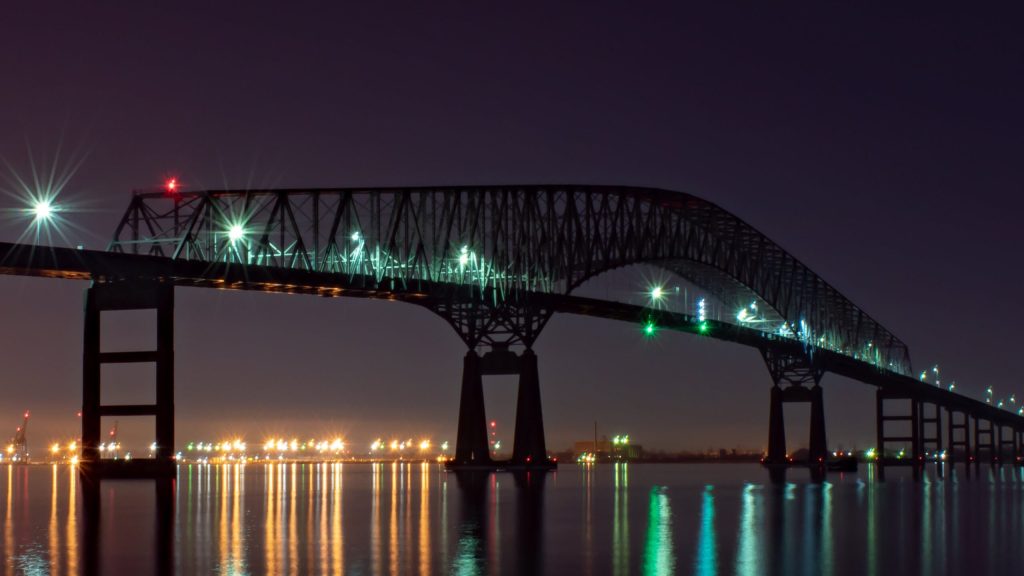
The Francis Scott Key Bridge at night. (Photo: Shutterstock)

A large section of the Francis Scott Key Bridge in Baltimore collapsed early Tuesday morning, after a container ship collided with it. The incident sent vehicles into the water, initiated a large-scale search-and-rescue operation, and has serious implications for one of the busiest ports on the U.S. East Coast.

The Port of Baltimore announced at approximately 8 a.m. Eastern that it was closed for inbound and outbound vessel traffic. It did say that truck operations at terminals inside the port would continue.

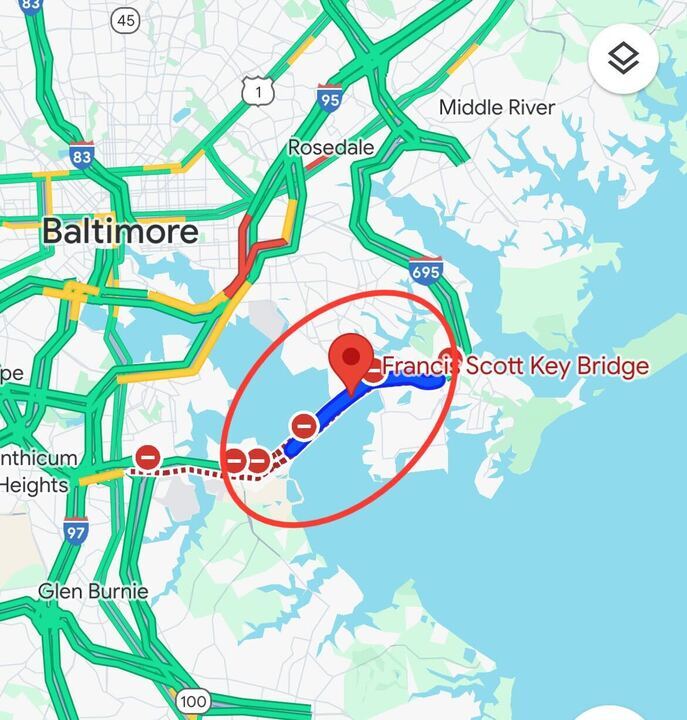
But the bridge collapse effectively sets up a wall between the port and Chesapeake Bay. There does not appear to be any other inbound or outbound way between the port and shipping lanes, raising the question of how long this key terminal will be closed.

The Maryland Transportation Authority is advising against the use of Interstate 695, a key route for Baltimore’s commuters and freight movement, following the collapse. The bridge plays a vital role in commercial shipping access to the Port of Baltimore, a major hub for autos, light trucks and various bulk goods. It is the easternmost way of getting across the Port of Baltimore. 

The actual waterway the bridge collapsed into is the Patapsco River, which ultimately flows into Chesapeake Bay and near its end forms the boundaries of the Port of Baltimore. 

Alternate routes for trucks that bypass the Key bridge are a tunnel on Interstate 895 under the Baltimore Harbor, a tunnel on Interstate 95 under the harbor, or Interstate 695 on the west side of Baltimore. The bridge is part of Interstate 695, the Baltimore Loop, on the east side of the city. 

The Maryland Transportation Authority on its X feed, noted that vehicles transporting hazardous materials may not use either the I-95 (Fort McHenry) or I-895 (Baltimore Harbor) tunnels. To get around Baltimore, they will need to use I-695 on the western side of the city.

Additionally, MDTA said on X that vehicles in excess of 13 feet, 6 inches in height or 8 feet in width are prohibited from using the Baltimore Harbor Tunnel on I-895. For the Fort McHenry Tunnel, which is part of I-95 through the heart of Baltimore, the limits are 14 feet 6 inches in height and 11 feet in width.

Paul Wiedefeld, Maryland’s transportation secretary, said the water where the bridge was struck is about 50 feet deep, complicating search-and-rescue operations. The U.S. Coast Guard and dive teams are currently searching for survivors, with Baltimore’s fire chief noting the additional challenges posed by the water’s current.

Initial reports indicate possible multiple casualties. The effort to locate survivors is critical, with water temperatures around 47 degrees Fahrenheit adding to the urgency.

During a press conference, Moore said that a mayday had been sent and that vehicle traffic on the bridge was stopped right before its collapse. It’s unclear if any passenger vehicles traveling on the bridge at the time went into the water.

Officials said there is no indication of foul play.

The Dali, the Singapore-flagged ship involved, was carrying around 4,900 containers at the time of the collision. It hit the bridge while under pilotage, disrupting not just the vessel’s journey from the U.S. to Sri Lanka but also the operations at the port and the flow of traffic on surrounding roadways.

News reports say the Dali was chartered by Maersk but managed by the Synergy Group. Reports also say the ship was owned by Singapore’s Grace Ocean Pte. The statement published by the Synergy Group about the crash said there were no casualties on the ship and no fuel was spilled.

Maryland Gov. Wes Moore has declared a state of emergency and is seeking federal assistance. The bridge’s collapse not only affects local commuters but also poses challenges to freight transportation, especially as the Easter holiday weekend approaches. The Port of Baltimore, known for handling a large volume of imports and exports, faces immediate operational hurdles.

Authorities are focused on rescue operations and determining the full extent of the disruption to commerce and traffic.

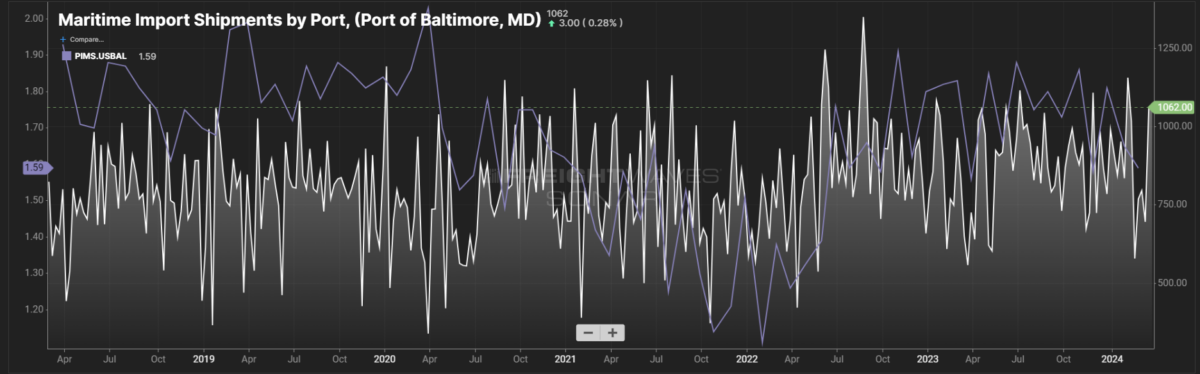
Source: FreightWaves SONAR, Maritime Import Shipments by Port (white) and Port Imports Market Share (purple) for the Port of Baltimore, dual-axis, five-year view.

One social media observation about the crash is that in terms of its impact on logistics, the West Coast ports — battered by a pandemic-driven movement toward East Coast ports — now face the prospect of another development that suddenly makes Long Beach and Los Angeles look more attractive.

Avoiding East Coast ports to skip the limits on a drought-stricken Panama Canal already were seen as helping the West Coast ports. Add to that any avoidance of the East Coast as a knock-on effect from the threat to shipping in the Red Sea and Suez Canal, and now one of the East Coast’s biggest ports effectively has a steel blockade that is likely to take months to remove.

Judah Levine, head of research at Freightos, the international shipping transaction and payment platform, laid out the impact on shipping in an email to FreightWaves.

“With most of Baltimore’s port terminals and all of its container terminals behind the collapsed bridge, containerized exports at or planning to depart from Baltimore will either need to wait until the waterway re-opens, or be rerouted by truck or rail to alternate ports which could include Philadelphia or more likely the more major hubs like Norfolk or New York/New Jersey,” he said. “Exporters choosing these options could face increased trucking and rail rates if enough volumes are shifted to other ports.”

Levine said seven container vessels are scheduled to arrive in Baltimore between now and Saturday.

“Diversions could cause some congestion at alternative ports, meaning delays for importers,” Levine said.

But quarterly container volumes at Baltimore are only about 13% of those handled at the Port of New York/New Jersey, he added. “Baltimore imports should be able to be shifted to other ports without causing too much of a disruption.”

How China skirts tariffs into the US

Chinese trade flow into Mexico is helping to build up the latter’s manufacturing capabilities, which is a long-term positive for the U.S.

In Maersk’s press release last week about a new warehousing facility in Tijuana, Mexico, one line stood out. It was sandwiched between a list of value-added services offered and a paragraph about the facility’s sustainable energy practices and certifications.

“Alternatively, it could operate [fulfillment or e-fulfillment] operations into the United States, leveraging the Section 321 Shipment Type** for e-commerce shipments.”

Under U.S. Customs and Border Protection rules, a Section 321 shipment is an import to the United States that, because it’s valued at less than $800, is exempt from tariffs. This rule has gained attention as a strategy to sidestep the extra costs of moving goods into the U.S. So Maersk’s inclusion of it in the release is no afterthought. 

The provision is widely used to support cost-effective cross-border movement of goods. The new facility is designed to capitalize on exactly that, across more than 320,000 square feet of space.

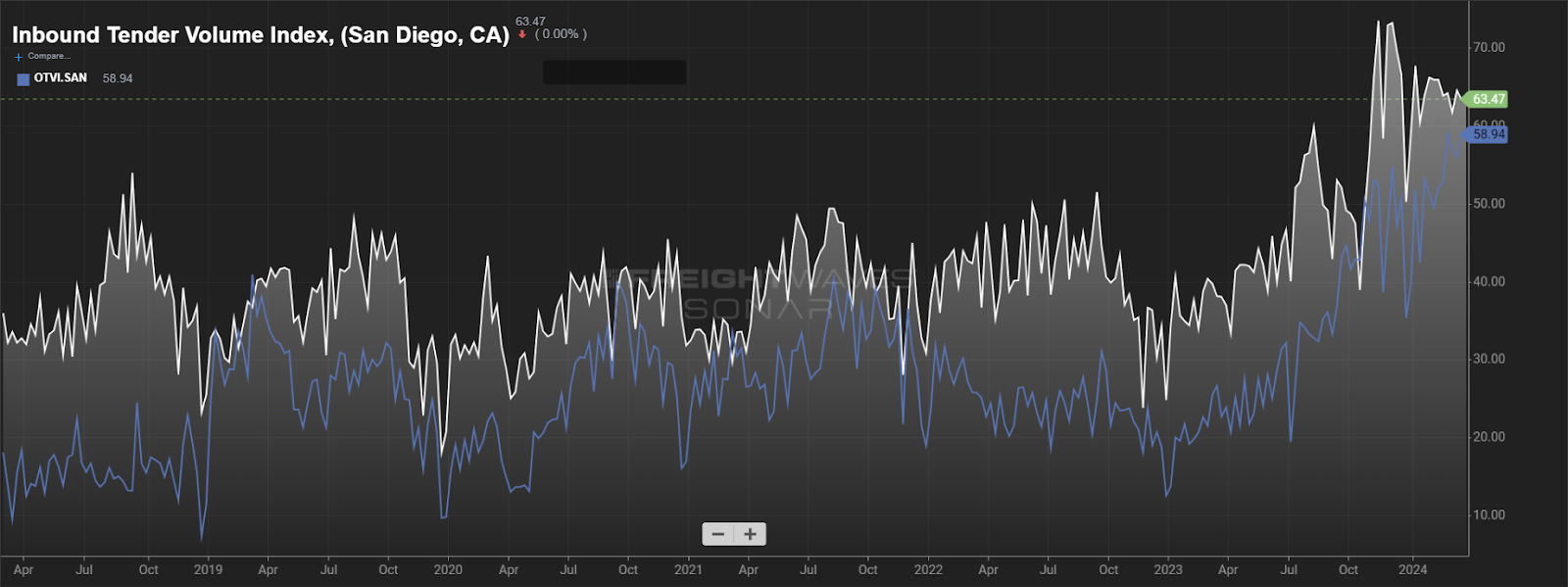
Source: FreightWaves SONAR, Inbound Tender Volume Index (white) and Outbound Tender Volume Index (blue) for San Diego, five-year absolute view.

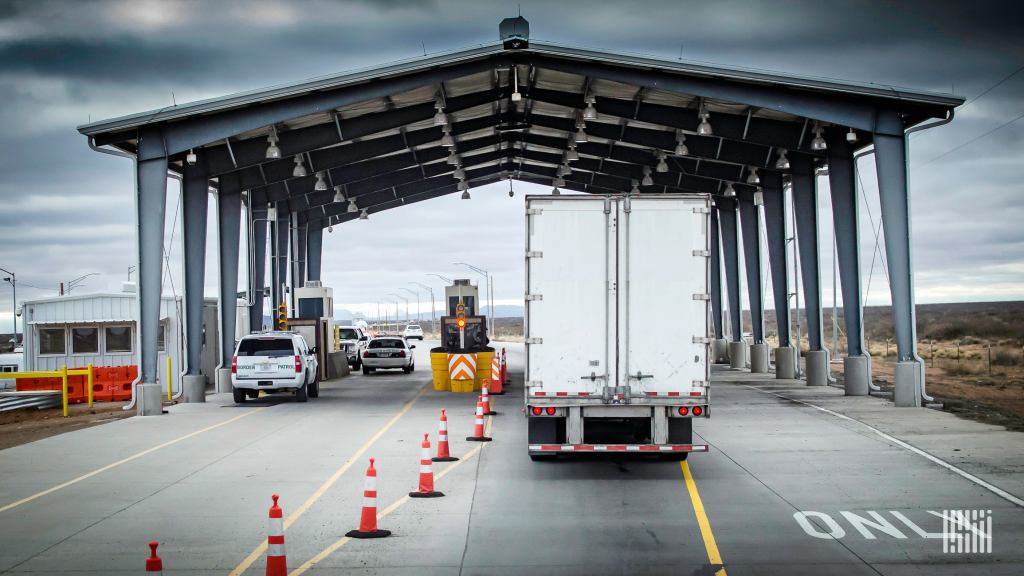
It’s within 10 miles of the Otay Commercial Port, situated between San Diego — which has already seen a marked increase in truckload volumes in recent years, particularly in the last one — and Tijuana. It’s also just slightly more than 12 miles from the San Ysidro Commercial Port, bridging San Ysidro, California, with Tijuana.

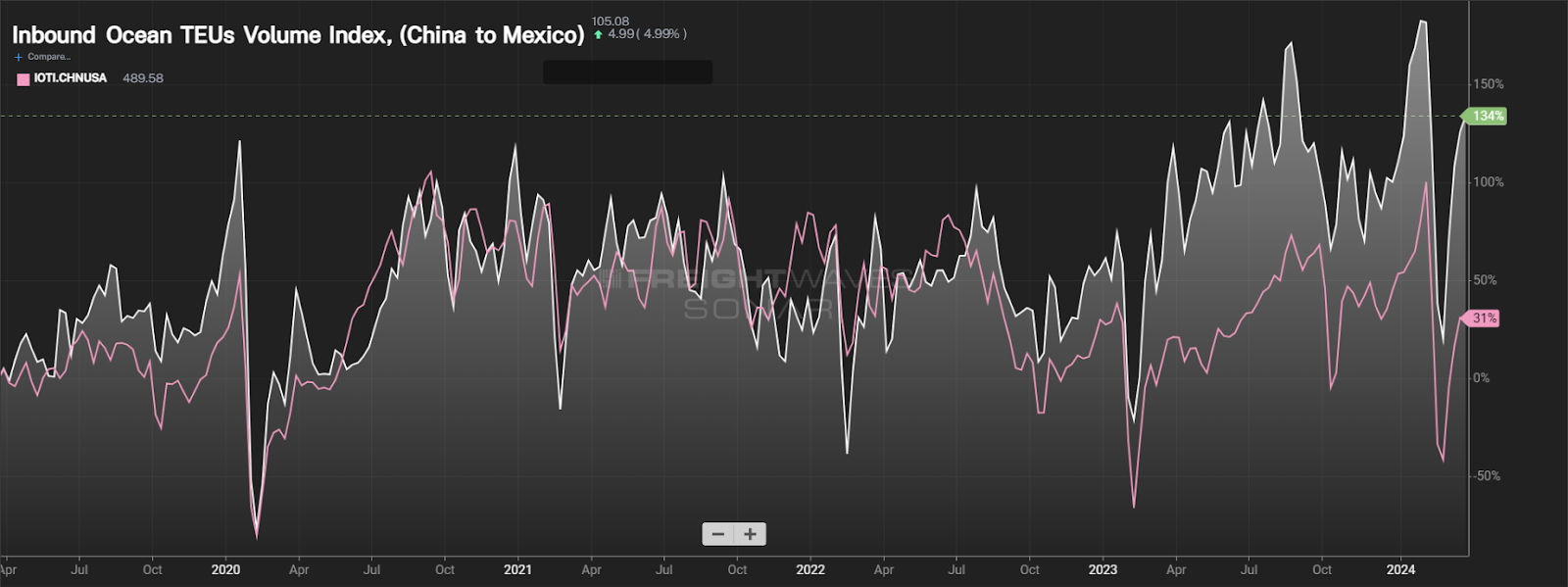
Mexico has seen a surge in imports from China in recent years. According to Xeneta, China exported 60% more containers to Mexico this January than it did in January 2023.

Analysts believe U.S. e-commerce consumption and the de minimis exemption for imports below $800 in value are fueling this. While Section 321 would also apply to ocean cargo shipped from China directly to the U.S., Mexico has become increasingly attractive for warehousing and fulfillment purposes.

The geographical benefit of Mexico’s proximity to the U.S. is compounded by the robust manufacturing and export services infrastructure supported by Mexico’s IMMEX program. The program facilitates streamlined processes for foreign companies to import materials, manufacture goods and then export them, often to the U.S., while enjoying tax and duty exemptions.

These elements combine to create an attractive proposition for Chinese businesses looking to maximize efficiency in their supply chains and minimize costs associated with tariffs and long-distance shipping.

China’s rising exports to Mexico

When a U.S. consumer buys something on Amazon from a Chinese storefront, the order sets in motion a fairly sophisticated chain of events. A notification of the order is sent to the seller, who could be operating directly from China or via a warehouse in Mexico.

Upon receiving the order, the seller prepares the item for shipment. If the product is located in China, it might first be sent in bulk to Mexico, leveraging the strategic advantages offered by Mexico’s logistics infrastructure and trade agreements. More likely is that if the Chinese shipper wants to take advantage of Section 321, the shipper has already warehoused the inventory in Mexico.

Each item destined for the U.S. is then individually packaged and valued at less than $800 to ensure it meets the criteria for duty-free entry. This valuation is key, so for more expensive, multipart products, it sometimes makes sense to ship multiple boxes in order to distribute value.

The packaged goods are then transported to the U.S.-Mexico border, either directly from a Mexican warehouse or after arriving in Mexico from China. At the border, the consignments are subject to inspection by CBP. Thanks to the precise labeling and adherence to the Section 321 rule, these packages typically qualify for expedited customs processing.

Once cleared through customs, the shipments enter the U.S. logistics network and are directed next to distribution centers strategically located across the country. Here, the packages are sorted and dispatched for final delivery.

Source: FreightWaves SONAR, Inbound Ocean TEUs Volume Index (China to Mexico [white] and China to the U.S. [pink]), five-year relative view.

While Chinese exports both to the U.S. and to Mexico have shown strong growth over the past five years, the latter trade lane’s growth since the middle of 2022 far surpasses the former. The Inbound Ocean TEUs Volume Index from China to the U.S. (IOTI.CHNUSA) shows a 31% increase since late-March 2019, while that same index from China to Mexico (IOTI.CHNMEX) shows a massive 134% climb over the same period.

While it is difficult to say definitively what is driving this growth, some of it is likely related to tariff skirting. An additional cause could be the ongoing investment in Mexico’s manufacturing infrastructure. It’s possible that this nearshoring development requires injections of raw materials from Asia.

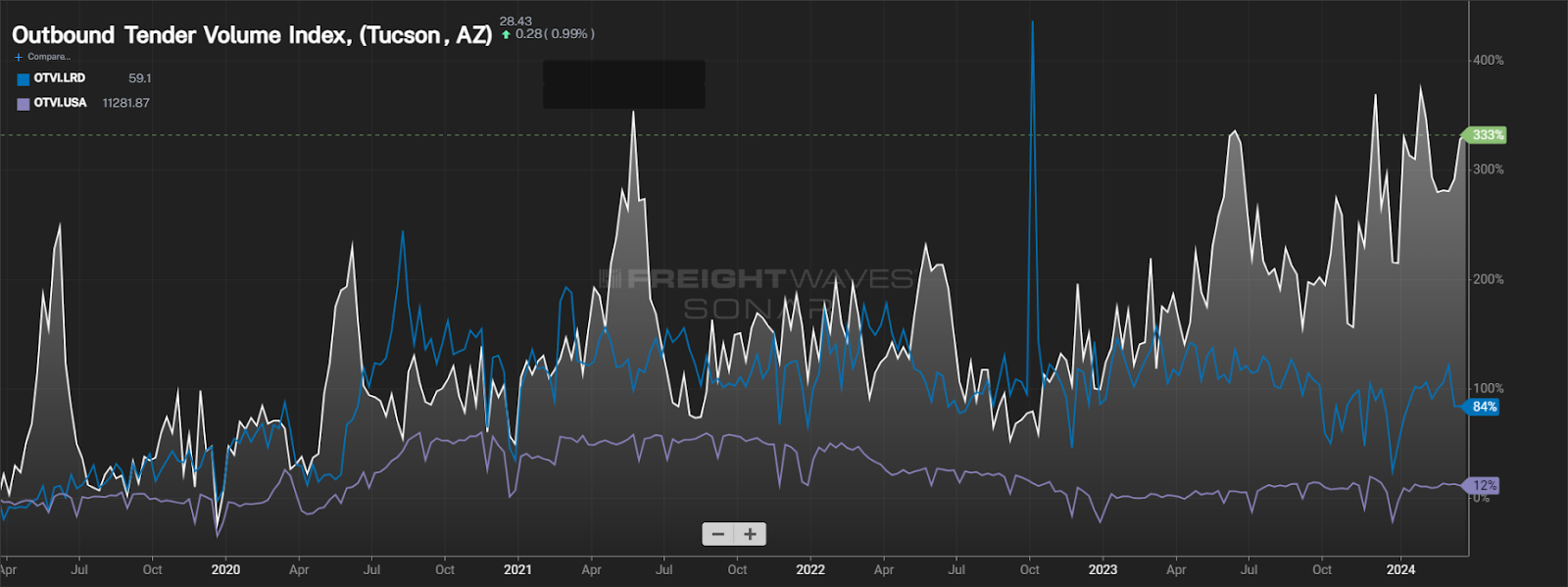
Border markets like those of Laredo, Texas, and Tucson, Arizona, have outpaced the average truckload demand growth for the U.S. in aggregate since 2019. This trend is likely to continue, barring legislative or executive change.

Source: FreightWaves SONAR, Outbound Tender Volume Index (Tucson, Arizona [white], Laredo, Texas [blue], and U.S. in aggregate [purple]), five-year relative view.

Will it continue?

The trade war between the U.S. and China began in 2018, when then-U.S. President Donald Trump imposed comprehensive tariffs on Chinese goods, citing unfair trade practices. This move set off a reciprocal imposition of tariffs, leading to a significant escalation. The U.S. targeted $550 billion worth of Chinese products. In response, China placed tariffs on $185 billion worth of U.S. goods.

A temporary truce was reached with the signing of the Phase One Deal in January 2020. This agreement aimed to ease the tariff war through commitments to decrease tariffs, boost trade purchases and address contentious issues such as intellectual property theft and technology transfer. The trade war’s impact was widespread, and its breadth and scale have drawn comparisons to historic protectionist measures, such as the Smoot-Hawley Tariff Act of 1930.

Trump’s recent campaign trail statements, vowing to levy a 100% tariff on cars produced in Mexico by Chinese firms if he wins reelection, shed new light on the complex interplay of international trade and economic strategy.

While the immediate reaction may be to view the circumvention of U.S. tariffs by Chinese entities through Mexico as a loss to the U.S. treasury, this could also be framed as a broader, more strategic benefit to the U.S.

The shift of Chinese manufacturing and trade flows toward Mexico carries with it potential for profound economic transformation in the region. The gradual buildup of production capacity, spurred by Chinese investment and the relocation of manufacturing activities, hints at a future in which Mexico becomes an increasingly robust and capable trade partner.

This evolution could lead to a reduction in U.S. reliance on more distant and potentially unstable global trade lanes, which are susceptible to disruptions from geopolitical tensions or global supply chain crises. Strengthening Mexico’s economy and its manufacturing sector could render North America’s supply chain more resilient, providing the U.S. with a stable and reliable source of goods from a neighboring country.

This increased trade between the U.S. and Mexico could partially offset revenue lost due to tariff avoidance. Furthermore, a prosperous Mexico contributes to regional stability and security, which is highly valuable given the shared border.

In this light, the long-term strategic advantages of fostering a stronger, more economically capable Mexico could well justify the short-term losses incurred from tariffs that are not collected on Chinese goods.

All quiet on the diesel front, for now: Benchmark price up slightly

For months, the weekly Department of Energy/Energy Information Administration average retail diesel price has been marked by moves that, except for once, always were at least 1 cent up or down.

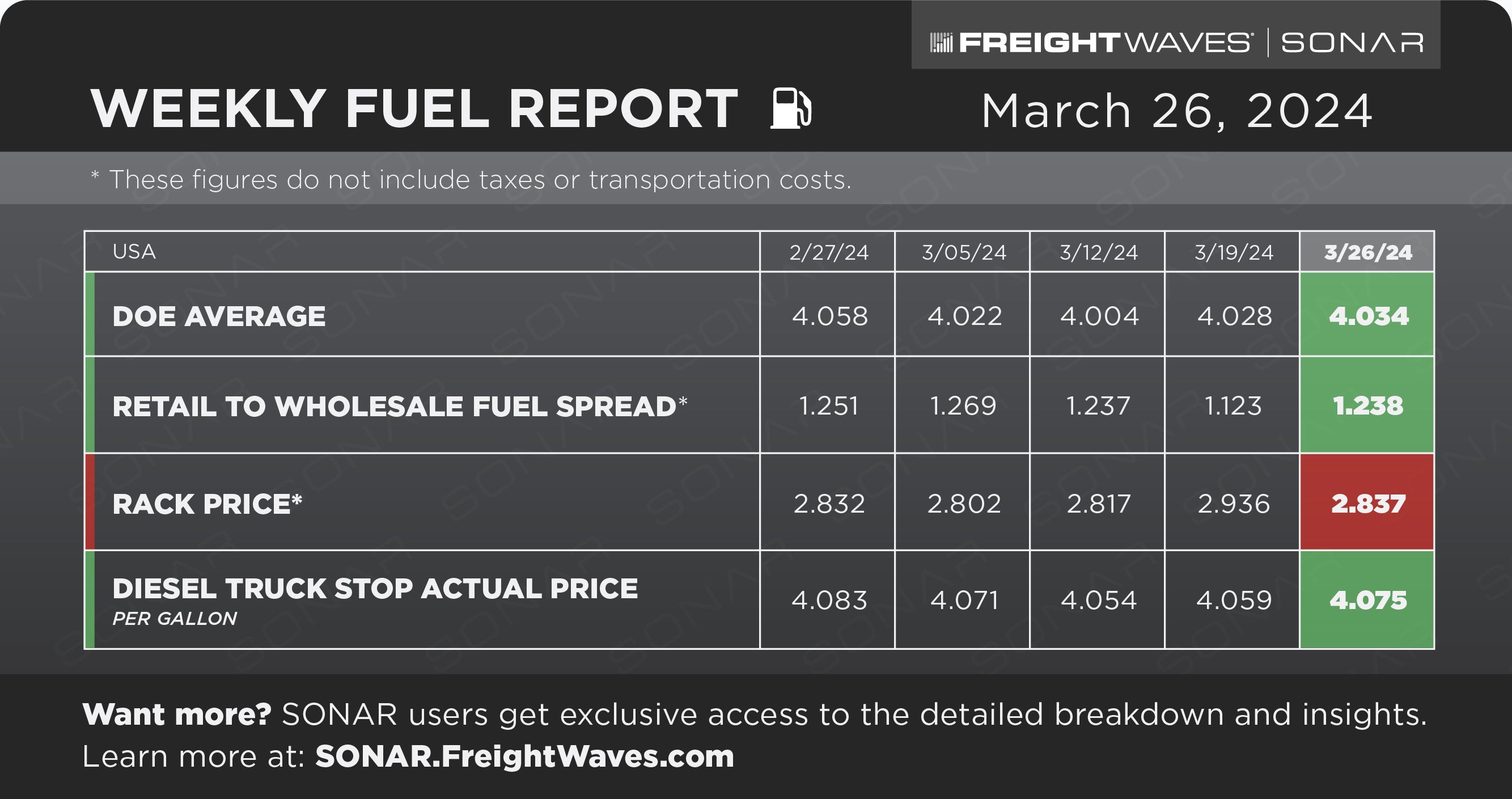
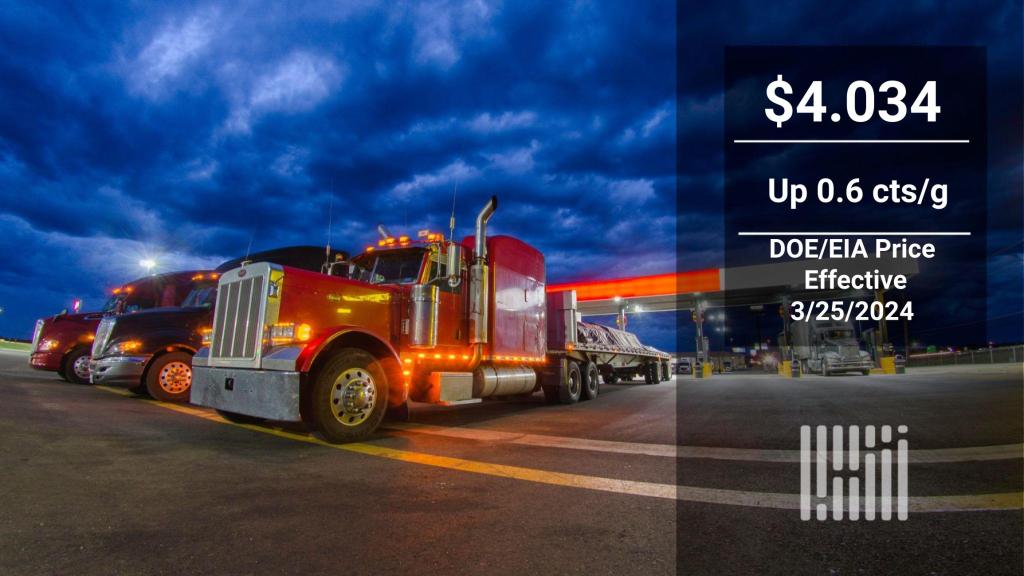
But reflecting the current state of a market that has swung in a relatively tight range for several weeks, the price used for most fuel surcharges rose Monday by just 0.6 cents a gallon, to $4.034 per gallon. Outside of the week of Feb. 19, when the price was unchanged, this week’s move is the first since Oct. 2 that didn’t reach even 1 cent, up or down.

Oil markets have moved in recent weeks in a range that isn’t particularly tight but does seem to be defined. It’s been marked by upward moves that eventually fizzle and downard moves that find a bottom and rebound.

The result is a diesel market that in the past 25 days has settled on the CME commodity exchange as high as $2.7882 a gallon on March 18, and as low as $2.6065 on March 5. The Monday settlement of $2.6786 is closer to the low than the high, but that comes after a day in which it rose 2.58 cents a gallon over the Friday settlement. However, it’s also just under the $2.6825-per-gallon average for those 25 days, which mark a period that began with a close less than $2.80 a gallon.

By contrast, during the 25 days prior to that stretch, settlements ranged from a low of $2.6536 a gallon to a high of $2.9642. That is a recent range of a little over 18 cents a gallon and the immediately preceding range of more than 31 cents a gallon.

But most of the market commentary and general online chatter has been more bullish than bearish of late, though that is not necessarily new. It’s been tough to find many subscribers to the bearish school of forecasting in oil markets for many months.

Among the news reports and forecasts that bulls are pointing to:

  • A news story out of Moscow said the government is telling companies to reduce their output in the second quarter to get Russian output down to 9 million barrels a day. In its latest survey, S&P Global Commodity Insights estimated Russian crude output in February at 9.43 million barrels a day. A cut to 9 million barrels would take more than 400,000 barrels per day off the market, a significant reduction in one step. It is a reduction that would bring Russia in line with its various promises to the OPEC+ group to reduce output.
  • Goldman Sachs, according to news reports, made a broad bullish call on commodities Monday. It said in a report, according to news sources, that it sees the reduction in central bank interest rates as boosting demand and reducing borrowing costs — bullish for the economy and for commodities.
  • A mixed report on diesel markets came from the research firm Energy Aspects. It said in a monthly report that diesel “fundamentals have loosened markedly as any impact from Red Sea shipping disruption has faded to the background and global demand is lackluster.” But it also noted that there is “plenty” of refinery maintenance still to come in the next few weeks and that “markets should not be too complacent, especially as Russian refinery disruptions add to medium-term supply risks.”
  • Those Russian disruptions referred to by Energy Aspects are Ukraine drone attacks on Russian refineries that have removed about 375,000 barrels a day of refining capacity from the market, according to Reuters.
  • Those bullish factors are not showing up yet in the futures market spread for ultra low sulfur diesel versus Brent on the CME. That spread Monday was less than 62 cents a gallon. A week ago, it was close to 72 cents.
  • Despite the aggressive moves by OPEC to cut output, it’s been increases in crude production by the U.S. and to a lesser degree Canada, Brazil and Guyana that have kept markets in check. While there is disagreement in the market about where U.S. output might end up when 2024 turns into 2025, the Macquarie Group on Monday released a highly optimistic forecast, according to news reports. It said U.S. oil production would close 2024 at about 14 million barrels a day, up from the current level near 13.2 million. Current forecasts among oil analysts call for a wide range of output changes in the U.S. this year, including some who see output as flat. But the Macquarie forecast is easily at the top of the range. 

More articles by John Kingston

Further appeals to block AB5 from California trucking seen as a long shot

Union Pacific CEO defends safety practices without mentioning key critic

Key analysis sees Red Sea shipping diversions starting to boost demand