Teamsters rack up late-2023 wins, stage significant strike in ’24

The Teamsters closed out the final quarter of 2023 with several representation victories and no known decertification votes, and started this year with a significant strike by food delivery truck drivers.

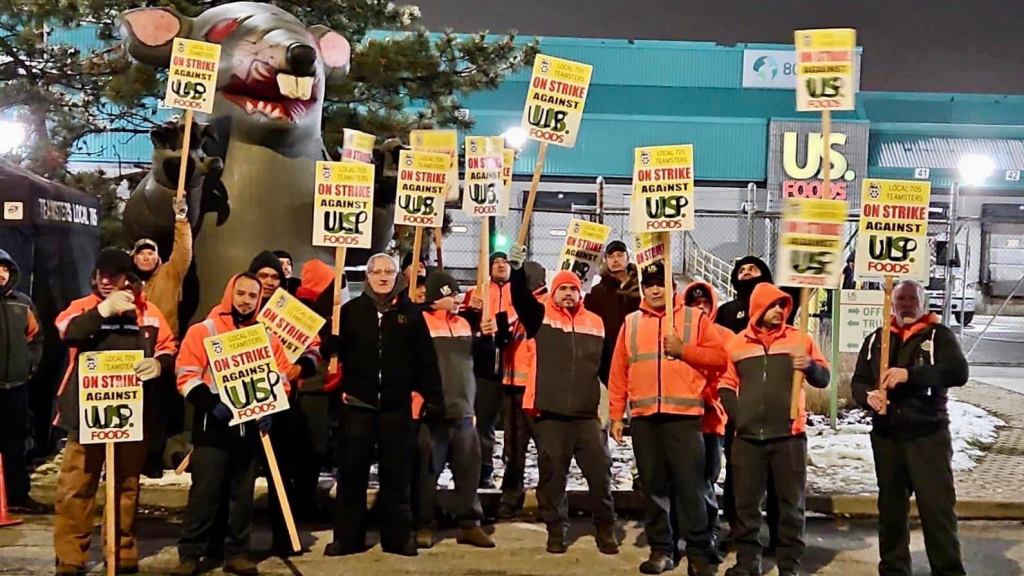
The picket lines are up in suburban Chicago and elsewhere after more than 130 members of the Teamsters went on strike Monday at 12:01 a.m. against giant food distributor US Foods (NYSE: USFD). The workers are represented by Local 705. The union’s contract with the food distributor expired Dec. 29.

A spokeswoman for the food distributor said negotiations are ongoing, which the Teamsters confirmed in a post on X.  Saying that the company was “disappointed” by the strike, the spokeswoman said US Food drivers receive “highly competitive offerings.” “In fact, our drivers in Bensenville currently receive wages and benefits that are market-leading for foodservice distribution in Chicagoland, and our current proposal includes increases to both wages and benefits,” she said.

In its statement announcing the strike, the Teamsters quoted Juan Campos, Local 705 secretary-treasurer and international vice-president at-large. “Our warning to US Foods was clear — meet our demands at the negotiating table or face a strike,” Campos said. “Now, the company must bear the consequences of their inaction. Our members will remain on the streets until US Foods gets serious in negotiations.”

The Teamsters for a Democratic Union, a separate group that is generally critical of the national Teamsters management for not being aggressive enough, said in a post that picket lines at other US Foods facilities have gone up in solidarity with the Illinois strikers. 

TDU said in its web posting that solidarity picket lines have gone up in front of US Foods facilities in Baltimore, Cleveland, California and Buffalo, New York.  

TDU said “scab” drivers had been employed to keep operations moving at the affected facilities, using rented trucks.

The US Foods spokeswoman said “business continuity plans are in place” at Bensenville “to continue to service customers, which includes a temporary workforce.” As to disruptions at other facilities impacted by the strike, the spokeswoman said in a similar vein that US Foods has “activated business continuity plans to help mitigate disruptions for our valued customers serviced from those facilities.”

In that post on X, the Teamsters said the number of US Foods workers on picket lines was close to 1,000.

The strike is significant enough that local news coverage in places such as Indiana and Detroit said area schools have been impacted by a cutback in deliveries for their food programs.

While strikes are more visual and get the attention, it’s representation votes that provide the longer-term impact of unionization or a lack of it. And on that front, the Teamsters finished the year strong.

The push at 10 Roads Express

In particular, regional carrier 10 Roads Express saw 81 drivers from its Commerce City, Colorado, facility vote to join Teamsters Local 17, and 45 workers at Newark, New Jersey, will join Teamsters Local 641.

In announcing the winning certification elections at the two locations, the Teamsters noted that it had been targeting 10 Roads Express in organizing efforts. Victories in early November brought 36 drivers into the fold in Iowa and Nebraska at 10 Roads Express. Earlier in the year, Teamsters won representation with 10 Roads Express at Edgerton and Colby, Kansas, which the union said were the first victories in the unionization drive targeting the company.

The victories come as 10 Roads Express faces pressure as a carrier for the US Postal Service, as do other companies that provide the Postal Service with freight services. In November, the company laid off 66 employees in Texas.

A note sent to 10 Roads Express’ web portal had not been responded to by publication time. 

In other victories late in the year, the Teamsters successfully won a representation vote at a Costco warehouse in Norfolk, Virginia, in December. A spokeswoman for the Teamsters said more than 18,000 Costco workers nationwide are already represented by the Teamsters. But the union’s announcement said it was the first organizing victory of Costco workers in two decades.

Also in December, a group of clerks who work for UPS-CSI, a division of UPS which the union said specializes in “importing and exporting high-volume freight,” voted to be represented by the Teamsters.

“Several weeks ago, the workers reached out to Local 243 after speaking with their co-workers who are already Teamsters, and seeing the historic gains won by the IBT during the 2023 UPS contract campaign,” Local 243 said in a statement announcing the victory at UPS-CSI.

The reference to the 2023 contract campaign was to the five-year agreement reached between the union and UPS management and overwhelmingly ratified by the rank and file. The contract was generally seen as a win for the union.

No recent decertifications

It’s been quiet on the decertification front for the Teamsters. The National Right to Work Committee regularly has touted to FreightWaves victories removing the Teamsters from representation — including the stunning vote to oust the union at XPO (NYSE: XPO) in Hialeah, Florida, site of the first contract signed by the Teamsters with the LTL carrier. But it has not said anything about the Teamsters on its web page for several months, even as it has highlighted other decertification votes.

In what could be viewed as another win for the Teamsters, a contract negotiation that appears to have gone smoothly and without rancor saw drivers from seven separate locals late last month ratify a “record-setting” new contract with Peninsula Trucking, an LTL carrier based in Auburn, Washington. 

Peninsula calls itself “the premier regional LTL Carrier to over 950 cities and towns throughout the Northwest.”

In its announcement of the deal, the Teamsters said the latest contract was approved “overwhelmingly” by the union members, which it described as consisting of “city drivers, line drivers, dock workers and office/clerical workers.”

“Negotiations went smoothly, as the two sides were able to reach an agreement in just one long day of bargaining,” the union said in its announcement of the new contract. The Teamsters said the contract means workers will “receive larger wage increases and pension increases than ever before, on top of other improvements to the contract.”

“Peninsula Truck Lines, which is locally owned and managed, came into the contract negotiations with a willingness to recognize and reward the workforce for their hard work and professionalism, leading to this strong contract,” the union said. 

More articles by John Kingston

Teamsters celebrated NLRB decision on STG Logistics, sees path to greater unionization

2 contacts in 2 weeks: XPO, Teamsters come to agreement in Trenton

A first for Werner: Small group of workers votes to unionize
Running on Ice: Hearts across the country 

Blue Truck on a sheet of ice over a blue background and Running on Ice Logo

Hello, and welcome to the coolest community in freight! Here you’ll find the latest information on warehouse news, tech developments and all things reefer madness-related. I’m your controller of the thermostat, Mary O’Connell. Thanks for having me!

All thawed out 

(Photo: Shutterstock)

Loyola Medicine had a revolutionary accomplishment in the way of organ transplants. Through the TransMedics Organ Care System, aka “Heart-in-a-Box,” a donor heart was able to be preserved in a natural state that mimics the human body. The traditional way of organ transplant transportation involved putting the organ on ice and limited the range it could be delivered to a possible recipient.

The Heart-in-a-Box allows the organ to stay viable for 12 hours, twice as long as the traditional method.

Newswise published a recent example of this tech in action: For a 64-year-old patient at Loyola, “the technology proved life saving. After suffering from heart failure for 13 years, his condition had deteriorated and he was hospitalized at Loyola waiting for a heart. Within days a donor heart that matched his rare blood type was located in another state, but the surgeon set to get on a plane to get the heart fell ill with COVID. Thanks to the extended time provided by the ‘Heart-in-a-Box,’ the Loyola team worked with Transmedics to identify another surgeon who could travel to get the heart before time ran out.”

Temperature checks

(Photo: Jim Allen/FreightWaves)

Parsyl, a data-powered risk management insurer, has more than doubled to $55 million in capacity, making it one of the largest cargo-only consortiums at Lloyd’s and the only one devoted exclusively to perishable commodities. The Essential Consortium is a multiyear arrangement that will bring new capacity to the perishable cargo market. The consortium will become supporting capacity for Parsyl’s flagship Global Health Risk Facility, which insures vaccines and pharmaceuticals to low-income and developing nations. Parsyl grew its written premium by 500% at an industry-leading loss ratio.

“Emerging from the prestigious Lloyd’s Lab, Parsyl’s journey from conception to delivery has been nothing short of remarkable,” Steve Smyth, Head of Marine, SiriusPoint, said in a news release. “In a short space of time, they have become the go-to insurance partner for clients involved in the pharmaceutical, life science and chilled, frozen and fresh food industry sectors.”

Food and drugs

(Photo: Enlightened)

Enlightened, the champion of frozen yogurt bars in the freezer section, has brought a new product to the freezers of consumers: Frozen Yogurt Bark. For those who have spent any time on Pinterest, frozen yogurt bark isn’t a new concept. It’s just the first time you haven’t had to make it yourself by slamming frozen things down on the countertop.

The new snack is simply greek Yogurt, chocolate and fruit frozen together for quick “better for you” snacking. The new flavors are Triple Berry, consisting of a Greek yogurt and white chocolate base, topped with frozen strawberries, blueberries and raspberries; Banana Peanut Butter, a Greek yogurt and dark chocolate base, filled with peanut butter and topped with frozen banana pieces; and Pineapple Coconut, made with a Greek yogurt and white chocolate base, and topped with pineapple and shredded coconut.

Michael Shoretz, CEO and founder of Enlightened, said in a news release: “We are thrilled to introduce our Frozen Yogurt Bark to the growing frozen snacking category. This new line marks our continued commitment to providing exciting new treats that don’t compromise on taste or nutrition.”

Cold chain lanes

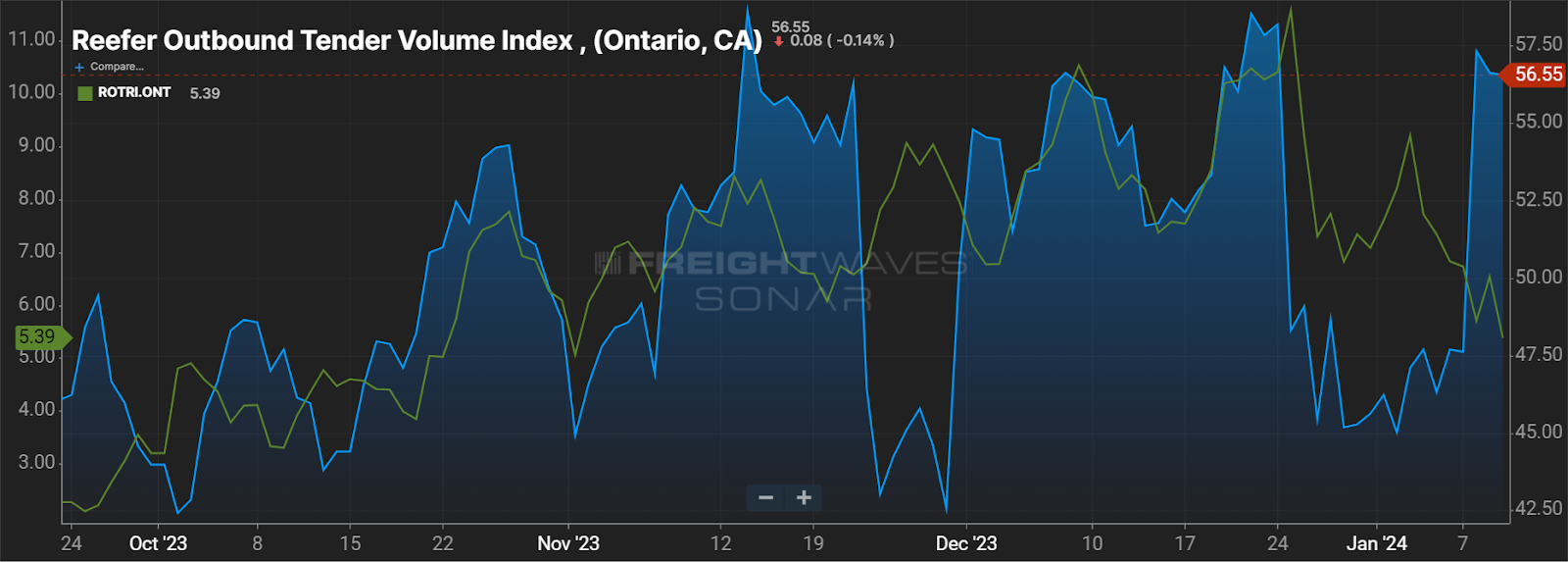
SONAR Tickers: ROTVI.ONT, ROTRI.ONT

The SONAR chart of the week is a snapshot of Ontario, California, near the ports of LA and Long Beach. Reefer outbound tender volume has hit a peak in Southern California as volumes begin to fall. Just as reefer outbound tender volumes start falling, reefer outbound tender rejections follow suit as rejections have declined 383 basis points week over week. This signals that capacity is loosening, and given that the ROTRI is at 5.39%, contract rates are going to be the move for carriers and shippers as stability begins to return to the market.

Is SONAR for you? Check it out with a demo!

Shelf life

UMaine-led research team making new frozen foods from squid fins

City moves to utilize funds toward Hyde Park and other city facilities

No power, no problem — Preserving the cold chain in Trinidad and Tobago

Ben & Jerry’s launches new non-dairy ice cream flavor: Strawberry Cheezecake

Watch The ColdSnap Countertop Ice Cream appliance in action at CES 2024

Wanna chat in the cooler? Shoot me an email with comments, questions or story ideas at moconnell@www.freightwaves.com.

See you on the internet.

Mary

If this newsletter was forwarded to you, you must be pretty chill. Join the coolest community in freight and subscribe for more at www.freightwaves.com/subscribe.

Chicago-based Coyote Logistics cuts sales, operations jobs

Chicago-based freight brokerage Coyote Logistics confirmed Friday that it has slashed a number of jobs in its sales and operations divisions, but it declined to disclose the number of employees affected or the percentage of the company’s workforce that was part of the layoffs.

The move comes nearly a month after Coyote Logistics, a subsidiary of UPS Inc. (NYSE: UPS), offered voluntary separation agreements to a number of senior managers and directors, which marked the fourth round of layoffs at the brokerage in 2023.

In a statement to FreightWaves, Coyote said the company is aligning its “Sales and Operations structures with the needs of our business. Unfortunately, we had to make the difficult decision to eliminate some positions.”

“Our people are extremely important to us, and we’ve taken steps to minimize the number of employees impacted,” a Coyote spokesperson said in the statement. “We are providing comprehensive severance and outplacement services to support those impacted. These changes are difficult but necessary to ensure our workforce and corporate structures support our business needs as they evolve.”

Early Friday morning, Coyote employees said they received an email from the company’s human resources department about the layoffs at the digital brokerage.

The email, obtained by FreightWaves, states that “news of another headcount reduction is not an easy way to start the year. Your leadership and our HR team are here to support you during this time.”

The Coyote employees were told that Sandeep Pisipati, who replaced Jonathan Sisler as CEO in September, “will be communicating more details surrounding this restructuring event this afternoon.”

Earlier this week, another Chicago-based digital brokerage, Uber Freight (NYSE: UBER), announced it was slashing as many as 50 jobs.

Do you have a news tip to share? Send me an email or message me @cage_writer on Twitter. Your name will not be used without your permission.

Read more here:

Medical logistics company divesting trucking, cross-dock operations
Digital brokerage Uber Freight slashes jobs
Shuttered California trucking company files for Chapter 7

2024 outlook for US domestic logistics

By Bart De Muynck

The views expressed here are solely those of the author and do not necessarily represent the views of FreightWaves or its affiliates.

As we start a new year, what is the outlook for the logistics industry in 2024 and what can companies do to make things better? It’s a question on most people’s minds. Especially, as we remain under a constant barrage of geopolitical, socioeconomic, regulatory, and weather disruptions. 

I will try to summarize the expectations for 2024 per mode of transportation as well as some of the key strategies companies should use to manage cost and capacity better.

The first half of 2023 saw continued decline in full-truckload rates due to excess capacity and weak demand, reaching 7-year lows. However, the second half of the year showed signs of recovery with rising tender rejection rates and improving load-to-truck ratios, leading to a rate stabilization. Less-than-truckload rates on the other hand remained relatively stable in 2023, with some regional and segment-specific variations. Some carriers implemented small rate increases, while others offered discounts or negotiated contracts with certain shippers.

A shift in the FTL market is likely coming in 2024. Several factors suggest potential rate increases due to decreased capacity and increased demand linked to projections for economic growth and continued e-commerce boom, which could lead to higher freight volumes. This will further intensify demand for limited capacity. Other elements influencing FTL rates are rising costs associated with higher diesel fuel prices, labor costs, and insurance premiums. Many FTL contracts negotiated during the downturn in 2023 are up for renewal in 2024. New contracts are likely to reflect the changing market conditions and higher cost environment. LTL rates are expected to remain relatively stable in 2024, with potential for modest increases – or even slight – decreases depending on specific segments and market conditions.

Here are some of the key strategies around FTL and LTL in 2024. 

  • Build strong relationships and foster partnerships with reliable carriers and brokers who understand your needs and can offer flexible solutions and competitive rates. 
  • Leverage technology such as freight procurement platforms, dynamic TMSes, visibility platforms and freight spend management solutions. 
  • Explore green logistics options like fuel-efficient vehicles, optimized routesand carbon-neutral transport providers to not only reduce costs but also enhance your brand image. 
  • Continuously monitor market trends, fuel prices, and regulatory changes. 
  • Be prepared to adapt your strategies and explore alternative solutions to optimize costs and maintain your competitive edge.

On the parcel side, we have seen rates increase for the last several years. FedEx and UPS implemented a substantial general rate increase of 5.9% in January 2024, impacting most services. Similar increases are expected from U.S. Postal Service later in the year. These general rate increases reflect continued rising costs for labor, fuel, and technology, pushing carriers to recoup expenses by raising rates. 

There are some factors that can positively influence parcel rates in 2024. 

Continued e-commerce boom puts pressure on parcel networks, potentially creating competition for available capacity and influencing pricing. A potential economic slowdown could decrease shipping volumes, putting downward pressure on rates in the long run.

Overall, U.S. parcel rates in 2024 are likely to increase in the near term due to the impact of general rate increases, particularly for residential deliveries. In the long term, they are expected to face downward pressure. A potential economic slowdown and increased competition could moderate rate increases later in the year.

Businesses concerned about rising parcel costs should leverage technology like freight-spend-management solutions and multicarrier parcel optimization solutions to compare rates, optimize routes, and automate processes. Shippers should use insights obtained from these platforms to better negotiate contracts, seeking volume discounts or negotiate specific terms with preferred carriers. And finally, explore additional or alternative carriers. Consider smaller regional carriers or alternative shipping methods for specific needs.

Cost management remains a top priority for both shippers and logistics providers. Reducing overall logistics costs in 2024 requires strategic thinking and proactive measures across all transportation modes powered using modern, AI-powered technology platforms.

Look for more articles from me every week on FreightWaves.com.

Bart

About the author

Bart De Muynck is an industry thought leader with over 30 years of supply chain and logistics experience. He has worked for major international companies, including EY, GE Capital, Penske Logistics and PepsiCo, as well as several tech companies. He also spent eight years as a vice president of research at Gartner and, most recently, served as chief industry officer at project44. He is a member of the Forbes Technology Council and CSCMP’s Executive Inner Circle.

Medical logistics company divesting trucking, cross-dock operations

Waltham, Massachusetts-based TruBlu Logistics, a subsidiary of Fresenius Medical Care North America, says it is divesting its private long-haul fleet in early February and will transition cross-dock shuttle operations to another logistics company by the end of February. The moves are expected to affect around 150 of Tru Blu’s 600 trucking jobs.

TruBlu Logistics is a leading provider of dialysis equipment, medicines and supplies for kidney care, according to its website.

In a statement, TruBlu Logistics confirmed the news, stating that after evaluating the company’s North American supply chain operations, “We are implementing strategic changes to increase efficiency and better serve our patients and customers.”

Effective Feb. 2, TruBlu will be divesting its “long-haul resupply, private fleet resources and converting to a purchased one-way transportation network.”

“Today, we ship about 80% of our resupply freight with contract carriers. A cost analysis shows that we operate more economically using contract carriers to transport long-haul loads instead of our TruBlu fleet,” Kirsten Stratton, senior media relations manager for Fresenius Medical Care, said in a statement to FreightWaves.

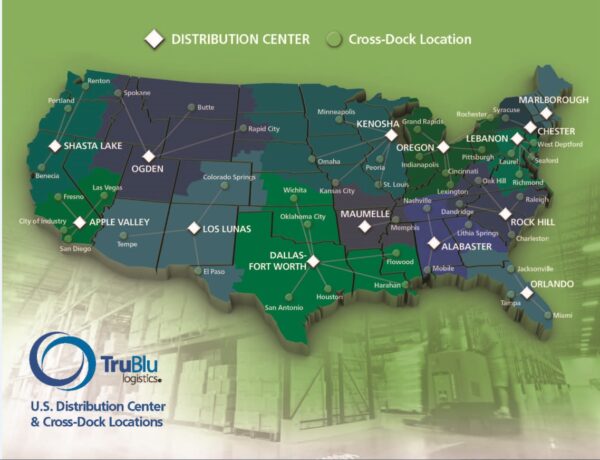
(Chart: TruBlu Logistics)

Stratton said the company will transition its cross-dock shuttle operations to Penske Logistics, a diversified international transportation services company, to increase efficiency and reduce operating costs.

“The agreement with Penske Logistics gives our North American Supply Chain access and exposure to equipment, knowledge, and technology that will drive transportation efficiencies and sustain high-quality service deliveries,” Stratton said. “These steps are in alignment with our FME25 transformation program aiming to increase profitability, efficiency, and productivity.”

According to the Federal Motor Carrier Safety Administration’s SAFER website, TruBlu Logistics had 614 drivers and 673 power units as of its latest MCS-150 form it filled out in September 2023. Of this number, the company said around 150 drivers who work in long-haul resupply and cross-dock shuttle operations will be affected. Stratton said the remaining drivers in the company’s final mile customer delivery fleet will not be impacted by the recent changes at TruBlu Logistics.

The company operates 14 distribution centers in the U.S., along with over 50 cross-dock locations. All but four cross-dock shuttle operations will be transferred to Penske Logistics. Stratton said those employees will have the opportunity to obtain employment with Penske effective Feb. 29.

The remaining four cross-dock shuttle operations will not be transferred to Penske Logistics. They are in Marlborough, Massachusetts; Ogden, Utah; Tempe, Arizona; and Hazelwood, Missouri.

“These drivers are eligible for severance under the company’s severance plan as they are not part of the transfer agreement with Penske Logistics,” Stratton said. “Employees who are laid off as a result of our divestment of TruBlu Logistics will be eligible to receive a severance package and have an opportunity to use outplacement services that can help them update their skills and find other jobs. Our intention is to provide resources that can help people successfully transition to another job opportunity as soon as possible.”

Do you have a news tip to share? Send me an email or message me @cage_writer on Twitter. Your name will not be used without your permission.

Digital brokerage Uber Freight slashes jobs
Shuttered California trucking company files for Chapter 7

Hydrogen rises at CES

In an event ruled by battery-electric trucks, hydrogen made a splash at the Advanced Clean Transportation Expo last May. It happened again this week at the massive Consumer Electronics Show in Las Vegas. 

The universe’s most common element got a lot of attention around fuel cells and direct use in the typically gasoline- or diesel-powered internal combustion engine (ICE).

Was this newsletter forwarded to you? Click here to get Truck Tech via email on Fridays. And catch the latest in major events and hear from the top players on Truck Tech at 3 p.m. Wednesdays on the FreightWaves YouTube channel.

Hydrogen everywhere

Global automakers like Hyundai and Tier 1 suppliers like Robert Bosch talked about how they plan to incorporate hydrogen to power fuel cells and directly into engines. 

In Hyundai’s case, it envisions a logistics ecosystem using Xcient fuel cell-powered trucks to move parts into and haul finished electric vehicles out of its Metaplant in Ellabell, Georgia, near Savannah. That includes making hydrogen on-site through electrolysis using electricity and water. Hyundai also sees hydrogen as a fuel for its energy-intense heavy-duty equipment business.

When powered by green hydrogen made from renewable sources like solar and wind, an H2 ICE engine is practically carbon-neutral.

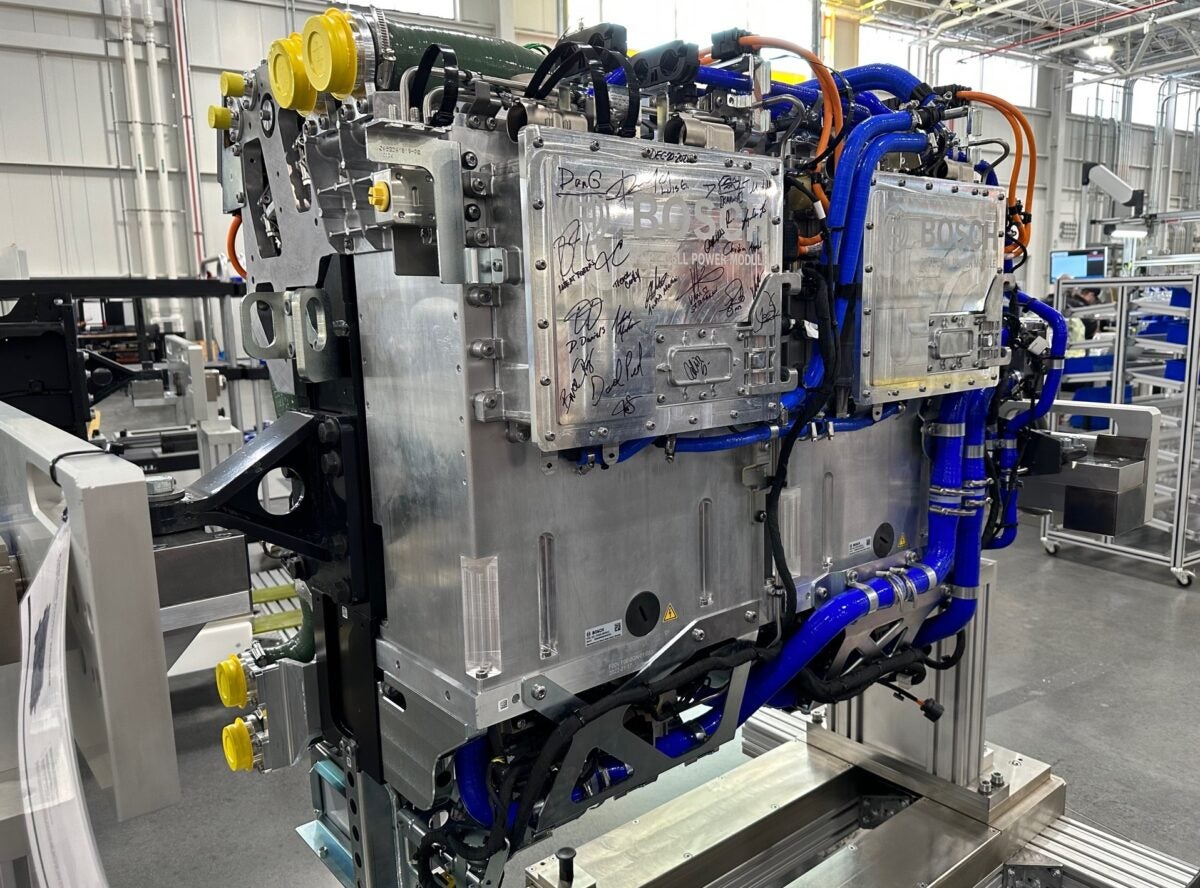
Bosch claims fuel cell orders from European, Chinese and U.S. truck makers. Outside the mobility- and transportation-themed West Hall of the Las Vegas Convention Center, Nikola gave short demonstration rides in its fuel cell electric truck powered with Bosch’s fuel cell system. 

Nikola uses fuel cells from Robert Bosch in its hydrogen-powered electric truck. (Photo: Alan Adler/FreightWaves)

The German supplier is also working on components for an ICE that converts hydrogen fuel directly into energy without first converting it into electricity as it does in a fuel cell. It plans to debut its H2 ICE this year. 

Getting governments on board

Enthusiasm for hydrogen engines can be traced to Europe’s acceptance of H2 ICE as a zero-emissions technology because of the absence of carbon dioxide. Burning hydrogen creates small amounts of nitrogen oxides. European governments seem willing to look the other way. In the U.S. — and especially California — NOx emissions are a focus of coming regulations.

“The indication from EPA is that it will qualify as a zero-emission CO2 technology. California does not allow H2 ICE currently under the ACT [Advanced Clean Trucks] rule. That’s something we have discussed with them,” said Carl Hergart, Paccar senior director of powertrain planning.

Cummins Inc. first promoted an H2 ICE engine as part of a fuel-agnostic makeover of its engine families. It has committed a billion dollars in plant makeovers and has orders from fleets including Werner Enterprises for delivery in 2027.

Volvo Group, Daimler Truck and Paccar. — the only major truck maker with a significant presence at CES — are all pursuing hydrogen-fueled engines by later this decade.

Paccar displayed its Kenworth T680 fuel cell truck with a second-generation Toyota fuel cell system that goes on sale next year. Paccar has paid deposits from more than 150 customers between Kenworth and Peterbilt. Fuel cell trucks for both brands will be assembled at Kenworth’s Renton, Washington, plant.

Q&A: Hergart on batteries, hydrogen and SuperTruck 2

Hergart talked about how the Bellevue, Washington, parent of Kenworth, Peterbilt and DAF Trucks views hydrogen and a battery-making joint venture with rival Daimler and supplier/competitor Cummins, as well as what it is learning from SuperTruck 2 projects at Peterbilt and Kenworth. The following is edited for clarity and conciseness.

Carl Hergart, Paccar senior director of powertrain planning, says hydrogen purity is essentially the same, regardless of how it is sourced. (Photo: Alan Adler/FreightWaves)

TRUCK TECH: Paccar is involved in the federal hydrogen hub project in the Northwest. But you stop short of participating in the creation of hydrogen infrastructure.

HERGART: All our trucks are connected so we know where the trucks are. We can provide data on where it makes sense to establish fueling stations. We’re not in the business of building fuel stations or producing hydrogen. But we can be active in this dialogue with the producers, the customers and people operating fuel stations.

TRUCK TECH: How important is green hydrogen made from renewable sources like solar, wind and water?

HERGART: From a sustainability perspective, of course we want to see green hydrogen. But there’s a lot of misconceptions about green and gray and blue hydrogen. Most of the hydrogen produced today, even gray hydrogen [from natural gas] is 99.999% pure. So whether it’s gray hydrogen produced from steam methane reforming or green hydrogen produced through electrolysis, for the most part both are suitable to run a fuel cell or a hydrogen ICE. 

TRUCK TECH: Using hydrogen in an internal combustion engine eliminates greenhouse gasses but still creates NOx emissions. Is that an acceptable trade-off?

HERGART: When you have nitrogen and oxygen reacting at high temperatures, you’re going to form NOx. But there are ways of addressing that. The [DAF Trucks HD] demonstrator in Europe shows that there’s potential to get down to very low levels of NOx. We don’t want the perfect to be the enemy of the good here.

TRUCK TECH: How did you choose lithium-iron phosphate chemistry for your battery-making joint venture with Daimler Truck North America and Cummins?

HERGART: You have a much better cycle life from an LFP cell chemistry than nickel, manganese and cobalt. NMC may have a little bit better energy density. But you have a worse cycle life, so durability is one aspect. Thermal stability is important. And you get away from the challenging materials like nickel and cobalt. So that’s what really makes it the best fit for truck applications.

TRUCK TECH: The Peterbilt SuperTruck 2 achieved 132% freight ton efficiency. What technologies from that are most likely to find their way into production?

HERGART: The 48-volt mild-hybrid system is significant because you can power auxiliaries electrically rather than running them off of the front-wheel drive. You really have to take a holistic view of the power consumption on the truck. Ultimately the value of 48-volt is that you reduce the current. And when you reduce the current, you reduce the amount of copper. So you reduce cost and you make it more efficient as well. The question is, do you introduce a third [electronic] bus? It’s a matter of making the business case work, but it’s clear there’s an efficiency potential benefit by adding 48-volt.


Xos Trucks and ElectraMeccanica get married

Talk about a marriage of convenience. Startup Los Angeles-based electric truck maker Xos and Canada’s ElectraMeccanica completed some quick nuptials that provides a $48.5 million cash infusion to Xos while giving ElectraMeccanica shareholders about 20% ownership in Xos.

ElectraMeccanica gave up on its tiny three-wheel Solo electric vehicle last year, recalling and buying back the vehicles from customers. In August, it announced a merger with U.K. electric truck maker Tevva. ElectraMeccanica got cold feet and claimed Tevva didn’t disclose everything it should. Tevva responded by filing a suit seeking $75 million.

One beau gone, another found

“Based on our diligence, which included discussions with key customers, we believe that Xos is well-positioned in the rapidly growing commercial electric vehicle market,” Dietmar Ostermann, ElectraMeccanica’s strategic committee chair, said in a news release.

“By leveraging ElectraMeccanica’s balance sheet to accelerate Xos’ growth and leadership position, the proposed transaction provides ElectraMeccanica’s shareholders with the opportunity to participate in Xos’ exciting future prospects.” 

Xos has delivered more than 600 electric vehicles to fleets since 2020. It went public via a special purpose acquisition company merger with NextGen Acquisition Corp. in August 2021. Xos received $575 million in proceeds at a valuation of $2 billion.

In a market that still mostly avoids investing in unprofitable startups, ElectraMeccanica’s dowry is welcome. To avoid delisting from the Nasdaq, Xos conducted a 1:30 reverse stock split in December.

“Leveraging ElectraMeccanica’s assets will strengthen Xos’ leadership position in the robust commercial truck market and allow Xos to scale profitable vehicle sales,” Xos CEO and Chairman Dakota Semler said.

The merger is expected to close in the first half of the year.

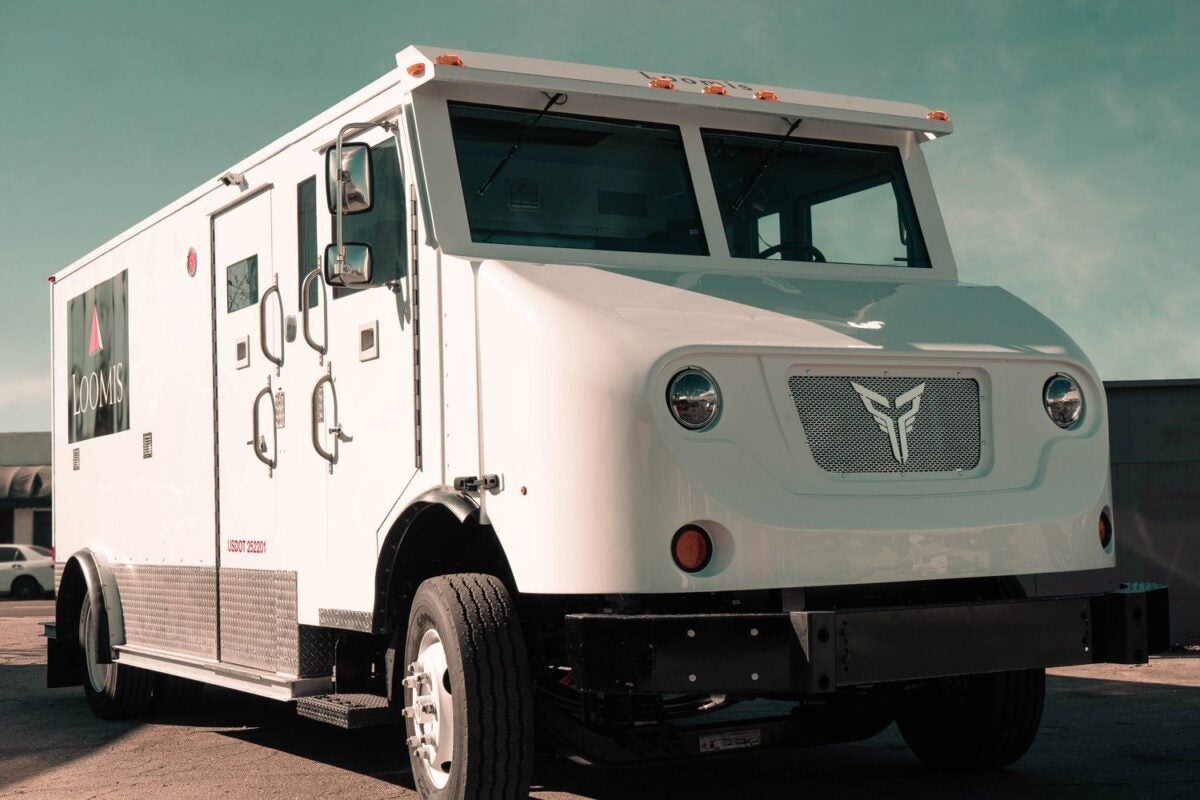
Loomis was among the first fleet customers for Xos Trucks. (Photo: Xos)

Briefly noted …

TeraWatt Infrastructure will get $63.8 million in a federal grant to pursue its buildout of an electric truck charging corridor across Interstate 10 in the Southwest. 

The Energy Infrastructure Incentives for Zero-Emission Commercial Vehicles Project is distributing more than $100 million in zero-emission vehicle  charging infrastructure incentives to qualified applicants across California.

Melissa Wade of Aurora Innovation will chair the Autonomous Vehicle Industry Association board of directors.


Bonus Content: Nikola’s Steve Girsky at CES

Nikola CEO Steve Girsky says battery-electric trucks and fuel cell electric vehicles will come out of the company’s plant in Coolidge, Arizona, this year.

That’s it for this week. Thanks for reading. We value your feedback. Please write to aadler@www.freightwaves.com with suggestions and comments on Truck Tech.

Editor’s note: CORRECTS number of Paccar fuel cell truck orders to more than 150 from more than 550.

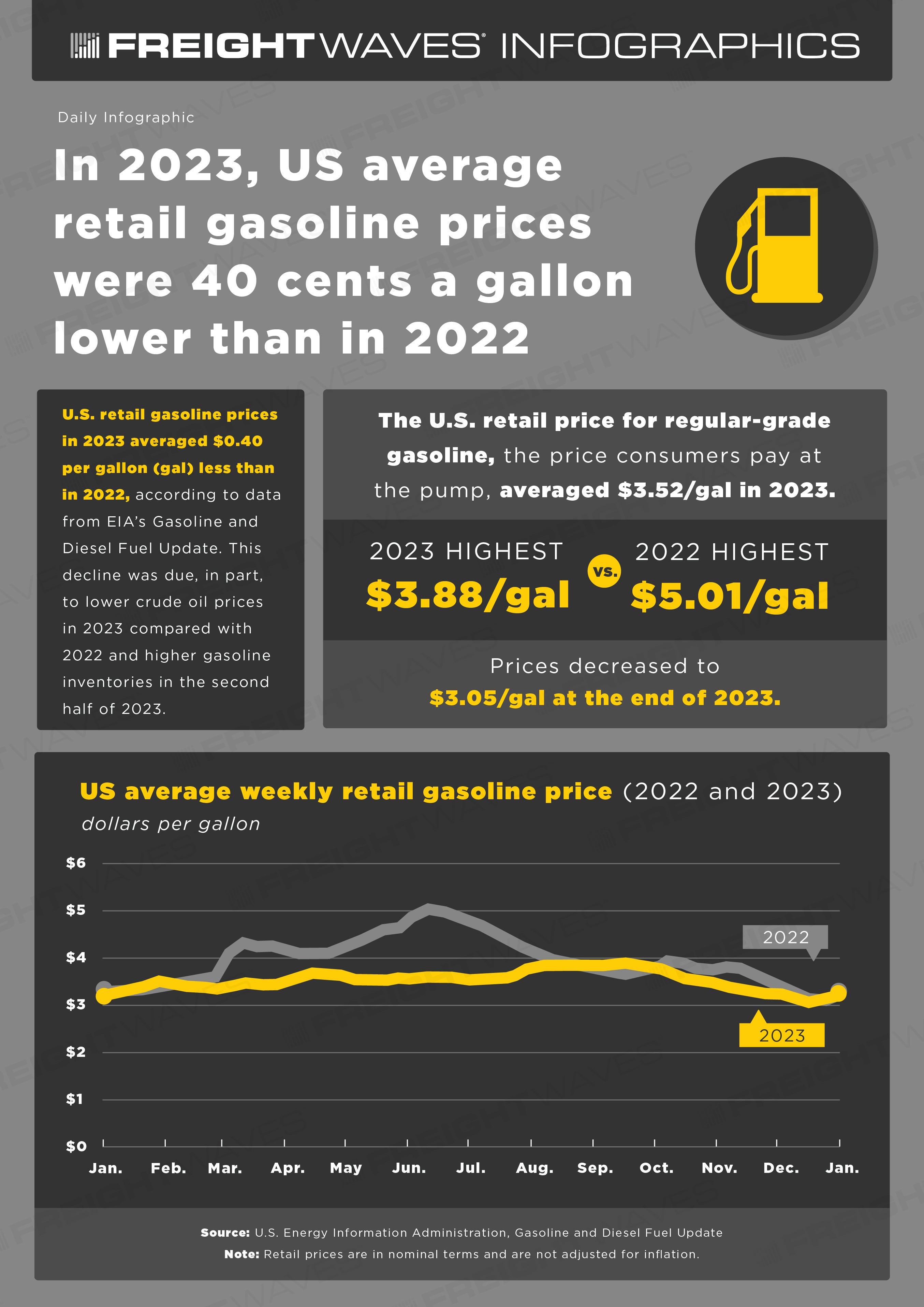
Daily Infographic: In 2023, US average retail gasoline prices were 40 cents a gallon lower than in 2022


To view more FreightWaves infographics, click here

FreightTech experts: 2024 is the year for laggards to catch up

As the FreightTech industry continued its rapid evolution, 2023 presented unique challenges and valuable lessons for organizations adopting new technologies. 

From the impact of strategic investments to the hurdles faced in technology implementation, experts from all corners of the supply chain discussed with FreightWaves the current FreightTech landscape and shed light on the trends that will shape its future in 2024.

Lessons learned in 2023

2023 seemed to be the year that freight technology overinvestment caught up with the down freight market, experts said. Many companies invested in freight technology when freight demand was booming in the past few years, yet many of those purchases were executed based on full pockets, not well-thought-out goals.

“The last two years were such a boom that folks spent a lot of money on technology without a plan. In 2023 when budgets were tight, they wanted to blame tech vendors for the software they bought, or their tech organizations for the product underperforming or not producing ROI,” said Ryan Schreiber, chief growth officer at technology consultancy Metafora.

Industry technology adviser Tommy Barnes backed Schreiber’s concern about user adoption over the past few years, and about FreightTech’s inability to capture a user’s intentions for the systems and ability to help with change management.

“The adoption of supply chain technologies is as much about change management as the technology itself. Many organizations underestimate this when developing products for the supply chain space,” said Barnes. “There must be an ongoing customer feedback loop. … This leads to a more robust go-to-market process and a delighted customer network that creates an ongoing network of referrals for your business.”

If your solution came with a higher level of change management, failure to hand-hold your customer and grow the solution’s value based on customer needs led to a tough 2023.

However, if your technology offered a phenomenal user experience and focused on that experience throughout 2022, your 2023 likely came with growth.

“Last year everybody cut back on technology because spending less demonstrated a faster payback. We have eight portfolio companies in supply chain and technology. The ones that performed best could demonstrate instant impact,” said Ben Gordon, managing partner and CEO of Cambridge Capital. 

Gordon described the growth of solutions like Greenscreens AI, ReverseLogix and Parcel Perform because of implementation that often took less than a month and turned loss centers of businesses, like returns, into profit centers.

Yet, with the amount of marketing being carried out by FreightTech companies to acquire new customers, Schreiber warned that for those who preach their product to be an easy button to solving a problem, change management must be addressed at the end of the day.

“Like Belle and Prince Adam [or The Beast to those who are not Disney adults], this is a tale as old as time. It is nothing new. The biggest hurdle is adoption. Adoption is about change management,” he explained. “They’ll say, ‘Well these are our employees we can make them do it’ and then say, ‘Well no one is doing it the way we tell them.’ It all comes down to why are you applying software to this problem? What are the reasons your user will push back on adopting this software?”

Ironically, Schreiber pointed to an age-old FreightTech statement to showcase implementation failure: “Think about how ‘this is a relationship business’ mentality affects software adoption negatively.” he said.

Maybe it is that antiquated thinking that has finally caught up to the FreightTech industry in 2023. For Adam Wingfield, trucking expert and owner of Innovative Logistics Group, this might mean hiring out of the ordinary to transform this industry from a “relationship business” to a technology-driven field.

“Let’s not forget, finding folks who know their way around these fancy new tools isn’t always easy in our business at the operational level as well as adaptation. So, what’s the fix? … Either bringing in some tech-savvy people or training up your current team. Going step by step and having everyone together really back the change makes a world of difference,” he said.

The year of data and automation

Anticipating developments in FreightTech for 2024, logistics providers and shippers are concentrating on enhancing their teams’ strength through technology that solves problems quickly with partners that understand the change management involved. 

Most experts FreightWaves spoke to agreed that this will come in the form of two major areas of investment — automation and data analytics.

Notice how we didn’t say AI? That was purposeful.

For experts, 2024 should be the year that your organization is preparing to leverage AI, but meaningful steps in data governance and knowing what you need to automate will eventually lead your company to its AI pathway.

“AI readiness is critical for our industry,” said Schreiber. “AI and ML [machine learning] are all the buzz, but it’s gotta start with readiness. None of these companies are AI-ready. This means creating a comprehensive data strategy and data management strategy.” 

“Organizations can prepare for a technology future by having data analytics as the front of end-of-process innovation,” said Barnes. “These data-focused individuals will become the agents of change so companies can harness the value of AI to be applied in many workflows.”

For Barnes, in preparation for technology to impact a business, the company needs to build an inquisitive culture by “surrounding yourself with smart people who will challenge you.”

“This will also allow organizations to understand if they have the proper technology to enable their internal processes or what their technology road map should look like,” he said.

Is it too late for the laggards?

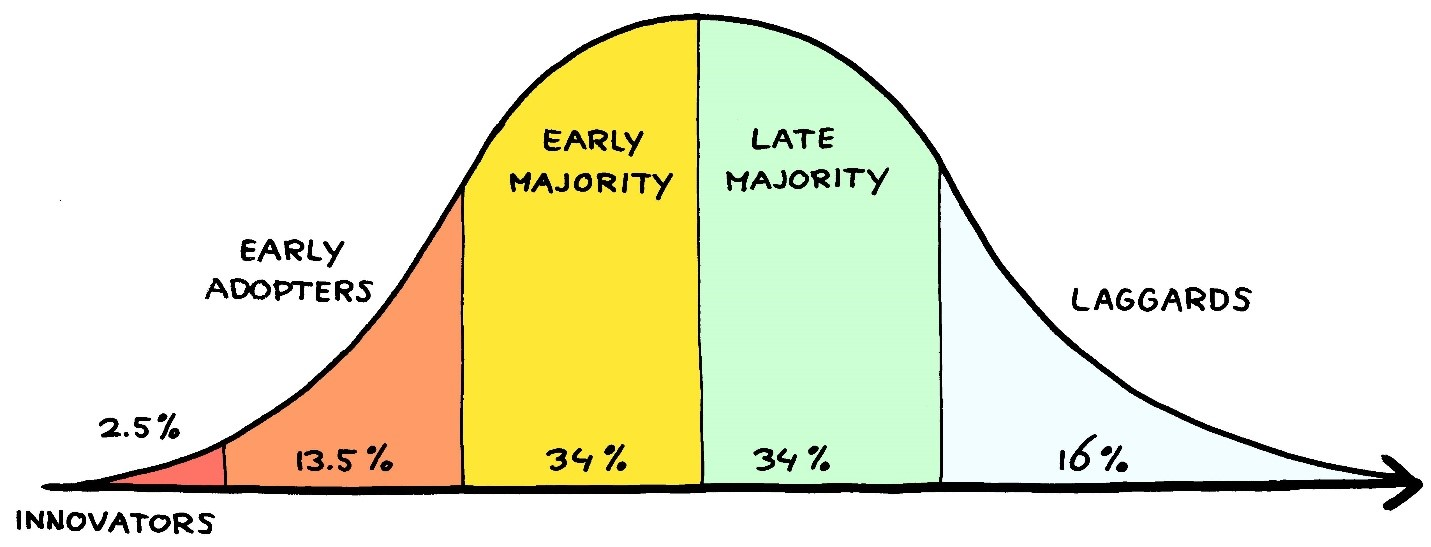
For those who have been focused on building a technology-driven culture, 2024 may enable those early adopters to leapfrog the late majority.

“We adopted the use of AI a few years back in a few different areas of the business as we saw the opportunity to get more efficient and to do more with less,” Wingfield told FreightWaves. “As a tech-based education provider, we continue to explore new ways of upskilling our teams as well as developing better solutions for our clients to be able to have more detail with less bandwidth.”

(Photo: American Society of Association Executives/The Center for Association Leadership)

Felipe Capella, co-founder and CEO of freight management solution Loadsmart, believes the early work his company has done with its data management and automation strategies has enabled the company to provide AI options, like its latest tool Co-pilot AI, which was released in June.

“I believe AI still has huge potential for the benefit of shippers and carriers. While brokers, 3PLs and other service providers talk about AI in the context of internal operational efficiency, very few companies currently offer shipper-facing AI solutions. We’ll continue to lead the industry in that direction, launching another robust AI solution tailored for shippers very soon.”

Experts say this is the year the laggards need to put in the work.

“Now is the time to continue to invest in the supply chain technology space. But do so with precision and focus. The supply chain is so primed for continued investments, but new technologies need to always enable more productive workflows and have a clearly defined vision and mission around them,” said Barnes.

“Two years from now, we’ll look at 2024 as the year that a few companies made the choices that set them up to be top 10 brokers and carriers,” said Schreiber. “Fortune favors the bold, so the companies that win make smart choices, not chase trends.”


The unsung FreightTech disrupters innovating supply chains

Navigating the brokerage landscape in 2024

Logistics M&A slower but opportunities still there

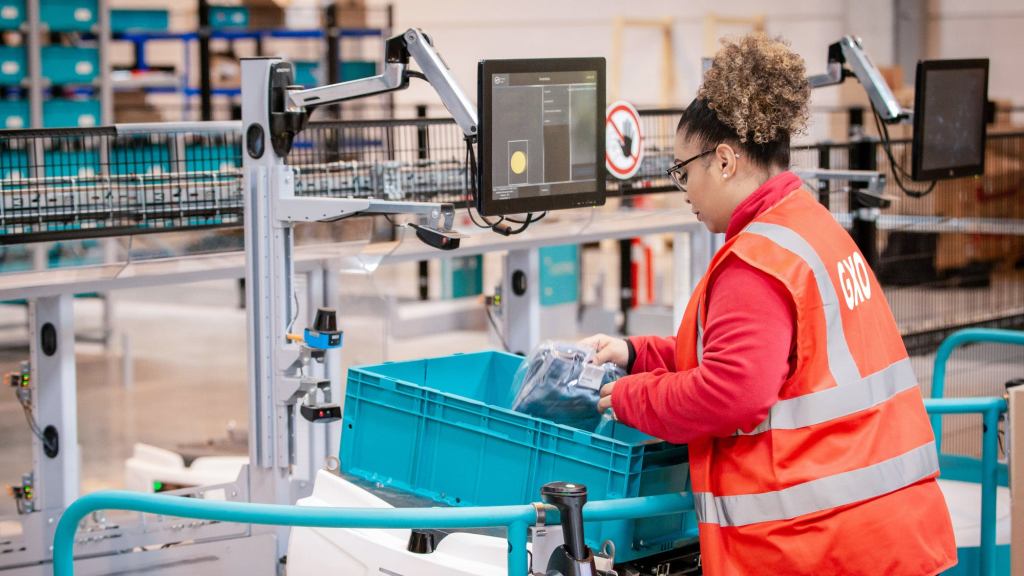
GXO to shut down Memphis facility, lay off 211 workers

Contract logistics provider GXO Logistics announced Wednesday it plans to close a distribution facility in Memphis, Tennessee, and lay off 211 employees.

The layoffs will begin March 6 and the facility will shut down by April 27, according to a filing with the Tennessee Department of Labor and Workforce Development.

Greenwich, Connecticut-based GXO (NYSE: GXO) said the Memphis facility’s closure was related to losing a contract customer at the site, which is located at 4795 Imagination Drive. The facility is listed as the Disney Distribution Center.

“We’re ending operations with one of our customers in the Memphis area. As a result, impacted employees will have the opportunity to apply for open roles and transfer to nearby GXO sites that serve other customers,” a GXO spokesperson told FreightWaves.

GXO has laid off more than 300 workers and ceased operations at several locations over the past year related to losing contract customers. Those facilities include logistics centers in Ohio, Texas and Maryland.

GXO is one of the world’s largest contract logistics providers, with over 130,000 global employees in 27 countries. It operates more than 970 warehouses.

More articles by Noi Mahoney

Warehousing and fulfillment startup Flexe lays off 99 workers

Private firm strikes $262M deal for 25-building logistics portfolio in South Florida

CBP reopens 4 Southwest ports of entry after weekslong closures

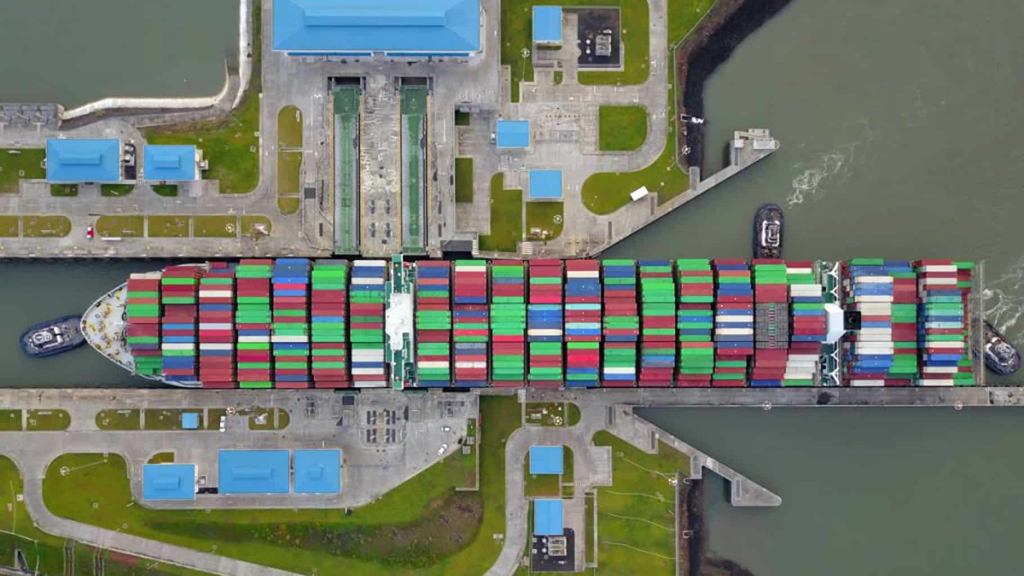
Maersk to use freight rail to circumvent Panama Canal amid drought

A.P. Moller-Maersk has announced it will begin using a freight railroad to bypass the drought-stricken Panama Canal, as low water levels have forced authorities to limit the number of large ships passing through.

The shipping container giant said Wednesday its Oceania-Americas (OC1) service, which normally uses cargo ships to transit the canal, will instead utilize the Panama Canal Railway, a 47-mile railroad running adjacent to the canal that connects the Atlantic and Pacific oceans.

Maersk’s OC1 service connects Australia and New Zealand with ports in Philadelphia and Charleston, South Carolina.

Maersk said vessels that used the Panama Canal will now use a “land bridge” creating two separate rail loops, one for cargo headed to the Atlantic and another for the Pacific. 

“Pacific vessels will turn at the Port of Balboa in Panama, dropping off cargo heading for Latin America and North America, and picking up cargo heading for Australia and New Zealand,” Maersk said in a news release. “Atlantic vessels will turn at Panama’s Port of Manzanillo, dropping off cargo heading for Australia and New Zealand and picking up cargo heading for Latin and North America.”

Maersk said it does not expect delays for any northbound vessels on routes stopping in Philadelphia and Charleston, but southbound vessels may experience some delays. 

As part of the adjustments, the OC1 route will also omit Cartagena, Colombia, the country’s main export port, Maersk said.

An unprecedented drought in Panama significantly reduced transits of larger Neopanamax-class container ships in November and December. 

Container vessels that traditionally used the Panama Canal to bring Asian exports to East and Gulf Coast ports switched to the Suez Canal due to low water levels. 

Those ships then began rerouting from the Suez Canal in October to avoid the threat of piracy from Yemen’s Houthi rebels, opting for longer ocean voyages around the Cape of Good Hope.

Maersk will continue operating its PANZ sailings that connect container ports in Los Angeles, Oakland and Seattle with ports in Australia and New Zealand.

“We are working diligently to minimize any impacts to your supply chain, and we remain in close contact with the Panama Canal Authority to ensure that we can give you timely updates,” Maersk said.

More articles by Noi Mahoney

Warehousing and fulfillment startup Flexe lays off 99 workers

Private firm strikes $262M deal for 25-building logistics portfolio in South Florida

CBP reopens 4 Southwest ports of entry after weekslong closures