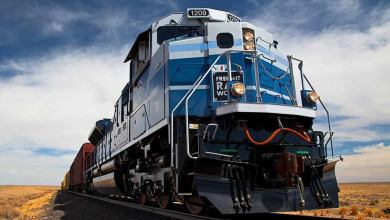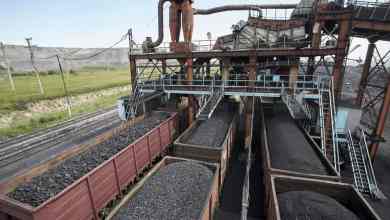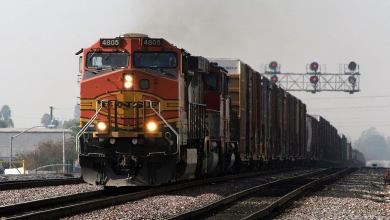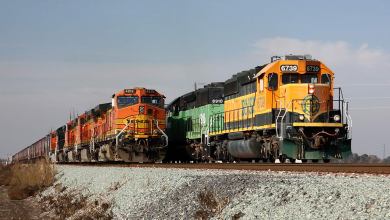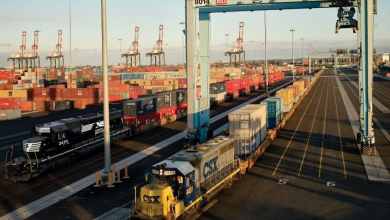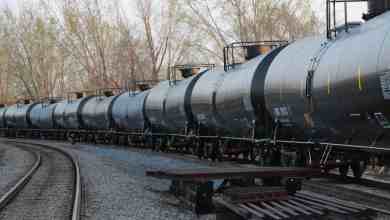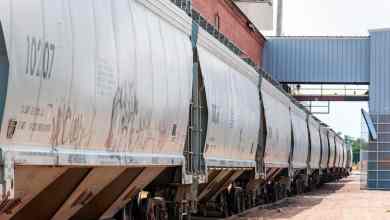
Commentary: Moving grain is a major market for U.S. and Canadian railroads
Jim Blaze writes about the movement of grain by rail. This is a huge business for U.S. and Canadian railroads, and is also critical to the export market of the two countries.
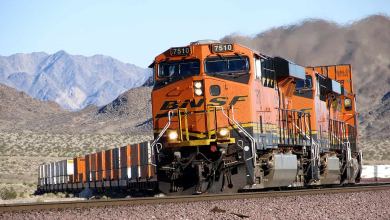

Year-to-date U.S. rail volumes fell again amid a loosening truck market, receding floodwaters in the Midwest and overall economic uncertainty.
Should the Class I railroads see U.S. rail volumes sustainably increase, furloughed workers could be called back to meet network capacity needs, resulting in a bump up of headcount levels. But another factor that could affect headcount levels in the long-term is the deployment of automation technologies.
U.S. rail volumes trended downward again for the week ending June 15, with weekly volumes falling over 5 percent and year-to-date volumes declining nearly 3 percent, according to the latest data from the Association of American Railroads.
Market expert Jim Blaze writes about the movement of coal by rail. He explores the history of rail-coal; more importantly, he writes about what the future may hold for coal in the U.S. and how that will impact the railroads.
Flooding impacts, cheap natural gas prices, and trade and economic uncertainty could be factors contributing to a significant slump in weekly U.S. rail volume.
U.S. intermodal volumes fell 5.9 percent in May, while carloads fell 2.1 percent amid economic uneasiness and uncertainties surrounding U.S. trade between Mexico and China.
The U.S. Supreme Court declined to hear a case again about whether Amtrak can have a role in crafting the on-time performance metrics and standards for the freight railroads. The Court’s June 3 action paves the way for Amtrak and the Federal Railroad Administration to finish establishing those metrics and standards.
e railroad industry is “concerned” about a possible disruption of the North American supply chain should the U.S. impose tariffs on imports from Mexico. But for now, the rail industry is taking a wait-and-see stance.
U.S. rail volumes tumbled 6.7 percent for the week ending May 25 as slumping intermodal volumes dragged total volumes lower. Softness in the housing and manufacturing sectors could be contributing to lower U.S. rail volumes year-to-date.
The Federal Railroad Administration is withdrawing its notice of proposed rulemaking for train crew staffing. Regulating train crew staffing is not necessary or appropriate for rail operations to be conducted safely, the agency said.
U.S. rail volumes fell again for the week ended May 18, while Canadian volumes grew, according to the latest data from the Association of American Railroads. The theme of higher U.S. carloads but lower intermodal volumes was also expressed by CSX this week.
This article brought to you courtesy of NEXT Trucking Intermodal and drayage carriers are seeing a drop in demand about midway through the second quarter. The U.S.-China trade war gets most of the blame, but it might be more complicated than that. After 2018’s rush to get containerized goods off of U.S. ports and into […]
Canadian rail volumes rose again year-to-date for the week ended May 11, while U.S. rail volumes continued downward amid U.S. tariff uncertainty and a fuzzy economic picture.
April rail volumes fell year-over-year but rose slightly from March 2019, the Association of American Railroads (AAR) said on May 1. But the AAR predicted that improving economic conditions could lead to rail volumes stabilizing or growing in the second half of the year, although some uncertainties still persist.
U.S. rail traffic dipped again for the week ending April 20, according to data from the Association of American Railroads.
Higher coal and chemicals volumes drove U.S. carloads upward on a weekly basis for the first time since late February, according to the latest data from the Association of American Railroads (AAR). But despite that weekly gain for U.S. carloads, overall U.S. rail traffic still softened.
President Trump’s executive order would create new transportation option for capacity-constrained LNG markets.
Year-to-date rail volumes for every commodity except petroleum and petroleum products slumped last week in the United States, according to the Association of American Railroads.
The Surface Transportation Board wants to hear from shippers and the Class I railroads on whether the railroads should supply more rail performance data to the board.