Commentary: What’s the 2020 outlook for railroad capital expenditures?
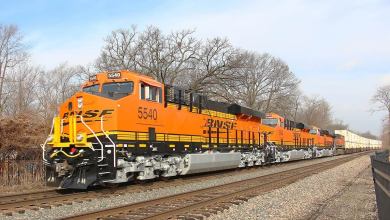
Jim Blaze writes about the decisions that will go into determining 2020 capital expenditures by the freight railroads.

Year-to-date U.S. rail traffic down 3.8 percent from the same period in 2018.
This week we step inside the world of an industry that’s been rolling for nearly 200 years. Ian Jefferies of the Association of American Railroads talks about rails role in the economy, an industry in transition, Precision Railroading, Positive Train Control, drones, data, and automation.
Trade uncertainty and loose truck capacity continue to weigh on rail traffic.
Weakness in the manufacturing sector is dragging U.S. rail volumes lower, AAR says.
Year-to-date U.S. rail volumes are still slumping this year, due in part to a competitive truck market for intermodal shipments.
The continued slump in U.S. rail volumes is putting pressure on overall North American rail volumes.
Grain may return with trade growth, but frac sand in structural change.
Year-to-date North American rail volumes fell 2.3 percent last week. But what about for the rest of the year?
The states of Illinois, Nevada and Washington are seeking to push ahead with state laws requiring a train crew size of at least two individuals, despite a federal declaration saying that such laws have been voided.
U.S. railroad operations loaded 5.5 percent fewer carloads and intermodal units in July, and trade uncertainty could threaten to maintain that downward trend in rail volumes for the remainder of 2019.
Jim Blaze writes about the recent history of intermodal rail service and what may happen in the next few years.
“If a shipper can share some of its production forecast information to railroads, railroads can plan better to meet that capacity. Conversely, if railroads can open up and show where their empty railcars are to the shipper so that the shipper has a bit more confidence that the right number of railcars are going to show up, then the shipper can more confidently choose rail.”
North American rail volumes are still lower year-over-year, but U.S. carloads recovered somewhat last week.
Passenger train proposal asks for comment on freight requirements as well.
U.S. rail volumes fell yet again for the week ending July 20, according to data from the Association of American Railroads.
Jim Blaze writes about the pros and cons of shippers owning or leasing their own freight railcars to move their products.
The continued decline of U.S. rail volumes was one of the themes mentioned in the second quarter earnings calls for CSX and Canadian Pacific.
Year-to-date U.S. rail volumes fell yet again this week, although improving economic indicators signal that rail volumes could moderate in the weeks and months ahead.
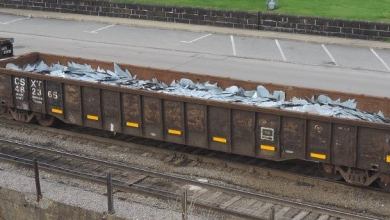
Jim Blaze writes about railroad movement of scrap – the market today and the future of the market.