ELDs hurting flatbed carriers more than other modes
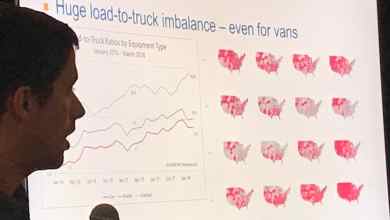
As the trucking industry continues to broadly install and learn to use the ELDs, there are beginning to be large disparities in the way the devices are impacting capacity via mode.


Brokers continue to see more business and higher revenue, according to the latest data compiled by DAT.
After setting one record high after another in the early weeks of 2018, the weekly DAT Dry Van and Reefer Barometers have finally pulled back slightly, before stabilizing in a strong growth range.
Lanehub is developing a social network where mostly shippers and carriers come together to identify long term efficiencies by aligning their networks—and they just lined up another round of seed funding.
“We are seeing what you are feeling,” says DAT data analytics consultant, Alex Perry.
As capacity tightens, there are two ways fleets and shippers can go: they can add more capacity through acquisition or equipment purchases, or they can tap into existing capacity in a different way. That way might be boosting the rental and dedicated transportation markets.
It wasn’t that long ago that many analysts believed the demise of Blackberry was close at hand. They were so wrong.
When capacity is tight and rates are high, to get the best deals, it pays to be a Preferred Shipper. But what is that, and how do you become one?
The compliance rate for ELDs among fleets sits at 86%, according to the latest rolling survey of 318 fleets by CarrierLists.
A combination of factors continued to drive dry van trailer orders as 2017 came to an end, with December orders up 38% year-over-year, according to FTR.
Losing your job is a painful experience, and buyers of transportation who can’t get things picked up and delivered on time lose their jobs.
According to ACT Research, preliminary North America Classes 5-8 net order data show the industry booked 58,800 units in December, bringing the full-year net order tally to 543,400. That is an 11% improvement over November and 35% above December 2016.
In today’s market carriers have more leverage than ever, and are going to start holding shippers accountable.
Just like everyone else who is familiar with the new regulation and the way that the trucking industry works, we expect that adoption of, and enforcement of, the ELD rule will initially lead to some constraints on trucking capacity. How big will that reduction be and how long will it last is yet to be seen.
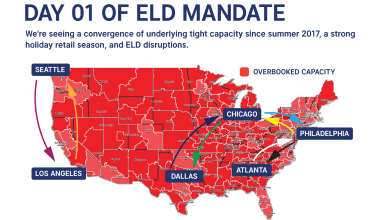
ELD fine enforcement hit during peak holiday retail season. Watch out for April’s ‘hard enforcement’ period, which will coincide with increased agricultural and construction demand.
Everyone who is even remotely aware of the trucking industry in the U.S. knows that the ELD rule goes into effect on Monday. Time will tell, but if there are not massive numbers of trucks parked on the side of the road, and shippers are actually able to find trucks to move loads, we will not be surprised.
In a mere seven months, the trucking marketplace has gone from over-capacitized to the most under-capacitized in recent history as the market dynamics have dramatically changed.
A natural disaster can rarely be called a benefit, but there are positives for the transportation industry and its investors from the double hit the nation took from Hurricanes Harvey and Irma. From higher stock prices to higher rates, trucking may be poised to reap many benefits from the storms.
The Shippers Conditions Index has improved slightly in August, although it remains in negative territory, according to the latest update from FTR. At the same time, DAT reported a decline in capacity last week on the spot market, which occurred before Hurricane Harvey struck Texas.
Harvey is the kerosene to accelerate the trends towards a major capacity crunch in the truckload industry. With as much as ten percent of capacity being impacted, combined with surpluss demand coming from relief and rebuilding- the truckload market capacity is expected to be super tight