Weekly Market Update: Volumes recover from Easter slump, but not all loads are created equal
Freight volumes recover from Easter lull as volumes are flat from a year-over-year perspective. Comparing load volumes is not the whole story, however.


National freight volumes took a nosedive this week as Easter had a decent impact on the freight market, but how much of the drop is related to the holiday?
Both companies share a common goal – giving small companies the leverage they need to play in the big leagues.
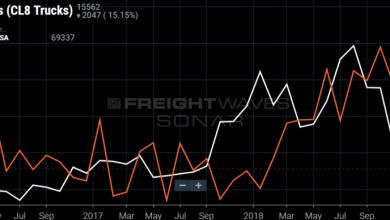
Capacity is still being added to the market. Truck orders numbers for both new and used models support this.
Job growth rebounded nicely in March as employers added nearly 200,000 workers to payrolls during the month. This strength in hiring did not translate to the trucking industry however, where payrolls declined for the first time in nearly a year.
Schneider Logistics published its 2019 Transportation Industry Review, arming shippers with the information they need to make short- and long-term distribution plans, budget freight costs and provide industry context to their broader audiences.
Choptank Transport is on a mission to turn its remaining manual processes into more efficient digital strategies. The quick-growing logistics service provider is hopeful that the transformation will bring revenue growth and help scale the business.
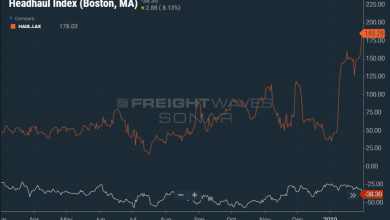
Data on producer prices shows that overall inflation pressure eased further in February, as a gain in goods prices was restrained by the service sector. Industry detail showed that overall trucking rates declined in February, led by the largest decline in long-distance truckload rates in four years.
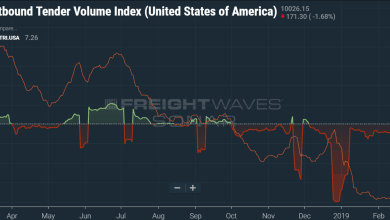
National freight volumes are flat year-over-year, but capacity is as loose as ever. What is driving the discrepancy?
Market volumes have increased significantly over the past several days, bringing national levels to those similar to early March of 2018 when the market was thought to be more active. The data tells us one aggregate value cannot tell the whole story.
The overall market remains relatively stable as volume dip below 2018 levels in two major markets. Spring is around the corner. Will freight volumes return with it?
The transportation giant will be using cloud-based software applications Load Track and Smart Capacity to improve its processes and make working with Schneider’s logistics division as seamless as possible for carriers and drivers.
So far this February has been what we would expect. Does the normally slow month have any surprises up its sleeves?
Driver detention has plagued the trucking industry for years. Now that the electronic logging device (ELD) mandate is in effect and fleets are decked out with more technology than ever, carriers have a better view of just how much detention is costing them.
Volumes and capacity remain flat through the first week of February. Has the freight market weathered the slowest part of the year?
Autonomous truck technology has the potential to change the cost structure of the carrier industry. A McKinsey & Company report said that a fully autonomous trucking market would cut operating costs by 45 percent, saving carrier companies between $85 billion and $125 billion annually.
The two Super Bowl teams and their fanbases are very different, just like their freight market identities.
Freight volumes recover as January closes. The artic air freezes the Midwest as the Chicago market heats up.
Last week had the largest single day percentage drop in volume since March of 2018. Capacity remained stable as we ride out the winter doldrums.
In the midst of the driver shortage and a growing economy, technology can be invaluable to brokers at third-party logistics providers working to secure reliable capacity for their customers.