Weekly Market Update: Capacity abounds as volume flattens
Capacity is abundant even though volume is relatively strong. Carriers are having little trouble covering the available freight making it a shippers’ paradise in mid-January.


The New Year has started off with a surprising amount of volume in the freight market. So far, capacity has been available to handle it. The tariff deadline extension may be providing a second wind.
It’s that time of year; time to look forward and plan for the year. In order to have a better idea of where the economy and industry are headed, we always like to look back and review from where we came and what happened.
The freight market has softened significantly in the last few months, but it is not due to a drastic reduction in volume.
Russel Jones, CEO of Cargo Chief, demonstrates C4 platform at MarketWaves 18: automated load-matching technology that levels the playing field among freight brokerages.
Volume continues to slide but there was little change in the market over the past seven days.
The second FreightWaves book, Freight Revolution: the supply chain will never be the same, sponsored by Uber Freight, is now available for download.
2018 may have seen tight capacity and the strongest economy on record since the Great Recession, but what will 2019 look like?
Retention, training, and the capacity crunch are undeniably hot button issues in 2018. In response, SmartDrive and FreightWaves collaborated to distribute a survey to uncover trends in driver incentive programs. The white paper—based on the findings of the survey, which was fielded in Q3 2018—reveals the steps that trucking companies are taking in order to hire and retain qualified drivers and create safer, more profitable organizations.
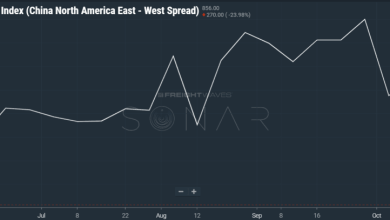
East coast bound containers from China are getting a pre-holiday discount as shippers increase volume to North America in front of tariff increases.
FreightWaves Chief Economist Ibrahiim Bayaan and FreightWaves Chief Analytics Officer Dean Croke explained what the data is saying about the freight market in this week’s monthly market update.
Demand for flatbeds always drop off this time of year, but is this a sign of a broader industrial slowdown?
Rail seems to be benefiting from higher diesel prices and capacity constraints with SONAR data suggesting more loads are shifting to intermodal in shorter lengths of haul.
Four new inbound truck lanes recently opened at Virginia International Gateway, increasing the capacity at the terminal’s gate complex by 30 percent.
Tender volumes are taking many by surprise, but not those that understand what is happening with the use of ELD’s by small carriers, especially in the dry van segment.
The economic roundup is a monthly summary of the various factors that affect freight demand and supply in the economy. Data releases in August showed an economic that was performing generally well, but softness in housing and trade are likely to impact freight demand.
After setting one record high after another in the early weeks of 2018, the weekly DAT Dry Van and Reefer Barometers have pulled back slightly before stabilizing in a strong growth range.
The song of 2018 remains the same—and tariffs or no tariffs, it projects to remain so even as infrastructure on the rails and ports expand.
The economy remains strong, and capacity tight, although buffeted by some headwinds.
North American Class 8 truck orders have soared to an all-time high, according to preliminary data from May.