Freight rates from/to China slide down the slippery slope
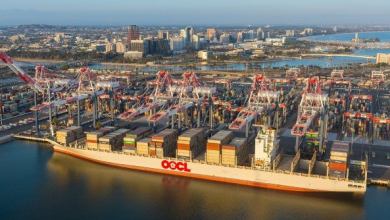
Down, down, down – freight rates are down, nearly across the board, on export and import routes to and from China, according to indices published by the Shanghai Shipping Exchange.
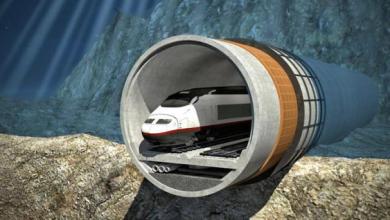

The FinEst Bay Area has secured a $17 billion financing for the world’s longest undersea tunnel between Finland and Estonia from a large Chinese private equity firm. This is yet another example of the Chinese interest in European infrastructure, a possible extension to their grand OBOR initiative.
The annual deficit in goods and services increased by $68.8 billion, or 12.5 percent, according to Commerce Department data released today.
Freight rates for biggest ships fall below those of smaller ships, but that is set up for rebound, market experts say.
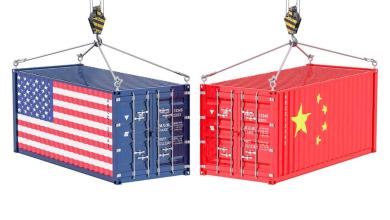
Political tensions in the Washington-Beijing bilateral relationship are making the China-based U.S. business community uneasy. Tariffs are being blamed for driving business confidence down, decreasing investment and for re-routing Asia-Pacific supply chains.
Widespread jitters in the Australian political and business communities that China may have banned imports of Australian coal now appear to be unfounded. Customs clearance delays at Dalian are happening owing to entirely “normal” reasons and coal cargo can be re-routed around a given port anyway, coal mining and coal transport executives have explained to FreightWaves.
Delphi Technologies (NYSE: DLPH) beat Wall Street’s consensus expectations of its fourth quarter non-GAAP earnings per share (EPS) of $0.88 by 20 percent according to Seeking Alpha. However, quarterly EPS decreased 14.5 percent year-over-year (Y/Y) from $1.24 to $1.06.
China leads the world in adopting futuristic transport technology and transit models – like electric vehicles and mobility as a service (MaaS). McKinsey believes that the trend would continue in autonomous driving niche as well.
Kerry Logistics (SEHK: 636) has entered a joint venture with E-Services Group (ESG) according to a Kerry press release. The joint venture, Kerry ESG, will increase e-commerce fulfillment in Hong Kong, mainland China and Taiwan, as well as the 10 members nations of the Association of Southeast Asian Nations (ASEAN).
Stifel’s head of equity strategy thinks the stock market will be weak for the next decade and that the federal government will default on debt unless it can force access into Chinese markets.
A weak December pulled down full-year volumes, trade group said.
Chinese e-commerce newcomer Pinduoduo (NASDAQ: PDD) seeks to finance an operational expansion by raising $1 billion. The company’s filing with the SEC said that it plans to sell 37 million shares to raise necessary capital.
Foxconn Technology Group (OTC US: FXCNY) created more uncertainty for its suppliers on Friday when it announced that it’s recommitting to building a liquid crystal display monitor (LCD) factory in Mount Pleasant, Wisconsin according to the Wall Street Journal.
The Grain Transport Report, a weekly publication by the Agricultural Marketing Service (a division of the U.S. Department of Agriculture) released information showing that total export inspections for grain (corn, wheat and soybeans) declined 22 percent from the previous week.
JUSDA, a supply chain platform that spun off Foxconn Technology Group, has raised $356 million in its Series A round.
China has problems that go well beyond U.S. tariffs.
Apple’s manufacturing partner Foxconn Technology Group, which assembles Apple’s iPhone product in China, announced on Saturday that it has raised over $213 million for what it described as a “mega-development” in India.
Profitability will lag in high growth markets like Brazil and India, but aftersales services in NAFTA and the EU will drive profitability growth.
Missing USDA data on wheat stockpiles has traders reacting cautiously.
The market for lumber slowed considerably in the second half of 2018 as the Chinese economy lost momentum and trade disputes with the U.S. persisted.