




FBX Report: November 02, 2022
The Freightos Baltic Index (FBX) is the world’s leading—and most accurate—index of market rates for 40′ containers.
The Freightos Baltic Index (FBX) is the world’s leading—and most accurate—index of market rates for 40′ containers.

Spot rate indexes look like they’re stabilizing — at least temporarily — after double-digit plunges in August and September.
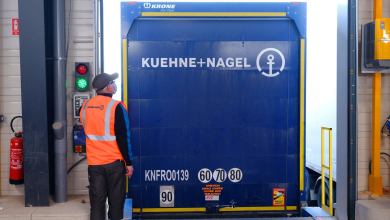
Kuehne+Nagel is the largest logistics company in the world. It sees opportunities to capture more business as shipping demand falls.

Rolf Habben Jansen, CEO of ocean carrier Hapag-Lloyd, gives his take on the “bullwhip effect,” rates and global trade.

Shipping lines face a minefield of surging capacity and sinking demand, but there is a path to safety, claims one industry expert.
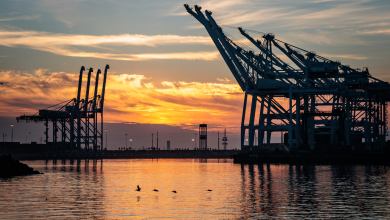
Southern California ports are being hit by double-digit import drops as the COVID-19 cargo boom winds down.

As container shipping stocks get battered by collapsing rates, tanker shares could be poised for a long bull run.
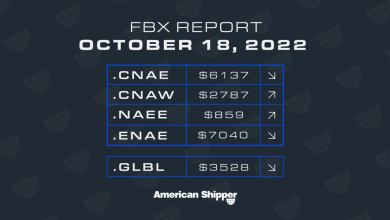
The Freightos Baltic Index (FBX) is the world’s leading—and most accurate—index of market rates for 40′ containers.

This week: J.B. Hunt launches a scholarship program for employee dependents and grandchildren, Maersk’s rainbow container is enjoyed by employees in Cape Town, South Africa, and Schneider receives its 14th Ride of Pride truck.
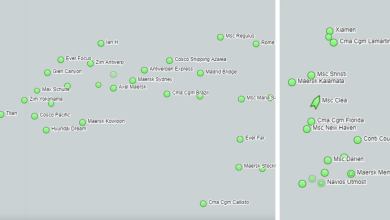
Declining imports have led to fewer container ships waiting off ports, injecting more capacity into the market, a negative for spot rates.
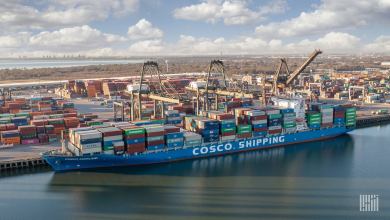
New disclosures by Asian ocean carriers confirm that container shipping lines remain extraordinarily profitable.
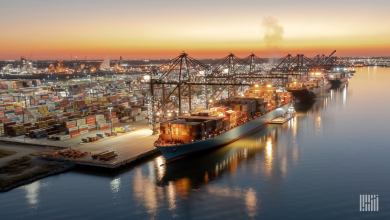
Demand for Asian goods began dropping earlier this year. This is now having a delayed — and highly negative — effect on U.S. imports.
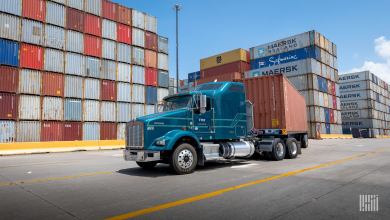
Ocean carriers will be subject to stricter requirements when they charge shippers fees on late containers if a proposed rule is adopted.
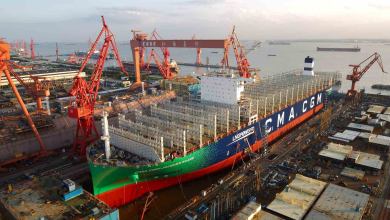
Shipping adheres to a time-honored tradition: When shipowners make exceptionally high profits, they order a lot of new vessels. When those newbuilds are delivered by the yards, it kills shipowners’ profits. Such boom-and-bust behavior has been de rigueur for over a century. As London shipbroker J.C. Gould, Angier & Co. wrote in 1894: “The philanthropy […]
As Southern California is the heartbeat of outbound truckload volume, the significant decrease in freight coming out of the region reflects in national freight volumes; maritime booking volume from all ports in SONAR Container Atlas are down 20% from this time last year.

The Freightos Baltic Index (FBX) is the world’s leading—and most accurate—index of market rates for 40′ containers.
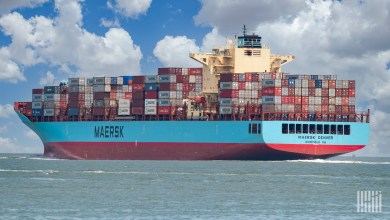
Supply-demand dynamics that supercharged pandemic-era rates are now “exactly the opposite,” says Maersk CEO Soren Skou.

Inbound container volumes into the U.S. bode poorly for future trucking volumes. Trucking is the critical node for transporting goods, handling over 70% of freight in the U.S. at a given time.

East and Gulf coast ports handled more volume than ever before in August, pulling far ahead of West Coast rivals.
Imports to the Port of New York and New Jersey are down this week, causing the Elizabeth, New Jersey, truckload market to soften. Shipments worldwide are down more than 33% since July 1.