FreightWaves SONAR data revealed global recession months before FedEx’s earnings
FreightWaves founder and CEO Craig Fuller outlines how FreightWaves SONAR pointed to the global freight recession months ago.
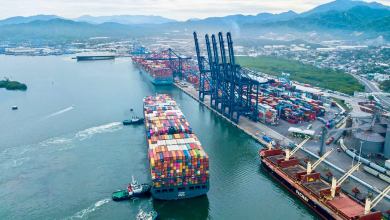

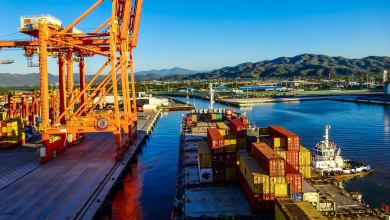
The Port of Manzanillo has resumed operations after a 7.7 magnitude earthquake rocked Mexico’s Pacific Coast region Monday.
Container lines are pulling back fast from the ship-leasing market, signaling less confidence in future freight income.
A 7.7 magnitude earthquake rocked Mexico’s Pacific Coast region, where the country’s largest container port is located.
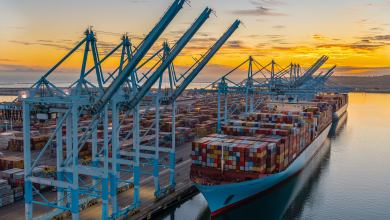
Container shipping rates — particularly from Asia to the U.S. — are still falling hard and show no sign of finding a floor.
The ports at Houston and Corpus Christi, Texas, continue to see monthly cargo growth from oil and steel shipments.
Outbound truckload tender volumes spiked this week out of Southern California, while intermodal volumes dipped due to a brief embargo. Could this be a result of shippers preparing for a potential strike?
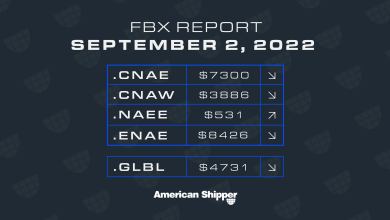
The Freightos Baltic Index (FBX) is the world’s leading—and most accurate—index of market rates for 40′ containers.
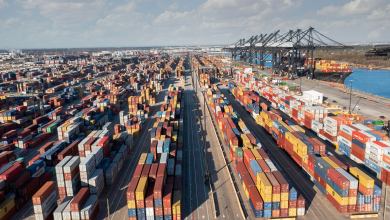
U.S. containerized imports are still near record highs, but not in Los Angeles, where they’ve fallen sharply.
Labor actions are creating great uncertainty for rail shippers in the U.S. and for air and sea cargo in Europe.
Federal regulators are proposing a “burden-shifting regime” aimed at helping importers and exporters secure container space on ships.
FreightWaves’ Mary O’Connell and Brian Glick from Chain.io, dive into all things ocean freight.
“This new funding will help us accelerate development of our platform and add even more data sets to enrich our expert industry analyses to further drive transparency in the market,” says Xeneta co-founder and CEO Patrik Berglund.
Spot container rates for U.S.-bound cargoes are falling fast, yet import numbers at U.S. ports remain near their peak.
Shipping volumes are weakening in and out of China. Is this a temporary pullback or a sign of more serious trouble ahead?
In a Q&A with FreightWaves, Shifl CEO Shabsie Levy says of current general rate increase global shipping practices: “It essentially incentivizes chaos and disruption but yet doesn’t play in anyone’s favor.”
Container and dry bulk shares soared last year, leaving tanker stocks behind. This pattern has now reversed.
A slowing eurozone may pull ocean container rates down further.
The Freightos Baltic Index (FBX) is the world’s leading—and most accurate—index of market rates for 40′ containers.
California’s container-ship traffic jam is almost gone, replaced by stubbornly high backlogs off the East and Gulf coasts.