





John Gallagher
Tuesday, September 17, 2019
DOT chief target of ethics probe into maritime connections
Chao’s influence over budget cuts could also affect national security, lawmakers allege.
Chao’s influence over budget cuts could also affect national security, lawmakers allege.
Dry bulk spot rates have pulled back from recent highs, while trans-Pacific container rates have held their gains.
The beleaguered dry bulk shipping sector is nearing its post-financial-crisis peak. Is it sustainable?

Companies like Safe Bulkers are booking their ships at considerably higher rates, yet investor interest remains muted.
The next global recession would have a different impact on ocean shipping markets than the 2008-09 financial crisis.
Golden Ocean could be a trendsetter, buying a stake in a marine-fuel operation to offset IMO 2020 price and availability risks.
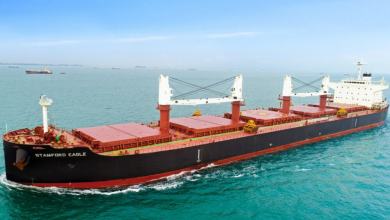
Eagle Bulk is finally in position to benefit from a rate recovery. It has been a long time coming for funds that invested back in 2013.
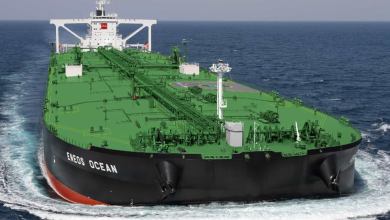
This week, VLCC rates are going sideways, Capesize rates have reversed, and container shipping has yet to gain traction.

Low pricing will speed up Europe’s transition from coal to gas, according to Morgan Stanley.

An in-depth, exclusive interview with Scott Borgerson, co-founder and CEO of CargoMetrics Technologies.
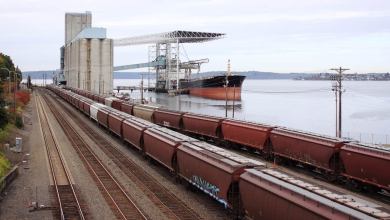
Generic corn and wheat futures are up nearly 30% since May 10 on depressed yields and constrained transportation in the Midwest.

Private equity-backed ship owners continue to sell fleets to already listed companies in return for shares.

Despite the controversies through the years, DryShips has proven to be a survivor – and has posted another quarterly profit.

Shipping’s ‘trade war’ equation is not measured in tons at sea, it’s measured in tons times miles at sea.
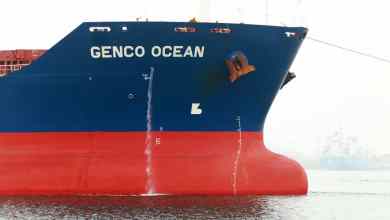
It’s rough out there in the dry bulk ocean shipping business. New York-headquartered Genco Shipping & Trading (NYSE: GNK) posted a net loss of $7.8 million in the first quarter of 2019, compared to a net loss of $55.8 million in the same period last year, when losses were driven by a non-cash impairment charge. […]

Momentum is building to limit the speed of ocean-going vessels to curtail harmful emissions. The debate will focus on how this could impact charter rates, and whether it could have the unintended consequence of creating even more emissions-generating ship capacity.

After falling rates and months of bad news, the dry bulk shipping community believes it has seen positive signs for the near-term markets. That’s despite some of the benchmark dry bulk seaborne volume and freight rate numbers taking a deep, deep dive. And, on analysis, the dry bulk shipping markets are currently really mixed-up.

Dry bulk shipping faced multiple headwinds in the first quarter, but NYSE-listed Scorpio Bulkers benefited from its smaller ships and its diversification into the product-tanker sector.
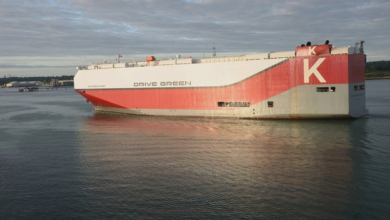
Tokyo, Japan-based ocean carrier, Kawasaki Kisen Kaisha https://kline.com/ (TYO:9107) has recorded a fall in revenues of Japanese Yen of 325,293 million down to JPY 836,731 million (US$7.5 billion) for the fiscal year ending March 31, 2019. Several board members have been removed.
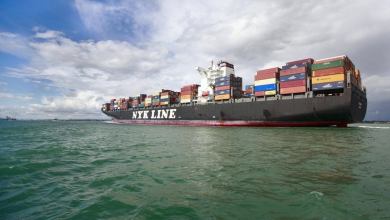
Japanese transport company, Nippon Yusen Kabushiki Kaisha (NYK Line) (JPX:9101) has today reported a loss of approximately US$400 million (Japanese Yen 44.5 billion) for the year ended March 31, 2019. Following the red ink bloodbath, the company has replaced the chairman, president and representative directors.