Today’s Pickup: Hours of Service “REST Act” bill introduced
The REST act would only make one significant change in the Hours of Service rule: to extend the day by three hours from its current top limit of 14 hours.
One thing that hasn’t changed (yet) with the ELD mandate is the way drivers get treated at shippers and receivers. The old adage of “hurry up and wait” has never been more apt, especially in the over-the-road truckload sector.
Rep. Babin introduced a bill that will overhaul the hours of service rules and if it passes it will end up making the industry safer.
FMCSA Administrator Ray Martinez heard plenty of complaints from truck drivers over ELDs, hours of service, and parking issues during a Listening Session at Mid-America.
The administrator said he is on an “aggressive listening” tour.
FMCSA’s Joe DeLorenzo took plenty of questions from the audience as he tried to clear up confusion over the ELD rule during a session at the Mid-America Trucking Show.
Crete Carrier had a 400% increase in load turndowns in February and that is just one of the metrics that indicates the current conditions of the freight market.
Even with lower levels of automation, trucks could essentially work around the clock, but what will regulators do about the ELD hours-of-service rule?
Drivers aren’t robots and one size doesn’t fit all, so in the absence of flexibility, wide-awake drivers attempt to sleep in rest stops on 10-hour breaks during the day, which is what makes the 14-hour clock so dangerous.
The Owner-Operators Independent Drivers Association has joined efforts to change the current hours-of-service rules to allow drivers to stop driving when they are tired.
We discuss our list of cities that made up our long-wait times for drivers and our methodology for how we came up with the list
Washington D.C., is often credited with killing the American truck driver and their ability to work. Now, we have ELD data to prove that, in-fact, Washington D.C. is where a drivers available hours go to die!
Back in November, KeepTruckin launched a petition drive asking FMCSA to provide a 2-hour exemption for long-haul drivers delayed at a shipper.
One of the big mysteries around hours of service is personal conveyance. When can a driver use a vehicle for personal reasons without it counting against their driving time? The Federal Motor Carrier Safety Administration is now attempting to clarify that usage through regulatory guidance.
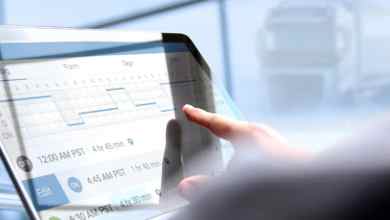
Nearly 17 years in the making since the Federal Motor Carrier Safety Administration first attempted to require electronic logging devices (ELDs) on commercial vehicles, the day has finally arrived for most of the nation’s 3 million plus driver workforce to begin using the devices.
The ELD mandate has finally arrived, but lets stop pretending this is a safety issue. Its not. The ELD mandate is about money. If we wanted to talk safety, our attention should focus on the real-evil: Hours of Service rules.
With truck drivers across the country being required to have electronic logging devices in their vehicles as of Dec. 18, some have complained about the move to electronic recording of hours when paper logs work just fine. For BigRoad CEO Tony Lourakis, the rule presented an opportunity.
ZED Connect offers an ELD device that comes with a one-time purchase fee and no monthly charges. COO Chris Harlow offered up some last-minute thoughts as the deadline quickly to implement ELDs quickly approaches.
FMCSA has made two recent changes to hours-of-service and ELD compliance that affects the agricultural community.
Offering long-haul truck drivers the opportunity to extend their day by 2 hours is the goal of a new petition to FMCSA from KeepTruckin. The ELD provider said an analysis of data collected from devices found a troubling pattern of safety concerns when drivers are detained at shippers.
An FMCSA pilot program to study the impacts of allowing drivers more flexibility in determined when they rest is being welcomed by many in the industry.
Trucking companies that have not installed electronic logging devices (ELD) are in a race against time to get them installed on their trucks before the Dec. 18 deadline. Omnitracs and Samsung Electronics are giving drivers another option to meet the regulation, according to Reuters.
Fleets using ELDs say they reduce manual processes related to HOS compliance, reduce compliance violations, and improve driver and public safety. All of these benefits provide fleets another benefit: potentially lower insurance costs.
In recent years, players in the transportation industry have embraced technology and this has greatly helped in solving the many challenges associated with manual operations, and the future is even brighter in the years to come.
There is growing talk of a possible bill in Congress that would kill the upcoming electronic logging device (ELD) rule that goes into effect on Dec. 18 of this year due to the cost to individual truckers, sources have told FreightWaves.
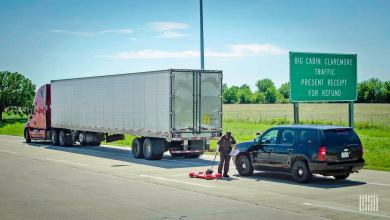
As efforts to delay implementation of the electronic logging device rule continue to flounder in Congress, opponents have received an olive branch from CVSA. The group says that while it will enforce the ELD mandate on Dec. 18 as planned, out-of-service orders will not be issued until April 1, 2018.
When the Federal Motor Carrier Safety Administration laid out the parameters of its electronic logging device (ELD) rule, it seemed pretty simple: Trucks newer than model year 2000 were required to have the devices. But the language, as is often the case, left some room for confusion.
While the industry continues to argue of the value of electronic logging devices (ELDs), it turns out that some of the data they generate can be very useful to carriers and their drivers. Keep Truckin has compiled some of the data its ELDs have collected and done a deeper dive, coming up with valuable insights into roadside inspections, of all things.
As the industry prepares for the December enforcement of the electronic logging device rule, there remains one area of the law that continues to create confusion for drivers – personal conveyance. What is personal conveyance and why does it cause so many problems?
Many larger carriers already require their drivers to use ELDs, but for smaller carriers that make up the majority of the industry, the implementation of ELDs and their associated cost could be a game-changer. This infographic highlights some of the key facts around ELDs, their impact on operations, and potential solutions to mitigate those impacts.