




Stuart Chirls
Tuesday, March 17, 2026
Longtime Memphis port chief Richardson retires
Port of Memphis Executive Director Randy Richardson, who led development of the inland hub, will retire at the end of this year.
Port of Memphis Executive Director Randy Richardson, who led development of the inland hub, will retire at the end of this year.

A lack of rain, particularly in areas that drain into the Ohio River, is leading to restrictions on barge sizes on the Mississippi River. On September 13, water levels on the Mississippi at Memphis were measured at approximately minus 4.45 feet, according to data from the National Water Prediction Service, which is part of the […]

The Port of New Orleans has received $230 million to complete infrastructure projects aimed at boosting international trade.
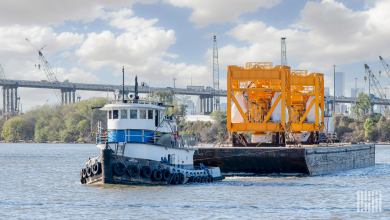
An unusually warm and dry winter might herald drought conditions in key areas of the Mississippi River Basin over the coming months.

The Port of New Orleans is receiving a $73.77 million federal grant to assist in building the $1.8 billion Louisiana International Terminal.

Barge rates on the Mississippi stabilized in the past week and are still well below where they were a year ago.

Barge rates for moving grain on the Mississippi have continued to rise as water levels remain low.

Barge rates on the Mississippi in St. Louis, a key port, have risen sharply due to low water levels on the river.
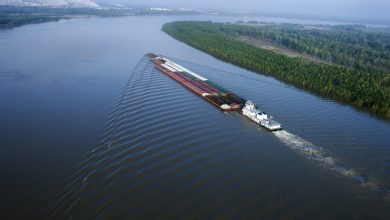
In March 1976, the Mississippi River was logjammed for eight straight days, causing massive shipping losses with an estimated 100 towboats and 900 barges stuck by the riverbank. The event spurred serious reform for operation on this vital route.
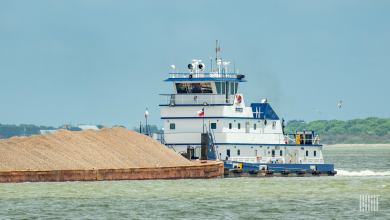
Water levels on the Mississippi River have been rising near Memphis, Tennessee, and that’s good news for barge movements.
Grain exporters have several options: paying higher transportation costs, storing grain, sending more of it to the domestic market or cutting their losses.
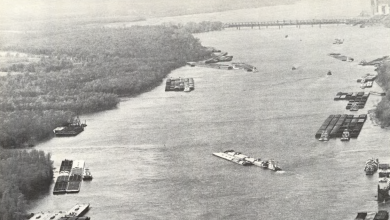
A massive eight-day backup of barge traffic at Locks and Dam 26 on the Mississippi River in 1976 resulted in shipping losses estimated as high as $500,000 a day.

Barge movement on the Mississippi River continues to be impaired by low-water levels with no end in sight.
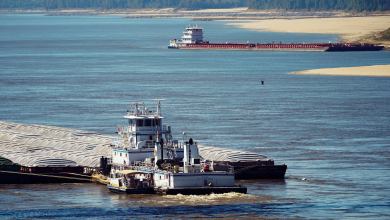
The world needs American energy and fuel — badly. And the barges carrying those goods can’t get through fast enough.

Work is underway to develop container-handling terminals in as many as five states along the Mississippi River.
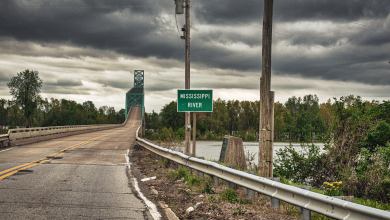
Officials say a proposed inland port near where the Mississippi and Ohio rivers meet will have ample capacity to serve Midwest customers seeking export access via barge, rail and truck.
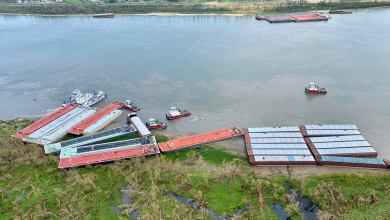
Port officials are still assessing Hurricane Ida’s impact, but initial reports indicate no major damage to the facilities.

FreightWaves discusses why and how the Water Institute of the Gulf is developing a digital platform monitoring shoaling on the Mississippi River.

The president of the Arkansas Trucking Association estimates $2.4 million a day in trucking industry losses due to the I-40 Mississippi bridge closure.
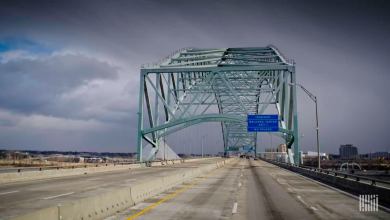
Due to a structural issue, truckers will have to keep taking detours around the Interstate 40 bridge between Tennessee and Arkansas.