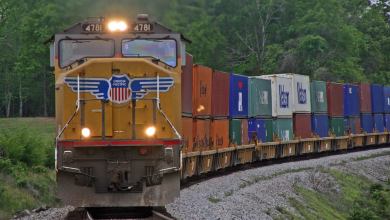
Union Pacific sets operating ratio record despite lower quarterly volumes
Union Pacific set an all-time record for its operating ratio in the second quarter despite lower freight volumes and a decline in freight revenue.
The continued decline of U.S. rail volumes was one of the themes mentioned in the second quarter earnings calls for CSX and Canadian Pacific.
Norfolk Southern and Union Pacific are modifying some of the ways they collect demurrage and accessorial charges for some commodities, but some shippers are questioning the modifications.
“The present economic backdrop is one of the most puzzling I have experienced in my career..”
Despite a drop in profit in the second quarter, CSX’s (NYSE: CSX) operating ratio set a company record.
Canadian Pacific’s (NYSE: CP) second quarter net income rose 66 percent amid a 13 percent increase in company revenue, the railroad reported on July 15. CP’s financials are reported in Canadian dollars, except for earnings per share.
The Cass Freight Index Report offers two questions. “Has economic contraction already begun? Will GDP be negative in Q2?”
Jim Blaze writes about earnings season for the railroads, and what investors, customers and employees should be looking and asking for in the railroads’ quarterly earnings reports.
While operational efficiencies get the credit for a freight railroad’s improved operating ratio, other factors, such as changes in fuel prices and increases in freight rates, play significant roles according to a research paper by a law firm representing shippers in Canada.
As the Class I railroads begin reporting their second quarter earnings results next week, some members of the Wall Street community expect the lower rail volumes from the second quarter to affect the railroads’ financial results.
Year-to-date U.S. rail volumes fell yet again this week, although improving economic indicators signal that rail volumes could moderate in the weeks and months ahead.
Although the U.S. Senate Commerce Committee has voted in favor of the nomination of an additional board member to the Surface Transportation Board (STB), whether and when she will be installed remains to be seen.
When it came to choosing the location for our latest and greatest event, Chicago was a no brainer. The Windy City isn’t just at the heart of the Midwest, it’s the center of all things freight, futures, and some of the most disruptive tech on the market today. That’s what makes Chicago the perfect place […]
“Without documented strategies for how it plans to communicate the results of its research, FRA may lose an opportunity to effectively work with internal and external stakeholders – such as railroads, rail workers and local communities – to address any risks of operating longer trains in support of the agency’s mission of enabling the safe, efficient and reliable transportation of people and goods.”
Jim Blaze writes about railroad movement of scrap – the market today and the future of the market.
Ben Thrower profiles Virgin Trains USA’s plans for private passenger service in Florida, Nevada and California. Richard Branson changed air travel; will he be able to do the same thing with passenger train service in the USA?
FreightWaves’ Freight Intel Group has released a new study of the impact of IMO 2020 on the U.S. trucking industries (and other industries). Read what may happen to diesel fuel prices.
The service problems associated with precision scheduled railroading (PSR) have motivated forest products and scrap recycling shippers to press the Surface Transportation Board to renew a longstanding request for regulatory oversight.
Rail volumes were off again for the week ending June 29, 2019 with U.S. railroads reporting a 5.5 percent decline.
Blocking railroad crossings in Oklahoma now could come at a financial cost for freight railroads.