Logis9 joins Blockchain in Transport Alliance
Logis9, a tech-enabled, non-asset based 3PL based in Sunnyvale, CA, that designs customer transportation solutions, announced it has joined as a new member of the Blockchain in Transport Alliance (BiTA).

With all the advances being made in technology, it’s time for state transportation departments to be innovative and forward thinking, but that is not the case, according to the latest edition of McKinsey & Co.’s Voices on Infrastructure report.
JD.com, Alibaba’s closest rival in Mainland China, is pushing to develop 1,000 “new energy logistics” vehicles through its subsidiary JD Logistics, Yicai Global reports.
Despite skeptics insisting on calling it an electrical airplane, Uber would rather call its latest prototypes Vertical Take-Off and Landing (VTOL) vehicles. Jalopnik has just reported the ride-hailing innovator’s deal with NASA to develop VTOLs. Tests are expected to start by 2020.
“Uberization” has become a huge buzzword in the 3PL industry, but the business models of the digital brokers using apps is unlikely to have an impact on the way the industry operates. The technology of smart contracts, however, is a game-changer.
The on-demand trucking service trend has hit France, as Convargo is now seeking to become that country’s “Uber of trucking,” TechCrunch reports. The company, which pitched itself as “a marketplace for shippers and carriers,” has raised $19 million in a Series A round of funding.
The Environmental Protection Agency’s (EPA) SmartWay program has recognized 48 carriers, retailers, manufacturers and logistics companies with its SmartWay Excellence Awards.
C.H. Robinson, a world-leading third-party logistics (3PL) provider, announced today that it has joined the Blockchain in Trucking Alliance (BiTA) to influence the development of blockchain standards and applications in the transportation business.
For the past 15 years, if a carrier needed some assistance getting over a rough time financially, there has been help available from lenders who specialize in transportation finance. One of those companies is Marquette Transportation Finance, which just surpassed a milestone of sorts: It’s lent more than $15 billion to companies large and small.
There were a number of companies that presented new and updated products this past week at the American Trucking Associations’ MCE 2017 conference in Orlando, FL. Here is a rundown of some of those products.
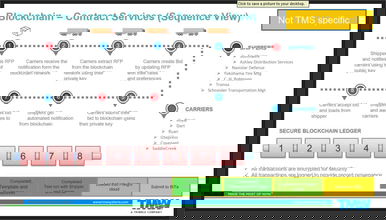
TMW Systems is working on blockchain-enabled products and gave a demonstration and update on how that work is progressing on Friday.
The potential for the hyperloop technology to take the world by storm is growing. Silicon Valley start-up Hyperloop One has finally chosen what the company views as the best areas to build its first hyperloop tracks.
TMW Systems sees enormous potential with blockchain technology, but notes that successful implementation requires a “strong partnership with a technology provider that understands its intricacies and potential applications.”
Blockchain has become the latest buzzword to enter industry lexicon. While many still may not know what it is, it is likely to be a technology that transforms trucking and the way it operates. Fleet Complete is one of the companies that has recognized its potential.
After seeing the fleet-wide fuel economy average climb 3% in 2015, the North American Council for Freight Efficiency (NACFE) says that the increase reported in its Annual Fleet Fuel Study was not as dramatic for 2016.
To solve inefficiencies in the supply chain, project44’s goal since day one has been to focus on the automation, optimization, and visibility of the freight movements by replacing legacy technologies with its “one-to-many” connectivity.
Although some politicians abhor rising GHG levels while others deny that global warming even exists, the general consensus of the private sector is that if corporations don’t get on board with safe environmental practices now, they will quickly fall behind their competitors.
Analysts continue to argue that EVs are not ready to compete with internal combustion engines (ICE), and technology advances will need to come in the next decade or two before EVs can dominate the marketplace. But the Tesla Model 3 is challenging that, and it’s success is something that trucking will watch closely.
Oil or electric? The future of transportation power is still unclear, but electric is making a strong push amid oil price volatility.
According to PriceWaterhouseCooper (PwC) global transportation and logistics deals soared in the second quarter of 2017, rising 127% over the first quarter and 26% year-over-year. One of the reasons is e-commerce.
Shut downs of operating systems due to cyberattacks are complete handicaps for logistics companies and lead to significant amounts of lost business as well as productivity. But can they be prevented?
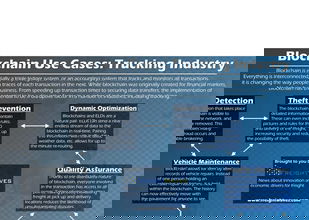
Blockchain is a technology that is rapidly growing in many industries, and its potential to disrupt traditional work flows in transportation is large. This graphic illustrates some of the potential areas where blockchain can be used to improve operations.
The logistics of transporting fresh produce from fields and warehouses to store shelves is already complicated by regulations and the seasonal nature of the products, but Amazon’s entry into the market could further complicate the journey.
TaaS seems like another in a long line of acronyms that have infiltrated the transportation industrypromising to disrupt the world as we know it. But what is TaaS, and why will this be an acronym that might deliver on its promise?
In another step into the food space, Amazon has announced it will buy Whole Foods for $13.4 billion plus debt, giving the e-tailer a physical presence in the $700 to $800 billion consumer grocery world. But like many things with Amazon, the end game may be something different.
Do you have money to invest? If so, Martin Tillier has some advice: the time may be right to invest in trucking and logistics company stocks. Tillier notes that money spent on infrastructure will improve the fortunes of an industry that counts infrastructure as a critical piece to getting its job done.
The battle between Amazon and Walmart took another turn when Amazon announced it would begin offering discounted Prime memberships to those on U.S. government assistance. That could pull shoppers, and freight, from Walmart.
When capacity is tight, spot market rates increase, and that hurts brokers. There are other factors that affect rates, of course, but 3PLs have had few options to manage the underlying fundamentals that so negatively hurt their businesses. That is about to change.
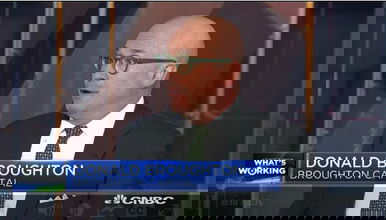
“If you look back at the DAT truck data, which is essentially the NASDAQ of truck freight brokerage, you would know ahead of time,” Donald Broughton told CNBC, explaining why the firm’s data is a good indicator of economic trends.
The transportation industry is ripe with startups hoping to be the one that disrupts a $726 billion industry, but without help, most don’t last. Dynamo is a Chattanooga-based venture capital firm that specializes in the logistics space and is helping a few of these startups gain a solid foothold in transportation.
From drones to the Internet of Things (IoT), technology is pushing the boundaries of what is possible in the world of business. It is no different for transportation entities, especially shippers and carriers who are embracing technology while remaining mindful of ever-slimming margins.