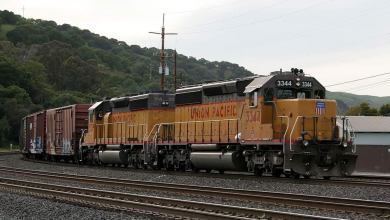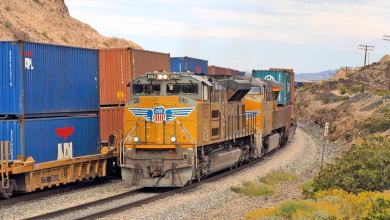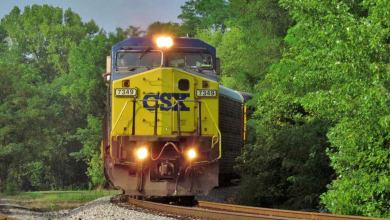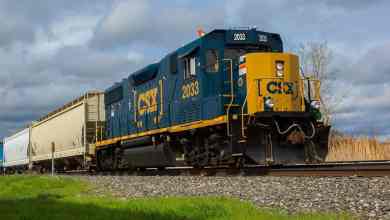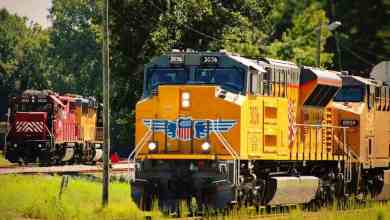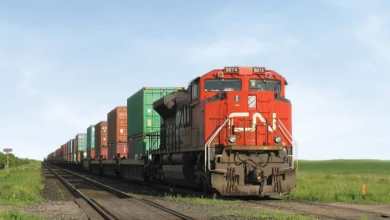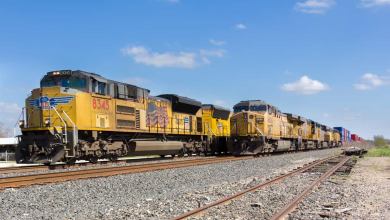
CSX, Union Pacific, Canadian National pledge to reduce emissions
The three Class I railroads have set or will set targets as part of their involvement in a global initiative.
Norfolk Southern and Union Pacific say they have contingency plans should the coronavirus threaten to disrupt operations.
The Brotherhood of Locomotive Engineers and Trainmen wants freight and passenger railroads to temporarily alter their sick leave policies and provide stronger sanitizing materials.
Uncertainty is still an underlying theme facing North American freight railroads.
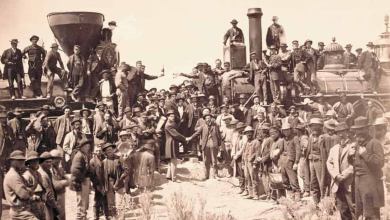
The transportation of goods and people was transformed when eastern and western rails were connected in 1869.
Union Pacific opens lanes, while Norfolk Southern talks lane opportunities to take market share from trucks.
Quarantines and factory shutdowns could deepen and extend the traditional Chinese New Year trough.
The railroad eyes slight volume growth in 2020 amid plans for longer trains and reduced headcount.
Net income falls in the fourth quarter amid a decline in operating revenue and a decrease in rail volumes.
Los Angeles port signals efficiency gains as the third-largest container alliance plans additional SE Asia stops.
Lower rail volumes, an active Surface Transportation Board and a strike were among the key events that the U.S. and Canadian freight rail industry experienced this year.
The next step is achieving full interoperability with other railroads.
Proposal providing relief for shippers could be rolled out next year.
Several management teams from North America’s largest Class I railroads were on hand to discuss current demand, their networks and the future at the Credit Suisse 7th Annual Industrials Conference.
Union Pacific (NYSE: UNP) is suing the city of Palestine, Texas, to nullify a 150-year-old contract to keep a certain number of jobs in the town indefinitely. The agreement between Union Pacific and Palestine — which was signed in 1872 — dates back to the days when the city was at the crossroads of several […]
North American Class I carloads increased year-over-year in week 47 on a favorable comp. The prior four-week average remains weak.
The terminal wants to be an alternative for those needing intermodal services to the U.S. West Coast.
Rationalizing additional network assets is still a possibility in 2020.
Now Goldman thinks that ISM data won’t turn positive until Q2 2020.
Carloads on the railroads remained under water in the first week of the fourth quarter 2019. Intermodal weakness will be in the spotlight as third quarter earnings season approaches.