




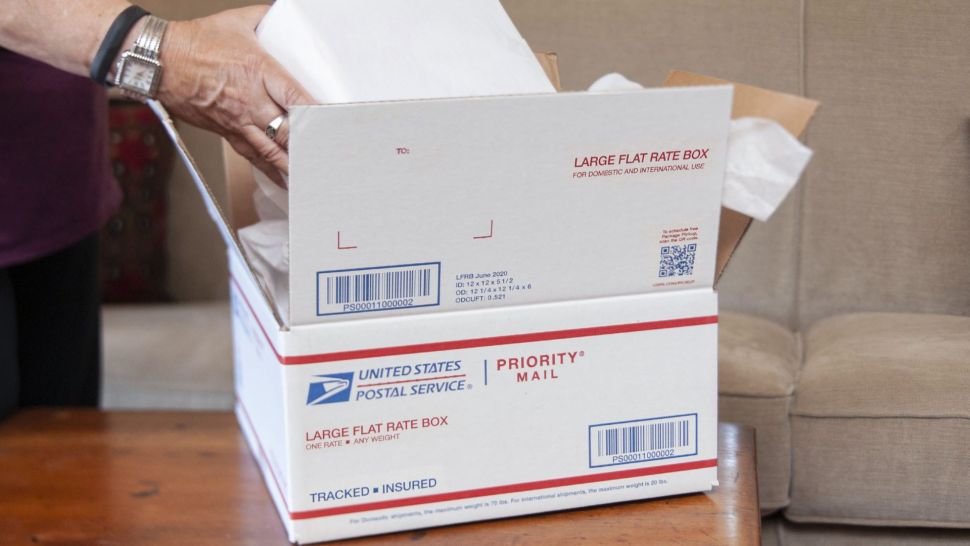
The price of sending packages, letters and bulk mail through the U.S. Postal Service went up on Sunday, to the dismay of mass mailers and e-commerce sellers.
The product and service price increases were telegraphed earlier this year and received approval from the Postal Regulatory Commission.
The price for domestic shipping service increased about 6.3% for Priority Mail service, 7.1% for USPS Ground Advantage and 7.6% for Parcel Select. Ground Advantage, introduced two years ago, is an economical service for shipping packages up to 70 pounds in two to five business days. It replaced three other parcel delivery products. The minimum charge for small packages now exceeds $4.
Meanwhile, the price of a first-class mail stamp increased to 78 cents from 73 cents. Letter and postcard rates on average increased 7.4%.
Single-piece letters weighing more than an ounce increased a penny to 29 cents for each additional ounce.
The new prices lists are available here.
Price increases for mailing services are based on the consumer price index, while shipping services are adjusted according to market conditions. The board of governors said the new rates will keep the Postal Service competitive while providing the agency with needed revenue. The cost of a first-class Forever stamp has risen seven times since 2021, when it was 55 cents.
The higher shipping rates will impact small-and-medium companies that sell goods online and some could go out of business, said Lucas Zheng, founder of San Jose, California-based startup Samezip.
“Although many companies also provide services cheaper than USPS, only USPS can cover the entire United States and can provide free delivery at home, which is something that no other company can do. In addition, it is still very difficult for small and medium-sized shippers to do pre-sorting because they don’t have many packages. For large customers, the price increase of USPS may still be a good thing, because they can do pre-sorting, use multiple package channels, and finally throw the packages that other companies cannot cover to USPS,” he wrote on LinkedIn.
Criticism from mass advertisers and non-profits
Bulk mailers say the rate increases are unwelcome. Keep US Posted, which advocates for greeting card publishers, magazines, catalogs, and printing and paper interests, this month urged incoming Postmaster General David Steiner to call on the board to freeze the mailing rates until after he takes office.
“We believe it is counterproductive for another postage surge to take place immediately before you undertake leadership of the Postal Service, as it will deprive you of the ability to thoroughly assess, and potentially rectify, one of the most destructive policies in DeJoy’s Delivering for America plan,” Executive Director Kevin Yoder said in a letter to Steiner.
Delivering for America is a 10-year turnaround strategy aimed at improving transportation efficiency and returning the Postal Service to financial viability, including by raising revenue. The Postal Service this month reduced service to remote post offices as part of an effort to streamline inefficient routes and consolidate distribution facilities.
Louis DeJoy left as postmaster general in March under pressure from White House, which encroached on the agency’s independence.
The mail system lost $16 billion in the past two years, partly due to congressional mandates on how to account for worker benefits.
The Alliance of Nonprofit Mailers says record rate hikes the past three years have worsened the Postal Services finances.
The Association for Postal Commerce last month requested that the Postal Service delay implementation of the rate hikes to Sept. 28 so businesses would have enough time to adjust their own customer pricing.
In a June 6 letter to the board of governors, the trade group complained that documentation needed for developers to update commercial mailing software should have been available no later than mid-April, but was not provided until May 1 and is not expected to be finalized until mid-June.
“Software companies, corporate mail centers, and mail service and logistics providers will therefore be forced to take shortcuts to meet an unrealistic deadline as well as seek exceptions for their clients who will otherwise fail to comply with preparation and entry requirements. Either way, July 13 implementation of the new rates is likely to result in misdirected mail, operational bottlenecks, postage payment adjustments, and severe service disruptions,” wrote Michael Plunkett, president of the Association for Postal Commerce.
PostCom said it didn’t receive a response from the board.
(Correction: An earlier version of this story incorrectly stated that the Alliance of Nonprofit Mailers is a member of the Association for Postal Commerce.)
Click here for more FreightWaves/American Shipper stories by Eric Kulisch.
Write to Eric Kulisch at ekulisch@freightwaves.com.
RELATED STORIES:
US parcel market to grow 36% by 2039, Pitney Bowes says
Postal Service board names FedEx official as CEO before vetting complete
Accounting change, higher labor costs drive $3.3B Postal Service loss
Brokerage Compliance Symposium
The day before F3. Every compliance issue you face - fraud exposure, carrier liability, FMCSA rules, cargo theft, insurance gaps - navigated by attorneys and operators defining best practices in a changing industry.
F3 Awards Dinner
The night before F3. FreightTech100 companies honored. FreightTech 25 and Shipper of Choice winners revealed live. Cocktail reception into dinner and live music - 300 industry leaders in one purpose-built room.
F3: Future of Freight Festival
Industry-defining keynotes, rapid-fire technology demos, and industry leaders networking in experiences across Chattanooga - plus the inaugural F3 Awards Dinner featuring the FreightTech and Shipper of Choice reveals.
The day before F3. Every compliance issue you face - fraud exposure, carrier liability, FMCSA rules, cargo theft, insurance gaps - navigated by attorneys and operators defining best practices in a changing industry.
The Signal at Chattanooga Choo Choo • Chattanooga, TN Register NowThe night before F3. FreightTech100 companies honored. FreightTech 25 and Shipper of Choice winners revealed live. Cocktail reception into dinner and live music - 300 industry leaders in one purpose-built room.
The Signal at Chattanooga Choo Choo • Chattanooga, TN Register NowIndustry-defining keynotes, rapid-fire technology demos, and industry leaders networking in experiences across Chattanooga - plus the inaugural F3 Awards Dinner featuring the FreightTech and Shipper of Choice reveals.
The Signal at Chattanooga Choo Choo • Chattanooga, TN Register Now