




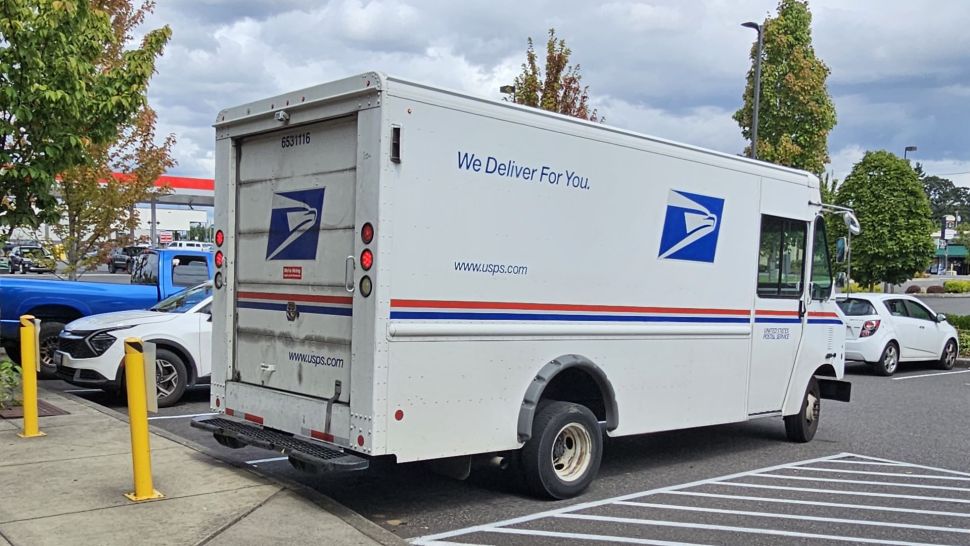
The Supreme Court on Wednesday will hear oral arguments in a case that tests whether the U.S. Postal Service can be held liable for intentional failure to deliver mail.
Lebane Konan, a Black landlord in Euless, Texas, sued the Postal Service under the Federal Tort Claims Act, alleging that mail carriers intentionally refused to deliver mail to her properties, causing tenants to move out and cost her up to $50,000 in rental income, plus emotional distress and extra time and costs using FedEx.
Konan leased two rental residences and retrieved business and tenant mail from a central mailbox. In May 2020, U.S. Postal Service employee Jason Rojas changed the lock on the mailbox at one of Konan’s properties without her approval, halted mail delivery and demanded ownership verification. Even after the USPS’s inspector general confirmed Konan’s ownership, Rojas and a coworker allegedly continued marking mail addressed to Konan and her tenants as undeliverable. Konan claims the refusal of service was racially motivated.
The Federal Tort Claims Act generally allows individuals to sue the United States for torts — wrongful acts that are neither crimes nor breaches of contract that can be subject to damages — committed by its employees, but a postal exception protects the USPS from liability for claims arising from the loss, miscarriage or negligent transmission of mail. That means someone can’t sue the Postal Service under the FTCA for mail that is lost, delivered incorrectly or damaged during transit. But legal experts say the exception isn’t absolute. The Supreme Court, for example, recently considered whether the exception applies to intentional acts of mail mishandling. The question for the court is whether Konan’s claims of intentional nondelivery fall within “loss” or “miscarriage.”
“The United States Postal Service is often forced to awkwardly balance operating as a private transportation services business and its role as one of the oldest institutions of the United States federal government,” said Greg Reed, a regulatory attorney at Hanson Bridgett LLP who previously served as executive director and transportation counsel for the National Star Route Mail Contractors Association. “To accommodate this balancing act, the federal code is littered with postal exceptions that liberate USPS from typical government obligations and, in the case of U.S. Postal Service v. Konan, may also shield it from lawsuits unlike any of its private industry competitors.”
The North Star Route Mail Contractors Association represents companies that comprise the U.S. Postal Service’s $5 billion surface transportation network.
A Texas district court dismissed Konan’s claims, but the U.S. Court of Appeals for the 5th Circuit reversed the decision, holding that the exception doesn’t apply to intentional nondelivery. The judges said “loss” implies unintentional destruction or misplacement, and “miscarriage” requires some attempt to deliver the mail. Other circuits in the past have gone the other direction, according to John Elwood, a partner at Arnold & Porter.
In written arguments, the U.S. Postal Service argued that the 5th Circuit’s decision creates a loophole allowing plaintiffs to bypass the exception by alleging intent, which could encourage a significant number of lawsuits that could disrupt its functioning.
“If plaintiffs can recover from injury caused by mail theft or other intentional mishandling, litigants may be inclined to assert that any mail deprivation was the product of intentional action, rather than mere negligence. Such allegations, even if later determined to be unfounded, could force the USPS to expend its limited resources on burdensome discovery and draw funding away from mail delivery,” University of Chicago Law School student Margaret Schaack wrote in a Law Review article.
The Postal Service may have valid concerns about facing tort claims. On the other hand, “Insulation from tort lawsuits for intentional actions may disincentivize the USPS from expending resources to institute policies that better prevent intentional impediments to mail delivery,” she opined.
“The risk that the USPS may not take this threat seriously seems especially acute given the mail’s frequent use to transmit extremely important documents. For example, in the face of relaxed procedures and policies, postal workers might feel emboldened to intentionally withhold mail-in ballots for elections. Though the government may hold postal workers accountable for such intentional action through other avenues, including criminal charges . . . these resolutions do not provide any direct recourse to potential litigants whose ballots are stolen and delayed.”
Click here for more FreightWaves/American Shipper stories by Eric Kulisch.
RELATED STORIES:
Brokerage Compliance Symposium
The day before F3. Every compliance issue you face - fraud exposure, carrier liability, FMCSA rules, cargo theft, insurance gaps - navigated by attorneys and operators defining best practices in a changing industry.
F3 Awards Dinner
The night before F3. FreightTech100 companies honored. FreightTech 25 and Shipper of Choice winners revealed live. Cocktail reception into dinner and live music - 300 industry leaders in one purpose-built room.
F3: Future of Freight Festival
Industry-defining keynotes, rapid-fire technology demos, and industry leaders networking in experiences across Chattanooga - plus the inaugural F3 Awards Dinner featuring the FreightTech and Shipper of Choice reveals.
The day before F3. Every compliance issue you face - fraud exposure, carrier liability, FMCSA rules, cargo theft, insurance gaps - navigated by attorneys and operators defining best practices in a changing industry.
The Signal at Chattanooga Choo Choo • Chattanooga, TN Register NowThe night before F3. FreightTech100 companies honored. FreightTech 25 and Shipper of Choice winners revealed live. Cocktail reception into dinner and live music - 300 industry leaders in one purpose-built room.
The Signal at Chattanooga Choo Choo • Chattanooga, TN Register NowIndustry-defining keynotes, rapid-fire technology demos, and industry leaders networking in experiences across Chattanooga - plus the inaugural F3 Awards Dinner featuring the FreightTech and Shipper of Choice reveals.
The Signal at Chattanooga Choo Choo • Chattanooga, TN Register Now