




(UPDATED Sunday Aug. 17, 2025,1:30 p.m. ET)
The government of Canada on Saturday ordered Air Canada and flight attendants back to the bargaining table and submit to binding arbitration, allowing the flag carrier to resume operations 12 hours after flight attendants went on strike earlier in the day.
Minister of Jobs and Families Patty Hajdu said the move was necessary to protect the Canadian economy as it deals with new tariff headwinds. The Canadian Union of Public Employees, which represents Air Canada’s 10,000 flight attendants, decried the forced arbitration, saying it undercut the bargaining power of workers.
“The Liberal government under Mark Carney has done incalculable damage to the charter and workers’ rights by siding with Air Canada to crush the rights of flight attendants at Air Canada,” the union said in a statement. This is absolutely shameful and a blatant betrayal,” said CUPE National Secretary-Treasurer Candace Rennick. “The government’s decision to intervene on behalf of an already wildly profitable employer, while a predominantly female workforce fights tooth and nail for a path out of poverty, is not just unjust, it’s a disgraceful misuse of power that reeks of systemic bias and corporate favoritism.”
Air Canada (TSX: AC) said in a statement on Sunday that it postponed a restart of operations until Monday evening because CUPE directed flight attendants to defy a return-to-work order from the Canadian Industrial Relations Board. About 240 flights were scheduled to operate beginning in the afternoon and have been canceled. Typically the carrier operates 700 flights per day, but expects it will take several days before operations return to normal because the suspension of operations put aircraft and crews out of position for normal schedules
The intervention, requested by Air Canada and business groups, is a relief for travelers and businesses that ship goods by air. The Canadian Chamber of Commerce and the Canadian Federation of Independent Businesses previously expressed concern that a work stoppage would hinder the flow of critical goods such as pharmaceuticals, perishable foods, and machinery and hurt companies already impacted by escalating trade tensions with the United States.
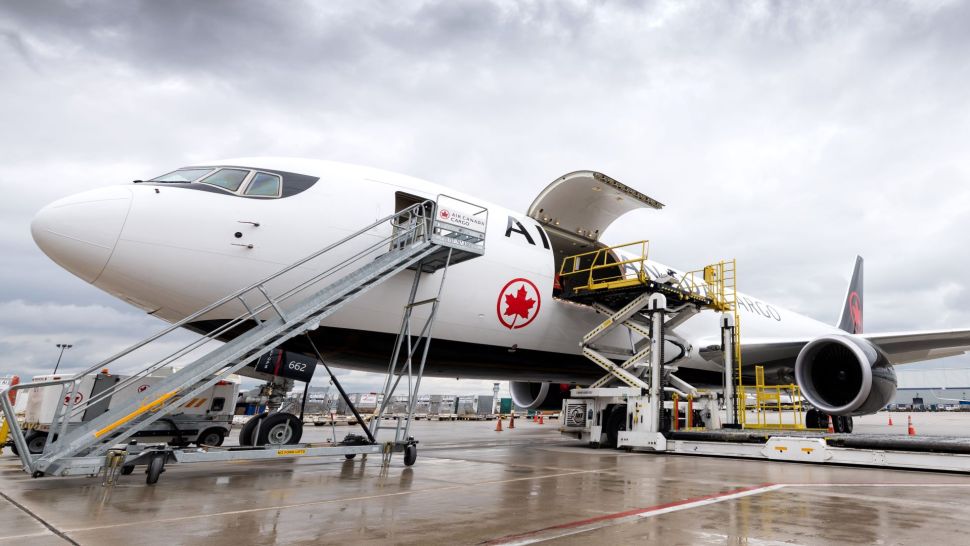
Air Canada Cargo implemented plans to keep its freighter fleet operating, albeit with a modified schedule.
CUPE set a strike deadline for Saturday morning after eight months of contract negotiations failed to produce an agreement. Air Canada began grounding its fleet on Thursday.
“It is disappointing to have to conclude today that Air Canada and CUPE flight attendants are at an impasse and remain unable to resolve their dispute,” Hajdu said in a statement. “It has now become clear that this dispute won’t be resolved at the table. Canadians are increasingly finding themselves in very difficult situations and the strike is rapidly impacting the Canadian economy.
“The enormous impact of a nationwide labour disruption of this scale is already being felt by Canadians and visitors to our country. This impact will grow significantly with a prolonged dispute. This nationwide labour disruption is impeding the movement of passengers and critical cargo. In a year in which Canadian families and businesses have already experienced too much disruption and uncertainty, this is not the time to add additional challenges and disruptions to their lives and our economy.
“Canadians rely on air travel to connect families, workers, and communities to each other and the world. Despite significant support from the government, these parties have been unable to resolve their differences in a timely manner. The government must act to preserve stability and supply chains in this unique and uncertain economic context,” she said.
Hajdu directed the Canadian Industrial Relations Board to help the sides resolve the outstanding issues in their dispute through binding arbitration. The board will take information from both sides and essentially set the terms for a new contract, which both sides will be required to follow. The statement left room for the parties to avoid arbitration if they can quickly reach a deal on their own.
“This decision will help make sure that hundreds of thousands of Canadians and visitors to our country are not impacted because of cancelled flights. Further, the shipments of critical goods such as pharmaceuticals and organ tissue, over 40% of which are moved by Air Canada, should continue to reach their destinations,” said Hajdu.
The Canadian government has inserted itself in several labor disputes lately. In December it ended a month-long strike by Canada Post mail workers and ordered the Canadian Industrial Relations Board to recommend fixes for the postal operator’s deteriorating financial position. The report mostly agreed with Canada Post about the structural and competitive challenges it faces as letter mail and package volumes decline. Hajdu this summer ordered the board to poll members of the Canadian Union of Postal Workers, over the objections of its leaders, on Canada Post’s final contract offer. Mail carriers on Aug. 1 overwhelmingly voted down the proposal.
CUPE claims Air Canada’s offer only raises wages 17% over four years, which doesn’t make up for lost ground to inflation under the current contract. Air Canada says its offer increases compensation by 38%, but the definition of compensation includes benefits and pensions.
Click here for more FreightWaves/American Shipper stories by Eric Kulisch.
Write to Eric Kulisch at ekulisch@freightwaves.com.
RELATED READING:
Supply chain disruptions feared as Air Canada prepares for strike
Brokerage Compliance Symposium
The day before F3. Every compliance issue you face - fraud exposure, carrier liability, FMCSA rules, cargo theft, insurance gaps - navigated by attorneys and operators defining best practices in a changing industry.
F3 Awards Dinner
The night before F3. FreightTech100 companies honored. FreightTech 25 and Shipper of Choice winners revealed live. Cocktail reception into dinner and live music - 300 industry leaders in one purpose-built room.
F3: Future of Freight Festival
Industry-defining keynotes, rapid-fire technology demos, and industry leaders networking in experiences across Chattanooga - plus the inaugural F3 Awards Dinner featuring the FreightTech and Shipper of Choice reveals.
The day before F3. Every compliance issue you face - fraud exposure, carrier liability, FMCSA rules, cargo theft, insurance gaps - navigated by attorneys and operators defining best practices in a changing industry.
The Signal at Chattanooga Choo Choo • Chattanooga, TN Register NowThe night before F3. FreightTech100 companies honored. FreightTech 25 and Shipper of Choice winners revealed live. Cocktail reception into dinner and live music - 300 industry leaders in one purpose-built room.
The Signal at Chattanooga Choo Choo • Chattanooga, TN Register NowIndustry-defining keynotes, rapid-fire technology demos, and industry leaders networking in experiences across Chattanooga - plus the inaugural F3 Awards Dinner featuring the FreightTech and Shipper of Choice reveals.
The Signal at Chattanooga Choo Choo • Chattanooga, TN Register Now