





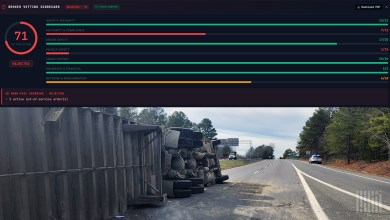
Carrier vetting 101. Spoiler: It’s not about safety.
Safe isn’t always exposure-free or risk-free. Compliant isn’t always safe. What “safety” means doesn’t matter. A carrier can be all three of those things on paper and still bury everyone who touched the load in exposure. This is a working primer on how risk professionals actually vet, qualify and screen a carrier.
Will the BUILD America 250 Act be the next capacity squeeze
The BUILD America 250 Act changes broker qualification rules, overhauls the DataQs violation dispute process, and puts a federal clock on hair drug testing. Here is what those three provisions mean for brokers, motor carriers, insurance renewals and driver capacity

BUILD America 250 Act hands AV trucks a fed framework
The BUILD America 250 Act creates the first federal framework for autonomous commercial trucks. It is not a green light. DOT has 2 years to write the safety standard; the liability question stays in front of a jury; and the bill funds retraining for drivers in the cab today.

The carrier vetting tech stack is the new line of defense in freight
The Supreme Court just told 28,000 freight brokers that they owe a duty of ordinary care in carrier selection. The question every broker, shipper, and 3PL should be asking is not whether they need a carrier vetting process. That question was answered on May 14. The question is: what technology are they using to build one that a jury will believe?

The freight Broker insurance gap is now real
The Supreme Court just opened the courthouse doors to negligent-hiring claims against brokers. The only federally required financial backstop is a surety bond designed to make sure carriers get paid. It was never meant to cover a wrongful death.
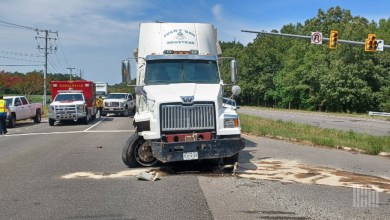
The Supreme Court just told every freight broker that they can be sued
The Supreme Court ruled unanimously today that state negligent-hiring claims against freight brokers are not preempted by the FAAAA. Twenty-eight thousand brokers just woke up in a different legal universe.
We have a long-haul problem and Hirschbach proved it
The American trucking industry built its workforce narrative on a myth, and the modern driver, who wants to be home by Friday and isn’t interested in sleeping in a cab for two weeks, is the one exposing it.
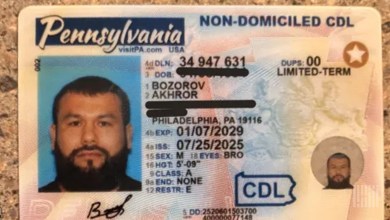
CVSA Roadcheck and enforcement are crucial to national security
An investigative analysis of the security gaps in American commercial trucking, from terrorism to trafficking and how CVSA Roadcheck plays an important role.
Hantavirus and passenger fleets: What passenger carriers should be thinking about
COVID nearly killed the motorcoach industry. Hantavirus is not COVID but the lessons still apply. Here is what passenger carriers should be doing right now without losing their minds.
67 ELDs revoked since January. 2 more just made the list.
FMCSA revoked two more electronic logging devices today, bringing the total to 67 noncompliant devices removed since January 2025. Carriers using Safe ELD or MYLOGS ELD have until July 7, 2026, to replace them or face out-of-service orders.

The Columbus corridor of Medicaid millionaires and chameleon carriers
An investigation found 195 active motor carriers clustered along a few miles of East Dublin Granville Road in northeast Columbus; the same corridor was just exposed for a billion dollars in Medicaid fraud. Federal inspection data shows those carriers have been involved in 275 crashes, including 4 fatal and 74 injury crashes. The world’s largest retailer appears in 175 inspections across 44 of those carriers with a 20.6% out-of-service rate.
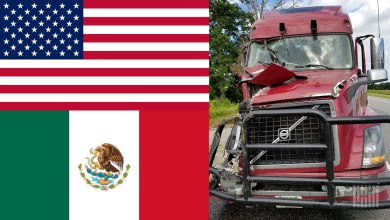
What 21,000 foreign trucks on American highways looks like
We have a carrier-quality problem with a specific geographic signature, an enforcement problem documented for decades, and a financial problem for American carriers competing against operators who pay their drivers 35 cents a mile to do work that American drivers expect 78 cents a mile to perform.

How an Executive Order reshaped highway safety
We have never seen a twelve-month period in which the White House, the Department of Transportation, and FMCSA moved as aggressively, as comprehensively, and as effectively on the specific safety failures that haunt our highways and our industry. Before we sit down with Derek Barrs on Monday, here is the year that got us here.

CVSA Roadcheck in 12 days, is a $77,000 fine in your future?
Every year, roughly the same time, the Commercial Vehicle Safety Alliance runs its International Roadcheck. Three days. Thousands of inspectors. Tens of thousands of trucks. The dates get announced months in advance, the focus areas get published, and somehow, fleets still get caught off guard.
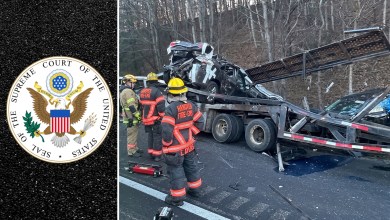
The freight brokerage model broke carrier selection
The rate is the rating. When the cheapest available carrier becomes the default selection criterion, the safety rating nobody actually checks becomes irrelevant anyway. The Supreme Court will decide by June whether brokers face any liability for that calculus at all.
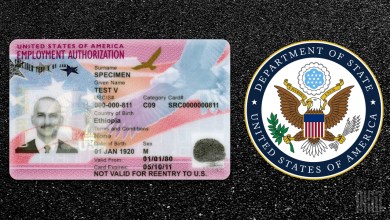
The State Department is processing trucker Visa apps again
On April 23, a State Department spokesperson confirmed that commercial truck driver visa processing has resumed under strict new standards. Now the question is whether the states tasked with running the new system have the institutional capacity to maintain what federal audit pressure forced them to fix.

The case for continuous license monitoring
The single most common-sense safety reform available to the trucking industry right now is to acknowledge that a regulation based on annual snapshots of a driver’s licensing status is inadequate for an industry where licenses can be suspended, revoked, or downgraded at any time.

The load is gone and so is the Driver
A CDL driver disappeared from a Florida rest stop on April 17 with multiple vehicles missing from his hauler. Cargo theft is at record levels and the pipeline moving stolen American vehicles out of the country has never been more active.
FMCSA moves to close the door on Clearinghouse fraud
This week the agency announced that new Clearinghouse registrants will have to prove their identity before gaining SAP-level access to a federal database that 38 million queries have trusted since 2020.
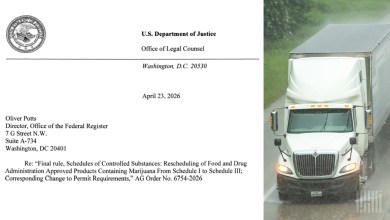
The Feds rescheduled marijuana. What happens in trucking?
The Trump administration rescheduled marijuana yesterday. Not all marijuana. Not recreational marijuana, but state-licensed medical marijuana and FDA-approved products containing marijuana moved from Schedule I to Schedule III of the Controlled Substances Act effective April 23, 2026. For the cannabis industry, it is a landmark. For the 3.8 million CDL holders in America and the broader population of CMV operators who never needed a CDL to begin with, the immediate practical answer is the same as it was Tuesday.