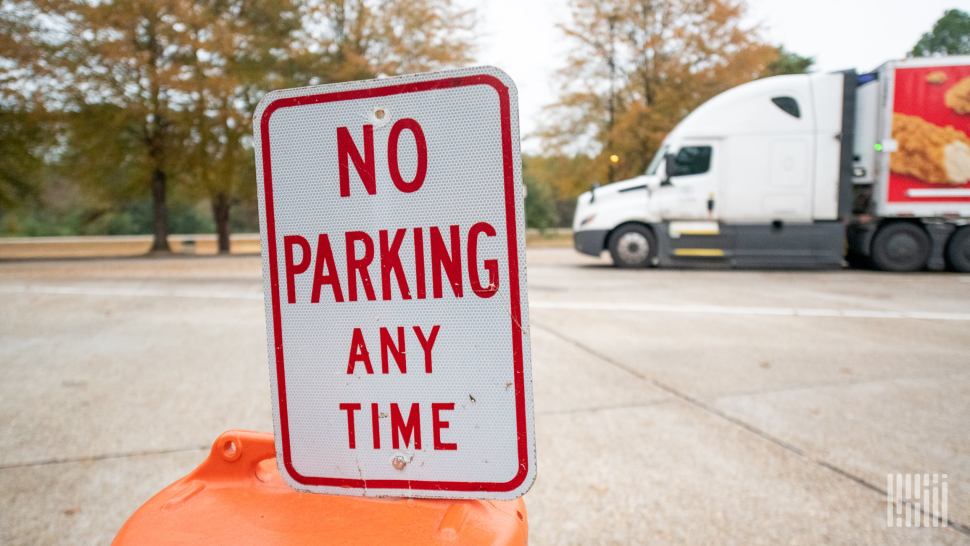
The trucking industry is at a crossroads when it comes to truck parking. Rising operational costs, shrinking profit margins, and the emergence of services like Truck Parking Club are intensifying the debate over free vs. paid parking. At the heart of this issue is balancing driver needs, property rights, security, and fair compensation.
Technology has made it easier than ever for drivers to locate parking spaces. Yet, the fundamental question remains: should truck drivers have to pay for services like Truck Parking Club, Freight Ninja or other for-profit truck parking companies? And where should the industry draw the line between fair compensation for parking access and burdening drivers with another expense?
Technology Provides Solutions at a Cost
With smartphones in every cab, drivers now have access to countless tools to locate parking, from Google Maps to dedicated apps. But the reality of trucking is far more complex than simply finding a pin on a map. After a long shift, the last thing a driver wants to do is search for a safe place to rest. Fatigue, safety concerns, and regulatory constraints dictate how far they can push their schedules. This is where paid parking services like Truck Parking Club come into play, offering convenience and security for a price.
Innovative solutions like Truck Parking Club and Freight Ninja provide peace of mind. For many drivers, avoiding the frustration of circling crowded lots is well worth the fee. Property owners who allocate space for truck parking also deserve fair compensation for maintaining security, lighting, and upkeep.
At the same time, truck drivers shouldn’t be forced to pay at every turn. The cost of operating a truck is already substantial, factoring in fuel, taxes, maintenance, and permits. Drivers shouldn’t be squeezed for every necessity, and excessive parking fees should not become yet another burden in an industry already straining under financial pressure. The key is balancing access to essential services and avoiding predatory pricing.
A Driver’s Perspective with Industry Experience
As someone who still drives and has held a Class A CDL with every endorsement for over 20 years, I see this issue from multiple angles. I’ve been behind the wheel, managed fleets, operated as a freight broker, and built compliance programs. That perspective allows me to recognize that both sides of the truck parking debate have valid points.
The argument that “not everything should be free just because we’re truck drivers” is fair. Businesses must make a profit, and truck parking services provide a genuine convenience. However, that does not mean drivers should be price-gouged simply because they have no other choice. While some believe all truck parking should be free, others see the value in a guaranteed, secure parking space that removes the uncertainty from their day.
The industry needs common ground. Instead of polarizing debates, stakeholders, drivers, fleets, parking service providers, and government agencies, must be open to compromise and alternative solutions that work for everyone. Here are a few ideas that could help balance the concerns on both sides:
- Incentive-Based Parking: Similar to fuel rewards that offer free showers, truck stops and parking services could allow drivers to earn parking credits through fuel purchases, food purchases, or other spending. This model benefits both drivers and businesses.
- Dynamic Pricing Models: A hybrid approach could allow for free and paid parking options. Reserved spaces could be available for a premium, while free spaces remain open for those who plan ahead. Some truck stops were already charging for reserved spots long before services like Truck Parking Club existed. Additionally, off-peak hours could offer discounted pricing for those on tighter budgets.
- Carrier-Sponsored Parking: Some fleets already cover parking fees for their drivers. If more carriers adopted this approach as a standard practice, it would reduce financial stress on drivers while ensuring safe, legal parking options.
- Public-Private Collaboration: Governments could partner with private businesses to expand truck parking capacity without converting public rest areas into exclusively paid lots. Additionally, offering tax incentives to property owners who develop truck parking facilities could help address shortages.
The Role of Paid Parking in the Industry
Services like Truck Parking Club offer drivers a choice. Those who prefer to plan their routes independently and find parking independently still have that option. Paid parking services provide a sensible alternative for those who value the security, reliability, and convenience of reserved space.
The challenge is to ensure that drivers are respected, not exploited. Paid parking should be an option, not a requirement imposed by a lack of alternatives. Free parking should continue at truck stops, rest areas, and certain private lots. At the same time, it’s reasonable for businesses to charge for premium services that offer enhanced security, guaranteed spaces, and added amenities.
A Larger Industry Challenge
The truck parking debate is a symptom of broader industry challenges, tight margins, rising costs, and an increasing need for sustainable solutions. Drivers shouldn’t expect every service to be free but shouldn’t be subjected to hidden fees and financial obstacles at every turn.
Resolving this issue requires open dialogue and innovative thinking. The industry must embrace flexibility, fairness, and collaboration, ensuring drivers and businesses thrive. Whether through loyalty-based incentives, tiered pricing models, or carrier-covered parking, there are ways to create a system that works for everyone.
Truck drivers deserve access to safe, secure parking without unnecessary financial strain. Businesses, in turn, deserve to be compensated fairly for providing valuable services. By finding the right balance, the industry can move toward a more sustainable, practical, and equitable future, one where both free and paid parking options coexist to serve the evolving needs of drivers and fleets alike.
Brokerage Compliance Symposium
The day before F3. Every compliance issue you face - fraud exposure, carrier liability, FMCSA rules, cargo theft, insurance gaps - navigated by attorneys and operators defining best practices in a changing industry.
F3 Awards Dinner
The night before F3. FreightTech100 companies honored. FreightTech 25 and Shipper of Choice winners revealed live. Cocktail reception into dinner and live music - 300 industry leaders in one purpose-built room.
F3: Future of Freight Festival
Industry-defining keynotes, rapid-fire technology demos, and industry leaders networking in experiences across Chattanooga - plus the inaugural F3 Awards Dinner featuring the FreightTech and Shipper of Choice reveals.
The day before F3. Every compliance issue you face - fraud exposure, carrier liability, FMCSA rules, cargo theft, insurance gaps - navigated by attorneys and operators defining best practices in a changing industry.
The Signal at Chattanooga Choo Choo • Chattanooga, TN Register NowThe night before F3. FreightTech100 companies honored. FreightTech 25 and Shipper of Choice winners revealed live. Cocktail reception into dinner and live music - 300 industry leaders in one purpose-built room.
The Signal at Chattanooga Choo Choo • Chattanooga, TN Register NowIndustry-defining keynotes, rapid-fire technology demos, and industry leaders networking in experiences across Chattanooga - plus the inaugural F3 Awards Dinner featuring the FreightTech and Shipper of Choice reveals.
The Signal at Chattanooga Choo Choo • Chattanooga, TN Register Now