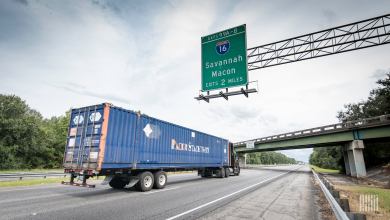
Atlanta becomes casualty of imports returning to West Coast
Shippers are reverting to pre-pandemic shipping patterns, which may exacerbate the next freight market shift.
The Logistics Managers’ Index has done a great job of explaining freight market capacity shifts over the past several years. The last few months are painting a picture of a market that is racing toward a correction.
After a relatively easy year for shipping and rightsizing inventories, shippers may have set up a holiday season in which expedited shipments become more prevalent.
The overall freight transportation market may be soft but the natural imbalance in the flow of freight is still able to create pockets of tightness.
The return of intermodal shipping could accelerate truckload capacity’s exodus.
It may not seem or read like it, but the trucking market is slowly tightening. The question is how much time till it is noticeable?
Spot and contract rates have stabilized with an unnaturally large gap between them. Is this sustainable or just a pause before the fall?
Sharply increasing fuel costs may exacerbate the carrier exodus this winter.
FreightWaves latest SONAR data addition suggests a wave of truckload capacity exits is coming this winter.
National truckload tender rejections topped 4% for the first time since the holiday season last year. Is this a sign that the trucking market is turning the corner?
As companies are shifting their sourcing and logistics networks, it is changing the way transportation providers will have to manage their own businesses.
Transportation providers are going to have to maintain an aggressive posture when competing for business during the upcoming bid season.
An unseasonable upward trend in truckload tender volumes is giving domestic transportation providers the potential inflection point they have waiting for.
The less-than-truckload sector has been disrupted by a very public dispute between Yellow and the Teamsters. Rates have already seemingly responded and may continue to see support.
There are some positive signs that the freight market has cleared most of the post-pandemic rubble, but full recovery is still a ways off.
If the spread between contract and spot rates narrows, capacity will become increasingly inconsistent in the second half of the year.
Underlying shifts in domestic shipping are showing up in the spot market.
There has definitely been a sustainable shift in how freight is distributed domestically.
The jury is still out on whether truckload demand has hit the floor.
Companies are still trying to get their margins back to pre-pandemic levels with price increases on finished goods. This will continue to put freight demand at risk in the second half of the year.