Rate increases drive trucking compliance higher in May
Shippers may have had a little more success with contracted carriers in May, but it came at a high cost.
Many carriers expanded their fleets after the 2018 freight boom and were rewarded with an extremely challenging oversupplied market in 2019. The current pattern looks eerily similar to early 2018, but are they comparable?
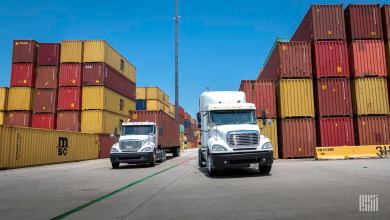
Containers have been in short supply, exacerbated by gross trade imbalances between the U.S. and China. The surging flow of empties moving back to the West Coast implies the ships won’t be slowing anytime soon.
One of the results of the 2017-18 freight market boom was an increase in the cost of operating that held over into a slower 2019 when capacity became abundant. Costs are on the rise once again as carriers struggle to find drivers to capture market share.
Imports have fueled the domestic freight economy over the past year. That growth continues out of the traditional peak season with shippers booking maritime capacity in April. Could this translate to a record summer for trucking?
The relationship between personal consumption and trucking demand has strengthened even further as companies struggle to maintain inventory. This suggests a very active spring and summer for transportation providers.
Transportation rates continue to climb while service is at an all-time low. Shippers will have to be aggressive in devising new strategies to keep costs under control.
Import volumes are growing rapidly into secondary ports as shippers scramble to build inventory. What are some of the short- and long-term implications to domestic transportation providers?
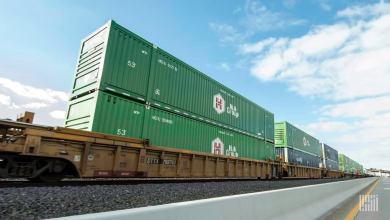
Intermodal shipping is dominated by the largest shippers in the U.S. and operates on a more static network, which gains higher cost efficiency than trucking over longer-mileage runs.
Reefer capacity has tightened to all-time levels, pushing spot rates for produce moves to seasonal peaks ahead of schedule.
The underlying fundamentals of the market are showing signs of moving slowly back toward a more stable scenario and spot rates may be unable to paint the full picture.
The latest round of winter weather hit transportation hard. How does this compare to other events?
The import boom appears far from over, and it will have implications long after this wave of unprecedented orders subsides.
Companies are paying significantly more for transportation than they were a year ago with many contracts yet to be implemented.
Although many questions remain for trucking in 2021, flatbed appears to be poised for a much stronger year.
Freight volumes have exploded out of southern California over the past two years. Is this pattern sustainable?
Consumer spending on goods drove the majority of the freight boom in 2020. Will this trend last in 2021?
Class 8 truck orders are surging signaling carriers are once again willing to invest in their fleets. Does this mean another overcorrection of capacity is in store?
Imports continue to pile up as shippers and carriers take time for the holidays. They may come back to a mess.
Transportation providers may spend January unclogging supply chains as warehouse capacity has become a precious commodity thanks to the continued influx of imports.