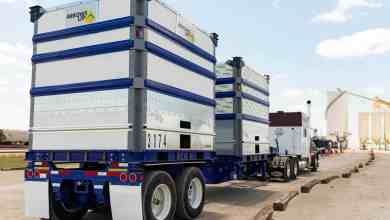
OmniTRAX and 1845 Oil Field Services team up for final-mile delivery of frac sand
Venture brings together two of the largest names in U.S. frac sand production to provide integrated delivery solution.

Railroads continue to play a significant role in North America’s economic infrastructure. According to the U.S. Department of Transportation Federal Railroad Administration, the U.S. rail freight network covers almost 140,000 route miles and is generally considered the largest, safest, and most cost-efficient freight system in the world. In addition, says the FRA, the almost $80 billion rail freight industry creates more than 167,000 jobs across the country.
In essence, rail freight companies charge businesses to carry cargo across their network of rails. Their rates are overseen by the Surface Transportation Board, a federal agency that regulates financial aspects of surface transportation. Major railroads in North America include Union Pacific Railroad, BNSF Railway, CSX, Norfolk Southern, Canadian Pacific Kansas City and Canadian National Railway.
Keep up with the latest news, trends and reports concerning rail freight transport here!
Venture brings together two of the largest names in U.S. frac sand production to provide integrated delivery solution.
The usual signs of an upturn in the trucking sector aren’t there, according to the Wall Street house, and Morgan wonders if a lot of the demand got pushed forward.
SONAR’s Headhaul Index map and the HAUL.JOT Index are both showing that the return to growth in inbound loaded container flow first seen in the Long Beach/LA port is continuing and gathering momentum.
The industry clearly is moving in the direction of precision railroading being the “way to go.” Now it’s time to figure out the possibilities and the hurdles.
Comments by the railroad previously were somewhat vague. But the CEO wasn’t vague in a video to employees.
Railroad sees more appliance and brown paper freight moving off road transportation to rail.
Railroad sees better volumes in energy and other bulk freight, with road-to-rail opportunities coming next year.
The FreightWaves Research Institute has announced the list of 55 voters who will be choosing the inaugural winners of the Freight.Tech 25 awards, and it’s who’s who of freight leaders.
From on-demand trucking to blockchain, loadboards and freight matching, the list of companies bringing innovative technologies to the freight industry is growing by the day, which makes the 100 that have made the cut to be honored by the FreightWaves Research Institute as part of its inaugural Freight.Tech 100 all the more special.
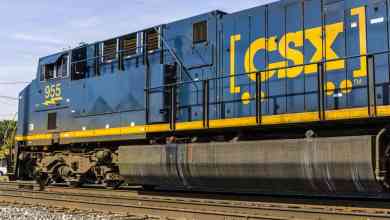
CSX beats estimates as coal volumes post strong gains, but increasing share in intermodal is the railroad’s next plan.
It started with an open nomination period, and after culling through hundreds of submissions, the FreightWaves Research Institute has announced the inaugural Freight.Tech 100 companies.
Arkansas-based motor carrier sees driver wages up 18%, but it aims to recoup those costs through new shipper contracts.
The city hopes to use its role as a landlord to help move truck traffic on to barges and to trains.
In his preview of the railroads’ Q3 earnings reports, Susquehanna’s Bascome Majors set optimistic price targets but warned that P/E valuations are at historically high levels.
Michigan-based asset-light logistics provider aims to boost western U.S. presence with latest acquisition.
Four new inbound truck lanes recently opened at Virginia International Gateway, increasing the capacity at the terminal’s gate complex by 30 percent.
Most of the hit is coming from an arbitration award with BNSF. Its conference call with investors is a change in its normal practice.
Norfolk Southern has control over a small connector railroad in the Hampton Roads port area, and CSX says it is using that control to block CSX from launching significant intermodal service there.
In Today’s Pickup: Michael is headed toward the Gulf, a quote by Hunter Harrison and a not-complimentary look at the job of a truck driver.
Howard Green is best on fights between the serial CEO and his boards, activist investors, and proxy wars, but there’s a lot in the book for railroad buffs who want to know more about Harrison’s signature philosophy, precision scheduled railroading.