




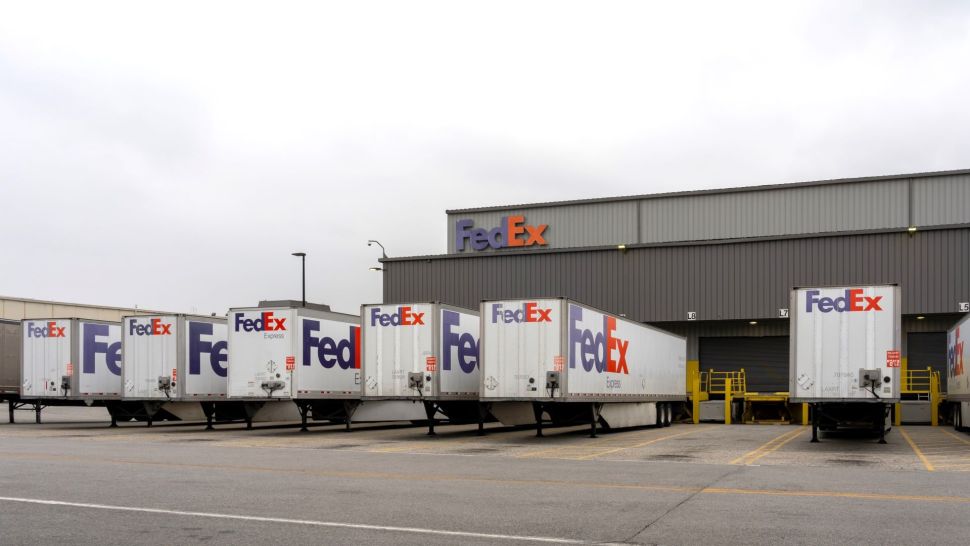
FedEx Corp., United Parcel Service and the maker of Ray-Ban and Oakley sunglasses face proposed class action lawsuits that seek to recover payments for import duties and fees associated with the Trump administration’s emergency tariffs that were invalidated by the U.S. Supreme Court last week.
On Friday, injury law firm Morgan and Morgan filed suit against FedEx Logistics (NYSE: FDX) in U.S. District Court for Southern Florida seeking a full refund of duties paid by an individual in Miami and seeking to represent millions of other consumers similarly impacted the tariffs and fees passed on by FedEx after paying the government. The plaintiff, Matthew Reiser, paid $36 in duty and fees on a pair of tennis shoes he bought from Tennis Warehouse Europe, a German company, on Jan. 27.
“FedEx is the only entity with legal standing to seek a refund of duties directly from the government. This leaves consumers like our client with no choice but to try to legally compel FedEx to refund them for the tariffs that they were charged by FedEx, not to mention the ancillary fees FedEx added to process these transactions,” said Morgan & Morgan founder John Morgan and attorney John Yanchunis, in a statement. “Our goal is to return to American consumers every penny they were improperly charged.”
New Yorker Nathan Ward on Thursday filed a proposed class action lawsuit against EssilorLuxottica S.A., the multinational maker of Ray-Ban, Oakley and Costa sunglasses. The company has sued the U.S. government for a refund and should return any reimbursements received to customers it charged, the suit says, noting that tariff surcharges increased the price of Ward’s purchase by about 6% compared to prices in the spring of 2025.
Previously, Hali Anastopoulo, a freight forwarder and customs broker in South Carolina, filed multiple lawsuits against FedEx and UPS (NYSE: UPS) in federal district courts in South Carolina, Georgia and Tennessee for repayment of duties, interest and related costs paid for parcel imports. The complaints, filed by the firm of Poulin Wiley, ask the courts to grant nationwide class-action status for all people who paid UPS for tariffs declared under the International Emergency Economic Powers Act. Anastopoulo is represented in the Tennessee case by Stranch Jennings & Garvey.
FedEx and UPS complaints are tied to the elimination last year of a duty exemption enjoyed by importers of low-value goods, typically shipped directly to consumers through parcel and postal channels. The end of the exemption subjected merchandise to high tariffs being imposed on countries around the world.
The Supreme Court ruled that IEEPA doesn’t authorize the President to impose broad-based tariffs. Trump used the rationale that imports of the dangerous drug fentanyl and the overall U.S. trade deficit were national emergencies that required immediate executive action. Customs brokers like FedEx and UPS passed the costs of tariffs onto their customers, along with brokerage and clearance fees.
The Court was mum on what should happen to more than $130 billion in duties, plus interest, already collected. Legal scholars and trade professionals say it is unclear if the government will agree to return money to companies. It could be some time before the U.S. Court of International Trade and U.S. Customs and Border Protection roll out a process for issuing refunds on IEEPA tariff duties and determine who is eligible, trade compliance experts say.
On Monday, FedEx sued the U.S. government seeking a full refund of duties paid under the IEEPA order. The company publicly stated it plans to return any refunds it receives to customers and consumers who originally bore the charges, but the Morgan and Morgan lawsuit notes that the company didn’t make any legally binding promise in its complaint, nor has it mentioned any plan to refund the extra processing fees it charged.
Toymaker Hasbro, beauty group L’Oreal and eyecare company Bausch+Lomb also filed refund suits in the Court of International Trade.
Click here for more FreightWaves/American Shipper stories by Eric Kulisch.
Write to Eric Kulisch at ekulisch@freightwaves.com.
RELATED STORIES:
Customer sues FedEx for refund after Supreme Court rejects Trump tariffs
FedEx redeploys air fleet after US ends parcel tariff exemption
Brokerage Compliance Symposium
The day before F3. Every compliance issue you face - fraud exposure, carrier liability, FMCSA rules, cargo theft, insurance gaps - navigated by attorneys and operators defining best practices in a changing industry.
F3 Awards Dinner
The night before F3. FreightTech100 companies honored. FreightTech 25 and Shipper of Choice winners revealed live. Cocktail reception into dinner and live music - 300 industry leaders in one purpose-built room.
F3: Future of Freight Festival
Industry-defining keynotes, rapid-fire technology demos, and industry leaders networking in experiences across Chattanooga - plus the inaugural F3 Awards Dinner featuring the FreightTech and Shipper of Choice reveals.
The day before F3. Every compliance issue you face - fraud exposure, carrier liability, FMCSA rules, cargo theft, insurance gaps - navigated by attorneys and operators defining best practices in a changing industry.
The Signal at Chattanooga Choo Choo • Chattanooga, TN Register NowThe night before F3. FreightTech100 companies honored. FreightTech 25 and Shipper of Choice winners revealed live. Cocktail reception into dinner and live music - 300 industry leaders in one purpose-built room.
The Signal at Chattanooga Choo Choo • Chattanooga, TN Register NowIndustry-defining keynotes, rapid-fire technology demos, and industry leaders networking in experiences across Chattanooga - plus the inaugural F3 Awards Dinner featuring the FreightTech and Shipper of Choice reveals.
The Signal at Chattanooga Choo Choo • Chattanooga, TN Register Now