




Cold storage warehouse operator Americold said Thursday that demand from its food-producing customers has “changed drastically” following early-April tariff announcements. The company reported a decline in throughput and inventories at its 235 facilities during the first quarter, and the downward trend has accelerated since.
Inflation fears have many of its customers slowing expansion plans, instead opting for the trade environment to stabilize.
“The ongoing trade rhetoric and changing tariff situation has already had an impact on consumer confidence, causing our customers to adjust their product portfolios and driving inventory levels down,” Americold CEO George Chappelle said on a quarterly call with analysts.
The company said most of the food it stores is unlikely to be directly impacted by tariffs, but the indirect impacts are still unknown.
Americold (NASDAQ: COLD) reported a headline net loss of $16.5 million, or 6 cents per share, versus net income of 3 cents per share in the year-ago quarter. Core funds from operations of 24 cents per share was 2 cents shy of the consensus estimate. (Adjusted FFO was 34 cents per share in the quarter.)

Global warehouse revenue was down 4% year over year to $575 million. Pallet throughput in the network was down 3.5%, with revenue per pallet increasing 2%.
Contractually committed, or economic, occupancy was down 470 basis points to 74.7%. (Actual physical occupancy fell 560 bps to 63.3%.)
Americold trimmed its full-year outlook. It now sees revenue flat to up 2% y/y versus the prior guide of up 2% to 4%. Throughput is expected to be roughly flat, with economic occupancy flat to 200 bps lower.
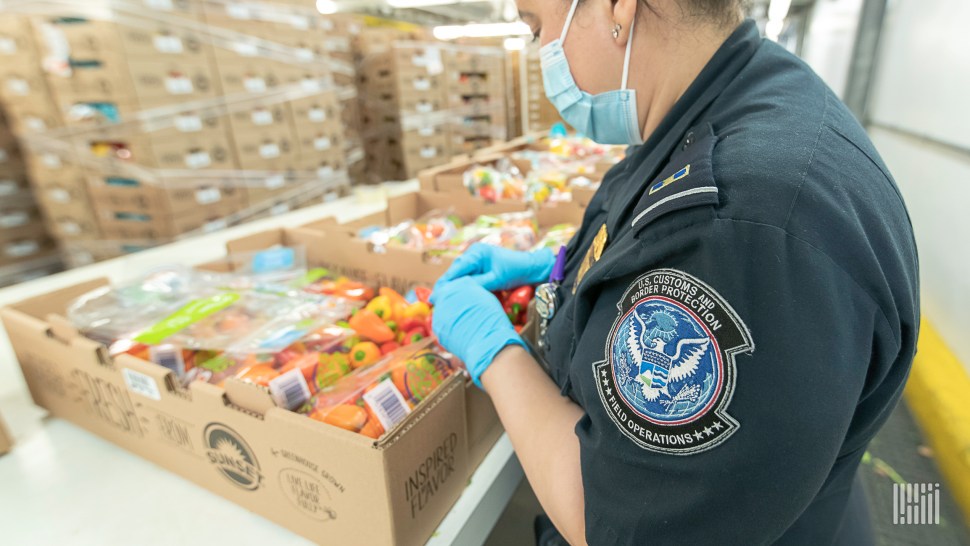
Chappelle said the company only has a single-digit-percentage direct exposure to import-export trade. Produce is the largest imported food category to the U.S., and just 1% and 4% of Americold’s revenue comes from fresh and frozen produce, respectively.
The company primarily stores proteins, potatoes and prepared foods, which Chappelle said are typically “more insulated from demand fluctuations.”
Full-year 2025 adjusted FFO guidance was lowered by 5% at the midpoint of the new range of $1.42 to $1.52.
Shares of COLD were down 5.6% at 11:32 a.m. EDT on Thursday compared to the S&P 500, which was up 0.9%.
Brokerage Compliance Symposium
The day before F3. Every compliance issue you face - fraud exposure, carrier liability, FMCSA rules, cargo theft, insurance gaps - navigated by attorneys and operators defining best practices in a changing industry.
F3 Awards Dinner
The night before F3. FreightTech100 companies honored. FreightTech 25 and Shipper of Choice winners revealed live. Cocktail reception into dinner and live music - 300 industry leaders in one purpose-built room.
F3: Future of Freight Festival
Industry-defining keynotes, rapid-fire technology demos, and industry leaders networking in experiences across Chattanooga - plus the inaugural F3 Awards Dinner featuring the FreightTech and Shipper of Choice reveals.
The day before F3. Every compliance issue you face - fraud exposure, carrier liability, FMCSA rules, cargo theft, insurance gaps - navigated by attorneys and operators defining best practices in a changing industry.
The Signal at Chattanooga Choo Choo • Chattanooga, TN Register NowThe night before F3. FreightTech100 companies honored. FreightTech 25 and Shipper of Choice winners revealed live. Cocktail reception into dinner and live music - 300 industry leaders in one purpose-built room.
The Signal at Chattanooga Choo Choo • Chattanooga, TN Register NowIndustry-defining keynotes, rapid-fire technology demos, and industry leaders networking in experiences across Chattanooga - plus the inaugural F3 Awards Dinner featuring the FreightTech and Shipper of Choice reveals.
The Signal at Chattanooga Choo Choo • Chattanooga, TN Register Now