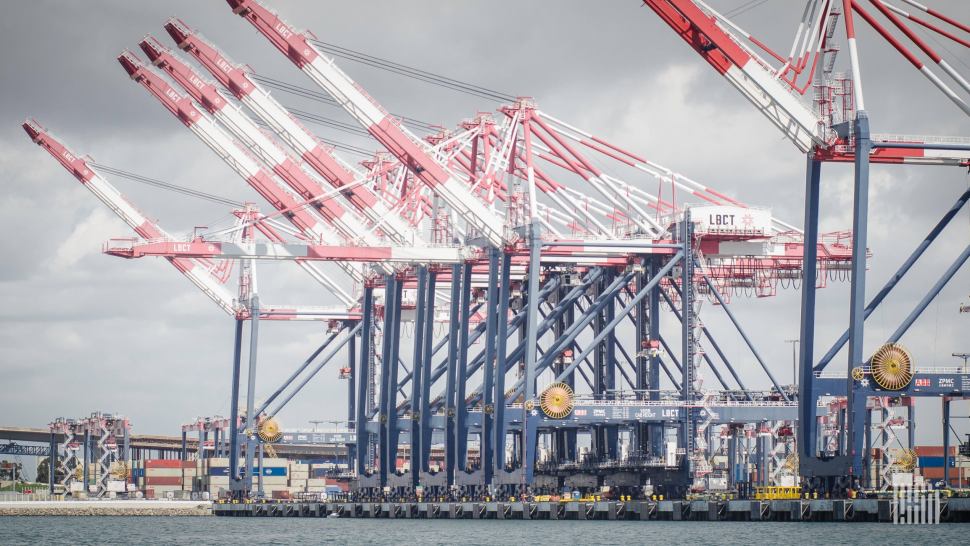
The United States Trade Representative late Friday announced massive tariff hikes on Chinese-made container cranes and other measures in response to China’s use of unfair trade practices to build a leading position in shipping and shipbuilding.
The crane levies, effective Nov. 9, come after President Donald Trump set new 100% tariffs on all China imports starting Nov. 1, firing back after Beijing announced new export controls on rare earth minerals.
The USTR at the same time announced 100% tariffs on Chinese-made intermodal chassis, also effective Nov. 9, in addition to an existing countervailing duty of about 44.32% due to subsidies on Chinese chassis and an anti-dumping duty of 188.05%, applied five years ago.
Trump’s response brings U.S. levies on China exports to 130% as the trade partners ratchet up measures prior to a meeting of Chinese leader Xi Jinping and Trump at a global economic conference in South Korea later this month.
The USTR’s changes include 100% tariffs on ship-to-shore container cranes, and 150% on rubber-tired gantry cranes manufactured in China, which claims 65-70% of the global crane market and 80% in the U.S., mostly through builder ZPMC. Adding the original 25% tariff on cranes and other retaliatory charges could bring stacked levies to between 125-270%, according to law firm White & Case.
Cranes made in China capable of working the largest container ships can cost from $14 million to $20 million.
The USTR first proposed crane tariffs and port fees on Chinese ships in April before announcing changes in June following public comments. The measures are aimed at helping rejuvenate American shipbuilding. China this week announced punitive port fees on American ships that mirror U.S. charges.
The USTR on Friday also set a fee of $46 per net ton on foreign-built vehicle carriers calling U.S. ports; previously those ships were to be charged $150 on a per-vehicle basis. The trade office eliminated a provision permitting the suspension of liquid natural gas (LNG) export licenses over the use of foreign-built vessels, and added a carve-out from fees for ethane and liquid petroleum gas (LPG) carriers under long-term charter.
The USTR said payment of some fees may be deferred through Dec. 10 while it evaluates public comments on the new proposals. The deadline to submit written comments is Nov. 12.
Find more articles by Stuart Chirls here.
Related coverage:
China retaliates with new fees on U.S. shipping
Maersk ‘closely’ monitoring Red Sea for eventual return to Suez Canal, says diplomat
Brokerage Compliance Symposium
The day before F3. Every compliance issue you face - fraud exposure, carrier liability, FMCSA rules, cargo theft, insurance gaps - navigated by attorneys and operators defining best practices in a changing industry.
F3 Awards Dinner
The night before F3. FreightTech100 companies honored. FreightTech 25 and Shipper of Choice winners revealed live. Cocktail reception into dinner and live music - 300 industry leaders in one purpose-built room.
F3: Future of Freight Festival
Industry-defining keynotes, rapid-fire technology demos, and industry leaders networking in experiences across Chattanooga - plus the inaugural F3 Awards Dinner featuring the FreightTech and Shipper of Choice reveals.
The day before F3. Every compliance issue you face - fraud exposure, carrier liability, FMCSA rules, cargo theft, insurance gaps - navigated by attorneys and operators defining best practices in a changing industry.
The Signal at Chattanooga Choo Choo • Chattanooga, TN Register NowThe night before F3. FreightTech100 companies honored. FreightTech 25 and Shipper of Choice winners revealed live. Cocktail reception into dinner and live music - 300 industry leaders in one purpose-built room.
The Signal at Chattanooga Choo Choo • Chattanooga, TN Register NowIndustry-defining keynotes, rapid-fire technology demos, and industry leaders networking in experiences across Chattanooga - plus the inaugural F3 Awards Dinner featuring the FreightTech and Shipper of Choice reveals.
The Signal at Chattanooga Choo Choo • Chattanooga, TN Register Now