Benchmark diesel price down, but fundamentals are pointing higher

The growing strength of diesel fuel relative to crude is beginning to draw significant attention in oil markets, even as there is evidence the past few days that the widening spread between the two may be taking a breather.

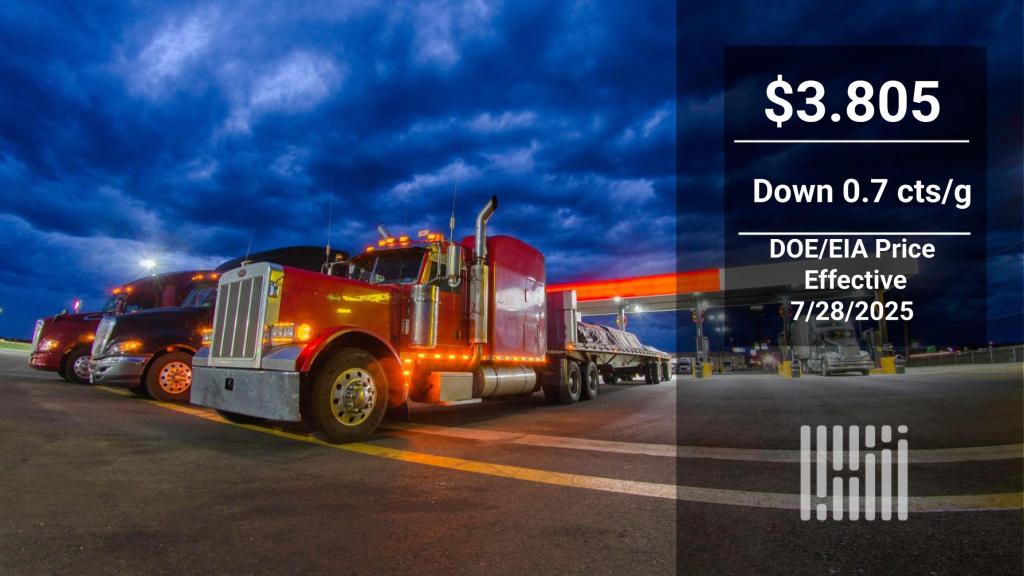
The benchmark Department of Energy/Energy Information Administration average retail diesel price fell 0.7 cents/gallon Monday, posted Tuesday, to $3.805/g. It’s the first decline after three weeks of increases, and only the second decline in the last eight weeks. 

Ultra low sulfur diesel (ULSD) on the CME commodity exchange settled Monday at $2.4266/g, down from a week-earlier settlement of $2.5092/g.

Measuring the diesel futures market on a straight comparison of the front month price (some comparisons make other adjustments) shows just how strong diesel has been compared to crude.

Diesel spread has blown out against crude

On June 11, crude made a significant upward move, with the West Texas Intermediate price on the CME commodity exchange rising 3.17% to settle at $68.15/barrel, and worldwide benchmark Brent rising 2.9% to settle at $69.77. Ultra low sulfur diesel (ULSD) on that day settled at $2.2053/gallon. 

Since then, based on Monday’s CME settlements, WTI is down 2.11%, settling Monday at $66.71. But ULSD is up just over 10%, settling Monday at $2.4266/g.

Diesel isn’t just strong against crude. RBOB gasoline, an intermediate gasoline blendstock that is the proxy for gasoline prices on CME, is now about 30 cts/g less than ULSD. The spread got as wide as 37 cts/g last week. But RBOB was at a small premium to ULSD as recently as late May. 

John Kemp, a long-time journalist who writes about energy and is now independent, described diesel recently as “the lone bright spot in an otherwise despondent oil market.” 

In a distributed email, Kemp said data on investment in oil futures showed that investors have “continued to boost their bullish position in middle distillates while selling the rest of the petroleum complex” in the week ended July 25. 

“Investors expect low diesel inventories to support prices and crack spreads even if the rest of the complex comes under pressure from rapid production increases by Saudi Arabia and its OPEC⁺ partners,” he wrote.

Open interest in ULSD on both the CME and the Intercontinental Exchange (ICE), which reflects investor activity, were high enough on a combined basis to be in the 85th percentile all-time, Kemp wrote.

Goldman sees the spreads remaining elevated

In an article late last week, Bloomberg said a report published by Goldman Sachs said that while the recent margins of diesel against Brent may slow, the investment bank said they “are still likely to end up above long-run averages given a crunch in global processing capacity.”

Energy economist Philip Verleger, who has long focused on the diesel market as a driver of overall oil market movements, headlined his weekly report published over the weekend as “A third distillate disruption.”

The reference to “third” is his view that oil topped out over $100/barrel twice in recent history because of environmental regulations regarding diesel: the introduction of ULSD around 2008, leading to the $100 crude spike that spring and summer, and the conversion of bunker fuel that powers ships to a tighter sulfur specification in 2020 but which didn’t really kick in to markets until 2022, given the impact on demand from the pandemic. That regulation, known as IMO2020, pulled distillate molecules out of the diesel market and into the bunker fuel supply.

Verleger’s report had several key points about why diesel markets may be on the verge of yet another instance of pulling oil prices higher.

U.S. oil quality doesn’t boost diesel output

His analysis gets into politics, noting that the Trump administration’s emphasis on rising U.S. production, even if it is successful, is likely to bring about an increase in the types of crudes that produce only a small amount of diesel when refined given the dominance of light crudes coming out of U.S. wells. Those crudes traditionally have a low diesel yield when refined.  

On top of that, restrictions on production by non-OPEC countries in order to support higher prices are taking supply out of the market in those grades of crude that do produce healthy levels of diesel when refined.

“The US does not produce the crude oil types that are most useful for world energy users,” Verleger wrote. “Further, to sustain oil prices, other nations shut in production of the more desirable crudes to maintain price levels. Their actions and others have now limited the global diesel fuel supply, pushing diesel and crude prices higher.”

He ticked off several current conditions in the market that are contributing to the diesel squeeze, and noted they are likely to continue.

  • Restrictions on importing Venezuelan crude into the United States
  • The decline of Mexican Mayan crude exports to the United States
  • The efforts of Asian nations to import more US crude to avoid high tariffs
  • The EU’s adoption of regulations that prohibit imports of petroleum products made from Russian crude
  • China’s limits on diesel exports

Expanding on those points, Verleger notes that several U.S. refineries were specifically built to process heavier Venezuelan crudes that have a strong distillate yield. But there are restrictions now on U.S. companies’ ability to bring in that crude.

U.S. tariffs are sending Mexican Maya crude elsewhere, and that heavier crude has a stronger distillate yield.

Meanwhile, heavy demand for U.S. crudes solely to placate U.S. demands for more exports mean that more of those diesel-poor crudes will be refined elsewhere. 

The end result is that those Brent to diesel spreads that recently went above 80 cts/g are some of the highest on record, Verleger said. They have softened recently as reports on U.S. inventories show stocks in this country rising, he added. 

But that may not last, Verleger said. “Margins may return to that high in the coming months if global demand remains strong and the (listed) disruptions worsen,” he said. “A major hurricane hitting refineries on the US Gulf Coast could turn things catastrophic.”

More articles by John Kingston

Yet another broker liability case, this time in the Fifth Circuit, adds to the growing mix 

Ryder’s used vehicle numbers show a bullish corner: tractor sales
Five takeaways from the State of Freight for July: What earnings and the indices are saying about the market

Shippers line up against railroad mergers

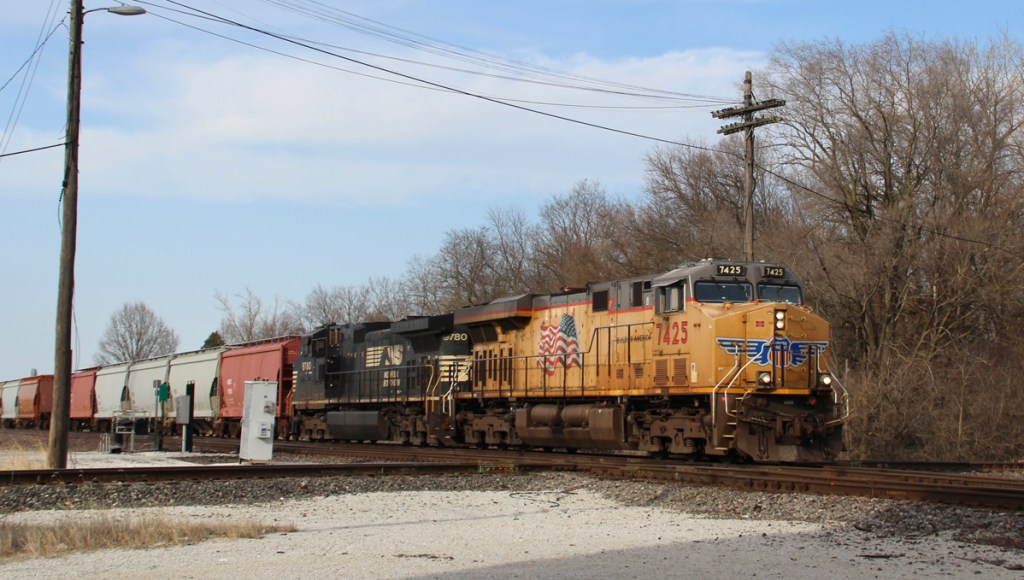
Groups representing rail shippers say they would be opposed to the creation of a transcontinental railroad in the U.S., arguing that further consolidation in the industry would reduce their competitive options, lead to higher rates, and worsen service.

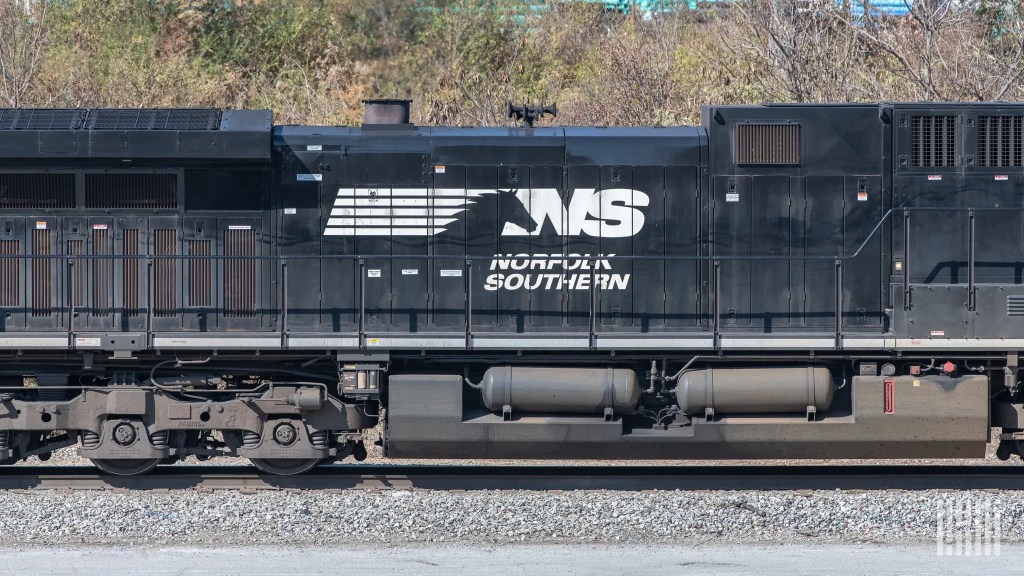
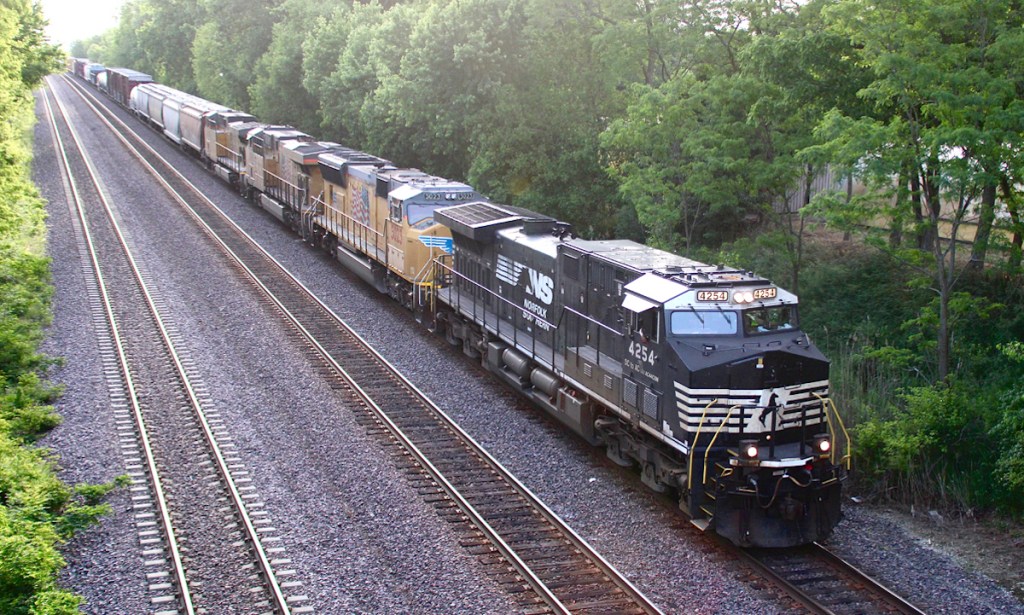
Union Pacific (NYSE: UNP) and Norfolk Southern (NYSE: NSC) announced Tuesday that they had come to an agreement for UP to acquire NS for stock and cash worth $85 billion.

It’s further expected that BNSF and CSX (NASDAQ: CSX) for competitive reasons would eventually pursue a similar agreement.

The National Industrial Transportation League, the American Chemistry Council, and the Freight Rail Customer Alliance are watching warily as a final round of mergers would leave the U.S. with a pair of transcontinental Class I systems.

Railroads have traditionally said that end-to-end mergers help improve service by eliminating costly and unreliable interchanges. Shipper associations don’t see it that way.

“NITL has been on the record wanting no more rail mergers,” said Nancy O’Liddy, the group’s executive director. “Generally shippers oppose continued consolidation in the rail industry based on past experiences resulting in increased rates, higher fees, and unreliable service.”

Scott Jensen, a spokesman for the American Chemistry Council, said chemical manufacturers would “oppose any merger that would boost railroad monopoly power.”

Chemical shippers are highly reliant on railroads for the shipment of hazardous materials as well as plastics and other petrochemical products.

“Our industry is one of the largest users of the U.S. freight rail system, and we need efficient and reliable service to deliver products that make people’s lives better, healthier, and safer,” Jensen said. “The four largest freight railroads already control more than 90% of U.S. rail traffic, with two dominating in the eastern U.S. and two dominating in the west. A merger between two of these railroads threatens to leave American manufacturers, farmers, and energy producers with even fewer options to ship by rail.”

The Freight Rail Customer Alliance, an umbrella group that includes trade associations representing 3,500 companies in the manufacturing, agricultural, alternative fuels, and electric utility sectors, said railroads already have too much market power.

Railroads are able to use that market power to force shippers into contracts, which fall outside of the jurisdiction of the Surface Transportation Board, said Ann Warner, the FRCA’s executive director. The STB can only regulate shipments that move under tariff rates, which are typically more expensive than contracts.

Shippers have not seen the benefits of efficiencies that railroads have gained through the spread of the low-cost Precision Scheduled Railroading operating model, Warner added. Railroad profits keep rising, she said, despite the industry losing market share to trucks.

The devil will be in the details of a merger application, such as what concessions the railroads may be willing to make to enhance competition, which is required under the STB’s tougher and untested 2001 merger review rules.

“NITL shipper members will have to see if an application(s) is filed and then what is offered and what the STB might prescribe and what enforcement mechanisms are put in place,” O’Liddy said. “All freight rail shippers need guaranteed competitive solutions.”

In prior mergers, regulators have imposed conditions to protect shippers who otherwise would see their options shrink from two railroads to one. In many instances that has meant giving a second railroad trackage rights and access to affected customers.

Analysts have speculated that some form of expanded reciprocal switching, which provides sole-served customers with access to a second railroad, may be a potential way to enhance competition for carload shippers — and therefore help a merger application meet regulatory hurdles.

FRCA’s Warner said many of the group’s members rely on unit train service, which has not benefited much from reciprocal switching.

A majority of shippers who responded to a survey by Wall Street firm TD Cowen said they would back a transcon merger, so long as it included significant concessions. Shippers said their support would hinge on gaining things such as access to a second railroad, rate case reform, and provisions that would force railroads to pay penalties for service failures.

Subscribe to FreightWaves’ Rail e-newsletter and get the latest insights on rail freight right in your inbox.

Related coverage:

Union Pacific and Norfolk Southern reach $85 billion merger deal

First look: Norfolk Southern earnings

Bill aims to prioritize rail freight, untangle congestion

Union Pacific and Norfolk Southern reach $85 billion merger deal

Union Pacific and Norfolk Southern today announced an $85 billion deal to tie their networks together and create the first U.S. transcontinental railroad.

The merged company — which will be called Union Pacific — will transform the U.S. supply chain and economy, strengthen domestic manufacturing, and preserve all union jobs, the railroads said.

UP will acquire NS in a stock and cash transaction that values NS at $320 per share, a 25% premium. The combined company would have an enterprise value of more than $250 billion. The railroads said the merger would create $2.75 billion in annual synergies within three years, through a combination of $1.75 billion in revenue growth and $1 billion in cost savings.

“Railroads have been an integral part of building America since the Industrial Revolution, and this transaction is the next step in advancing the industry,” UP Chief Executive Jim Vena said. “Imagine seamlessly hauling steel from Pittsburgh, Pennsylvania to Colton, Calif., and moving tomato paste from Heron, Calif., to Fremont, Ohio. Lumber from the Pacific Northwest, plastics from the Gulf Coast, copper from Arizona and Utah, and soda ash from Wyoming. Right now, tens of thousands of railroaders are moving almost everything we use. You name it, and at some point, the railroad hauled it.”

The railroad will stretch 52,215 route miles, with track winding through 43 states from the East Coast to the West Coast and serving around 100 ports.


The combined company will deliver faster, more comprehensive freight service to U.S. shippers by eliminating interchange delays, opening new routes, expanding intermodal services, and reducing distance and transit time on key rail corridors, the railroads said.  The merged Union will shift freight to rail, reducing congestion and wear and tear on taxpayer funded highways, they added.

“Norfolk Southern, like Union Pacific, is a railroad integral to the U.S. economy, with a storied 200-year legacy of serving customers across 22 states in the eastern half of the nation,” NS CEO Mark George said in a statement. “Our safety, network, and financial performance is among the best we’ve had as a company, as is our customer satisfaction. And it is from this position of strength that we embark on this transformational combination. We are confident that the power of Norfolk Southern’s franchise, diversified solutions, high-quality customers and partners, as well as skilled employees, will contribute meaningfully to America’s first transcontinental railroad, and to igniting rail’s ability to deliver for the whole American economy today and into the future. Union Pacific is a true partner that shares our belief in rail’s ability to deliver for all stakeholders simultaneously, and we are excited for our future together.”

Vena, who will be CEO of the combined railroad, invoked President Abraham Lincoln, who created the Union Pacific in 1862 with the signing of The Pacific Railroad Act.

“This combination is transformational, enhancing the best freight transportation system in the world – it’s a win for the American economy, it’s a win for our customers, and it’s a win for our people,” Vena said. “It builds on President Abraham Lincoln’s vision of a transcontinental railroad from nearly 165 years ago and advances our Safety, Service and Operational Excellence Strategy. I am confident this historic transaction will enhance competition to benefit customers, communities, and employees while delivering shareholder value.”

Union Pacific CEO Jim Vena, left, and Norfolk Southern CEO Mark George shake hands in UP’s Omaha, Neb., headquarters after signing their historic deal to create the first U.S. transcontinental railroad. (Photo: Union Pacific)

Creating the transcontinental version of Union Pacific is overwhelmingly in the public interest, the railroads said, and will enhance competition, consistent with the test that will be applied in the review of the transaction by the Surface Transportation Board.

The companies expect to file their application with the STB within six months, in which the companies will describe how the combined rail network will provide safer, faster, and more reliable service and increased competition. A pre-filing notification of intent to file an application could come as soon as Wednesday, and is the first official step in the merger evaluation timeline.

Both eastern carrier CSX (NASDAQ: CSX), and reported possible merger partner, Fort Worth-based BNSF, had no comment.

“The intermodal freight supply chain thrives when it offers a competitive alternative to long-haul trucking,” said Anne Reinke, president and chief executive of the Intermodal Association of North America, in an email statement to FreightWaves. “It succeeds where there are strong efficiencies, a focus on growth, and a commitment to customer service. As this merger moves forward, we will be looking for these core values to be reinforced.”

Norfolk Southern and CSX serve the Port of Savannah, the fourth-busiest U.S. container port, which loads 42 intermodal trains per week. A spokesman for the Georgia Ports Authority said, “We are following the [merger] situation. It’s business as usual here at the port with our rail operations.”
The board of directors of both Union Pacific and Norfolk Southern unanimously approved the transaction, which is subject to STB review and approval within its statutory timeline, customary closing conditions, and shareholder approval.

The companies are targeting closing the transaction by early 2027. The deal includes a $2.5 billion reverse termination fee.

They do not plan to use a voting trust, a common maneuver in prior rail mergers that allows the shareholders of the target railroad to cash out while the deal is under regulatory review. The STB rejected a voting trust in Canadian National’s (NYSE:CNI) ill-fated attempt to acquire Kansas City Southern under the board’s tougher 2001 merger review rules.

The combined company will be headquartered in Omaha, Neb., which has long been UP’s home base. The NS headquarters in Atlanta will remain a core location over the long-term, with a focus on technology, operations, and innovation, among other priorities, the railroads said.

This article was updated July 29 to add statements from the Intermodal Association of North America and the Georgia Ports Authority.

Subscribe to FreightWaves’ Rail e-newsletter and get the latest insights on rail freight right in your inbox.

Related coverage:

Union Pacific and Norfolk Southern reach $85 billion merger deal

First look: Norfolk Southern earnings

Bill aims to prioritize rail freight, untangle congestion

Union Pacific expands domestic intermodal service

Aeva teams with LG Innotek on 4D LiDAR manufacturing

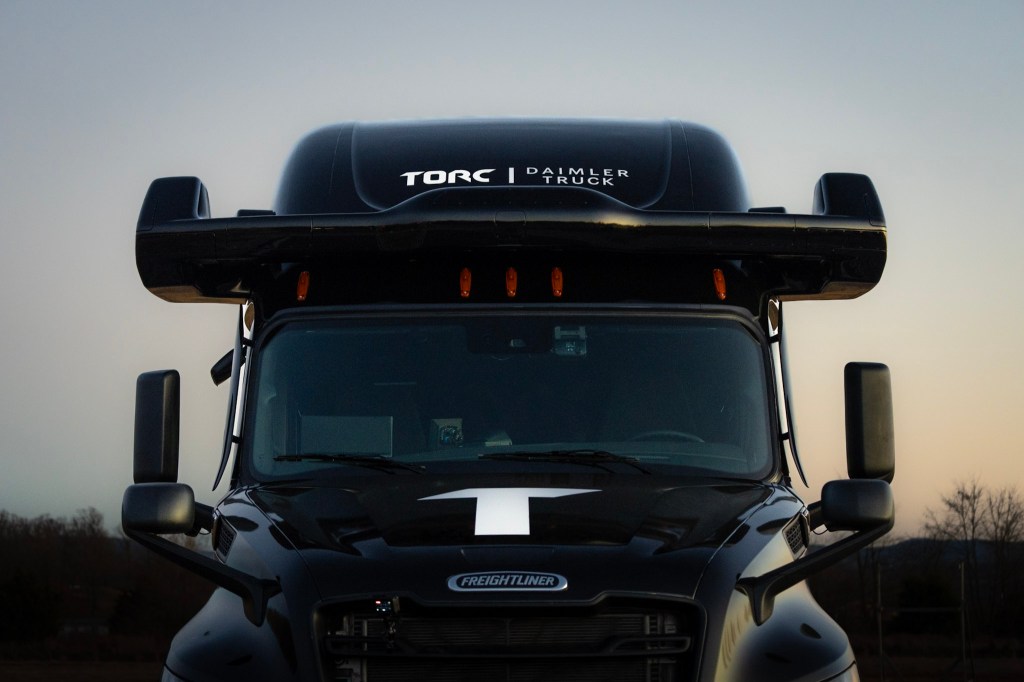
Aeva LiDAR on a Torc Robotics autonomous truck

Aeva, a maker of next-generation 4D LiDAR systems, announced on Tuesday a strategic collaboration with LG Innotek, an affiliate of LG Group, which will serve as a manufacturing partner. The partnership will help to bring Aeva’s technology to the mass market for both commercial and passenger vehicles.

The partnership includes a $50 million strategic investment by LG Innotek and is part of a larger non-dilutive investment for new product development. FreightWaves spoke with Soroush Salehian, co-founder and CEO of Aeva, about the deal and how the technology works.

Aeva is a perception systems company and has developed an innovative 4D LiDAR technology that measures both distance and velocity simultaneously. The 4D refers to the addition of velocity as a fourth dimension of measurement compared to traditional LiDAR systems. “It’s just like cameras went from black and white to color. That additional dimension of information is what we call the fourth dimension,” Salehian told FreightWaves.

Unlike conventional time-of-flight LiDAR that only measures distance, Aeva’s frequency modulated continuous wave (FMCW) technology detects both position and speed for every pixel it captures. This capability provides crucial information for autonomous systems, particularly in trucking applications where LiDAR is used to identify objects at distances of 400-500 meters, about four to five football fields away.

“In trucking, this is especially important,” Salehian explained. “Even if time of flight could see that object, you only get a few points at that distance. So what do you see there? You don’t know if that is one object, it’s three objects, it’s noise.”

The 4D LiDAR’s ability to capture velocity data enables faster decision-making in critical situations like traveling at highway speeds. According to Salehian, this technology can save seconds of decision-making reaction time, which is crucial in terms of trucks being able to come to a full stop at a safe distance.

Some estimates note it can take a semi-truck traveling at 65 mph around 525 feet or around five to six seconds to come to a full stop.

This is a deal years in the making. Salehian told FreightWaves the company has invested over half a billion dollars over eight years to create a unified perception platform that integrates LiDAR optics onto a chip.

Looking ahead, Aeva has secured a production agreement with Daimler Truck, which chose the sensing and perception systems maker as the supplier of its long and ultra-long range LiDAR for its series production autonomous commercial vehicle program.

As part of the agreement with Daimler Truck, the company aims to ramp up production capacity for 200,000 LiDAR units per year. Salehian told FreightWaves its North American LiDAR production will be USMCA-compliant.

A long-standing challenge for LiDAR makers has been cost, but with the focus on having the chip embedded in the hardware, it opens the door for lower costs.

Aeva aims to make the technology competitive with existing radar solutions. “Because we are able to integrate everything down on the LiDAR chip, we can reduce the number of components drastically,” Salehian noted, adding that the wafer-scale, chip-based technology allows for continued cost reduction as production volumes increase. 

First look: Norfolk Southern earnings

Norfolk Southern (NYSE: NSC) reported strong Q2 2025 results, with revenue reaching $3.1 billion and diluted EPS increasing 5% year-over-year to $3.41. 

The company achieved an operating ratio of 62.2% and railway operating income of $1.2 billion.

After adjusting for restructuring and continuing costs from the East Palestine derailment, NS’s adjusted EPS was $3.29, an 8% increase, and its operating ratio improved to 63.4%. Volume saw a 3% growth, and productivity savings are now projected to exceed $175 million in 2025.

In a significant development, NS announced a merger agreement with Union Pacific, which will establish America’s first transcontinental railroad. Under the terms of the agreement, NS shareholders will receive one Union Pacific share plus $88.82 in cash for each NS share, valuing Norfolk Southern at $85 billion.

Load-matching wars escalate as DAT snaps up Convoy

DAT acquired Convoy, setting off another chain reaction in the load-matching wars

DAT Freight & Analytics has announced the acquisition of the Convoy platform from Flexport. Sources suggest the price was around $250m in cash.

DAT intends to shift away from its main business: a dumb load-board service that connects brokers with carriers.

Convoy, a venture-backed unicorn, shut down abruptly in October 2023. Flexport snapped up its platform for $16m, hoping to weave it into its own services. The aim was to expand beyond international trade and freight forwarding into full domestic door-to-door logistics.

That goal has faded, but Ryan Petersen secured himself as the best deal-maker in logistics, turning a previously mothballed platform into a massive 15x return in just 24 months.

Flexport has cemented its role as a vital player in global trade, helping firms cope with ever-shifting rules and requirements. Despite volatility in trucking, Flexport’s best bet is to stick to its strengths: providing seamless tools for international supply chains.

DAT is disrupting DAT

For DAT, buying Convoy transforms its offering. Its load board is a simple posting site, like Craigslist. Loads are listed online, but deals are struck offline.

Think of it as a dating app for trucking: matches occur on the platform, but everything else happens elsewhere. DAT’s former finance chief once compared it to Ashley Madison, the notorious affair site—not for its users’ demographics, but because customers keep coming back rather than committing.

Convoy’s platform changes that. Built with hundreds of millions in venture funding, it is regarded as best-in-class by potential buyers.  It handles the lot: finding capacity, matching loads, payments and execution. The system takes a cut for automating deals—like Amazon, not Craigslist.

DAT has inched this way through acquisitions. It bought Trucker Tools, a visibility platform that links capacity to load matching. Then came Outgo, for payments and financing. These bolster liquidity and fight fraud, a plague in trucking.

Convoy for Brokers thrusts DAT into a new arena. Transactions happen entirely on the platform. Brokers remain key, but DAT’s tech handles the grunt work. That could slash costs by ditching carrier sales reps—a boon for managers, but a threat to those reps. The era of “DAT rats”, a term used to describe floor brokers that mindlessly post loads and match freight on DAT without much effort beyond that, may be ending.

DAT will also participate in the gross merchandise value of the load, earning a commission rather than a software-as-a-service fee.

Big brokers may be ambivalent. Consolidation could reduce costs, but it cedes more power to DAT.

VCs spent billions to disrupt the model, but the incumbents will do it instead

Venture capitalists dreamed of disrupting load matching. Instead, incumbents are doing it. This mirrors the payments industry a decade ago. Fintech startups, awash in billions, targeted Visa and Mastercard. The giants bought innovations to fill gaps. They prevailed.

If DAT is Visa, the market leader, who is the number-two player, the “Mastercard” of load matching? And if one is Mastercard, who is Discover—a late entrant with scant hope of contending?

The contest seems to be between Truckstop and Highway + Triumph, rivals in fraud-risk management.


Currently, the number-two position is held by Truckstop, which until a few months ago seemed poised to concede its role. It has since regained momentum with founder Scott Moscrip’s return in June as interim chief executive, focusing on in-house product innovation. Original founders can work magic that few outside executives could hope to match.

Earlier this year, Triumph bought Greenscreens, a rate-data startup rivalling DAT, for $160m—a steep price for a firm with $8m in annual revenues.

Highway is launching a private load board to compete directly with DAT and Truckstop, hoping to capture share. In recent weeks, Highway has conducted joint sales calls on brokers along with Triumph, in a bid to secure second place in the load-matching wars. While Highway and Triumph are separate businesses, the market will view them as a common offering.

There is also Cargado, Matt Silver’s startup. It occupies an unchallenged niche in the fastest-growing segment: cross-border logistics. Entering the broader, cut-throat domestic truckload market would be daunting, but not unthinkable. It is probably years away—if it happens at all.

Recent acquisition valuations show how much is at stake

Whoever secures second place, one thing is clear: the premiums paid relative to revenues show the hunger for dominance in load matching. Roper, DAT’s parent with a $60bn market cap, is unafraid of bold bets, as shown by the over $450m spent on acquisitions in the past seven months.

That is hefty for logistics tech, especially since these platforms generated less than $20m in combined revenues at closing. Crazier still, Roper’s investors will barely notice; none of these deals is material to the “Berkshire Hathaway of software”, as admirers call it. 

Triumph, on the other hand, spent over 10% of its market cap on a freight data business that is smaller than 2% of its revenues, with the hope that a combined Highway + Triumph will be a major contender in the load-board wars. This might prove to be a savvy bet, assuming the combo can gain traction. But the road to market relevance for Highway + Triumph will be contested with an entrenched category king, with a nearly unlimited budget to protect their core market and a legacy runner-up with founder’s revenge.

SONAR is sitting this one out, preferring our role as the only independent freight data provider

As for SONAR, my own company, we have no intentions of getting into load matching. We believe that market is too crowded and our focus is on being the best source of truth in the market, regardless of where freight transactions are consummated.

We’ve increasingly realized that our customers view our role markedly differently from those of DAT and Triumph’s Greenscreens, or any other freight data platform.

Clients use SONAR for market and strategic analytics—something no rival offers. We see it as a complementary data platform, whatever the outcome of the load-matching wars, providing deep market intelligence and high-frequency data unencumbered by transactions. True independence, regardless of how freight is matched (today or in the future).

An uncontested blue ocean in contrast to the increasingly red one that is being fought over by three rival groups: DAT, Truckstop and Highway + Triumph. This is has become the most exciting period in freight tech history and its not the venture capitalists creating the momentum, but the sleeping giants.

Sequential numbers at diversified trucking operator TFI International may mark a turnaround

(Editor’s note: This article has been edited after a review of the transcript of the earnings call. The quote from David Saperstein where he says “We’re going to buy the trucks that we need while continuing to migrate toward the more asset right model in the recently-acquired businesses” now correctly reflects the transcript.)

 While the year-on-year comparisons in TFI International’s second quarter earnings showed a company that was still struggling, investors–and the analysts on the call who offered congratulations on the results–appear to be looking at other metrics that sequentially showed a trucking company that may have turned things around.

The first small indications from the equity market saw a post-close and earnings announcement gain in the price of TFI (NYSE: TFII) stock–which is down more than 40% in the last year–of more than 6%. 

TFI’s overall adjusted net income of $1.34 per share was down from $1.71 in the corresponding quarter a year earlier. However, according to SeekingAlpha, it was still 11 cents better than forecasts.

A relatively ebullient Alain Bedard, CEO of TFI, cited numerous numbers on the earnings call to boast about the company’s performance.

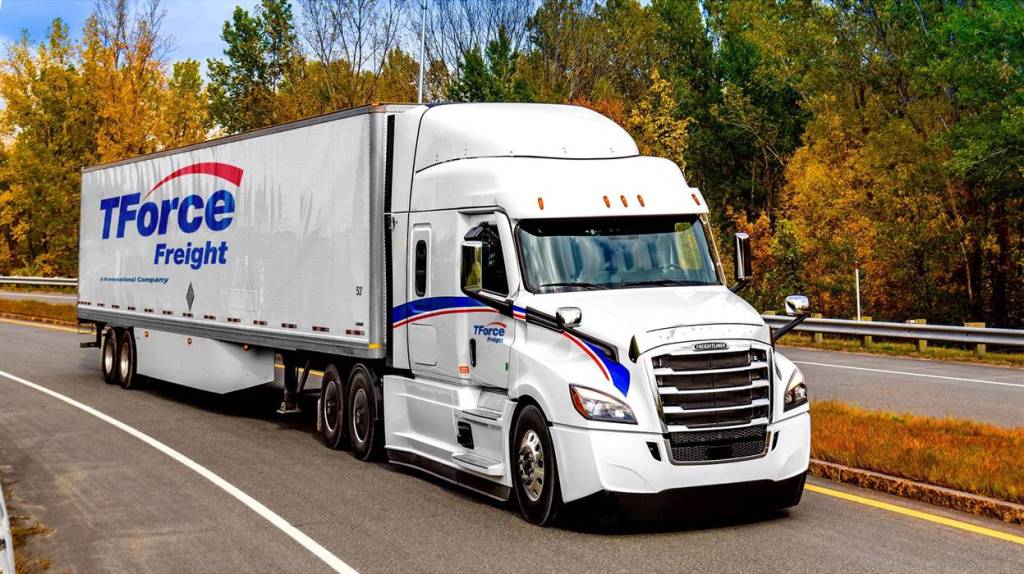
Bedard said the struggles at the U.S. LTL operations had made “a few shareholders…very disappointed. They were disappointed that they thought that we’ve lost control of TForce Freight,” the operating name of the U.S. LTL operations. 

“So now we’re starting to show that, no, we’re back in control,” he added.

Bedard mostly stayed away from comparisons against the second quarter of 2024, where the year-on-year changes generally do not look good.

A positive reversal in margins

Instead, Bedard focused on numbers like this: in the second quarter, the adjusted EBITDA margin for the company’s LTL business was 17.8%. The truckload margin was 22.4% and in its logistics segment, that figure was 13.6%. 

By comparison, the respective numbers in the first quarter were 14.4%, 19% and 12.2%.

There were other numbers that were improved. For example, TFI’s total LTL operating ratio (OR) was 89.5% in the second quarter. It was 93.1% in the first quarter in the metric where the lower, the better.

The U.S. LTL segment, which includes the TForce Freight segment built out of the acquisition of UPS’s LTL division, had an OR of 94% in the quarter. In the first quarter, that number was 98.9% .

Canada’s LTL OR slipped slightly to 80.6% from 80.2% in the first quarter.

But the first metric Bedard addressed in the call was TFI’s free cash flow (FCF).  The company reported FCF of $182 million in the quarter. “Strong free cash flow is always a top priority at TFI International,” Bedard said. 

The second quarter FCF number was down sequentially from $191.7 million in the first quarter,  but up from $151.4 million in the corresponding quarter a year ago.

Bedard at times in the past year or two has often been blunt in his assessment of the operations of TForce. The segment has been troubled enough that Bedard last October felt it necessary to tell analysts that the purchase wasn’t one he regretted. He also has been critical of the group, 

including a call one year earlier when he described the company’s operations as “too fat.” 

But in the last two quarterly earnings phone calls, including Monday’s, he has been far more positive. 

“Our volume is still too soft,” he said. “But what the guys have done so far is improved the mix of our freight, year over year.”

One U.S. LTL benchmark that did not improve was yield. Revenue per hundredweight excluding fuel in the U.S. LTL operations, referred to in the LTL industry as yield, was down to $25.80 in the second quarter from $27.62 a year earlier. Sequentially, that number was down from  $26.81.  

On the call, David Saperstein, TFI’s CFO, said the company had a higher weight per shipment in the quarter, which tends to push down yields. 

Even with so much focus on the struggling U.S. LTL operations, the latest two earnings calls also have featured a discussion on the company’s U.S. speciality truckload operations, which is mostly the operations of formerly publicly-traded Daseke, which TFI closed on in April 2024.  

A different approach at the legacy Daseke business

Operations at Daseke are in for a change, Bedard said, and the company’s focus on generating FCF is a driving factor. 

The flatbed operators were “good truckers, but we’re changing those guys into good business truckers,” Bedard said. “You’ll see us brokering more freight to the market and driving less miles with our own assets,” he added, noting that a similar model is in place for TFI’s specialty trucking operations in Canada.

Daseke, he said, “their thinking was we have got to run it ourselves. We’re changing that in the U.S.” By doing so, FCF can be improved because “you’re not stuck with the capex or the accidents,” Bedard said. 

Taking a similar approach in the U.S. LTL sector is difficult because of the fact that the operations that came over in the UPS deal are unionized, according to Bedard. 

Describing a company with almost 4,400 vehicles as “asset-light” may seem odd, but Saperstein echoed Bedard. 

“When we start making a lot of money, we’re not going to go out and celebrate and buy trucks,” Saperstein said. “We’re going to buy the trucks that we need while continuing to migrate toward the more asset right model in the recently-acquired businesses,” he said. 

Cash flow should rise along with earnings “and you will not see any sort of large step up of adding capacity,” Saperstein said.

All of the discussion about Daseke was not negative. Bedard said the legacy UPS LTL business was “a retail machine.” 

And the legacy Daseke business, with its deep ties into the industrial sector, is providing an opening for TForce, Bedard added.

“We said let’s move more into the industrial environment,” Bedard said. “And through the Daseke sales team, we’re opening doors to our LTL team to see, hey, can we do something with you guys with all these industrial customers that we service on the industrial side but don’t on the LTL side.”

The impact from tariffs

Both Daseke and the LTL business are being impacted by tariffs, though Bedard was careful not to offer too strong an opinion on his view of the levies. 

Bedard did cite the uncertainty brought about by tariffs as impacting what he called TFI’s “industrial truckload base” in the U.S., which is largely built from its acquisition of Daseke. 

“A lot of our customers are just waiting on the sidelines saying, hey, where are we going?” Bedard said. “When is this going to end? Because our miles are down around 10%, which is not normal.”

The Daseke acquisition was made, he said, “because we thought that the industrial business in the U.S. will start to grow again. We missed the call. Maybe we were one year too early.”

Asked about the sustainability of the strong cash flow numbers, Bedard described his company as a “cash cow and this is the golden goose of TFI.”

Bedard in the call had boasted about the amount of shares purchased in the quarter as a result of the cash flow: $84.9 million in repurchases, equating to 1,025,000 shares. The company in its earnings statement also said since the quarter finished, it had bought another 475,000 shares.

More articles by John Kingston

Yet another broker liability case, this time in the Fifth Circuit, adds to the growing mix 

Ryder’s used vehicle numbers show a bullish corner: tractor sales
Five takeaways from the State of Freight for July: What earnings and the indices are saying about the market

First look: Most metrics at TFI are down from 2Q 2024 but Bedard touts higher margin

The earnings report at diversified carrier TFI International (NYSE: TFII) beat Wall Street estimates on the bottom line, but virtually every operational metric in its key LTL division, including the U.S. operations that house the former UPS Freight acquisition, was lower compared to the second quarter of 2024. 

But in the first moments of the company’s earning call with analysts, CEO Alain Bedard noted “strong” free cash flow figures and “solid margin performance.” He also cited sequential improvement in operating ratio at the LTL operations. And Wall Street liked what it heard, with post-close trading boosting TFI stock by about 6.25%. 

The operating ratio (OR) at U.S. LTL in the second quarter ballooned to 94% from 90.8% in the corresponding quarter of 2024.  Revenue per hundredweight excluding fuel fell just under 2% to $331.18. 

In a prepared statement released with the earnings, TFI noted the one bright spot in the U.S. LTL operations, an increase in weight per shipment of just over 5%. But the rest of the countdown of various measures was all negative: a 10.1% drop in the number of shipments and a 5.5% decline in the total level of shipments as measured in tons.

Canadian LTL, which has been the example that TFI management has said it wants to emulate in the U.S., suffered a worse decline in its OR, dropping 500 bps to 80.6%. Revenue per hundredweight excluding fuel was down 3.56%.

The truckload operations at TFI suffered the same sort of weak quarter that has been showing up in other earnings reports from truckload carriers. Revenue before fuel was down about 3.4%, adjusted EBITDA was down a little more, but revenue per truck per week excluding fuel was down only a small amount. The adjusted OR in truckload declined 110 bps to 90.1%.

TFI’s overall adjusted net income of $1.34 per share was down from $1.71 in the corresponding quarter a year earlier. However, according to SeekingAlpha, it was still 11 cents better than forecasts.

Total revenue of $1.8 billion was down 9.4% from a year earlier. It was also $20 million less than the Wall Street consensus, according to SeekingAlpha. 

By the close of trading Monday, TFI stock was down about 41.3% in the last 12 months before the post-market increase. 

,  

More articles by John Kingston

Yet another broker liability case, this time in the Fifth Circuit, adds to the growing mix 

Ryder’s used vehicle numbers show a bullish corner: tractor sales

Five takeaways from the State of Freight for July: What earnings and the indices are saying about the market

Bill aims to prioritize rail freight, untangle congestion

intermodal trains at rail yard

WASHINGTON — A bill stripping government-backed preference given to Amtrak passenger service over track shared with freight railroads has been reintroduced in Congress as a way to alleviate congestion near ports and rail yards.

The Freights First Act was introduced in 2022 by U.S. Rep. Dusty Johnson, R, S.D., but died before making it out of committee. It was resurrected on Friday by U.S. Rep. Eric Burlison, R, Mo.

“The backbone of America’s economy is a strong and reliable supply chain,” Burlison said in a press release.

“When freight rail is forced to wait for passenger trains near critical infrastructure, our entire economy suffers. My Freights First Act removes this barrier and ensures goods arrive on time and without costly delays.”

Federal law in place since Amtrak was created gives passenger service preference over freight railroads on shared tracks, “but often creates unnecessary bottlenecks near ports and major rail yards,” Burlison’s office asserted.

For five years after the bill is enacted, “intercity and commuter rail passenger transportation provided by or for Amtrak shall not have preference over freight transportation in using a rail line, junction, or crossing if such rail line, junction, or crossing is located within 50 miles of a port or rail yard,” according to text in the 2022 bill. A copy of the latest bill was not immediately available.

When Johnson introduced the legislation three years ago, it was against the backdrop of lingering delays caused by the Covid-19 pandemic. “The supply chain backlogs that began at our ports have trickled down to our freight rail networks,” Johnson stated at the time.

Burlison did not provide a particular justification for reviving the legislation. Analysts have recently pointed out, however, that tariffs, and the trade disruption that may result, sets up the potential for supply chain kinks that could lead to congestion in the U.S.

Following service delays last year on its Sunset Limited service over track shared with the Union Pacific Railroad (NYSE: UNP), Amtrak cited the freight railroad’s obligations to the passenger service in a complaint filed with the Surface Transportation Board in October.

The “public bargain” that created Amtrak over 50 years ago that relieved railroads from operating increasingly unprofitable passenger rail service “had a critical condition,” Amtrak stated in its complaint.

“In return, the railroads had to – and must still – provide rail passengers with preference over freight traffic on their rail lines. That passenger-preference obligation …. was also consistent with the commitments made by industry leaders at the time of Amtrak’s inception to continue to prioritize passenger trains.”

UP responded that Congress “created Amtrak to relieve railroads from financial burdens of serving passengers that were endangering their ability to compete for freight, not to promote passenger service at the expense of freight service.”

Click for more FreightWaves articles by John Gallagher.

Automatic or Manual – Did the Easier Shift Make Roads More Dangerous?


Introduction: The Gearshift That Sparked a Divide

There’s an unspoken line drawn in the dirt at every truck stop in America: those who drive automatics, and those who swear by a stick. It sounds like a preference—but it runs deeper. One side sees convenience, consistency, and progress. The other sees lost skill, lazy entry, and a new kind of risk on the road.

And now, with more trucks than ever coming out of the factory with no clutch pedal in sight, the conversation’s gotten louder. Are automated transmissions making our roads safer—or is the shift from manual driving part of what’s putting inexperienced drivers behind the wheel of 80,000-pound missiles?

The truth sits somewhere in the middle. But we’re not here to argue—we’re here to unpack the full story so you can decide for yourself.

The Rise of the Automatic – Why Fleets Made the Switch

Let’s start with the facts. Over the past decade, major fleets have aggressively shifted toward automated manual transmissions (AMTs). And it wasn’t by accident.

Here’s why:

  • Fuel Economy: AMTs optimize shift timing better than most humans can. That alone saves thousands per truck per year.
  • Driver Fatigue: Shifting countless times a day wears a driver down. AMTs let them stay focused and less physically drained.
  • Training Time: Fleets can get new hires on the road faster. Teaching someone how to drive is easier when you remove gear timing from the equation.
  • Wider Driver Pool: Simply put—more people can qualify. That’s a win for large fleets trying to keep up with turnover.

From a business standpoint, it made sense. In a margin-tight industry, saving time and money wins.

But while fleets were optimizing spreadsheets, the long-haul veterans were raising their eyebrows.

The Case Against the Clutch-Less Driver – What We Lost

Old-school drivers don’t talk about torque curves or downshifts in theory. They feel them. And what they’ve been warning us about isn’t just nostalgia—it’s a real concern about skill erosion and road safety.

Here’s the problem, according to the manual crowd:

  • Situational Awareness Declines: When you’re shifting manually, you’re engaged—in the RPMs, the terrain, the weight behind you. Automatics let your mind drift.
  • Too Easy to Get In: With AMTs, someone who’s barely driven a sedan can pass a CDL test and be on the road in weeks. That’s not enough time to understand what that truck can do—or can’t.
  • Lack of Control in Critical Moments: Snow, ice, mountain grades—there are times when the driver needs to override the logic of an AMT. But what if they don’t know how?
  • Mechanical Disconnect: Manual drivers often hear a problem before it becomes one. Automatics separate you from the machine—and that can delay early warning signs.

Some even argue the rise in runaway truck ramps and blown transmissions isn’t just coincidence. And while data is hard to pin down directly, the voices from the road are loud enough to demand attention.

A Closer Look at Crash Data – Can You Blame the Gearbox?

Here’s where things get murky.

As of today, there is no definitive national crash dataset that singles out transmission type as a contributing factor to collisions. FMCSA data tracks everything from fatigue to brake failure—but not whether the truck was automatic or manual.

Still, some patterns are worth noting:

  • The rise of automatics coincides with the industry’s lowest barrier to entry in history.
  • Carriers complain of driver readiness and control loss in critical terrain—particularly mountain descents.
  • ELD-mandated new drivers are now operating trucks without having learned shifting fundamentals—or how to downshift in an emergency.

Is the transmission to blame? Maybe not entirely. But it may be enabling a system that’s failing to prepare drivers.

The Midpoint No One Talks About – AMTs with Manual Override

Here’s where the conversation gets more interesting.

Not all automatics are equal. Many AMTs—especially newer models—offer manual mode options. They allow the driver to override gear selection, downshift preemptively, or hold a gear in challenging terrain.

So what’s the problem?

Many drivers don’t know how or weren’t trained to use manual mode.

This is a training failure, not a transmission flaw.

We’ve built trucks that can adapt to both ends of the skill spectrum—but we’re only training for one. The result? Drivers rely on automation without understanding the “why” behind what the truck is doing.

What New Drivers Need to Know – Beyond the Pedals

Here’s where we flip this into something useful—because debating AMT vs. manual does nothing if we don’t train better drivers either way.

Whether you’re in a 13-speed or a push-button auto, here’s what matters:

  1. Know Your Weight and Grade. Use Jake brakes before you need to. Don’t rely on software to calculate your descent.
  2. Understand Shift Points. Even in an AMT, you should know when the truck should shift—and how to override it if needed.
  3. Use Manual Mode. If your truck has it, learn it. It could save your brakes—or your life.
  4. Train for Emergencies. Simulate steep declines, tire blowouts, and gear loss. Whether you’re shifting or not, reaction matters.
  5. Respect the Machine. Automatics may simplify some tasks—but the truck is still 80,000 pounds of physics in motion. It doesn’t care if you’re comfortable.

The Future of Transmissions – Autonomous Prep or Safety Play?

Let’s ask a bigger question: Is this move toward automatics really about driver comfort?

Some say no.

Some say it’s laying the groundwork for autonomous trucks—standardized, software-driven gearboxes that don’t require a human at all. It’s easier to automate shifting than judgment. And in that context, AMTs are a step toward removing drivers altogether.

Others see the transition as a safety upgrade—removing the margin of error that comes with a missed downshift or grinding gears.

But if we’re heading toward either outcome, we’d better be honest about it. Because training drivers like they’re temporary placeholders in a self-driving future now only hurts the industry now.

Final Word – A Truck Is Only as Safe as the Driver Behind the Wheel

At the end of the day, a transmission is just a tool. Like any tool, it can be misused, misunderstood, or undertrained.

Manuals demand attention, timing, and skill. Automatics offer consistency, comfort, and convenience. Neither will fix a training problem. Neither will replace judgment. And neither can be blamed for an industry that’s rushed too many underprepared drivers into high-risk situations.

We don’t need to pick a side—we need to train better drivers. Period.

Because no matter the gear, the risks don’t change. Only the readiness of the person holding the wheel does.