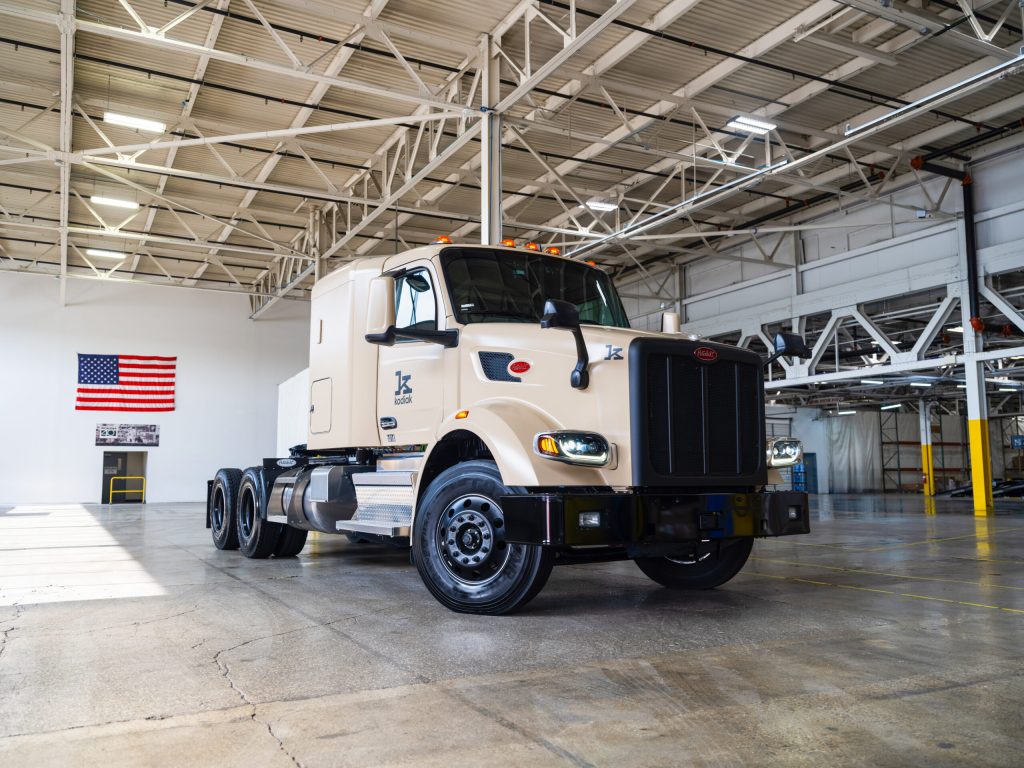
Kodiak selects Roush as manufacturing partner for autonomous truck upfitting

Kodiak Robotics autonomous truck

Kodiak Robotics announced on Thursday it has selected Roush Industries as its manufacturing partner to scale the upfitting of trucks equipped with the Kodiak Driver autonomous system. Starting in the second half of 2025, Roush will begin upfitting these autonomous trucks at its facility in Livonia, Michigan, with initial production focused on vehicles for Kodiak’s customer, Atlas Energy Solutions.

The partnership includes a production line dedicated to the scaled upfitting of trucks with Kodiak’s modular and vehicle-agnostic hardware. This includes Kodiak’s proprietary SensorPods, AI compute systems, Actuation Control Engine safety compute, and redundant actuation elements. Roush has committed to designing and implementing a flexible manufacturing process capable of rapidly scaling to meet increasing customer demand.

“Kodiak’s autonomous trucking technology is an exciting advancement in the mobility industry,” said Brad Rzetelny, VP contract manufacturing at Roush in the release. “Together we’re working to build a robust and repeatable manufacturing process that supports Kodiak’s transition from limited production to full-scale deployment.”

Roush brings nearly 50 years of mobility industry experience to the partnership. The company has developed specialized expertise in upfitting and delivering complex vehicles, including autonomous vehicles for multiple developers. 

“Roush’s deep experience upfitting autonomous vehicles makes them an ideal production partner for Kodiak,” said Don Burnette, founder and CEO of Kodiak. “We believe that Roush’s strong quality management processes will ensure our customers’ Kodiak Driver-powered trucks will be built to exacting standards.”

The partnership offers advantages over traditional factory-line integration, including manufacturing flexibility to support various vehicle configurations and customization options that trucking customers require. This collaboration comes as Kodiak pursues plans to go public through a SPAC with Ares Acquisition Corporation II, expected to close in the second half of 2025.

Motiv Appoints Scott Zion as Chief Product and Engineering Officer

(Photo: Motiv Electric Trucks)

On Thursday, Foster City, California-based medium duty electric truck maker Motiv Electric Trucks appointed Scott Zion as its Chief Product and Engineering Officer. In this role, Zion will oversee Motiv’s product roadmap and ensure the company’s technologies and vehicles meet high quality standards while fulfilling customer specifications.

Zion brings over 30 years of experience in vehicle engineering and electric vehicle technology to Motiv. Most recently, he served as Chief Product Officer at Bollinger Motors, where he led product strategy and development for electric commercial vehicles. His previous roles include Head of Engineering at Xos Trucks, Director of Medium Duty Vehicles, and General Manager and Chief Engineer of Zero Emission Vehicle Programs at Hino Motors Manufacturing USA.

“Scott’s proven expertise in product planning and his experience leading engineering and product teams in the commercial electric trucking space is a perfect fit for where Motiv is today,” said Scott Griffith, CEO of Motiv Electric Trucks in the release. “His background and leadership will be critical as we scale our team to continue to design and produce the most technologically-advanced, reliable, sustainable and cost-competitive electric trucks and buses for the largest fleets in North America.”

The news comes as Motiv celebrates 15 years of manufacturing electric step vans, box trucks, shuttles and buses. The company has deployed nearly 400 vehicles that have collectively driven over 5 million miles. Currently, 10 of North America’s 20 largest medium duty truck fleets have deployed Motiv vehicles, including Purolator, Vestis, Cintas, and Bimbo Bakeries.

Motiv now accounts for 45% of electric step vans in California and 19% of step van deployments across the U.S. The company reports that 64% of its vehicles have been delivered to repeat customers.

“Medium-duty commercial trucks are especially well-suited for electrification given their relatively short-range use cases, predictable duty cycles and depot-based charging, which avoids dependency on public charging infrastructure,” added Zion.
You’re halfway there! To read the rest of the Truck Tech newsletter, subscribe below. It’ll be delivered to your inbox every Friday at 11am eastern.

While you’re at it, check out this week’s episode.

$5M settlement in Illinois fatal crash exposes risks of commercial trucking

The attorneys for the family of a woman killed in a wreck with a tractor-trailer hope their case highlights how quickly bad things can happen on the roadway.

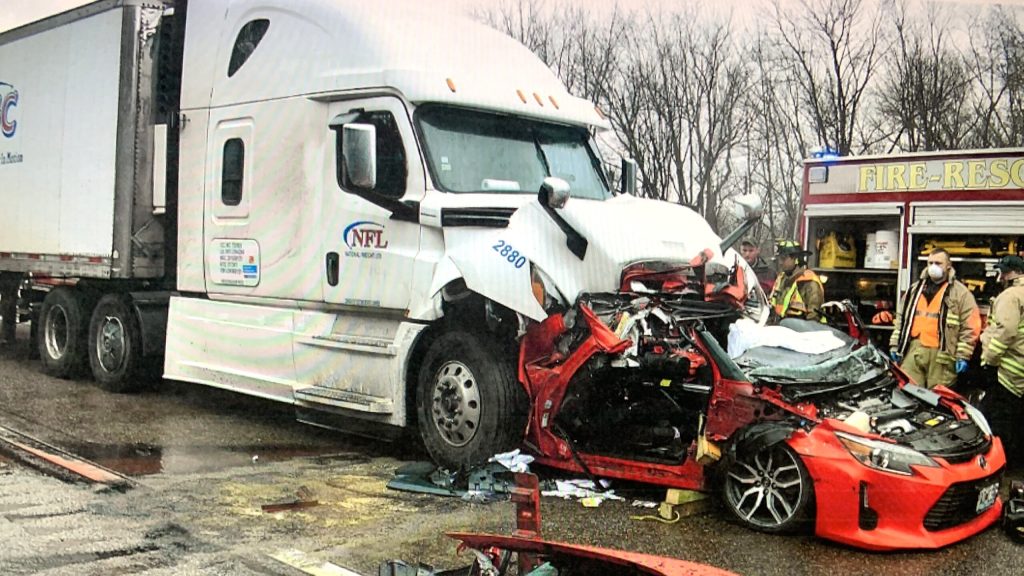
In March 2021, Jamie Roth, 34, died when a heavy-duty truck driven by Gursimran Singh crashed into her stalled car on Interstate 70 outside of Edwardsville, Illinois. 

Her family’s civil team — lawyers Kevin Etzkorn and Nathan A. Steimel — recently helped bring a $5 million settlement with the carrier that owned Singh’s truck, NFL National Freight Ltd.

“No. 1, be careful driving,” Steimel told Freightwaves in an interview. “Understand your surroundings, and if you see people staring at their cell phone, be extra careful.”

Etzkorn and Steimel are both based in the St. Louis, Missouri, area. They took on the case after members of the Roth family reached out to them. 

Etzkorn said large trucking accident settlements are often confidential, but this settlement was  unsealed by Roth’s family.

“It’s really unusual… I have cases that settle for substantially less than this, the defendant requires confidentiality,” Etzkorn told FreightWaves. “But this one … I think it benefits everybody if cases, when they do settle, are not sealed, then we can learn from mistakes.”

The attorneys spent months researching the accident to understand what happened, including hiring a forensic investigator, interviewing eye witnesses and talking to employees who worked at the trucking company involved in the accident.

The investigation led them to conclude Singh was driving the truck “on cruise control in heavy rain while looking down at his phone,” according to the forensic report.

The report was produced by John C. Glennon, Jr., and it was included in a 2023 wrongful death lawsuit Etzkorn and Steimel filed on behalf of Roth’s family against NFL National Freight Ltd.

Glennon is an automotive technologist and crash reconstructionist. 

NFL National Freight Ltd. is based in Surrey, British Columbia, Canada. The cross-border carrier has 35 trucks and 40 drivers, according to the Federal Motor Carrier Safety Administration.

On the night of the accident, Singh was co-driving an NFL National Freight truck across the country. The co-driver’s name was Lakhveer Singh, no relation to Gursimran.

“In the early part of 2021, they put Gursimran Singh on the road and he and Lakhveer go to California and spend a few weeks driving across the country with a shipment of fruit products that they have taken from California up to the eastern part of Canada,” Etzkorn said. 

The crash occurred at 12:41 p.m. on March 18, when Gursimran Singh’s truck rear-ended Roth’s Scion TC car, which was disabled in the eastbound right lane of I-70. 

A witness reported that Gursimran Singh was looking at a phone that he was holding in the center of the steering wheel. The witness also reported the co-driver, who was seated in the passenger seat, was also looking at a cell phone.

“At the scene [Gursimran Singh] told police that he just didn’t have time to react because there was another truck that was in front of him that moved at the last minute,” Etzkorn said. “He said that it was pouring rain as well, which did not help his cause at all because he did not slow down, he didn’t deactivate the cruise control and as we found out when we got further into the case, he actually was on his cellphone while he was driving.”

Gursimran Singh and his co-driver Lakhveer Singh had driven almost 14,000 miles in a 17-day period by the time the accident with Roth occurred, the forensic report said. 

Steimel and Etzkorn said their investigator found evidence that NFL National Freight Ltd. may have been part of a chameleon carrier operation. The carrier was NFL, but that company may not have been all that it seemed.

According to the forensic report, 17 other companies were found to likely be affiliated with NFL National Freight Ltd. and its owners.

“The Freightliner truck was reportedly being operated by the motor carrier NFL National Freight,” Glennon wrote in the forensic report. “Based on my review of this case I found that there are numerous companies affiliated with NFL. The group of companies are using common employees for the management of multiple motor carriers. The evidence shows that this group of companies is an affiliated chameleon operation that is most likely ghosting loads for larger companies.”

A chameleon carrier often reincarnates to separate itself from negative past behavior, including FMCSA and/or state imposed citations or fines.

“Certainly, it seems like the trucking industry would want to know about [chameleon carriers],” Steimel said. “Even if you have the companies that aren’t going to take care of themselves, which is what these chameleon companies try to do, they’re getting hit for liability, and go down to one truck or two, but then put 20 trucks over here with the guy that has a good safety record.”

Attorneys Kevin Etzkorn and Nathan A. Steimel recently appeared on FreightWaves’ “What the Truck?!?” podcast to discuss the events that led to trucking accident that killed Jamie Roth. “What the Truck?!?” is hosted by Timothy Dooner.

DHL Express Canada seeks exemption on use of replacement workers

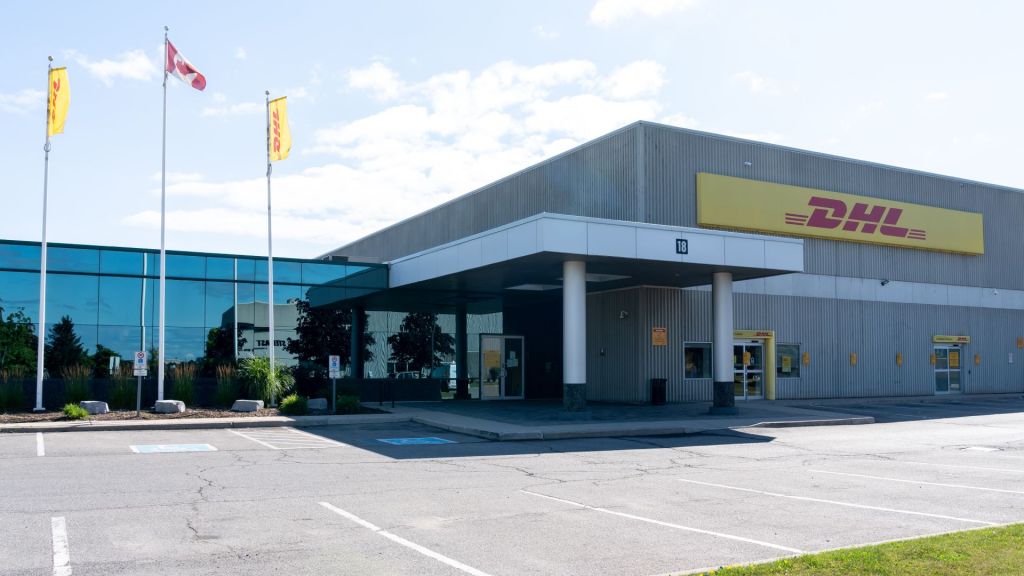
DHL headquarters building with yellow-red signage and flag poles with Canadian flag.

DHL Express has asked Canada’s government to exempt it from new legislation banning federally regulated employers from hiring replacement workers during strikes or lockouts, saying a cessation of parcel delivery operations would significantly harm businesses and communities at a time of high economic uncertainty.

DHL Express Canada late Tuesday stopped accepting new packages and will suspend operations Friday, when the new law takes effect, in response to a work stoppage over deadlocked contract talks with unionized workers. It initially called in strikebreakers to maintain service levels after a lockout-strike moratorium expired on June 8 and both sides took action. 

In a letter to Prime Minister Mark Carney and Patty Hajdu, the minister of jobs and families, DHL Express Canada said the prohibition on replacement workers shuts off a vital trade link for more than 50,000 international shipments per day, including pharmaceuticals and e-commerce products, that industries and consumers depend on. The letter was signed by Andrew Williams, the CEO of DHL Express Americas, and Geoff Walsh, CEO of DHL Express Canada, who urged Ottawa to intervene — as it recently did in the ongoing Canada Post labor dispute.

“We respectfully request … the government’s intervention under section 107 of the Canada Labor Code to allow DHL Express to continue operating while we negotiate in good faith with the union. We have witnessed similar interventions during the ongoing strike at Canada Post, and we believe such action is warranted in our case, given that we provide essential logistics services to Canadians. This intervention is critical not only for the survival of DHL Express in Canada but also for the thousands of Canadians and businesses that rely on our services. Our commitment is to continuing bargaining in good faith, and we are confident that a balanced approach to labor relations can be achieved without resorting to measures that could jeopardize the livelihoods of many,” the DHL executives wrote.

Unifor, the union representing about 2,100 independent couriers, truck drivers, warehouse pickers and clerical workers at DHL, posted the letter on its website. It castigated DHL Express for seeking special treatment from a law designed to protect workers in collective bargaining.

“Let’s be clear — DHL is not the victim here. This company locked out its own workers, forcing members to respond with strike action, and now they want the government to override the collective bargaining rights of workers,” said Unifor National President Lana Payne in a statement. “Unifor will stand firm, and we expect the federal government to do the same. No exemptions. No bending the rules.”

Labor advocates say Bill C-58 levels the playing field and prevents employers from dragging out disputes by using replacement workers. 

Unifor, in a response letter to the prime minister urging against intervention, challenged the claim that DHL Express is critical to Canadian supply chains and the economy.

“To be clear, DHL is not even one of the top four express package delivery companies in Canada and DHL workers represent fewer than 0.7% of all local delivery workers and less than 15% of all courier workers in the country,” Payne said in the letter.

DHL could have protected customers by making contingency plans to shift volumes to other carriers and call centers ahead of the lockout, instead of training replacement workers days before a statutory ban kicked in, she said.

“Given this deliberate timing and detailed advanced planning, DHL cannot now say that it was taken by surprise or put at a disadvantage, as a result of the lockout or the enactment of ‘anti-scab’ legislation,” Payne wrote. “DHL appears to be asking for a free pass to avoid having to comply with the new anti-scab legislation that is the result of years of hard work on the part of unions and workers, and which was unanimously supported by parliamentarians.”

Bargaining differences

DHL Express accused Unifor of “intentionally” stalling negotiations on a new labor contract for a year so it could gain leverage when the anti-replacement worker law is implemented. Unifor denied the charge, telling officials it was bargaining in good faith despite members having authorized the union to call a strike on June 8. It said DHL Express Canada triggered the lockout because workers refused to accept concessions. Unifor subsequently implemented its own strike action. 

Unifor’s demands for a 22% hourly wage increase and a 42% cost increase for owner-operator drivers over three years was exorbitant and would “jeopardize our operational viability,” DHL told the government. 

DHL offered a 15% wage increase over five years, new premiums for certain job classifications, increased pension match and benefits, and increased union representation rights. It also seeks to revise the compensation model for owner-operators in response to changing market conditions. It says drivers would still receive highly competitive compensation and increased reimbursement for vehicles.

“With supply chains already strained and businesses grappling with rising costs and uncertainties, the introduction of additional obstacles could push many companies to the brink. The ripple effects of such a decision could lead to increased consumer prices, reduced availability of goods, and further job losses across the economy,” the DHL executives said in the letter.

Earlier this month, Minister Hajdu instructed the Canada Industrial Relations Board to conduct a vote of mail carriers, represented by the Canadian Union of Postal Workers, on Canada Post’s most recent contract offer. Canada Post suggested that union leadership wasn’t accurately representing rank-and-file attitudes toward negotiations, which have dragged out for 18 months. The CUPW three weeks ago implemented a no-overtime rule for members, meaning that mail carriers stop working after eight hours each day and 40 hours per week. The government agreed to go over the head of union leadership in an effort to return the postal operator to normal operations and allow it to implement reforms designed to improve delivery service and restore financial health. 

Objectionable demands, according to Unifor, include forcing drivers to travel up to 62 miles to reach their routes or pick up freight without compensation, the ability to lay off employees more easily, reducing the daily minimum guarantee for drivers, and rerouting pick ups in ways that would cut pay for independent drivers. 

Click here for more FreightWaves/American Shipper stories by Eric Kulisch.

Canadian government to force union vote on Canada Post contract offer

DHL Express Canada to suspend parcel operations amid labor deadlock

DHL Express prepares to open $140M cargo facility at Lyons airport

Securing the voice layer: WireBee’s fight against freight fraud

In an industry where phone calls remain the dominant channel for booking freight, WireBee has emerged as a pioneer in protecting brokers from increasingly sophisticated fraud attempts. This AI-powered call automation platform, built specifically for freight brokers, brings intelligence, security, and control to the inbound call process—stopping fraudulent calls before a human even picks up the phone.

According to WireBee, the greatest threat in freight fraud today is “fraud moving to the voice layer—specifically caller ID spoofing, identity impersonation, and social engineering via inbound calls.” While the industry has made significant progress in vetting carriers at the transactional level, the phone call remains the most vulnerable—and most overlooked—point of entry.

Fraudsters are exploiting brokers’ reliance on voice communication by posing as trusted carriers, hijacking MC numbers, and slipping through during high-volume call spikes. “If we don’t protect the first point of contact, we risk everything that comes after,” WireBee states, highlighting the critical vulnerability in current brokerage operations.

WireBee answers and screens inbound carrier calls using voice-enabled AI agents. When a broker posts a load, they often face dozens or even hundreds of calls from carriers—many either unqualified or fraudulent. The platform’s AI collects key information, runs real-time checks against trusted compliance systems, and only passes qualified, verified callers through to human representatives.

WireBee’s system operates through a structured five-step process designed to screen and manage inbound calls effectively. Initially, loads are posted with phone numbers specifically assigned by WireBee. When a call comes in, the AI-powered platform engages in an automated conversation, collecting essential MC information, load references, and other pertinent data. This is followed by real-time validation, where the caller’s details are meticulously checked against various compliance tools and fraud detection databases to ensure accuracy and legitimacy. A sophisticated spoofing check then analyzes metadata and behavioral signals to detect any caller ID spoofing attempts. Finally, the result of these assessments determines the smart routing of the call. Depending on the validation and risk scores assessed, calls are either blocked, dropped, or forwarded to a human representative for further handling.

WireBee aims to combat several prevalent types of freight fraud that are both common and costly. Caller ID spoofing and impersonation are major issues addressed, with WireBee using advanced, patent-pending technology to identify suspicious behaviors that may arise even from seemingly legitimate numbers. Another threat is carrier identity theft and double brokering, where WireBee offers robust solutions through integrations with FMCSA, Descartes MyCarrierPortal, Highway, and FreightValidate, which affirm MC numbers, company names, authority status, and insurance validity in real-time. Additionally, WireBee’s AI automation shields brokers from engaging with fraudsters attempting phishing or information harvesting through cunning social engineering tactics. Through these comprehensive measures, WireBee provides a formidable defense against the evolving threats in freight fraud.

WireBee’s effectiveness in combating freight fraud is clearly reflected in the substantial improvements observed by its customers. The platform’s AI-driven capabilities have enabled businesses to automatically filter up to 70% of inbound calls before they even reach a human representative. This proactive screening identifies and blocks calls from unqualified or suspicious carriers, significantly reducing potential exposure to fraudulent activities. As a result, hundreds of spoofing attempts are identified and intercepted each week, safeguarding brokerages from the risks associated with carrier impersonation.

Moreover, the use of WireBee has expedited the connection time to qualified carriers by fourfold. This streamlined process minimizes the loss of opportunities that often result from engaging with fraudulent or low-quality calls. Impressively, since WireBee’s implementation, early adopters have reported zero successful fraud incidents, highlighting the platform’s robust defense mechanisms.

A compelling case study underscores WireBee’s impact: Pivot Supply Chain Solutions narrowly avoided a significant fraud incident thanks to WireBee’s vigilant call filtering. When a load was stolen from one of Pivot’s clients by a fraudulent carrier working with a different broker, Pivot utilized WireBee’s call history data to discover that the same impostor had attempted to contact them over ten times. Each attempt was thwarted by WireBee’s integration with MyCarrierPortal’s compliance screening, illustrating the platform’s crucial role in preemptively halting fraudulent interactions and identifying suspicious patterns.

These documented successes attest to WireBee’s capacity to effectively shield freight brokers from evolving threats, ensuring that brokers can prioritize their attention on building genuine, productive relationships with reputable carriers.

One powerful example came from WireBee’s customer, Pivot Supply Chain Solutions. According to WireBee, “One of their clients recently had a load stolen—while working with a different broker who was not using WireBee. After the incident, Pivot’s team searched WireBee’s call history and found that the same fraudulent carrier had attempted to call them over 10 times. Each attempt had been blocked because the carrier failed Pivot’s MyCarrierPortal (MCP) compliance screening in WireBee.”

This case demonstrated both the effectiveness of real-time call filtering in protecting clients and the value of the data captured by the system in helping brokers proactively identify suspicious patterns.

As one agency owner from a mid-sized freight brokerage testified: “WireBee has completely changed the way we handle inbound calls. Our reps now focus only on verified carriers, while the system filters out everything else. The integration with compliance tools is seamless, and we’ve saved countless hours—not to mention avoided some very risky interactions.”

Looking ahead, WireBee sees fraud becoming “more coordinated and more technical—especially in voice-based phishing and spoofing.” They expect bad actors to increasingly leverage automation, fake carrier networks, and AI tools to scale their operations.

WireBee offers clear advice to brokers: “Don’t wait for fraud to happen—build your defenses into your workflows.” The company emphasizes that the earlier you can validate a caller or detect something suspicious, the lower your risk. Their recommendation is to automate what can be automated while keeping humans in the loop where relationships and judgment matter.

“Don’t treat fraud prevention as a one-time setup,” WireBee advises. “It should be adaptive, continuously improved, and deeply integrated into the day-to-day tools your team already uses.”

WireBee is pioneering a new category in freight fraud prevention: voice-layer defense. By combining AI-powered voice automation with real-time carrier vetting and compliance intelligence, the platform offers an innovative blend of automation, security, and operational efficiency.

“It’s not just about keeping bad actors out—it’s about helping brokers focus on what matters: real carriers, real loads, real results,” WireBee states. In an industry where trust is paramount, WireBee’s mission to protect brokers “where fraud starts: at the first ring” represents a significant advancement in creating a safer, more resilient freight network.

When to Outsource Tasks and How to Train a Virtual Assistant

If you’re a small fleet owner wearing ten hats, let me hit you with something hard: just because you can do everything, doesn’t mean you should. That mentality will trap you in one truck. It’ll keep your business crawling when it should be scaling. And the longer you delay outsourcing the low-dollar, high-time tasks, the longer you’ll stay stuck working in the business instead of on it.

You don’t need to be a tech wizard to hire help. You don’t need a massive payroll. You just need a clear process, good communication, and the right kind of support. That’s where virtual assistants come in. But don’t let the buzzword fool you. This isn’t about hiring someone overseas for five bucks an hour. This is about buying your time back so you can focus on what drives profit—sales, strategy, and scaling.

Let’s break down when to outsource, what a virtual assistant can realistically take off your plate, and how to train them so they actually become an asset—not another headache.

The Real Cost of Doing It All Yourself

Let’s do some quick math. Say you spend two hours a day updating load info, sending rate confirmations, checking ELD reports, and responding to broker emails. That’s ten hours a week. Forty hours a month. Now ask yourself: are those forty hours growing your fleet? Or just keeping it barely running?

Time is a fixed resource. Once it’s gone, it’s gone. If your goal is to build a sustainable, profitable operation, your focus needs to be on the highest ROI tasks—building relationships, quoting lanes, hiring right, tightening up processes. Everything else needs a system or a person.

When It’s Time to Outsource

You don’t need a certain revenue mark to bring in help. You need a workload that’s keeping you from growing. Here’s the clearest signs it’s time:

  • You’re spending more time on admin than on freight.
    If paperwork and inboxes are eating your day, that’s your first signal.
  • You’re missing callbacks, quotes, or broker updates.
    That’s not just costing time. It’s costing money.
  • You’re the bottleneck for every decision.
    If your drivers, clients, or dispatcher can’t get answers without waiting on you, it’s time to delegate.

Outsourcing doesn’t mean giving away control. It means building a system that works without burning you out.

What Tasks You Can Hand Off

A virtual assistant isn’t just someone who answers emails. A good one becomes an extension of your office. They handle the repetitive, non-revenue tasks that don’t require a CDL—but do require consistency.

Here’s a breakdown of common tasks you can delegate:

  • Load board posting and refreshThey keep your available trucks visible and updated on all platforms.
  • Rate confirmation handlingThey verify, organize, and send signed rate cons back to brokers.
  • Invoicing and POD trackingThey collect BOLs, submit to your factoring company, and follow up on missing docs.
  • Broker setup packetsThey complete and send carrier packets so you’re not wasting time redoing the same forms.
  • Driver check calls and updates They handle routine calls so you can focus on managing—not micromanaging.
  • Email and calendar managementThey filter junk, schedule calls, and make sure you don’t miss anything critical.

Bottom line: if it’s repetitive and you can create a checklist for it, it’s a job that can be outsourced.

How to Find the Right VA for Trucking

Don’t just hire the first person who says “I’ve worked with dispatchers before.” You want someone who understands the pace of trucking, the urgency of communication, and the importance of accuracy.

Look for:

  • Previous experience with logistics or dispatching – Even better if they’ve worked with TMS platforms like Truckstop, DAT, or McLeod.
  • Strong English communication skills They’ll be emailing brokers, calling shippers, and representing your company.
  • High attention to detailOne wrong number on a BOL can delay funding for days. Precision matters.

Where to find them:

  • Upwork
  • Onlinejobs.ph
  • Freelancer
  • Facebook groups for trucking VAs
  • Referrals from other carriers

Start with a trial. Don’t offer full-time right away. Give them tasks, test their speed and accuracy, and pay them fairly. A solid VA isn’t a cost—they’re a profit multiplier.

How to Train a VA So They Actually Add Value

This is where most carriers fail. They hire someone, throw tasks at them, and get frustrated when things go sideways. If you want your VA to succeed, you need to train them right.

1. Document Everything with Video or Screenshots – Use Loom or Zoom to record how you do each task. Narrate your thought process. Show the clicks, the steps, the tools. Don’t assume they “should just know.”

2. Build a Process Library – Put everything in Google Drive or Notion. Create folders for:

  • Rate confirmations
  • Load board updates
  • Factoring instructions
  • POD collection process

Your goal is to make every repeatable task teachable.

3. Set Clear Expectations and KPIs
Tell them:

  • How fast you expect emails returned
  • What time you want load boards refreshed
  • What happens if a POD isn’t uploaded within 24 hours

Clarity beats assumptions every time.

4. Start With One Task at a Time – Don’t dump ten things on them Day One. Start with one job. Master it. Then add the next. That’s how you build trust and skill.

5. Check Their Work and Give Feedback – This isn’t “set it and forget it.” Set a weekly check-in. Review their tasks. Ask what’s confusing. Fix small mistakes early before they turn into big problems.

How to Know It’s Working

You’ll know your VA is worth every penny when:

  • You stop missing emails and start closing more deals
  • You can focus on scaling instead of scrambling
  • Your back office runs smooth—even when you’re on the road
  • You feel confident walking away from your desk without the wheels falling off

If you’re doing this right, your VA becomes a system, not a stressor.

Final Word

Most small fleet owners think outsourcing is a luxury. It’s not. It’s survival. Because the longer you stay buried in the busywork, the longer you’ll delay the real growth moves.

Outsourcing doesn’t mean you’re lazy. It means you’re smart enough to know what your time is worth—and disciplined enough to train someone to protect it. You can’t scale if every invoice, every rate con, and every check call runs through you. The carriers who win in this market aren’t just the ones with the best rate. They’re the ones with the best systems.

And in this business, your time is the most valuable freight you’ve got. Don’t haul it for free.

FourKites CEO Manipulates My Words to Unfairly Slam Project44’s Movement Platform

This week, I was drawn into the feud between Project44 and FourKites, fierce rivals in logistics tech.

Matt Elenjickal, FourKites’ CEO, misrepresented my comments about Project44’s Movement platform as a quote from Jett McCandless, Project44’s CEO. He also misstated their context to unfairly damage Project44’s reputation. Those were my words alone.

In a LinkedIn post, Elenjickal used a comment I made on X: “This week, a certain ‘Decision Intelligence Platform’ announced its intention to become a ‘managed transportation platform’ for the top 2,000 global shippers, effectively eliminating the need for contracted logistics providers.”

He was referring to Project44’s Movement platform, which I previewed two weeks ago. It’s an impressive, transformative solution for logistics tech.

Elenjickal claimed Project44 aims to harm carriers, 3PLs, 4PLs, freight forwarders, and brokers, urging caution in doing business with them. This distorts Project44’s mission.

Project44 seeks to empower shippers with better supply chain control while supporting their logistics provider network. Elenjickal’s misrepresentation of my quote created a false narrative to undermine their credibility.

My comment about “eliminating the need for contracted logistics providers” was about AI solutions taking over tasks traditionally done by managed transportation services. As AI handles these roles, such services may become less critical.

I wasn’t suggesting Project44 wants to drive these companies out of business.

Elenjickal also left out the next paragraph of my X post, where I wrote: “The most exciting feature (for me) is the shipment negotiation tool, which enables carriers, brokers, and forwarders to participate in the Project44 execution platform.”

It continued: “An AI agent negotiates with carriers on behalf of shippers. This feature will drive a significant increase in spot freight, allowing shippers to access lower-cost spot rates while working with pre-approved, vetted carriers.”

Does that sound like Project44 plans to put these firms out of business? Far from it.

The core issue is Elenjickal’s manipulation of my words and their context. I posted my thoughts on X, and he falsely presented them as coming from McCandless or Project44 to harm their reputation.

McCandless never told me Project44 aimed to eliminate contracted logistics providers. That reference was mine alone.

This behavior, though unsurprising, is troubling. FourKites, under Elenjickal’s leadership, has a history of purported unethical conduct, in its rivalry with Project44.

In a 2020 lawsuit, Project44 accused Elenjickal of sending anonymous emails to its board and an executive, falsely claiming accounting fraud and ties to organized crime.

A forensic IT investigation traced the emails to accounts linked to phone numbers tied to FourKites and Elenjickal. The case reached the Illinois Supreme Court, which ruled FourKites had sent “a false message in bad faith.”

The lawsuit settled out of court. Shockingly, the FourKites Board retained Elenjickal despite millions in legal fees and a damaged reputation.

Competitive rivalries are normal, but Elenjickal should provide proper attribution and, if suggesting a quote comes from Project44, ensure it is accurate. Twisting my words and their context to harm a competitor is unethical and undermines fair competition.

Canada Post, rural postmasters agree to new contract

A rural Canada Post post office. Square building with mountains in the background.

Canada Post said Thursday afternoon that it has reached a collective bargaining agreement with its second largest union, the Canadian Postmasters and Assistants Association (CPAA), after 18 months of negotiations. 

The deal comes as Canada Post remains in a standoff with mail carriers, represented by the Canadian Union of Postal Workers. The Canadian government recently agreed to intervene and force a union vote on Canada Post’s latest proposal, against the objections of union leadership. Tensions have escalated between the postal operator and the CUPW over the same period, culminating with a 32-day strike late last year and the current refusal of mail carriers to work overtime. 

While the postmasters were rarely in the news as they worked on a new contract, the sides required arbitration to reach a deal after talks broke down in December.

The CPAA represents more than 8,500 employees, who are primarily responsible for managing post offices in rural Canada. The CUPW has 55,000 members who work as letter carriers, postal clerks, mail handlers, dispatchers, vehicle mechanics and electronic technicians.

Under the new contract, postmasters will receive an 11% wage increase over three years, retroactive to Jan. 1, 2024. Workers will receive 6% in the first year of the deal. 

The new collective agreement was reached with the help of a government arbitrator.

The Toronto Star reported Thursday that experts don’t believe members of the CUPW will approve Canada Post’s contract offer. 

Click here for more FreightWaves/American Shipper stories by Eric Kulisch.

Canada Post, mail carriers remain far apart on contract as talks resume

Volvo Group and Daimler Truck partner to launch Coretura

On Tuesday, Volvo Group and Daimler Truck officially launched Coretura, a joint venture dedicated to developing a standardized software-defined vehicle platform for commercial vehicles. The launch followed binding agreements between the two companies, signed in October 2024. By early June, the companies obtained all required regulatory approvals and began operations in Gothenburg, Sweden.

Coretura aims to build a non-differentiating core software platform and dedicated commercial vehicle operating system, as OEMs jockey to position themselves at the forefront of digital transformation in the transportation industry.

“With Coretura, we are setting a clear strategic focus on software development for commercial vehicles,” said Karin Rådström, President and CEO of Daimler Truck in the release. “This is a big and really exciting step — not just for us, but for the entire industry and our customers. Together we are starting the digital-driven future of trucks and buses, ultimately making commercial vehicles smarter, more connected, and more efficient than ever before.”

Coretura’s activities include the specification and procurement of centralized high-performance control units designed specifically for commercial vehicles. These units will be capable of handling large amounts of data, allowing for decoupled software and hardware development cycles. A major benefit will enable end customers to purchase and update digital applications wirelessly “over the air.”

The joint venture will be led by a four-member Executive Management team composed of two representatives from each shareholder company. Johan Lundén, previously responsible for Strategic Product Planning, Project and Innovation management at Volvo Group, has been appointed CEO.

“This joint venture blends the agility of a start-up with the stability and expertise of our major shareholders,” said Lundén. “We are proud and energized to lead the digital transformation in the commercial vehicle industry—backed by strong shareholder support and committed to shaping the industry’s future.”

Despite the partnership, Volvo Group and Daimler Truck will remain competitors, continuing to differentiate their product and service offerings, including their respective digital solutions. Coretura is open to cooperation with new and traditional suppliers and partners who share its values.

Starting with approximately 50 employees, the company plans to grow incrementally, with its first products expected to launch in vehicles by 2030.

ACT Research: Trailer Orders Decline Seasonally in May

Preliminary net trailer orders in the U.S. dropped by over 2,300 units from April to May, a 26% decline to 6,600 units, according to the latest data from ACT Research. Despite the monthly decline, orders remained nearly 12% higher compared to May 2024. When seasonally adjusted, May’s order intake rises to 9,200 units, with final results expected later in June. ACT notes final order numbers typically fall within 5% of the preliminary data.

The May decline aligns with expected seasonal patterns, but broader concerns about market stability remain. “Lower May net order intake was expected, as it is one of the weakest order months of the annual cycle. More concerning, though, is this level of order acceptance does nothing to support backlog growth, particularly with the elevated cancellation rates reported in the past several months,” said Jennifer McNealy, director CV market research & publications at ACT Research in the release.

Multiple factors continue to cause trailer market headwinds for manufacturers and suppliers. Notably, weak for-hire truck market fundamentals, depressed used equipment valuations, and relatively full inventories. High interest rates and uncertainty surrounding potential policy shifts related to tariffs were also mentioned. 

Looking ahead, ACT Research remains cautious. McNealy added, “With weak for-hire truck market fundamentals, low used equipment valuations, relatively full inventories, high interest rates, and the ambiguity of policy shifts still in play, ACT’s expectations for subdued build and order intake levels during 2025 remain intact.”

You’re halfway there! To read the rest of the Loaded and Rolling newsletter, subscribe below. It’ll be delivered to your inbox every Thursday at 2pm eastern.

Most recent episode

C.H. Robinson will use AI agents to classify LTL freight

White pup trailers being loaded at an LTL terminal

Global logistics provider C.H. Robinson has announced the launch of a pioneering AI agent designed to adapt to the upcoming changes in the National Motor Freight Classification (NMFC) system for less-than-truckload (LTL) freight. As the largest mover of LTL freight among third-party logistics (3PL) providers in North America, C.H. Robinson is positioning its proprietary technology to revolutionize how shippers classify their freight, marking a major leap in efficiency and accuracy in the logistics industry.

Classifying LTL freight has long posed challenges for shippers due to the complex, manual processes involved. Traditionally, each shipment’s classification required a detailed analysis of four factors: density, handling, liability, and stowability. Density involves calculating the pounds per cubic foot, with higher density often resulting in a lower freight class and thus a lower shipping cost. Handling considerations look at the ease with which a product can be moved between terminals, with more fragile items potentially requiring higher freight classes. Liability encompasses the potential for damage or perishability of the item and its ability to damage adjacent shipments. Lastly, stowability evaluates whether freight can be stacked or turned to maximize space utilization without requiring special handling conditions.

C.H. Robinson’s new AI tool is set to simplify these evaluations. By automating the classification process, the AI agent minimizes human error and expedites order processing. “We have a fleet of over 30 AI agents performing tasks that had defied automation for decades,” said Arun Rajan, Chief Strategy and Innovation Officer at C.H. Robinson. “Now we’re building AI agents that help our AI agents.” This innovation is particularly significant given the upcoming changes to NMFC classifications, which can increase uncertainty and errors if not addressed with precision.

The AI agent’s ability to automate and streamline freight classification will have profound implications for the company’s operations. 

Greg West, Vice President for LTL, noted the impact on efficiency: “Before generative AI, half of our LTL orders were automated by way of customers using our global shipper platform or direct connectivity between our tech and their tech. We have the freight classifications for those shippers baked into our system.” With the new AI agent in place, C.H. Robinson has enhanced its automation capabilities, resulting in over 75% of LTL orders being automated—particularly benefiting small-to-medium businesses heavily reliant on email-based freight tenders.

The AI agent’s speed and capacity for multitasking vastly outperform human abilities in processing freight classifications. In its early months of operation, it has managed to determine the freight class and code for about 2,000 orders per day—a task that would conventionally require substantial human resources and time. 

“Manually looking up or confirming the freight class and code for every emailed LTL tender can easily take a person 10 minutes or more per shipment,” Rajan pointed out. “Our AI agent can do the same in about 10 seconds for first-time reasoning tasks, and just three seconds post-training, handling numerous shipments simultaneously.”

This technological advancement not only accelerates the classification process but also reduces operational costs and turnaround times, effectively getting customers’ freight on the road faster. C.H. Robinson expects this will result in enhanced customer satisfaction and more strategic supply chain operations without the risk of delays associated with misclassified freight.

As the overhaul of the NMFC system looms, C.H. Robinson advises shippers to ensure their readiness by accurately gauging their freight dimensions and weight, both crucial for correct NMFC classification. The logistics leader also announced collaborations with dimensioner technology vendors to offer discounts, aiding customers in achieving precise measurements for their shipments.

“C.H. Robinson’s track record of LTL innovation sets the standard for our industry,” commented Michael Castagnetto, President of North American Surface Transportation. 

C.H. Robinson’s new LTL freight classification tool is a step into the future of freight logistics, providing a transformative solution to a longstanding industry challenge. As the new NMFC standards take effect, this AI agent is poised to play a crucial role in supporting shippers through the transition.

The Real Impact of FMCSA’s English Proficiency Enforcement

Let’s get one thing straight up front—this isn’t about politics, and it’s not about opinion. This is about operational reality. The FMCSA’s renewed enforcement of English proficiency rules isn’t new, but it is hitting harder now, and if you’re not paying attention, it can cost you.

Small fleets and owner-operators need to stop treating this as some side-note regulation. Because it’s not. It’s showing up in audits, roadside inspections, and now—more than ever—it’s being used as a gatekeeping tool for who gets to play and who gets sidelined.

So let’s break this down the right way: what’s happening, why it matters, how it impacts your operation, and what you need to do now before it bites you in the back office or out on the road.

What the Regulation Actually Says

The FMCSA requires that any commercial motor vehicle operator must be able to:

  • Read and speak the English language sufficiently to converse with the general public,
  • Understand highway traffic signs and signals in the English language,
  • Respond to official inquiries, and
  • Make entries on reports and records.

It’s written right into 49 CFR § 391.11(b)(2). And again—this isn’t new. But in 2024 and beyond, enforcement is tightening up in ways small carriers cannot afford to ignore.

What’s Actually Happening on the Ground

Here’s what enforcement looks like in real life:

  • Drivers getting flagged during roadside inspections not for speeding, not for hours of service—but because they “couldn’t effectively communicate” with the officer.
  • Auditors documenting violations when a safety manager or driver couldn’t explain required logs or paperwork clearly enough during a compliance review.
  • Shippers and brokers quietly blacklisted carriers because their communication was difficult, unclear, or broke down at critical moments.

This is becoming an operational risk factor. Not a personal one. If your driver can’t confirm directions, clarify pickup numbers, or speak effectively to DOT during a stop—you don’t just have a language barrier. You have a business liability.

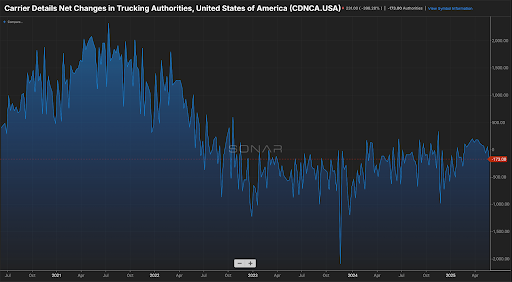
(Source: SONAR Carrier Details Net Change in Trucking Authorities (CDNCA.USA). Overall carrier counts continue to fall with new fraud prevention features in the FMCSA carrier registration process along with ELP enforcement mandates being communicated)

Who This Hits the Hardest

Let’s be honest: this hits immigrant-owned and non-native English-speaking carriers the hardest. And while we can debate fairness all day long, the reality is this: FMCSA doesn’t grade on a curve.

If you or your drivers are operating in this system, you’re expected to meet the standard. Doesn’t matter where you’re from or how good your operation runs otherwise.

And that’s where a lot of small fleets get caught off guard. They assume that as long as they’re safe, compliant, and professional, that’s enough. It’s not.

The Business Risks You’re Not Seeing

This isn’t just about avoiding a ticket or a violation. The real risks go deeper than that:

1. Insurance Premiums and Underwriting

Insurance companies monitor inspection reports and safety data. Too many language-related issues in the books? That’s a risk marker. Your premium’s going up—or worse, you won’t get renewed.

2. Broker Relationships

Brokers are constantly evaluating carrier performance. If your driver can’t clearly confirm appointments, answer phone calls, or communicate updates—it creates friction. That friction turns into lost freight.

3. DOT Audits

Language-related deficiencies can trigger audit findings in:

  • Driver qualification files
  • Training logs
  • Safety communication documentation

And once you’re flagged for noncompliance, it’s a short walk to conditional ratings, intervention letters, and even involuntary out-of-service orders.

Real-World Scenario

Let’s say you’ve got a great driver—hardworking, dependable, safe on the road. But he struggles with English, especially on the phone. One day he gets pulled over for a routine inspection. The officer asks a few questions—Where are you coming from? Where are you headed? What’s your load?

The driver can’t clearly answer.

Now that officer checks the English proficiency box as “Unable to communicate effectively.” That report gets logged. It’s now part of your safety profile. And if that happens more than once, it starts raising flags that your hiring process doesn’t meet FMCSA standards.

Now imagine an insurance renewal or a DOT audit happens while that’s sitting in your file. Think they’re going to overlook it?

What FMCSA Is Really Enforcing

FMCSA isn’t out here acting like English teachers. They’re not looking for perfect grammar or native fluency.

What they are looking for is functional communication.

Can the driver:

  • Understand and follow verbal instructions?
  • Respond to law enforcement or shipper personnel?
  • Complete their logs, inspections, and required forms without assistance?

If the answer is no, then enforcement can—and likely will—follow. And in 2025, that means compliance reviews aren’t just about logs and maintenance anymore. They’re about communication too.

So What Do You Do About It?

Here’s what you don’t do: bury your head in the sand and hope nobody checks. That’s not leadership. That’s negligence.

If you’re running a small fleet, here’s how to address this head-on:

1. Assess Your Current Roster

Start with an honest internal review. Can every driver on your team:

  • Speak clearly enough to hold a phone conversation with a shipper or officer?
  • Fill out DVIRs, logbooks, and inspection reports without assistance?
  • Ask for help or give updates when something goes wrong?

If not, it’s time for a conversation.

2. Invest in Communication Training

Don’t overthink this. You don’t need a language lab. You need a structure:

  • Set up a weekly 15-minute communication call for non-native speakers
  • Role-play common broker and DOT questions
  • Use apps like Duolingo or Babbel as part of onboarding
  • Partner with a local ESL program to offer basic English improvement tools

Small steps go a long way. This is about getting drivers functional, not fluent.

3. Document Everything

If you’re taking steps to train or improve English proficiency, log it.
Create a folder in your DQ files labeled “Communication Training” and add:

  • Sign-in sheets from calls or sessions
  • Certificates from language apps
  • Notes from coaching sessions

If FMCSA comes knocking, you want to show you’ve addressed the regulation, not ignored it.

4. Revise Your Hiring Standards

Make English proficiency part of your hiring checklist. Ask questions that test for it—not just “Can you speak English?” but actual situational examples:

  • “How would you handle a shipper that says your load isn’t ready?”
  • “What do you say if DOT pulls you over and asks for your last log entry?”

If they can’t get through those basics, they’re not ready to run under your authority yet.

Let’s Talk About Culture

Some folks hear “language enforcement” and immediately go defensive. They see it as an attack on who they are, how they speak, or where they’re from. That’s not what this is.

This is about safety, communication, and compliance. The truth is, some of the best drivers in the country didn’t grow up speaking English. But they worked at it. They adapted. They built businesses and reputations because they understood that in this industry, communication is currency.

If you want to protect your authority, keep your safety rating intact, and get taken seriously by brokers and shippers—you have to lead from the front.

Final Word

The FMCSA’s enforcement on English proficiency isn’t about discrimination—it’s about operational standards. And like it or not, it’s here, and it’s not going away.

If you run a small fleet, you can’t afford to have your reputation—or your revenue—tied up in communication breakdowns. Every inspection, every load, every broker call is a chance to either build trust or lose it.

Start training. Start testing. Start documenting. Because in this business, communication isn’t a soft skill. It’s a safety requirement.

And if you don’t manage it, FMCSA will.