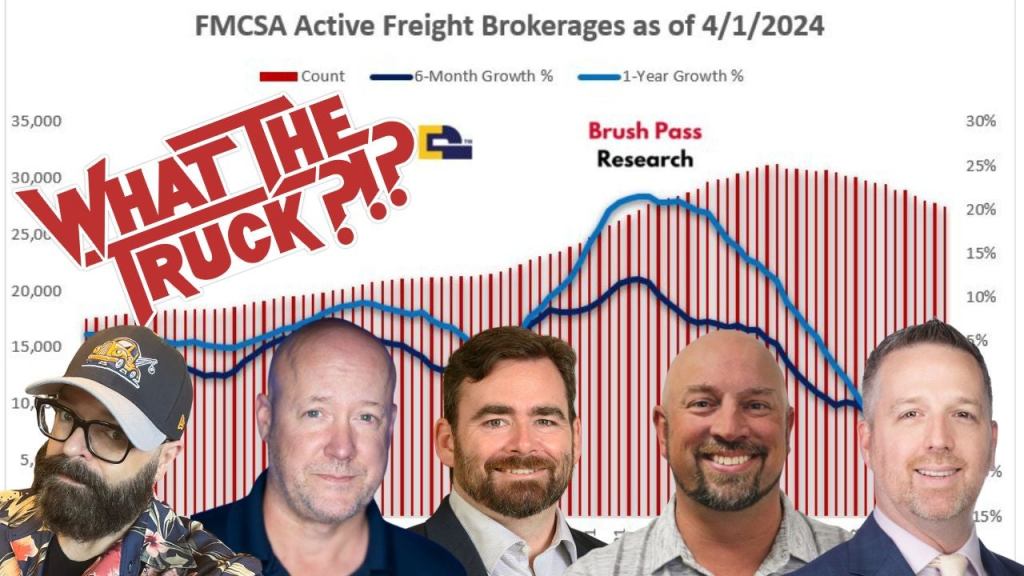
There are 10% fewer freight brokerages than there were 1 year ago – WTT

On Episode 706 of WHAT THE TRUCK?!?, Dooner is talking to Brush Pass Research’s Kevin Hill about his latest data on freight brokerages. There are 35% more freight brokerages than there were five years ago but 10% fewer than there were one year ago. Are we close to finding the floor in this market? We’ll see what the numbers say.

Put the phone down, driver, it’s Distracted Driving Awareness Month. Distracted driving claimed 3,308 lives in 2022, according to the National Highway Traffic Safety Administration. Travelers’ Chris Hayes is here to talk about how all this erratic driving is impacting both drivers’ lives and insurance rates.

The Broker Carrier Summit kicks off next week in Kansas City, Missouri. We’re joined by Troy Wiitanen and Rob McCutcheon to find out everything we need to know about the event that promises to bring brokers and carriers together.

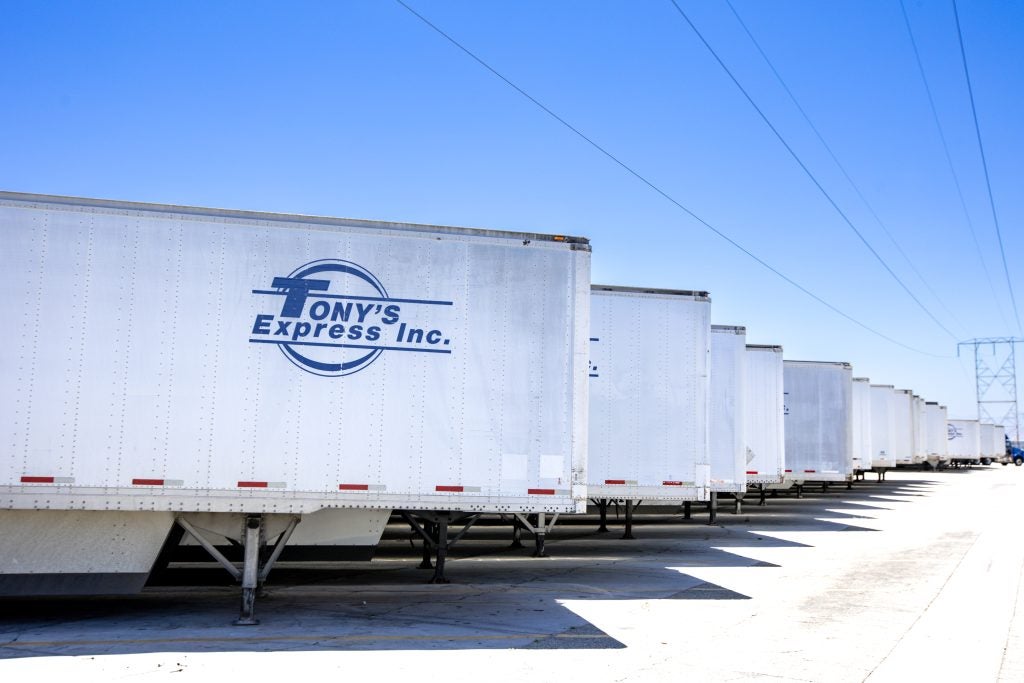
Plus, Tony’s Express employees say mismanagement sank carrier; the power of the road atlas; Tesla Semi spotted with a Walmart trailer; happy Boston Marathon Monday; and more. 

Watch on YouTube

Subscribe to the WTT newsletter

Apple Podcasts

Spotify

More FreightWaves Podcasts

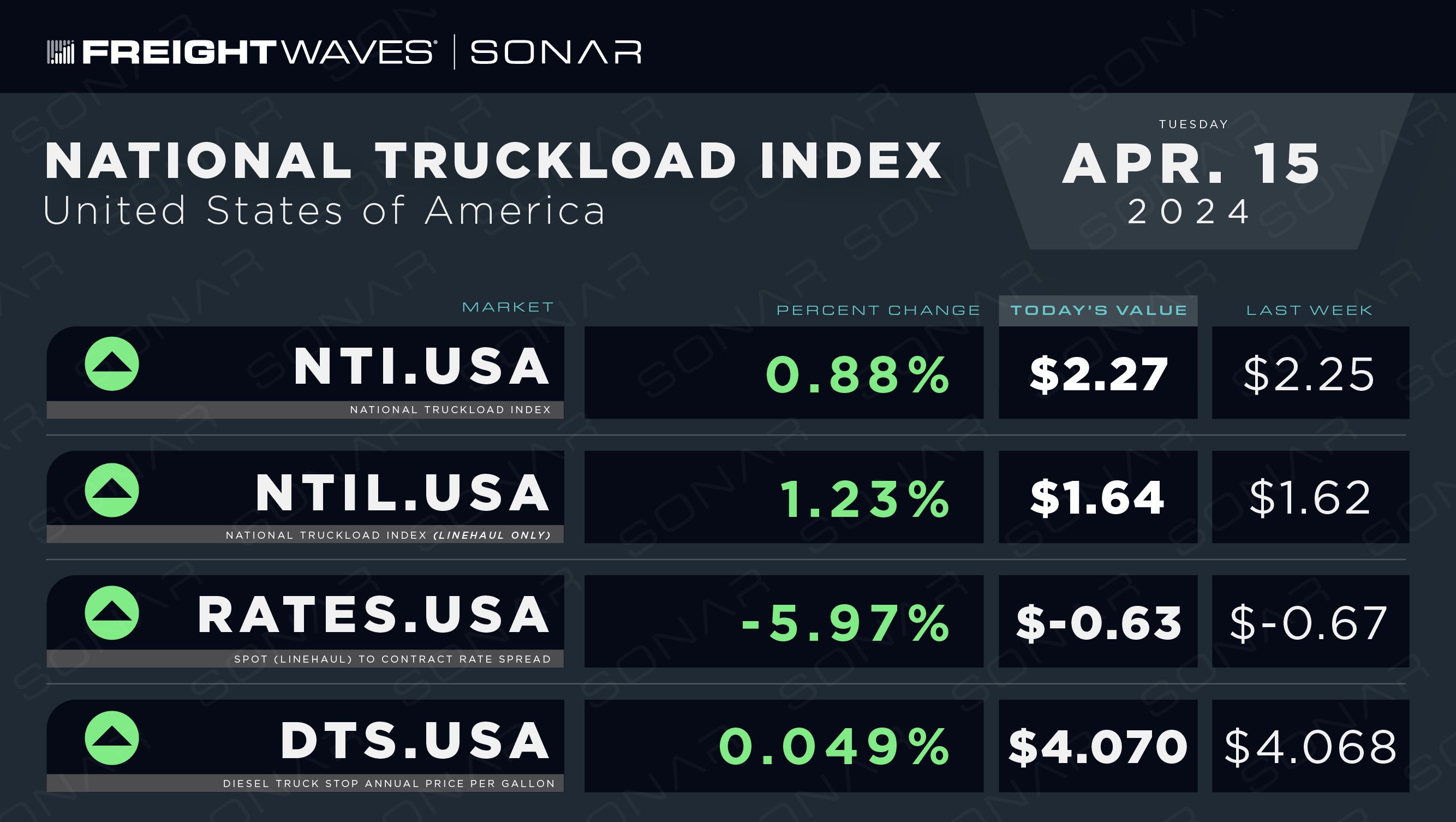
Weekly NTI Update: April 15, 2024


Learn more at SONAR.FreightWaves.com

High schools driving students to trucking with training classes

More students are getting behind the wheel of trucks as dozens of high schools across the U.S. offer classes to help them obtain their CDLs.

The driving force behind the trucking classes is the desire to expand career opportunities for high schoolers and bolster the professional driving field, teachers told FreightWaves. The American Trucking Associations reports that the industry will need to recruit 1.2 million drivers over the next decade to meet demand, though some in the industry dispute whether there is a truck driver shortage. 

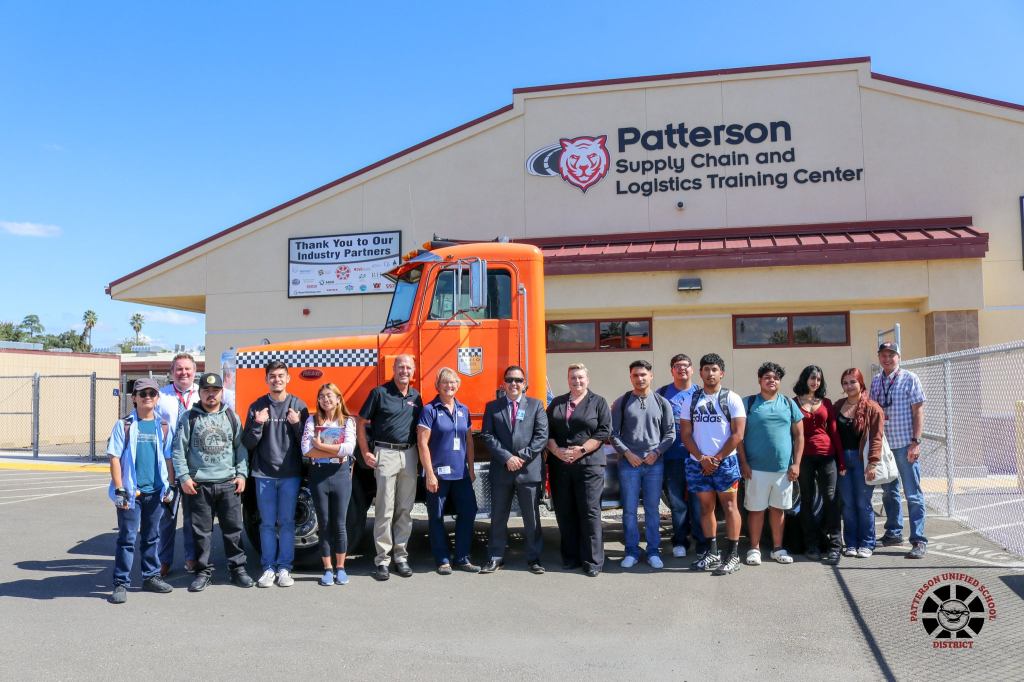
David Kastiro, 21, took Patterson High School’s truck driving class — an elective course open to seniors at the California school — before going to college for one year. Kastiro had dreamed of being a cardiologist, but that plan was shattered when the financial strain of the coronavirus pandemic left his parents without jobs, causing them to be evicted from their home.

“My family was broken after COVID,” he said. 

He moved to Texas with his dad but returned to California to get his CDL, building on the knowledge he learned in his high school classroom. That decision enabled him to provide stable housing for him and his parents. Trucking provided a financial lifeline that would have otherwise not been available to him, he said.

It’s Lindsey Trent’s hope that more high schoolers will choose the professional driving career path, which she said provides excellent job opportunities across multiple fields, such as agriculture, construction and energy.

Trent, president and co-founder of the Next Generation in Trucking Association, works with high schools across the country that want to offer CDL classes. Since the nonprofit trade association’s founding in 2021, Trent said the organization has met with some 300 high schools interested in launching a program. About 50 schools across 15 states now offer classes.

The nonprofit’s goal is to build up the reputation of trucking and make it a first-choice job for students and just as competitive as other career and technical education classes, like welding, said Trent, who serves as a liaison between schools and the industry.

“This generation, they want a job that is more than just making a dollar and helping people make money,” she said. “They want something that makes an impact on the community and they know being a professional driver is an essential job, and if we don’t have drivers, we don’t have medicine, we don’t have food in restaurants or grocery stores.”

Ricardo Jimenez, 22, took Patterson’s truck driving class as an elective at the urging of a friend, unaware that the choice would send him on a new career path. It was Patterson educator and Next Generation in Trucking Association co-founder Dave Dein’s passion that sparked Jimenez’s own enthusiasm about the industry.

“The best things come when you’re not looking for them,” Jimenez said.

Jimenez is studying management and business economics at the University of California, Merced. He started his own trucking company, Fastboy Logistics, where he has two trucks and two drivers, so he could be a part-time driver while obtaining his degree.

“It’s such an undervalued and under-looked-at career,” he said.

The U.S. Bureau of Labor Statistics reports that about 240,000 openings for driving jobs are projected each year on average over the next decade. Many of these jobs are expected to be open due to retiring drivers. About 73% of the nation’s freight by weight is moved by trucks.

Charlie Dansie, an educator at Connell High School in Washington, has taught high-demand truck driving classes for the past three years and said he poses a simple question at the start of the year: Can students name an item not transported by a truck? 

“I’ve never had a student name one commodity that’s not transported by a truck,” he said of the exercise, which underscores the importance of trucking. 

In his class, students study and work to receive their commercial learner permits when they turn 18 before registering for dual-enrollment and getting behind the wheel at Walla Walla Community College to earn their CDL. 

Students were thrilled by the class, which helps them enter the workforce soon after graduating, Dansie said.

Dansie, who has taught for more than two decades, said he’s observed a shifting attitude about postsecondary education. Now, students are realizing the opportunities of going into a trade or similar industry, like trucking, he said.

It’s that changing attitude that led Parke Heritage High School in Rockville, Indiana, to offer the program. Principal Bruce Patton said about half of his students don’t go to college and that educators always seek new ways to enhance student skill sets ahead of graduation. Trucking classes were a perfect avenue for preparing students for post-high school life and a career, he said.

“Not all kids are going to go to college, and not all kids have to go to college,” he said.

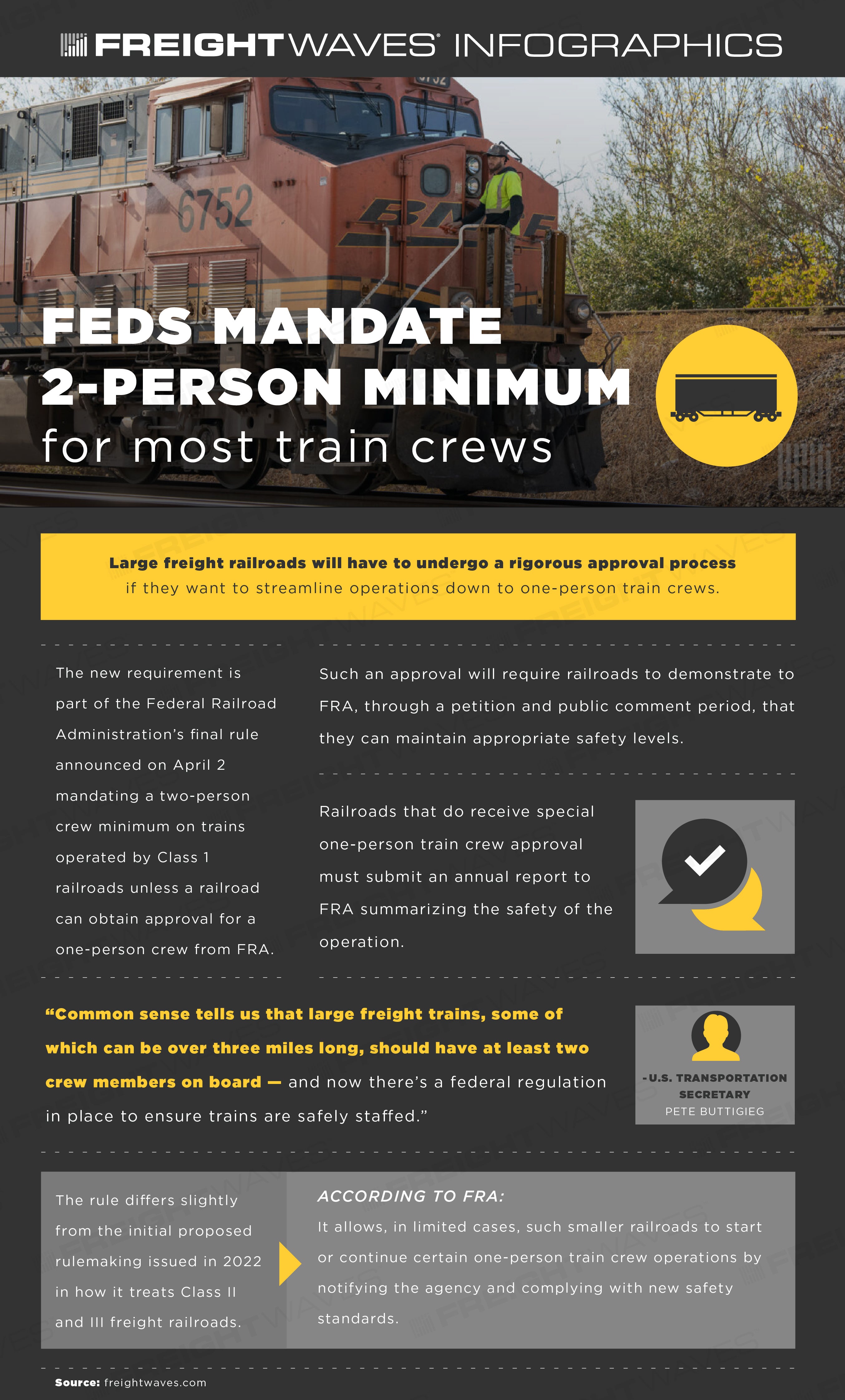
FreightWaves Infographics: Feds mandate 2-person minimum for most train crews


To view more FreightWaves infographics, click here

Panama Canal’s future is dark and stormy, much to shippers’ relief

The end of Panama’s dry season is in sight, and the Panama Canal Authority (ACP) plans to welcome more vessels in the coming weeks.

Over six months since the Panama Canal’s reservoir system suffered from the driest October in at least 73 years, the ACP finally sees a path to normalizing operations. On March 25, the ACP allotted three additional transit slots to Panamax vessels, bringing the total number of reservations to 27 per day.

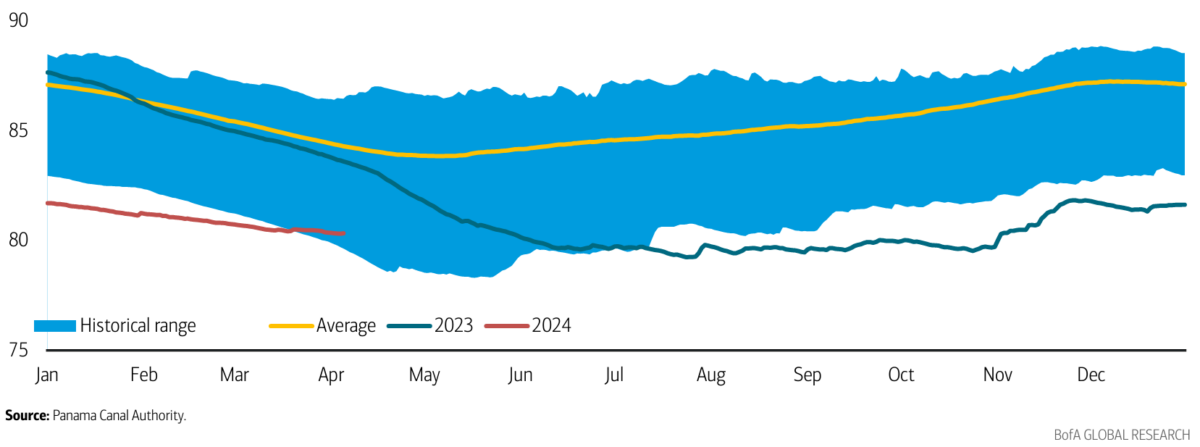
Water levels at Gatun Lake are currently at the low end of their historical range.

A recent downpour was gladly received by the man-made Gatun Lake, from which the canal gets its supply of water. Traffic has seen an uptick in the past few days: Per data from Clarksons, transits are currently at 60% of where they were in 2022, a year in which conditions were more or less normal. Transits of product tankers and container ships have almost fully recovered, with both types trending near 90% of normal activity.

While the ACP is careful to stress that all of its plans are ultimately contingent on the weather, it is optimistic that canal operations will return to normal by 2025.

Not a drop to drink

One of the strongest headwinds that the Panama Canal has faced over the past six months has come from El Niño, a climate pattern that brings high temperatures to surface waters in the region. This heat has contributed to the evaporation of Gatun Lake, bottlenecking the number of ships that can traverse the canal’s 51 miles of navigable water.

But Gatun Lake is not only used for canal operations — it is also a source of drinking water for roughly half of Panama’s 4.4 million people.

This dual function has made the canal’s utility a critical issue ahead of an already contentious presidential election, which will be held on May 5. Former president Ricardo Martinelli, whose administration made substantial investments in Panama’s infrastructure so as to attract foreign business, was a clear front-runner in the polls despite being convicted of money laundering. Panama’s Supreme Court disqualified his candidacy in February. 

His running mate, José Raúl Mulino, has inherited both Martinelli’s bid and his lead, albeit one slightly narrower than it once was. It is safe to assume that Mulino would prioritize the canal’s economic uses where possible, as his platform promises a return to heavy investment in public works.

The ACP recently proposed a $2 billion project that would dam the nearby Indio River and then drill a five-mile mountain tunnel connecting the newly constructed reservoir to Gatun Lake. This six-year project is estimated to allow 11 to 15 additional transits per day through the canal. It has, however, faced heavy criticism from local farmers, whose lands risk being flooded by the adjacent reservoir.

All of Panama’s presidential candidates have vowed to secure access to potable water for the country’s population — with water being a necessity, such a stance tends to garner support in the polls. It is worth noting that the ACP claims that the Indio River proposal would also secure drinking water for Panama City, which has seen steady population growth in recent years.

Let the rain fall down

Thankfully, Panama’s future president might not have to choose between filling the locks and filling the taps, at least in the short term.

The U.S. National Weather Services’ Climate Prediction Center forecasts a swift end to El Niño conditions in the coming months with 85% confidence. Even better, they also predict a 60% chance for La Niña conditions to develop by August at the latest.

La Niña would bring cooler surface temperatures and potentially more precipitation to Panama, an encouraging start to the nation’s wet season that lasts from May to December. Such a bounty could accelerate the ACP’s timeline towards a full recovery, and so remove one of the many bottlenecks to international trade.

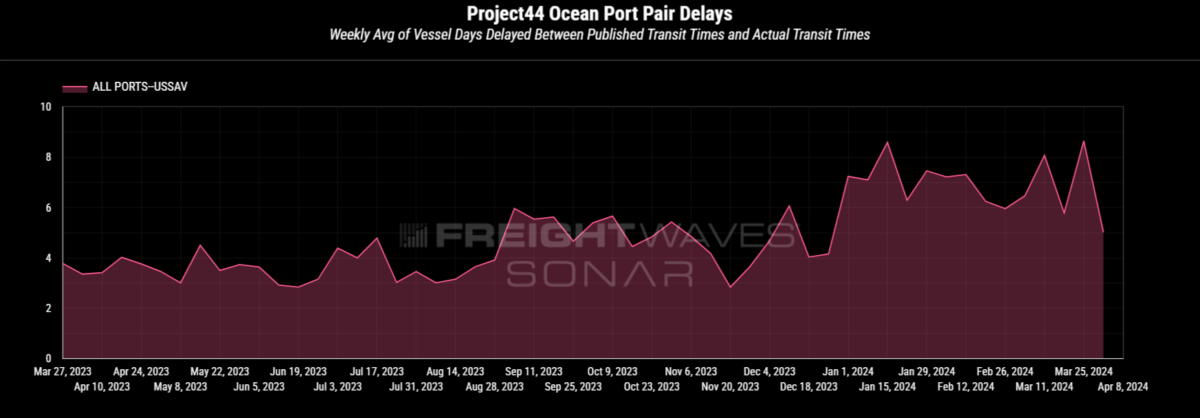
SONAR Container Atlas: Project44 Ocean Port Pair Delays from all global ports to the Port of Savannah (in days)

The Panama Canal sees nearly half of all container volumes from China and East Asia pass through to the U.S. East Coast. The current drought and ensuing operational impediments have caused delays to the Port of Savannah to rise from an average of three days in May 2023 to nearly nine in late March — though the Port of Baltimore’s closure has certainly had no small impact on other East Coast ports.

The Port of Savannah has bet the house on its expansion in recent years, but its growth is tethered to that of the Panama Canal.

White Paper: Embrace the future of logistics with emerging tech

Tired of inefficiencies eating into your profits? Frustrated by customer demand outpacing your capacity? You’re not alone. The supply chain is changing rapidly, and falling behind is a risk no airline or freight forwarder can afford.

The good news? A new era of emerging technologies promises to optimize freight and cargo operations. Using these tools, you can:

  •   Maximize cargo capacity on flights
  •   Improve routing efficiency
  •   Boost on-time performance metrics

But realizing these gains is far from straightforward. Adopting new tech is a huge undertaking — one that requires meticulous planning and expertise to execute effectively.

Download this free guide from Unisys to learn how to identify key areas for digitization and how you can integrate new solutions into your existing workflows.

Complete the form below to access “The logistics behind emerging tech: A tactical guide for airlines and freight forwarders.”

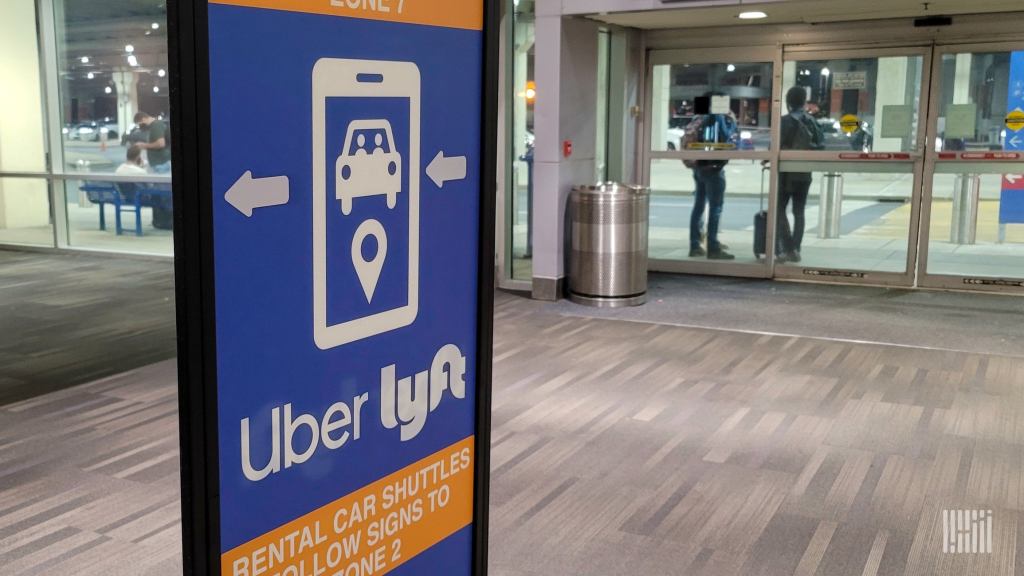
Minimum pay for Uber, Lyft drivers in Minneapolis pushed back to July

The showdown in Minneapolis over a May 1 level of minimum pay for what the city calls Transportation Network Companies — specifically, Uber and Lyft — has been put off for at least two months.

With both companies having said they would pull out of the city when the minimum compensation ordinance went into effect at the start of next month — and news reports saying Uber (NYSE: UBER) also would withdraw from the larger Twin Cities area, including the airport, which is not located in either Minneapolis or St. Paul — the days were growing shorter for any sort of compromise.

But in a unanimous City Council vote Thursday and signed by Minneapolis Mayor Jacob Frey on Friday, the effective date of the minimum compensation ordinance was pushed back to July 1.

Frey had vetoed the original ordinance but was overridden. In an article in the Star-Tribune, he  said, “A delay is not a fix. While [the] council continues to make a mess of this, I’ll be working with policymakers and partners from across the disability, hospitality, and business communities to find a path forward for drivers and riders.”

The core of the bill is a requirement that transportation network company drivers be paid at least $1.40 per mile and 50 cents per minute for the time spent ferrying a passenger. If that calculation came in less than $5, that figure would become the minimum for the trip. The legislation also provided for possible annual revisions.

According to the Associated Press, council member Robin Wonsley, who was one of the leaders pushing through the original legislation, said “the delay would lead to better outcomes for drivers and riders, and lay a stronger foundation for a more equitable ride-hailing industry statewide.” Wonsley said the current model for Uber and Lyft (NASDAQ; LYFT) is “extremely exploitative.”

Separately, council member Jamal Osman said the additional two months gives other ridesharing companies more time to “come in, get set up and running,” according to the Star Tribune. 

In the article, Osman identified companies that have applied for a license as Moov, MyWeels, Wridz and Joiryde. He said there were six others that have “expressed interest” in launching a rideshare business in Minneapolis but have not yet submitted license requests. 

He also said there was an ongoing effort to create a driver-owned cooperative to replace Uber and Lyft. 

On the same day the vote to delay implementation was approved, two council members introduced alternate legislation. It would cut the minimum payment as $1.21 per mile, down from $1.40 in the legislation now set for July 1, and 51 cents per minute. That latter figure is unchanged from the now delayed legislation.

According to the Star Tribune, Uber and Lyft back that proposal.  But the Star Tribune article  also said “a majority of council members were not on board with the plan.”

State legislation also was introduced this past week that would provide for statewide minimum compensation less than what the Minneapolis city council has approved: $1.39 per mile and 49 cents per minute. It also has the $5 minimum. 

All the legislative proposals, approved or proposed, also have provisions for such things as fees for transporting passengers that use wheelchairs. 

More articles by John Kingston

Wisconsin court affirms Amazon Flex drivers were not independent contractors

TCA’s Heller: trucking has adjusted to route diversions post-Baltimore

Truck lease purchase deals come under heavy fire at MATS and in court

Borderlands Mexico: Samsara opens new office to focus on expanding cross-border trade

Borderlands is a weekly rundown of developments in the world of United States-Mexico cross-border trucking and trade. This week: Samsara opens new office to focus on expanding cross-border trade; TriumphPay expands payments network to Mexico; China-based auto supplier to build $36M factory in Mexico; and Quantix acquires hazardous waste hauler in Houston.

Samsara opens new office to focus on expanding cross-border trade

San Francisco-based Samsara recently opened a new office in Mexico City aiming to support a growing customer base south of the border.

The telematics solution provider first entered the Mexican market in 2019 and has increased its customer base rapidly, collecting five of the top 10 trucking companies in Mexico as customers. 

With the new office, Samsara officials expect to double the number of employees in Mexico by the end of the year to around 400 people. The company is also investing in business technology, operations, sales and support roles to meet the growing demand in the country.

“We are growing across the board with sales, support, and finance, so that our customers are very well covered throughout their journey,” Julia Monroy, Samsara sales director for Mexico, told FreightWaves. “Today we have around 200 employees based in Mexico, compared to two years ago, when we were only 10. It’s been a really great growth and we’re expecting to double the amount of employees over the next year.”

Samsara (NYSE: IOT), founded in 2015, provides a connected cloud to modernize physical operations, such as commercial fleets and industrial activities. The company has more than 20,000 customers in the energy, food and beverage, construction and manufacturing and transportation industries.

Sanjit Biswas, Samsara’s CEO and co-founder, said Mexico’s trucking industry has been focused on enhancing security and keeping drivers safe on the road.

“Our rapid growth in Mexico shows the strong return on investment we provide to our customers. Samsara’s new office will provide a space for in-person collaboration for our growing team as we continue to invest in new product innovations specific to the needs of the Mexico market,” Biswas said in a news release.

Samsara recently opened a new office in Mexico City and expects to double its workforce in the country by the end of the year. (Photo: Samsara)

Samsara’s growth in Mexico has largely been driven by its focus on customers’ needs, Monroy said.

“It is very interesting how Samsara has tended to localize our products for the Mexican market. I love to share the story regarding the immobilizer,” Monroy said. “When we started our operation here in Mexico, we didn’t have the immobilizer for our customers. We would go to different meetings, present at different associations and companies, and they would say, “if you don’t have an immobilizer, we’re unable to use your product. This is critical because of security reasons.”

Samsara’s immobilizer stops vehicles automatically when tampering is detected, with the aim of keeping both truck drivers and the cargo safe from criminals.

“We were able to get with our product team, and they developed the first version of an immobilizer, within six months. So this was something that created trust among our customers, where we showed that we were committed to localizing our products,” Monroy said.

In the past year, Samsara has also released several new features specifically tailored to the Mexico market, including:

—Driver QR codes: pairs drivers with their vehicles through QR codes to lead to a better driver experience.

—AG52 Asset Gateway: a device which can be connected with cargo and door sensors to provide real-time alerts on door activities and the presence of cargo, to improve theft detection and prevention.

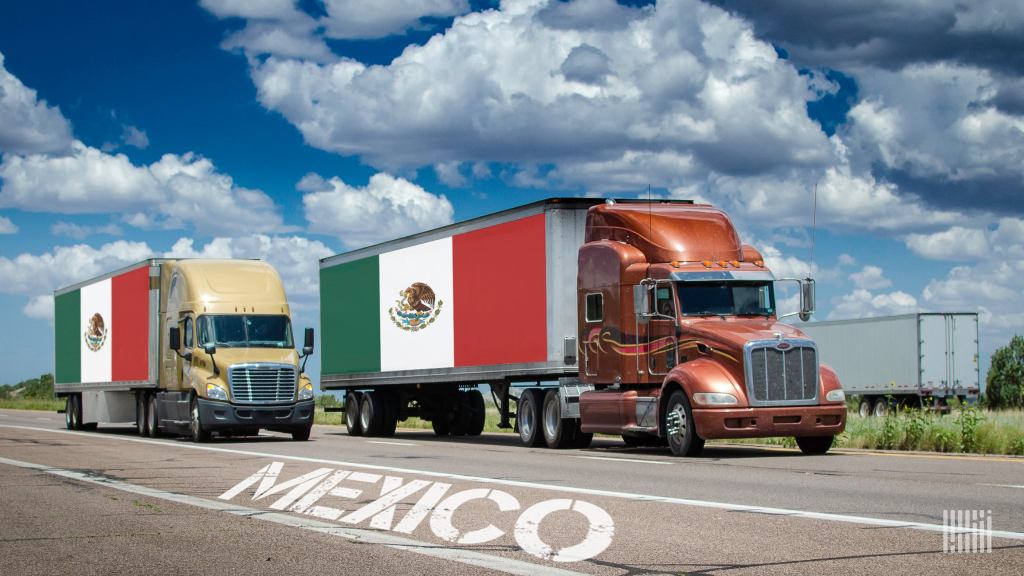
Trends in nearshoring have accelerated the trade partnership between Mexico and the U.S. Mexico was the top trading partner for the U.S. in 2023, the first year in over two decades that the U.S. bought more goods from Mexico than China.

Monroy said she sees cross-border trade between Mexico, Canada and the U.S. continuing to grow and adopt more and more cutting edge technologies. The company’s main product is its vehicle telematics gateway, but also offers technologies such as a smart dash camera that can capture more data.

“I think there are two main aspects of what I’ve seen within our Mexican customers. One is how important and critical security is here. Trucking companies began adopting technology that can support their operations to act in a faster way to have visibility in real time, which is critical today,” Monroy said. “The second piece that I’ve seen with the companies evolving is the adoption of safety measures, and how they want to really invest in their operators using technology. I was able to see that transition of pioneers in Mexico adopting our cameras, and how that evolved in today being something that most of the companies need today.”

TriumphPay expands payments network to Mexico

Dallas-based TriumphPay recently announced the expansion of its open payments network for the freight transportation industry to include Mexican pesos.

Company officials said the expansion is a significant step forward for the network which currently offers its payment services to shippers, brokers, carriers, and factors in U.S. dollars and Canadian dollars.

“Expanding our payments network to Mexico is critical for our customers as trade increases between the U.S. and Mexico,” Melissa Forman, president of TriumphPay. “Our expansion into Mexico clearly indicates TriumphPay’s commitment to providing brokers, factors, carriers and shippers worldwide with fast payments that offer security, efficiency and transparency.”

 By the end of the second quarter, TriumphPay expects to have the ability to make standard term payments in Mexican pesos for carriers, provide customer service and support in Spanish, and offer the automation of payment processing in pesos.

TriumphPay is a payments network for freight brokers, factors, shippers and carriers in the trucking industry. The company also offers tools and services to increase automation, mitigate fraud, create back-office efficiency and improve the payment experience.

China-based auto supplier to build $36M factory in Mexico

UTAS-NOVA Automotive Lighting Systems Co. recently announced it is building a factory in the Mexican city of Aguascalientes to manufacture automotive parts.

The new factory will create about 220 jobs and will be dedicated to producing automotive lighting components such as headlamps, brake lights, license plate lights and tail lights.

UTAS-NOVA was founded in Danyang, China, in 1994. The company’s customers include General Motors, Stellantis, JAC Motors, Beijing Automotive Group Co. and AIC Motor Corp.

Quantix acquires hazardous waste hauler in Houston

Quantix recently announced the acquisition of Houston-based Space City Services, a company that specializes in the transportation of hazardous and non-hazardous chemicals and waste materials throughout the Gulf Coast region. 

Quantix, which is based in The Woodlands, Texas, is a supply chain services company operating in the chemical industry. The company is part of a portfolio owned by Wind Point Partners, a Chicago-based private equity investment firm with approximately $7 billion in assets under management.

Quantix operates 30 terminals and 20 warehousing/packaging facilities nationwide and has a fleet of over 5,000 trucks, trailers and other highly specialized equipment.

“This acquisition is important for Quantix as we continue to lead the chemical industry in being a comprehensive provider of supply chain solutions for every need,” Chris Ball, president and CEO of Quantix, said in a news release. 

More articles by Noi Mahoney

Over 1,300 layoffs hit logistics companies across US

Canada’s Pride Group files for bankruptcy protection, faces $100M lawsuit
Investment surges in Mexico as companies shift supply chains, plan new factories

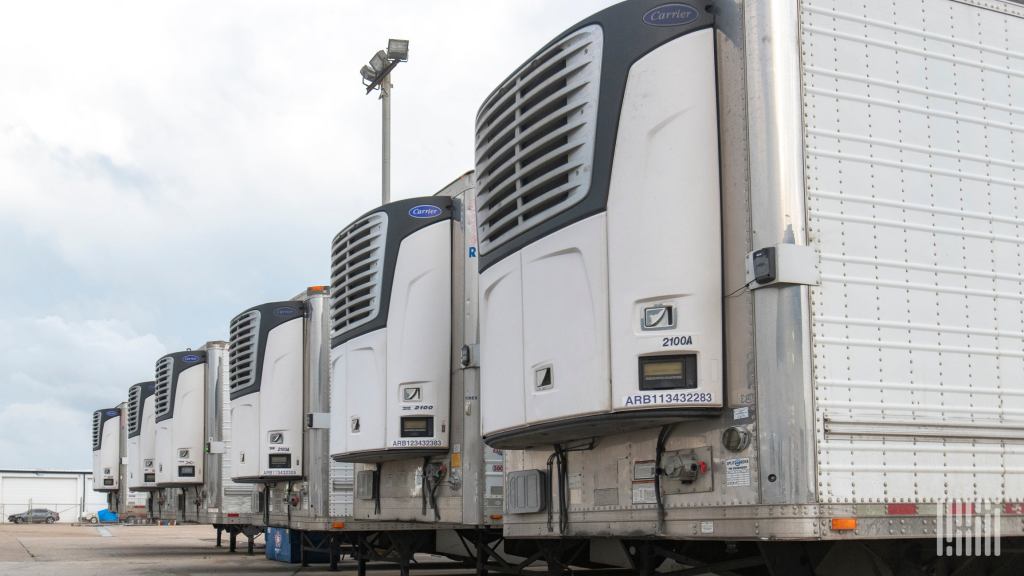
Refrigerated market flatlines in the spring

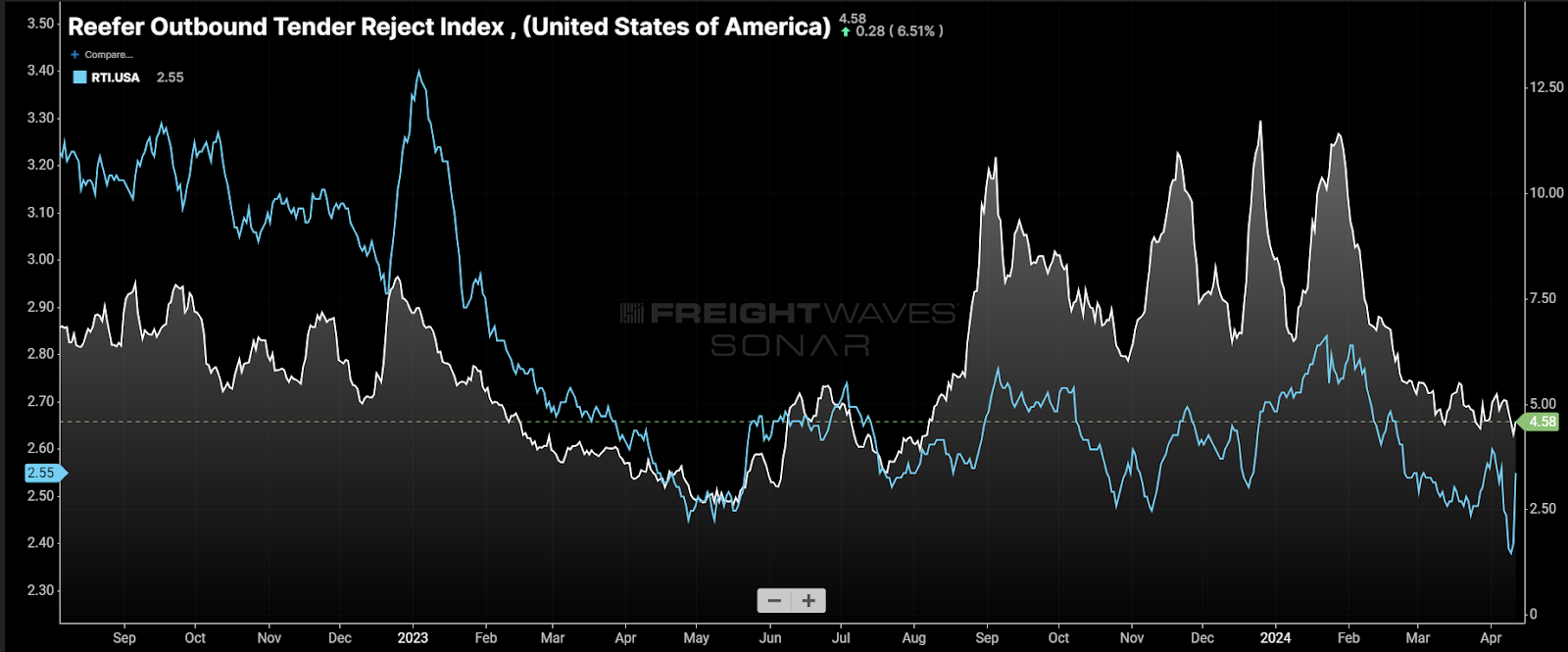
Chart of the Week: Reefer Tender Reject Index, Reefer Truckload Index – USA  SONAR: ROTRI.USA, RTI.USA

The refrigerated (reefer) truckload market has settled after showing signs of destabilizing in front of the broader market last fall.

The Reefer Outbound Tender Reject Index (ROTRI) has averaged below 5% since the start of March after spending much of Q4 2023 and January above 8%. The Reefer Truckload Index (RTI) that measures aggregated spot rates for reefer loads has moved similarly, indicating the market has returned to a looser state.

Rejection rates measure the rate at which carriers are turning down load requests from their shipper accounts. The higher the figure, the more challenging it is to find trucking capacity.

The reefer market tends to be much less served than the dry van market, and far more niche. Because of this, rejection and spot rates tend to be more volatile.

The refrigerated freight space is typically influenced heavily by seasonal demand fluctuations. The various produce runs can be extremely disruptive, even for companies that don’t ship produce.

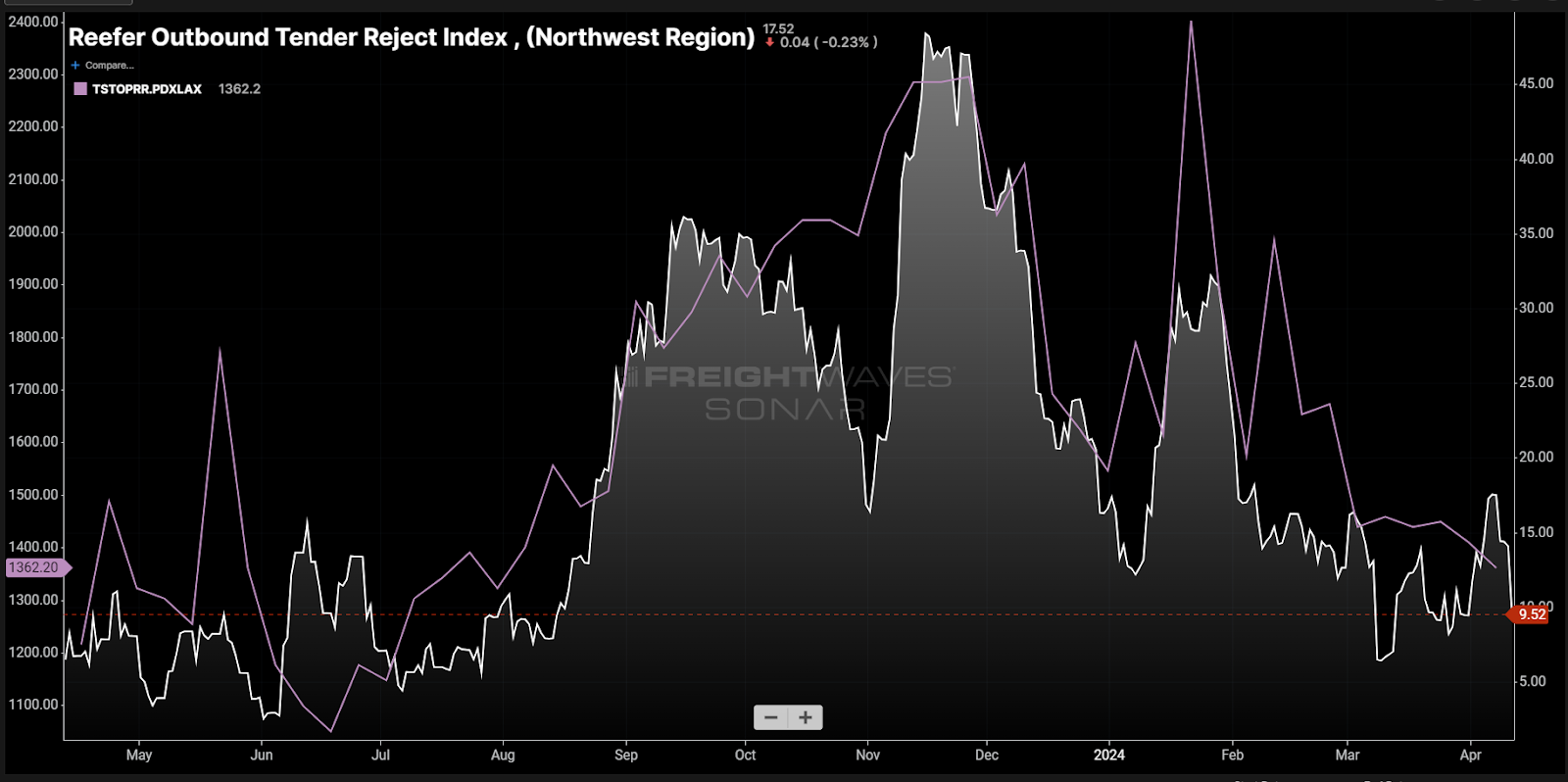
Spiking rates lure carriers away from their more consistent business when seasonal harvests come outside of expectations. This appeared to be a driving reason for spiking rates and rejections in the Pacific Northwest last fall.

Northwest regional rejection rates spiked above 30% last September after averaging under 8% through most of the spring and summer. Spot rates from Portland, Oregon, to Los Angeles — normally an extremely cheap and easy lane to cover—jumped from $1,330 to $1,950 (46%) in less than a month, according to Truckstop.com.

Several harvests occur in the Northwest from August through October. The apple harvest is probably the best known to those outside trucking, but potatoes, berries, onions and hops are also big moves in this area.

Christmas tree runs hit in November and can also cause rates to spike in what is normally an extremely slow area for freight shipping demand.

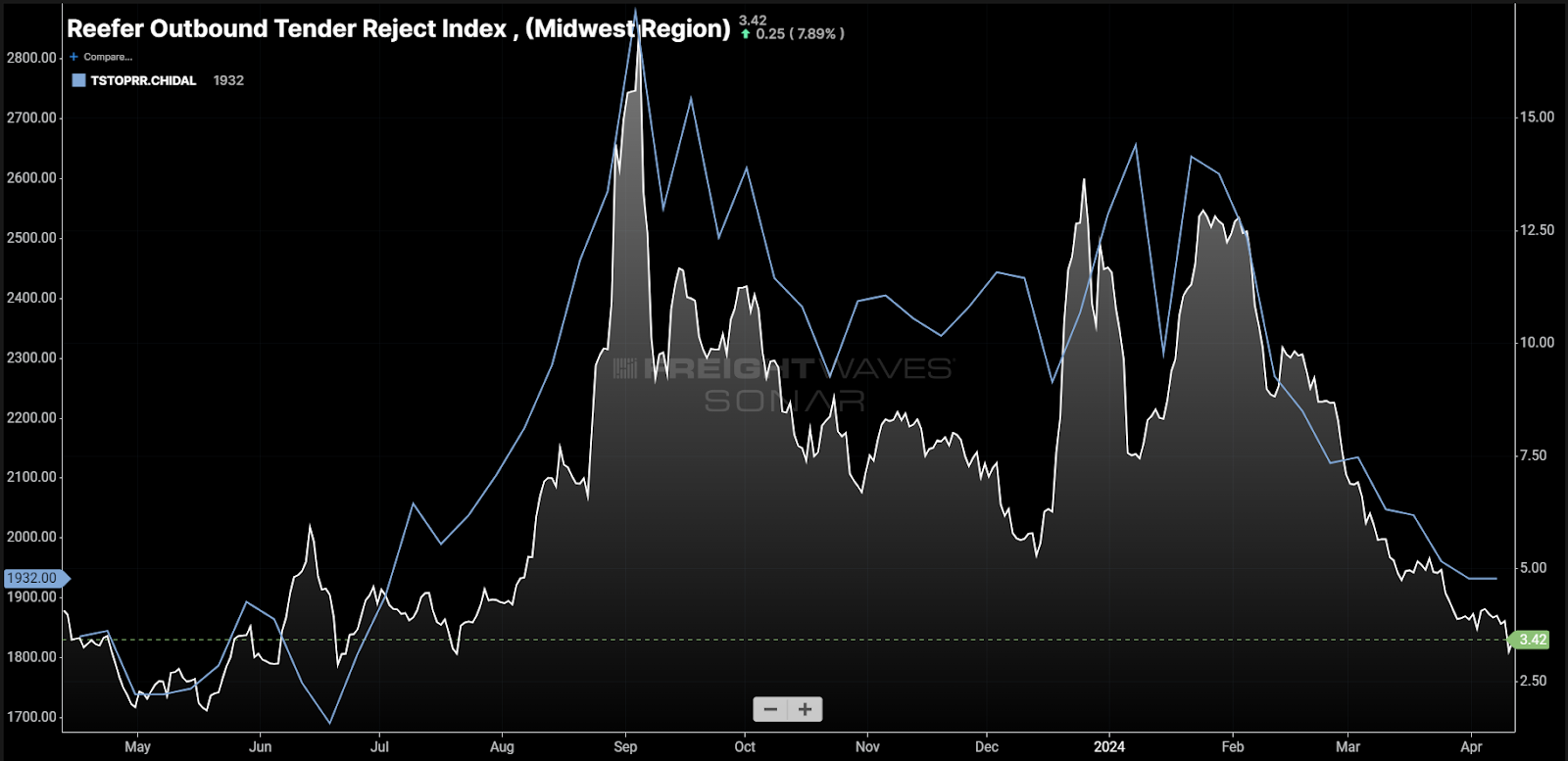
January brought the lowest temperatures of the year and hit the Midwest particularly hard.

Shippers saw a sharp increase in their need for protect-from-freeze service — also served by reefer trailers due to the insulation and temperature control unit.

Anyone watching the Taylor Swi … er … Kansas City Chiefs playoff game against the Miami Dolphins in January will recall wind chills below minus 20.

Regional reefer rejection rates out of the Midwest jumped back above 12% in mid-January with spot rates from Chicago to Dallas jumping 15% in a week.

Reefer rejection and spot rates have been on a slide since the extreme cold event. There were signs of life at the end of March but nothing sustainable or nearly as strong as the previous two disruptions.

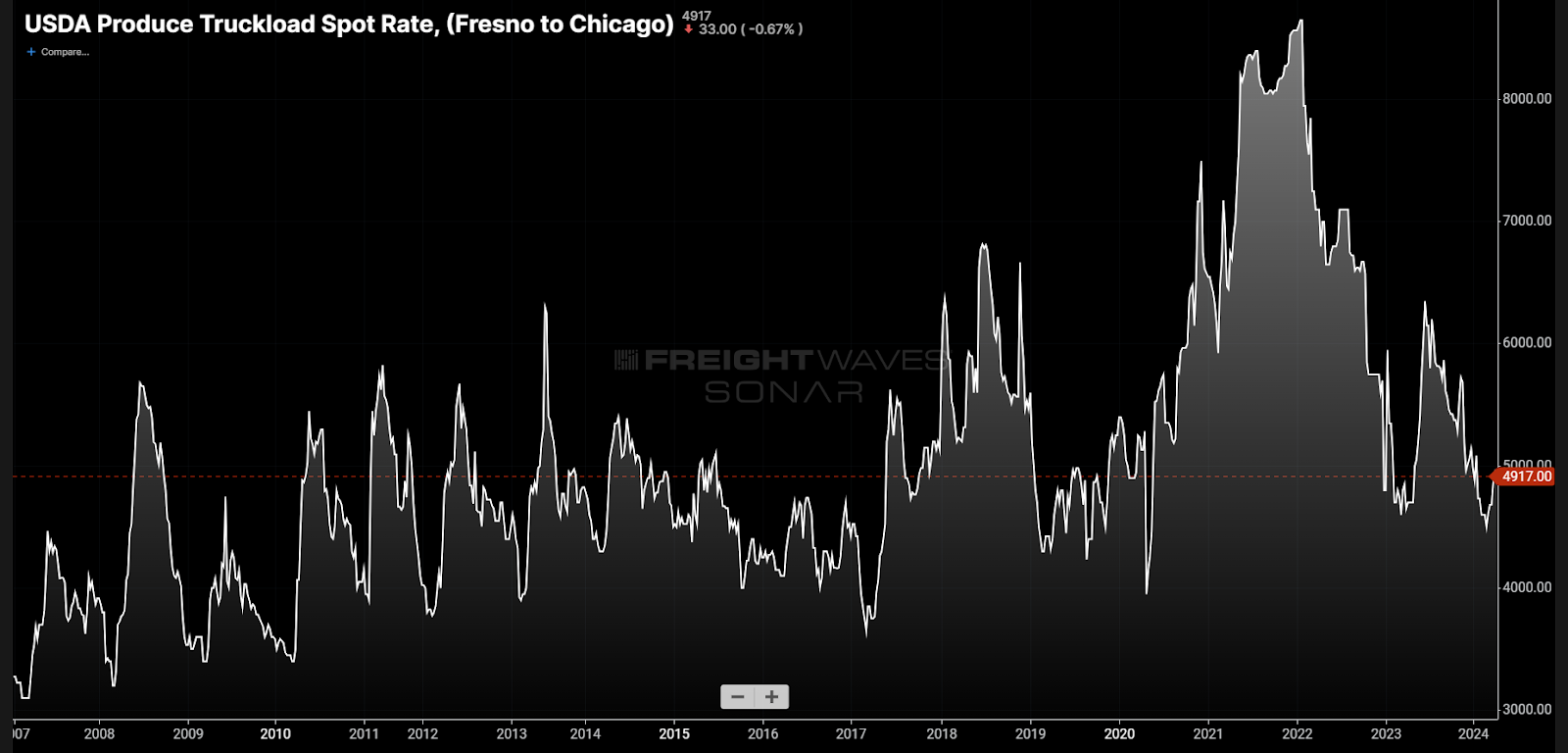
Produce runs are scheduled to start soon off the West Coast, typically hitting somewhere between now and June. Looking at produce-specific runs from California’s Central Valley to Chicago, spot rates tend to start jumping about now and remain elevated into July. A wet winter may delay harvests, which tends to make the market more responsive when they are off schedule.

Produce alone will not lead to a market flip, however. That is largely determined by the larger capacity environment, which remains abundant. As long as there are more trucks than freight, the disruption will be temporary, but that doesn’t mean that it will remain a quiet year for reefer carriers.

The California produce season was a leading indicator of a broader market turn in 2017. It was not the thing that turned it, but it did signal it was likely to arrive. At the bare minimum, the refrigerated sector does appear to be telling us a shift is on its way even though the spring has been soft.

About the Chart of the Week

The FreightWaves Chart of the Week is a chart selection from SONAR that provides an interesting data point to describe the state of the freight markets. A chart is chosen from thousands of potential charts on SONAR to help participants visualize the freight market in real time. Each week a Market Expert will post a chart, along with commentary, live on the front page. After that, the Chart of the Week will be archived on FreightWaves.com for future reference.

SONAR aggregates data from hundreds of sources, presenting the data in charts and maps and providing commentary on what freight market experts want to know about the industry in real time.

The FreightWaves data science and product teams are releasing new datasets each week and enhancing the client experience.

To request a SONAR demo, click here.

Former Tony’s Express workers, drivers say mismanagement sank company

Former Tony’s Express truck drivers and other employees say financial mismanagement by new owner John Ohle led to the 70-year-old trucking company’s recent collapse.

Tony’s Express, headquartered in Fontana, California, shut down March 28 after Ohle and others sent a series of text messages starting on March 24, informing workers that the company would not be running trucks the following day “due to a truck insurance issue.”

In texts obtained by FreightWaves, Ohle sent a second message March 25 that the company was “still troubleshooting our current insurance issue and require that all employees remain off” the following day.

They never returned to work.

Two weeks after the closure, Ohle has yet to pay drivers, warehouse and dockworkers, and office personnel their final checks and for their paid time off (PTO), sources told FreightWaves. Some are owed multiple checks after previous paychecks bounced. Their medical coverage ended two days after the company shut down.

“The current market just didn’t support our ability to operate and be a profitable company, and the cost of fuel in California made it very difficult,” Ohle told FreightWaves a few days after the closure. “We were in very serious discussions with two different companies about coming in and partnering or taking over Tony’s, and those fell apart at the very end, and literally, it was a last-minute decision.”

Ohle said he plans to have Tony’s Express employees paid but did not provide a date for when that might occur.

“We’re working right now to make sure we mitigate that situation and get everybody paid,” he said on April 2.
While Ohle initially cited insurance issues in telling employees not to report to work March 25, a source familiar with the situation said Ohle knew the company was done March 22.

The source said Tony’s Express had a recourse agreement with factoring company eCapital, which is headquartered in Aventura, Florida. When eCapital was unable to collect on invoices amounting to hundreds of thousands of dollars within a certain time frame per the agreement, Tony’s was forced to buy back around $300,000 in uncollectible invoices.

One day after Tony’s closure, the source said Ohle was already in talks to take over another trucking company and brokerage.

Anthony “Tony” Raluy and his brother, George Raluy, sold the company that their father started to John Ohle in March 2023.

The formerly family-owned company had over 200 employees, including around 90 truck drivers, at the time of its closure.

In the weeks leading up to Tony’s sudden closure, drivers reported fuel cards weren’t working at various times and complained that their paychecks had bounced after the company switched from direct deposit to paper checks a few months before shuttering operations.

“Besides not getting paid for two weeks before we closed, my fuel card wouldn’t work at times, and John Ohle or one of his managers asked me to use my personal debit card to pay for fuel, which would cost hundreds of dollars,” a former Tony’s less-than-truckload driver, who didn’t want to be named for fear of retaliation, told FreightWaves. “I already had paychecks bounce from Tony’s. There’s no way I was going to use my own money and trust the company would reimburse me.”

As of publication Friday, neither Ohle nor Morgan Craven, who headed the human resources department at Tony’s, had responded to former employees’ emails about when they would receive their final checks. In his final text to employees about the immediate closure, Ohle also included Craven’s email address to ensure that she had employees’ current mailing addresses and phone numbers to send their checks when money became available.

Craven did not respond to FreightWaves’ request seeking comment. Ohle has failed to respond to new allegations raised by former employees or ex-coworkers since the first article was published about Tony’s Express’ sudden closure.

Ohle bought another family-owned trucking company that closed after two years

Ohle bought another family-owned trucking company, C&M Transportation Inc. of Kansas City, Kansas, in 2002. Two years later, he abruptly shuttered operations after closing the majority of the company’s terminals and reducing its workforce from around 150 employees to 70, according to the Kansas City Business Journal.

Ohle acknowledged that C&M “had come up short on paydays in recent months,” according to the news outlet. “We did not sufficiently fund some of our checks.”

Asked about the closure of C&M Transportation 20 years ago, Ohle blamed the collapse on a failed attempt to take the cartage company public “with some people in California.” 

“It did not work out because it [C&M] probably should have been closed when I bought it because it was losing money,” he told FreightWaves. “The situation at Tony’s Express hurts a lot more because I thought I could turn things around and make it profitable again.”


Read related article here: 70-year-old California trucking company, freight brokerage closes abruptly

Company offers to hire former Tony’s employees, drivers

Joe Comins, one of the owners of Dedicated Delivery Professionals, headquartered in Santa Fe Springs, California, said his company stepped in to hire as many former Tony’s drivers as possible. 

Comins said DDP took a leap of faith and leased a 70,000-square-foot warehouse in Chino, California, in hopes of acquiring some of Tony’s Express’ former clients.

“Originally, we were trying to get something worked out with Mr. Ohle, who came to us awhile ago and basically said, ‘I don’t think I can get this thing turned around.’ We were trying to do a very expeditious deal, and it just didn’t work out. We couldn’t come to a reasonable middle ground,” Comins told FreightWaves.

He said DDP has had success in acquiring some of those customers but there have been challenges.
A source familiar with the situation said the skeleton crew still working at Tony’s is allowing certain carriers to come inside its gates to pick up freight but has only allowed a few DDP trucks to enter the facility.

“DDP is wanting to hire as many ex-Tony’s drivers and other workers as soon as possible, but Joe Comins and his team can’t do this if they can’t fill up this leased warehouse,” the source said.

Comins said he’s had a lot of sleepless nights since acquiring the additional warehouse in Chino.

“We did this deal pretty fast because we thought that we were gonna have that opportunity in order to help out and service a lot of former Tony’s customers real quick, but that hasn’t come to fruition yet. But we’re hopeful,” he said. “We have a bunch of drivers already approved — they’ve done their road tests and drug screening, but we can’t put them to work yet because we don’t have boxes for them [to haul] yet.” 

Red flags 

Some former Tony’s employees said they saw the writing on the wall months ago. They left after their hours were cut and the company’s mechanics’ shop and on-site fuel island closed.

Ohle said when reached by FreightWaves in early April that these decisions were necessary to boost the company’s bottom line.

“Some drivers had two paychecks bounce and others had at least six weeks of paid time off they did not receive or weren’t paid their bonuses for being accident-free for a certain amount of time,” a former Tony’s driver said.

Along with its headquarters in Fontana, Tony’s operated a facility in Stockton, California, which had around 65 drivers, a terminal in Sparks, Nevada, and two satellite yards in Phoenix and Las Vegas, which had about five drivers apiece at the time of the closure. They lost their jobs on March 28.

“John [Ohle] quit paying the bills and was behind on rent payments on all of the terminals,” the source said. “The garbage company at the Sparks, Nevada, terminal quit picking up [our trash] for nonpayment.”

The source says the Raluys, who formerly owned Tony’s Express, had a long-standing truck leasing relationship with Papé Kenworth, which operates multiple dealerships along the West Coast. However, after Ohle took over, the source claims the new owner failed to make the lease payments to Papé and the dealer was forced to take back its power units.

“We shut down the shop because it was inefficient, and we saved money by going through a full lease and maintenance program with Penske, which is a great operation,” Ohle said. “When I took over, I thought I could save the company, that I could pull a team together and save it.”

As of publication, a Papé Kenworth representative had not responded to FreightWaves’ request seeking comment.

“John switched over to Penske [to lease more tractors],” the source said. “It is my understanding he had not made a payment to Penske since making the original down payment to acquire the power units.”

According to former drivers and other employees, prior to the Raluys’ selling Tony’s Express in March 2023, the company had great relationships with vendors.

“We had A-1 status and credit with several vendors, and because of our service, we were able to bypass other trucks in line and get in and out of places,” said one long-term former Tony’s Express driver, who asked to remain anonymous for fear of reprisal. “Towards the end of it all, we lost that status and we were returning to our terminals with the freight because we couldn’t pay the lumper fees. I found out our mechanic was no longer coming around because he wasn’t getting paid.”

In recent months, one ex-employee claims some company executives, including Ohle, started paying lumper fees on their personal credit cards, which could add up to thousands of dollars per day, instead of adding funds to Comdata to pay the lumpers who were unloading Tony’s trucks at customers’ warehouses.

“It’s such a shame that John Ohle and others at Tony’s Express were able to tear down this beloved company in less than a year when it took the Raluy family 70 years to build and maintain a good reputation in this industry,” a former office worker said.

A few days after the closure, one former employee was sent two videos of Tony’s Express’ tractors and equipment parked at a wrecking yard near the company’s headquarters. 

“The message said, ‘Hey, look what’s in front of this wrecking yard — the mechanic’s trailer and two more rigs,’” the source said. “The second video I was sent the very next day was of more Tony’s equipment, including trailers. There was so much equipment that the wrecking yard couldn’t close their gates and the company had already started dismantling them.”

According to the California secretary of state’s office, Ohle and several of Tony’s entities have Uniform Commercial Code (UCC) liens against him and the companies.

A UCC lien allows a lender to establish priority in case of debtor default or bankruptcy. According to the lien documents, CT Corporation System is listed as the secured party in Glendale, California.

Losing hope

Without paychecks and health insurance, some said they are in a financial bind and unsure if Tony’s Express will pay them what they are owed and pay out their PTO and their mortgages, rent and other bills are due soon.

“Some of us long-term employees went through some tough times when there were some down years in trucking, but the Raluys were always transparent with us,” said a former employee. “We usually received a $100 bonus at Thanksgiving and a $300 bonus for Christmas, which meant so much to us. The Raluys wouldn’t have closed the doors without having a conversation with the employees first. They wouldn’t have sent out a text telling us this devastating news like John [Ohle] did.”
Do you have a news tip to share? Send me an email or message me @cage writer on X, formerly Twitter. Your name will not be used without your permission.

Jury finds Colorado trucker guilty of vehicular homicide in 2022 crash
Shuttered California trucking company files for bankruptcy
DAT blames ‘external forces’ for intermittent service outages
Illinois trucking company with 171 drivers files for bankruptcy