Analysts at CERAWeek know 2023 oil market predictions didn’t pan out, look to 2024

HOUSTON — The oil market of the past 12 months is not one that analysts at the CERAWeek conference of 2023 would have predicted.

That it has been a surprise to numerous experts and analysts was a recurring theme at a key session at the giant CERAWeek 2024 conference. The panel was titled “Oil Markets in 2024-2025: Abundance or Scarcity?”

Panelists did not definitively answer the question. However, with a prevailing price of more than $80 a barrel for Brent crude, the world’s benchmark, the consensus seemed to be that there was enough scarcity or threat of it to keep the price relatively high but enough abundance not to worry about fears of a spike in the next year.

Oil markets at the time of CERAWeek 2023 meeting led to several forecasts that didn’t pan out, according to Helen Currie, chief economist at oil giant ConocoPhillips (NYSE: COP). A prevalent view a year ago was for a year marked by weaker demand created by poor economic conditions.

“At this time last year, there were a lot of consensus views that the U.S. was going to have a recession and there’s going to be a large global slowdown,” Currie said. “That created a lot of negativity for oil markets and other commodity markets.”

But that didn’t happen, and oil demand has been setting all-time records.

Also unforeseen were two major conflicts in the Middle East: one in Gaza being waged against Hamas by Israel and the second, related conflict marked by drone and missile attacks on international shipping in the Red Sea by Houthi militants in Yemen.

And yet the impact on price from all that has been minimal. While demand has surprised to the upside, according to Ben Luckock, the global head of oil at trading firm Trafigura, so has supply.

No backing down in U.S. oil production

The list of countries that contributed to that unexpected “beat” on supply forecasts is headed by the U.S. The U.S. wrapped up 2022 with production in December of that year of 12.1 million barrels a day. By December 2023, U.S. crude output was 13.3 million barrels a day, according to the Energy Information Administration.

Currie said the ConocoPhillips forecast is for U.S. production to continue to grow, “but at a slower rate.” She said her company expects the growth rate in 2024 to be about half that of 2023. 

For anybody anticipating a significant slowdown in U.S. production, Currie had a message: “The U.S. is going to continue to be a very large and reliable producer of oil for a long time.”

Luckock said after listening to various presentations at CERAWeek by the CEOs of major U.S. producers, “I suspect U.S. production is going to continue to grow nicely.”

“You leave the presentations thinking that the ones who bought assets are going to produce with them and the ones that are already there are finding technologies to drive efficiency,” he said.

In particular, the application of AI, particularly generative AI, is a “driving force” in maintaining and growing U.S production, Luckock said. (AI has been a key theme at CERAWeek and the general thrust is that it can process far more information than current technology, helping to reach better decisions and strategies).

Frederic Lasserre, the global head of research and analysis at Gunvor Group, said the potential gains in output as a result of AI are “probably just the beginning of a new wave. I think even the producers themselves tend to underestimate what AI can deliver in terms of productivity.”

This year is one in which an enormous percentage of the world’s population is going to elect their countries’ new leaders or reelect existing ones, none bigger than in the U.S. Luckock downplayed the impact on the U.S. oil industry that would occur regardless of who wins.

“I think we’ve been sort of trained over many years to feel that one party is better for the industry and one party is worse,” he said. “But are we on edge about what happens? Not particularly. We’ll take what comes.”

Whoever wins the election will likely be dealing with an oil sector marked by stability, Luckock said, using a word that came up often during the discussion.

Oil price has started to move higher, fueled by Russia

Recent increases in the price of oil did draw attention, however. Lasserre said recent attacks by Ukraine on Russian refining assets, which are seen as a factor in price increases, particularly for refined products, have probably taken about 1 million barrels a day of refining capacity off the market.

As measured by the price of ultra low sulfur diesel on the CME commodity exchange, the recent bullish oil market has taken that number up to a settlement Monday of $2.7882 a gallon from a recent low of $2.6065 on March 5.

That sort of development generally leads to an increase in exports of crude that can’t find a home in Russia’s refineries, but “tightening of sanctions by the U.S. and EU is having some impact” on the ability of Russia to turn to crude exports to offset the loss of refining capacity.

That is a short-term issue. In the longer term are the various sanctions packages against Russia that are restricting exports of exploration and production technology to that country.

Russian production in February was 9.43 million barrels a day, according to S&P Global Commodity Insights, which produces the CERAWeek conference (NYSE: SPGI). Six months earlier, it was largely the same.

Luckock questioned whether that could be maintained because of the sanctions. “I think over time, it’s hard to see how the Western squeeze on technology doesn’t impact Russian production,” he said.

Another area of short-term risk: the rerouting of trade flows to avoid the Red Sea and the Houthi attacks. Lasserre said it was “quite amazing” that oil markets have not reacted more strongly to the disruptions in the oil supply chain created by the diversions. Implied volatility from the oil options market is “too low, which is surprising based on the context where anything could happen overnight.”

Currie said the shipping sector “has adjusted and started to reoptimize ship movements.” But echoing the recent monthly report of the International Energy Agency, Currie said the diversions are adding to oil demand as well as the supply chains for all sorts of goods. “It’s creating kind of a knock-on effect for other industries that could ultimately kind of trickle into a little bit of inflationary impact,” she said.

More articles by John Kingston

Hydrogen mania at key energy conference in ’23 more tempered in ’24

Further appeals to block AB5 from California trucking seen as a long shot

California gets another pot of money for ZEV trucks, courtesy of Volkswagen

J.D. Power: Commercial vehicle auction volumes steady but prices down

A new report by J.D. Power Valuation Services finds that although auction volume for commercial vehicles in February was similar to that of January, prices fell unexpectedly. The report also suggests that the March 5 sale of equipment – mainly trailers and single-axle day cabs – as part of a liquidation by defunct carrier Yellow Corp. is having a significant impact on prices in March.

The number of late-model sleepers sold in February was comparable to the January figure. However, prices dropped significantly, particularly among trucks that hit the 5-year-old mark in January. The report found that the average price in February of model-year 2020 sleeper tractors was $37,064 — a nearly 26% decrease from January.

Current pricing is roughly 65% higher than it was at the last market low point in late 2019. In inflation-adjusted dollars, it is 37% higher.

Class 8 retail 

The average sleeper tractor retailed in February was a month shy of 6 years old, had about 436,000 miles and sold for $62,400. This is an approximately $16,800, or 21.2%, dip from February 2023, the report found, even though the typical sleeper sold in February 2024 was two months newer and had about 35,000 fewer miles.

Model-year 2022 trucks retailed in February for $128,768 on average — a nearly 25% increase from January. 2018 trucks saw an almost 15% decrease in cost since January. Overall, 3-to-5-year-old sleeper tractors brought 10.4% higher revenue in February compared to January, but that was “artificially inflated” by a comparatively high number of 3-year-old owner-operator trucks, the report stated.

Late-model day cabs brought in 16% less in February 2024 compared with February 2023.

With regard to Yellow’s liquidation, the report noted that with the first major sale of the carrier’s equipment on March 5, “pricing was what you might expect for so many trucks and trailers released into the market in a short time. Prior to that date, it was unusual to see a notable number of late-model, single-axle daycabs in the marketplace, and selling prices reflected this increased supply.”

Yellow’s auction liquidation didn’t factor into February’s retail data, J.D. Power stated, but it said its April report will provide more specific information on sales.

Yellow shuttered last July.

Air cargo market rides an incoming wave, but can it last?

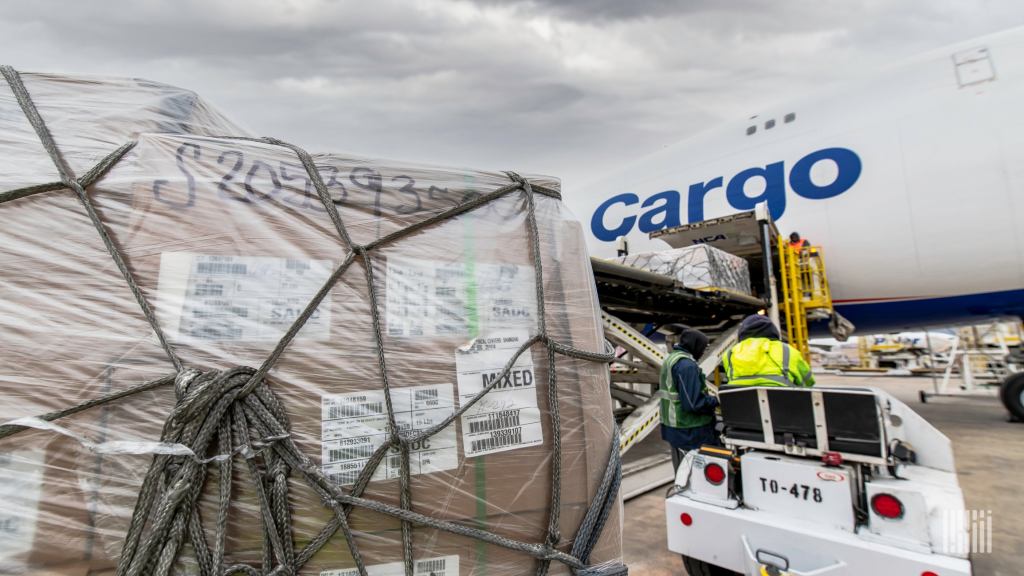
A large pallet of freight covered in plastic and straps on the tarmac next to a large cargo plane.

The air cargo market has started the year on an apparent tear thanks to strong e-commerce volumes out of Asia and extended transits for ocean freight being rerouted around the Red Sea conflict zone, but whether the growth is sustainable or a product of low comparisons to last year remains an open question.

Last summer the industry was drifting at the bottom of a trough, but a swell of business in September turned into a wave that has carried into the first quarter. 

Shipping demand on airliners was up 13% annually for the first two months of the year, normally a slower period that follows the fourth-quarter peak season and the short spike for Chinese New Year, according to WorldACD. Growth was 11% if the extra leap year day in February is excluded.

The freight data provider revised upward its initial January estimate, saying volumes increased 17% for the month — three points higher than initially reported. Xeneta, another market intelligence firm, also bumped up its estimate for January volume to 11% from 10% and released figures that showed February growth was equally strong.

Meanwhile, the International Air Transport Association (IATA) said air cargo demand leaped 18.4% in January, the highest annual growth since the summer of 2021. Global volumes were also 2.8% higher than in 2019, prior to the COVID crisis. All three sources use different methodologies and data sources to generate their findings.

Improved volume performance is reflected by the continued March rise in average global cargo spot rates, narrowing the price gap to within 15% to 20% of last year’s level, according to price reporting agencies. Although prices are still lower than a year ago, when a 16-month downturn was still in full swing, they remain nearly 30% above pre-COVID levels.

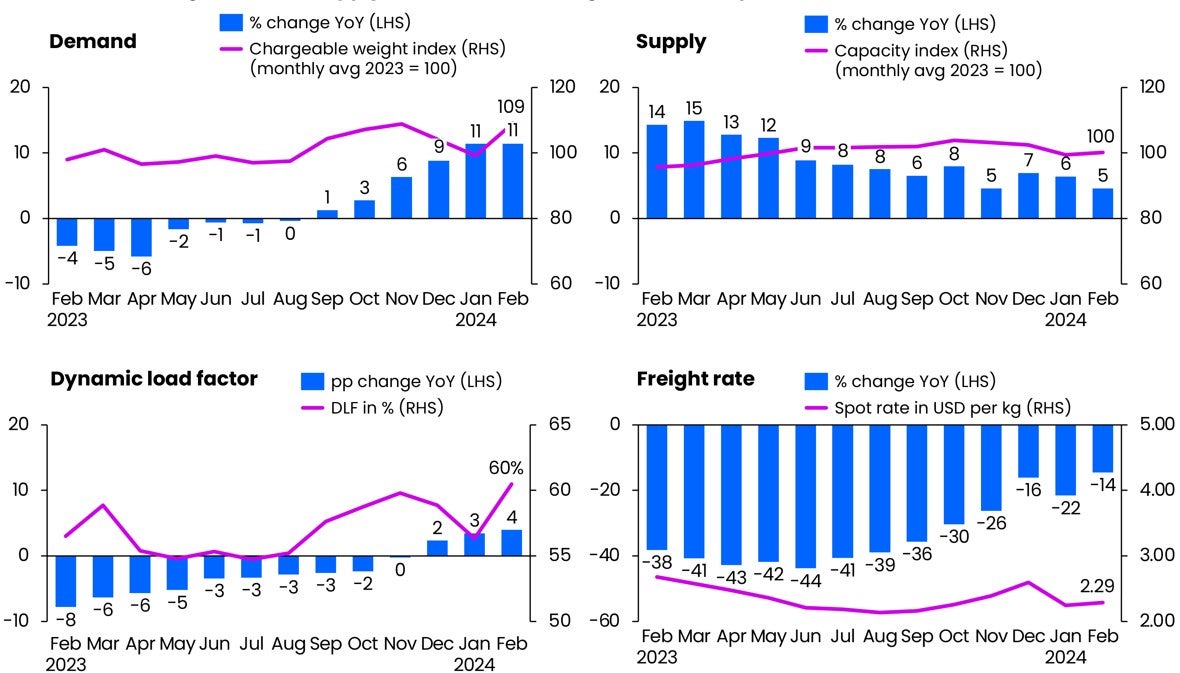
Global air cargo demand has remained solid in March, up 7% year over year, according to Xeneta’s latest high-frequency data. Sixty percent of aircraft space for cargo is now filled, up 4 points from January.

It should be noted that this year’s growth looks better, in part, because volumes were down about 10% in January and February of 2023 from the prior year.

The upswing in volume was also influenced by the timing of Chinese New Year, which occurred in January last year and February in 2024. Factories close for an extended holiday period, and exporters increase shipments in the two weeks before and after the production pause. But compared to 2019 levels, when Chinese New Year fell in February, volume was only up about 3% in January and 2% in December, according to analysis by investment bank Stifel.

“It’s fair to say that the trend is up, though the trajectory isn’t as steep as suggested by the yearly observations,” said Marc Zeck, senior research analyst at Stifel, in a column for the monthly Baltic Air Freight Index newsletter.  

Industry professionals point to a strong pickup in e-commerce exports from Asia, especially South China and Hong Kong, as a key driver of the unexpected surge in airfreight demand. International consumers are buying more goods on Chinese e-commerce platforms and expect quick delivery of their packages, which requires air transport. 

“For some airlines, e-commerce now makes up over 50% of their revenue ex East Asia,” said Niall van de Wouw, chief airfreight officer at Xeneta, in his company’s latest monthly report. The surge in volumes has created congestion at airports in Guangzhou, China, and Hong Kong.

Meanwhile, views are mixed about the extent to which rebel attacks on Red Sea shipping are causing a mode shift to air cargo. The researchers say cargo owners are increasingly diverting urgent commodities out of Asia to more expensive airfreight to circumvent supply chain problems caused by ocean vessels having to reroute around the horn of Africa, which has degraded ocean schedule reliability to the lowest level since October 2022.

In February, the South Asia-to-Europe market led the month-over-month growth in spot rates, as the Red Sea disruption caused demand to rise 18%. Demand growth is also higher since the start of the year for the China and Vietnam air lanes to Europe.

WorldACD data shows a surge in volumes from hubs such as Dubai, Bangkok and Colombo, Sri Lanka, that support sea-air moves to Europe as cargo owners there seek to replenish inventory. The hybrid solution, in which shipments are transported from Asia by container ship to a midway point, offloaded and transferred to a local airport for carriage to the final destination, is faster than traditional ocean shipping but cheaper than an all-air shipment.

Tonnage out of Dubai to Europe has been exceptionally strong for more than five weeks and is now triple the level from last year. Demand from Bangkok to Europe is up more than 30%, with many shipments originating in Vietnam and being trucked to Thailand’s main airport. Movement through Colombo is slower than in recent weeks but still up more than 20% from a year ago. Spot rates for air exports from Sri Lanka increased more than 50% in the week ending March 3 from a month earlier, reflecting the heightened demand there.

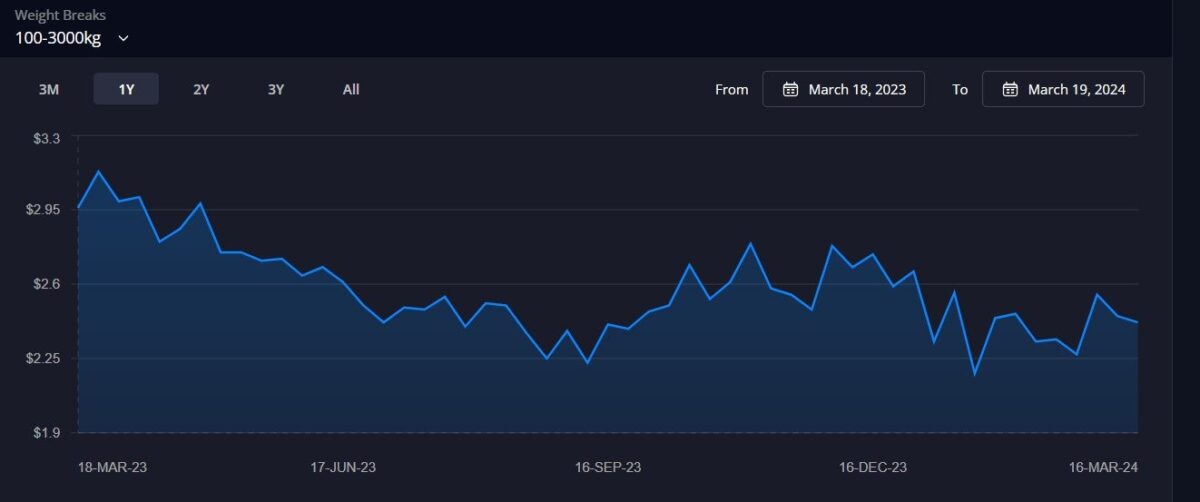
Air demand and rates out of India are also elevated, which many partly attribute to the Red Sea situation. Rates out of South Asia reached $4.60 per kilogram to North America last week, 55% higher than in December, with prices to Europe nearly double their end-of-year level at $3.55 per kilogram, according to price reporting agency Freightos.

A global view of the Freightos Air Index for the past year. (Source: Freightos)

Germany-based Neo Air Charter last week said it arranged 60 rentals of widebody freighters from Hong Kong for e-commerce customers during the first two months of the year because of ocean shipping delays from Asia to Europe.

“The Red Sea attacks are causing a lot of time-sensitive traffic to switch to airfreight,” said Neo General Manager Brian Davis in a press release. “We haven’t seen demand like this since the early days of COVID.”

Kerry Logistics recently announced the start of an air-sea offering from eight European countries to destinations in Australia and New Zealand that it says is 50% cheaper and three times faster than ocean shipping. Cargo is moved by air to Hong Kong, where it is transloaded to ocean vessels for transport to Oceania, reducing a 60-day transit to about 21 days.

Dubai-based Emirates, the second-largest airline in the world excluding express carriers, moved 30% more volume in the first two months of 2024 versus the same period last year, Jeffrey Van Haeften, the company’s senior vice president of worldwide commercial cargo, told the South China Morning Post.

Zeck noted it is difficult to determine the impact on airfreight from the Suez Canal bypass since major freight forwarders say they have not seen a noticeable shift from ocean to airfreight.

Others also say that the ocean disruptions have not led to widespread or long-lasting surges in demand. Rates on the China-to-North America lane increased about 25% in the second half of January to about $6 per kilogram and have since fallen back to $4, while rates from China to Europe have receded to about $3 per kilogram after rising to $3.60, which suggests the Red Sea impact is not a huge factor, according to Freightos. And the impact of the Red Sea diversions could decrease in the coming months as the market enters a slow season. 

Kuehne+Nagel, the world’s largest logistics company by revenue, recently said the rerouting of ships past the Red Sea has raised interest in other options, such as sea-air movements, but has not resulted in any material increase for air cargo. But several European airlines told analysts on earnings calls that they did experience a notable volume increase because of the Red Sea situation.

One outlier from the growth trend is the trans-Atlantic corridor. In the first two months of this year demand from Europe to North America was down by 4% compared to the same period in 2023 and 5% lower than 2019 levels, Xeneta reported.

Supply problem? 

One variable that could undermine revenue growth for airlines and logistics providers is ongoing influx of cargo capacity, primarily from passenger airlines adding flights to their networks. At least half of global air shipments move in the lower hold of passenger aircraft. Available space is currently 9% higher than a year ago at this time and twice as high for traffic out of Asia, said WorldACD. IATA’s calculations show even more supply on the market as of January, with overall capacity up 14.6% and international capacity up nearly 26%.

Excess space means providers have to lower prices to attract business. The supply situation is expected to worsen, especially for the trans-Atlantic market, as passenger airlines ramp up for the busy summer season. Airlines typically hike capacity between North America and Europe by 50% from the winter to summer seasons.

Air Canada expects cargo revenue this year to be more a function of volume than yield because of the capacity situation, said Mark Galardo, executive vice president for network planning and revenue management, during the quarterly earnings briefing in February.

Similarly, the IATA anticipates a continued decline in rates throughout the year, projecting a 21% decrease in yields as carriers reintroduce capacity to the market.

Looking ahead

The momentum in business is positive for an industry that endured a painful freight downturn for more than a year, but the underlying demand dynamics remain fragile amid sustained geopolitical and economic uncertainty.

Air cargo demand could cool a bit as international trade heads into the slow summer season, but leading indicators suggest the sector can continue its recovery as the year progresses.

Inflation in Europe has fallen, which is expected to boost consumer spending in that economic region. Global manufacturing has increased for three consecutive months and reached the 50 threshold in the Purchasing Managers’ Index for January, indicating the sector is finally expanding. Meanwhile, the low U.S. unemployment rate of 3.9% suggests consumers still have the ability to purchase goods and services at current levels. Rising credit card debt, however, could eventually lead some to spend less.

A rebound in global air cargo demand halted the decline of freight rates. (Source: Xeneta)

Signs also point to higher volumes this year for electronic products, a big category for the airfreight sector. International Data Corp. forecast that shipments for augmented reality and virtual reality headsets are expected to jump 44.2% to 9.7 million units this year, after declining 23.5% in 2023. It said that the worldwide smartphone market will swing back to growth in 2024, rising 2.8% year over year. Gaming PCs will grow a modest 1%, while gaming monitors will continue their growth trajectory, reaching 22.2 million units and growing 13.6% this year.

The National Retail Federation on Wednesday forecast U.S. retail sales will increase this year between 2.5% and 3.5% to about $5.25 trillion, slightly below the 3.6% annual sales growth in 2023 and 10-year annual pre-pandemic average. The figures cover services and merchandise. Non-store and online sales, which are included in the total figure, are expected to grow between 7% and 9% year over year to about $1.48 trillion. 

Container lines have adapted to the alternative Red Sea route around Africa, which has not materially added to their costs or contributed to global inflation.

U.S. ports handled 1.96 million standard containers in January, up 4.7% from December and 8.6% year over year, suggesting continued import strength. The National Retail Federation’s Port Tracker forecasts container volume will grow 7.8% year over year in the first half of 2024.

Lower inventories are also a positive contributor to increased trade as manufacturers and retailers cleared out excess supply last year and are ready to place new orders if they detect consumer strength. S&P Global Market Intelligence reported that the effect of destocking can be seen in U.S. seaborne imports of sports shoes, which increased by 4% in January and 17% in February after dropping by 17% in the fourth quarter of 2023.

Still, Trade Data Service predicts 2024 will be strong for international air cargo if cross-border e-commerce and manufacturing hold up and the global economy stays on a path to 3% growth. Airfreight volumes could grow about 10%, according to the consultancy’s latest forecast.

(This story was updated with news about air-sea shipping by Kerry Logistics)

Click here for more FreightWaves stories by Eric Kulisch.

Sign up for the weekly American Shipper Air newsletter here

Air Canada says freight demand starting to improve

Lufthansa Cargo profit tumbled 86% last year

Air cargo growth to start 2024 less than meets the eye

Kuehne+Nagel operating profit cut 50% in 2023

Daily Infographic: Bill would give states new power to waive truck weight limits


To view more FreightWaves infographics, click here

Hapag-Lloyd CEO predicts early peak season for ocean shipping

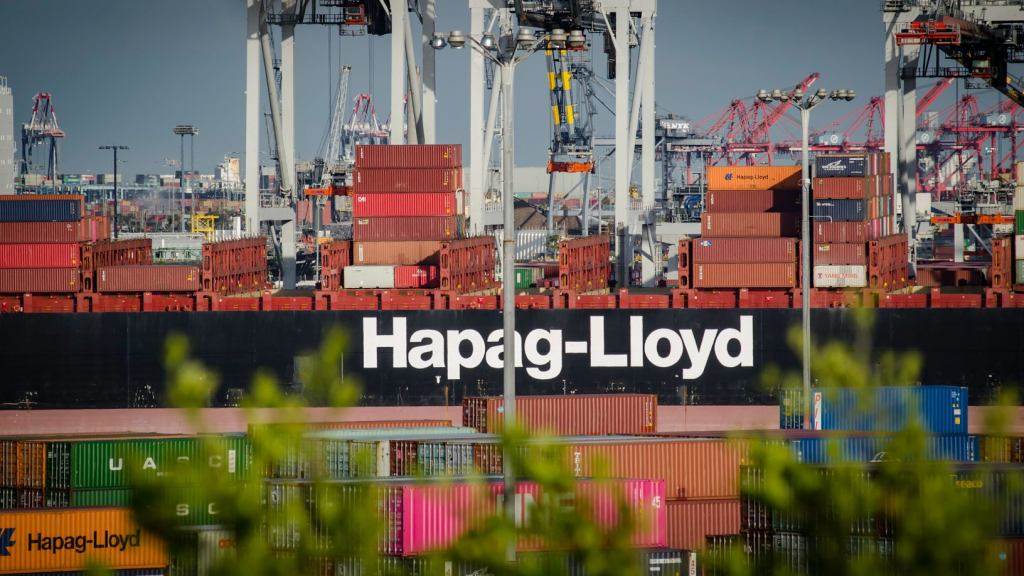
Hapag-Lloyd’s annual report for 2023 and financial results for Q4 reveal exactly how challenging the ocean container market has been for the largest steamship lines. The report, which the German container ship line released Thursday, notes that Liner Shipping revenues dropped 48.5% to 17.7 billion euros ($19.2 billion) from 2022 to 2023, and earnings before interest, taxes, depreciation and amortization fell by 77.1% to 4.4 billion euros over the same period.

The ocean carrier grew its volumes slightly, from 11.8 million twenty-foot equivalent units to 11.9 million TEUs, but the collapse of average freight rates from $2,863 per TEU to $1,500 per TEU meant that Hapag-Lloyd took in much less money for every box it moved, crushing its margins and profitability. As a group — in other words, consolidated Liner Shipping and Terminal and Infrastructure results — Hapag-Lloyd managed to generate profits of 2.9 billion euros in 2023, down 82.6% from 17 billion euros in 2022.

Note that Hapag-Lloyd’s 2023 results were still the third-best profitability result in the group’s history; the steep decline in freight rates, revenues and EBITDA indicated the popping of the pandemic-era bubble in transportation demand rather than any fundamental weakness in Hapag-Lloyd’s business.

But when it came time to discuss Hapag-Lloyd’s financial results on CNBC, CEO Rolf Habben Jansen was already painting a rosier picture: Inventories are depleted worldwide, Habben Jansen said, and the volumes were picking up nicely after the Lunar New Year. Peak season will come early this year, he predicted.

“I would also expect that peak season is going to start a little bit early,” Habben Jansen told CNBC. “I also expect that there’ll be quite a number of people who tried to bring in their goods somewhere between June and August.”

Typically, ocean container peak season runs from September to October, effectively ending with Golden Week each year. That gives importers enough time to pick up boxes at the port, transload them at nearby warehouses, and then move them to inland distribution centers by rail or truck, ingesting them into their domestic supply chain in time for peak retail season in November and December.

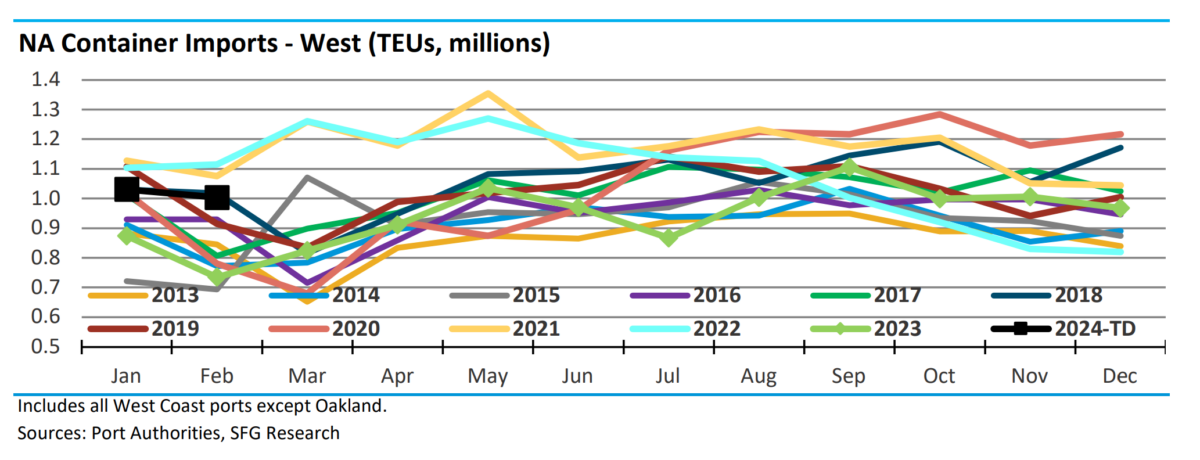
(Monthly loaded imports at U.S. West Coast ports. Chart: Susquehanna)

So far, 2023 containerized imports have started off strong, but favorable year-over-year comps have also been supported by the timing of the Lunar New Year. In 2023, the holiday began on Jan. 22, while it started on Feb. 10 this year. The historical imports data in the chart above shows that the depressed volume effects following the holiday are roughly evenly split between February and March, depending on the year — 2024 should see a weaker March.

If Habben Jansen is right, though, soft conditions won’t last long, and we may see elevated, peak-ish volumes as soon as early summer. The thinking here is that while labor conditions at West Coast ports have stabilized since last year’s contract negotiations, it’s now the East and Gulf Coast ports’ time to settle up with their unions. Strikes are always on the table as dockworkers try to put pressure on port authorities prior to the signing of these important multiyear agreements, so shippers, Habben Jansen believes, will try to move their goods into the country earlier rather than later.

DOT confirms boost in West Coast container imports

DOT Headquarters in Washington, DC

WASHINGTON — The Biden administration announced on Wednesday it is gaining ground on its ability to help importers and container vessel operators navigate shifts in freight flows with new information it is publishing from inland rail terminals and warehouses.

The increase in timely ocean container import data being supplied by private industry into the U.S. Department of Transportation’s Freight Logistics Optimization Works (FLOW) initiative confirms what has been predicted since earlier in the year — a boost in U.S. West Coast container volumes caused by detours around the Red Sea and transit blockages through the Panama Canal. 

“DOT and supply chain stakeholders are applying lessons learned from the pandemic-caused disruptions as it helps manage changes in freight traffic resulting from the reckless Houthi attacks against vessels in the Red Sea, as well as the reduction of traffic in the Panama Canal due to drought conditions,” DOT stated on Wednesday in announcing the enhanced view of container import trends it has started providing to FLOW participants.

“The Department has held regular listening sessions with the freight industry and mariners since the Houthi attacks began last year and has worked with FLOW participants to leverage data on shifting traffic caused by the ensuing disruptions.”

Launched in March 2022, FLOW allows DOT to collect and aggregate information from participants on container freight imports that starts with importer purchase orders. The 61 current freight industry participants include the five largest U.S. container ports, seven of the largest ocean carriers and nine of the 20 largest retailers by imports.

Speaking on Tuesday at the American Association of Port Authorities’ 2024 Legislative Summit in Washington, Allison Dane Camden, deputy assistant secretary for multimodal freight infrastructure and policy, which oversees FLOW, said she has been leading a biweekly call with industry leaders on how the terrorist attacks against Red Sea shipping are affecting supply chains.

While she didn’t provide specific volume numbers, “we’re starting to see a little bit [of an uptick]” in containers going to the West Coast in the FLOW data, Camden said. “So it’s helping us to be able to look around the corner and be prepared. It’s not perfect — it’s small compared to where we want to grow it, but I think we’ve already gotten some good capability.”

Commenting as a FLOW participant, Jesse Whitfield, director of global ocean freight at UPS [NYSE: UPS], said that the “more granular views” of container imports allow UPS “to consider not only alternate routings but also potential shifts in their distribution networks. That directional insight is invaluable when it comes to being able to pivot during times of disruption.”

 Click for more FreightWaves articles by John Gallagher.

Georgia bill would restrict truck-crash lawsuits against insurers

A bipartisan measure that would largely protect insurers from being sued directly after crashes involving trucks is on its way to Georgia Gov. Brian Kemp for his signature or veto.

The state House of Representatives passed the bill 172-0 on Monday after the legislation passed in the Senate by a vote of 46-2. Backers say that no longer permitting direct lawsuits against insurers would expand the beleaguered insurance market for trucking companies and lower premiums, media outlets reported.

Insurance Journal reported that Kemp is expected to sign the bill.

The law would not forbid all direct-action lawsuits against insurance companies. Rather, they would be permitted only if a plaintiff could not find the driver or the carrier involved in the accident or if the carrier had gone bankrupt, according to The Associated Press.

Most states do not permit direct-action lawsuits against the insurance companies of carriers and truck drivers. Insurers in states that do have responded to huge jury verdicts and settlements by increasing rates or halting coverage altogether, Insurance Journal reported. In January, it quoted Bryce Rawson, assistant to Georgia Insurance Commissioner John King, as saying the existing law “has destroyed our market. No one wants to insure trucking here.”

Plaintiffs’ attorneys oppose the bill, news outlets reported, and similar legislation in 2023 failed.

Hydrogen mania at key energy conference in ’23 more tempered in ’24

HOUSTON — At CERAWeek’s energy conference in 2023, hydrogen was all the rage. The fuel that is seen by many as eventually the only real pathway for the Class 8 trucking sector to join the energy transition away from petroleum was coming off a legislative victory in Washington with the passage of the Inflation Reduction Act (IRA) and its generous incentives for producing hydrogen from renewable fuels, so-called green hydrogen.

A year later, at CERAWeek 2024, a parade of presenters at the conference’s Hydrogen Hub still said all the right things about the potential for hydrogen in transportation and other end-use markets. But there was clearly a level of caution that had been a lot less visible just 12 months earlier.

It led one panel moderator, Peter Gardett of S&P Global Commodity Insights (which produces the conference), to ask: Is there a bull case for hydrogen? (NYSE: SPGI).

And over the course of the Hydrogen Hub panels, participants laid out numerous bull cases. Many of the concerns within the hydrogen community stem from the fact that specifics of the tax breaks under the IRA have not been finalized.

When hydrogen was under discussion at CERAWeek in 2023, the number that presenters focused on was simple: A kilogram of hydrogen produced through renewable energy, qualifying as green hydrogen, would get a tax break of $3. That was seen as equivalent to a $3-per-gallon downward move toward price parity with diesel, the key benchmark.

Details in the proposed regulation were released in late December, and a subsequent comment period ended in February. The industry awaits the final rule.

But the devil is in the details, and that’s what concerned several Hydrogen Hub presenters.

The section of the tax code that would impact hydrogen production is known as 45V. According to Resources for the Future, a Washington-based interest group focused on environmental issues, one of the factors being considered at the Treasury Department for its final rule related to 45V is that the tax credit for green hydrogen could be claimed only if it could be be shown that the green electricity used to produce the hydrogen was produced in the same hour as the hydrogen.

Spinning turbines producing fully renewable electricity at the same time hydrogen is being produced can be “proven” through the use of energy attribute certificates, according to Resources for the Future. With EACS, there can be proof of “hourly matching.” But EACs previously had been viewed as the tool to just show that somewhere in the supply chain, renewable energy had been used to generate electricity and that would be enough to claim the credit. That may not be true anymore.

Worried about “hourly matching”

Requiring hourly matching is viewed as a significant problem by people involved in growing the hydrogen market.

Scott Pearl, a principal at Global Infrastructure Partners on a panel titled Innovative Hydrogen Financing — the one moderated by Gardett — did not mince words about the impact of hourly matching. “It could add 40% to 50% of the cost of the projects,” he said.

If hourly matching is enforced, a hydrogen production facility like an electrolyzer could not claim the tax credit if it couldn’t show a link to green electricity production. According to Resources for the Future, that proof now comes through the use of energy attribute certificates.

Anthony Omokha, a managing director at Ares Management Corp. (NYSE: ARES), which is a major investor in a Texas hydrogen project, was blunt. “When it comes to truly making hydrogen at large scale, we need 45V to be in place,” he said. 

But it might not stop there. Despite repeated statements during the day that there is adequate demand, Omokha said, “we may need additional demand-side subsidies to unlock these projects.”

That issue came up repeatedly during the Hydrogen Hub sessions: the uncertainty of demand that projects face. That ultimate demand exists in a variety of applications was not a concern, panelists said.

It was that developers of the hydrogen production projects like electrolyzers need to find funding for a “bankable” project — a word that came up several times — and one of the best ways to get that is a long-term purchase commitment for the project’s output. But that is not a feature of the hydrogen market, which might be viewed as little more than nonexistent.

The need for the long-term contracts is fueled also by the fact that market signals are not fully transparent. Long-term offtake deals are needed, Omokha said, because “there is no spot market for low-carbon hydrogen today.”

The disincentive to sign up long-term

Part of the problem is that the hydrogen community generally sees the price curve bending down over time — if it doesn’t, there essentially will never be a market for it — so committing to a long-term purchase agreement now could be buying at the top.

Kelly Cummins, the acting director of the Office of Clean Energy Demonstrations at the U.S Department of Energy, summed up that view. “The problem we’re facing with these large hydrogen hubs projects is that the people building the infrastructure need bankable long-term contracts,” she said. “But the offtakers don’t want to sign up when they know the price of hydrogen is likely to decrease.”

The analogy to early LNG

However, there were several references over the course of the day to the fact that liquefied natural gas faced a similar landscape 20 to 30 years ago: no spot market, contrived price benchmarks built off the value of alternate fuels, and the need for developers to find long-term purchase agreements of 20 years or more to proceed. Now, there is a robust spot LNG market with price transparency.

Austin Knight, the vice president of hydrogen at Chevron New Energies, noted that history and expressed a wish: “We’re hoping it moves faster for hydrogen than it did for LNG,” he said.

Cummins’ remarks came at a panel about the status of the U.S. hydrogen hubs approved by the DOE since the IRA was approved. There are seven of them, awarded in October, stretching across the country.

Those projects are in the design phase now, Cummins said. Each has a unique aspect that led to its being awarded. For example, she said, the California hub can benefit from the state’s advanced mandates on clean fleets, whereas the Appalachian hub can benefit from being in the middle of an area with plentiful, relatively cheap natural gas and a workforce that, as she said, is “in transition.” (Cummins did not mention coal specifically but that was implied). 

But setting up new hubs is not imminent, Cummins said, because the DOE now wants to focus on getting buyers for the hubs’ output. “We’re going to pull back on some of the remaining hydrogen hub funding because we want to help on the demand side,” she said. That assistance might come in the form of support to help create a sustainable price for hydrogen that would make the project more — repeating the word of the day — “bankable.”

In response to the Gardett question about the bull case for hydrogen, Pearl said the “low-hanging fruit” would be to displace gray hydrogen — produced with natural gas but without carbon capture — with blue hydrogen, which also extracts hydrogen from water but with carbon capture to minimize the carbon footprint of the process.

More articles by John Kingston

Key analysis sees Red Sea shipping diversions starting to boost oil demand

Further appeals to block AB5 from California trucking seen as a long shot

California gets another pot of money for ZEVs, courtesy of Volkswagen

Check Call: AB5 takes a body blow

people gathered around a desk of computers. Check Call news and analysis for 3pls and brokers

(GIF:GIPHY)

The battle over the independent contractor law in California rages on. Nicknamed AB5, the law changes how a lot of workers are classified. It matters in the transportation world because for carriers that also use owner-operators to haul freight, it classifies many of those owner-operators as employees versus independent contractors. To catch up on how we got here, check out some of the previous articles about it.

Why it matters now is that it’s back in the federal courts. After the U.S. Supreme Court denied a request by the California Trucking Association to review a ruling in a long-running case on AB5, the case went back to the U.S. District Court for the Southern District of California. A decision by that court has finally come, and it isn’t in favor of plaintiffs CTA or the Owner-Operator Independent Drivers Association.

Judge Roger Benitez imposed an injunction against AB5 the first time but this time refused to do so. “Remedying complexities and perceived deficiencies in AB5 are the kind of work better left to the soap box and the ballot box than to the jury box,” Benitez wrote in his decision. “If sufficient political or economic pressure can be brought to bear by [CTA and OOIDA] and their supporters, the more onerous provisions of the statute can be amended. The courts, on the other hand, are not the proper bodies for imposing legislative amendments.”

On the other side of the fight, CTA and OOIDA had argued that a federal law, nicknamed FAAAA, created an “implied preemption” blocking AB5. FreightWaves’ John Kingston summarizes Benitez’s dismissal of that argument: “‘Implied preemption might have a place,’ Benitez wrote. But an argument that it is impossible to comply with the FAAAA because of AB5 falls short. ‘It is not impossible for truck drivers to comply with both federal and state law because there is simply no federal standard of classification requiring compliance. The FAAAA does not dictate that truck drivers must be classified as independent contractors or that drivers are not subject to state wage and hour laws.’”

Despite Benitez’s dismissal of the case, the war will inevitably rage on. The OOIDA is looking at an appeal, and due to the oversupply of trucks in the market, it’s unlikely that rates will be significantly affected for a while as the cards fall where they may.

SONAR TRAC Market Dashboard 

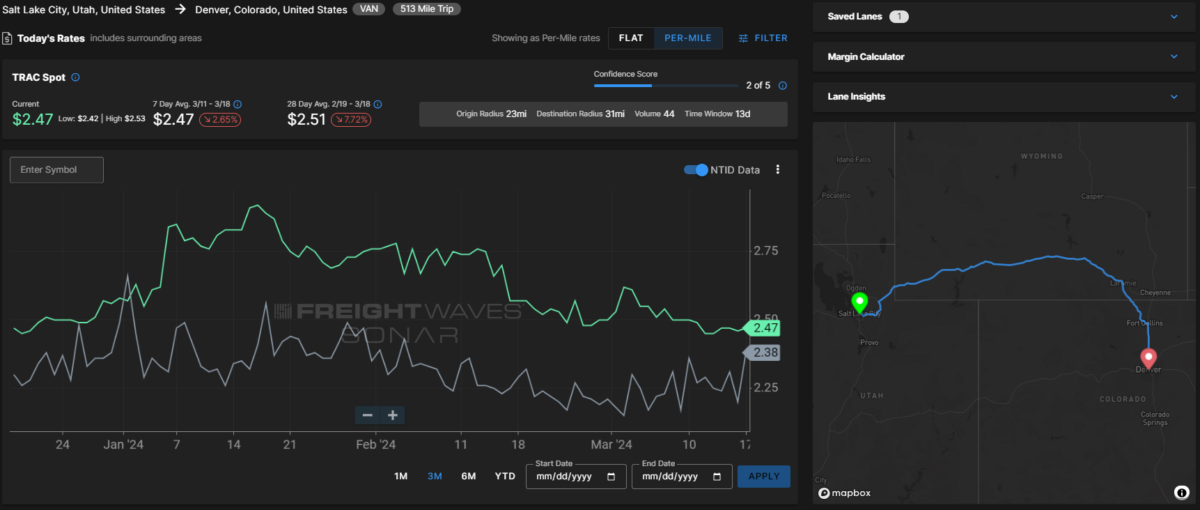
TRAC Tuesday. This week’s TRAC lane goes out West: Salt Lake City to Denver. The 513-mile trip through the Rockies comes in at $2.47 per mile, which is about 9 cents higher than the National Truckload Index. Outbound tender volumes have risen 6.36% week over week in Denver. The Outbound Tender Reject Index in Denver has come down to just 2.21%, which signals that most everything is getting picked up and there isn’t much strain on capacity. A similar story is happening in Salt Lake City, with the OTRI at 1.46% and outbound tender volumes trending downward slowly. Overall spot rates for this lane should begin trending downward to be right in line with the NTI.

(GIF:GIPHY)

Who’s with whom? Everyone and their brother is setting up some form of operations in Mexico; that’s nothing new. In the middle of this nearshoring boom is Wise PanAmerican Solutions. The Austin, Texas-based company offers services to help firms expand or establish cross-border operations. In an article by FreightWaves’ Noi Mahoney, Tatina Skumatenko, who oversees WPS’ business development between the U.S. and Mexico, says “This year started with an increase in demand for our services as compared to the previous year. It may be related to the fact that nearshoring projections are expected to reach their peak in 2024-2025.” The metaphorical gold rush of nearshoring has to come to an end at some point, and it looks like it’s got a year or so left.

“Mexican carriers importing U.S. goods have been some of the biggest beneficiaries of [nearshoring], as the number of vehicles registered for cross-border shipping grew by 14.3% and the average fleet size grew by 11.3% in 2023. The market’s overall growth was 2.3%, compared to a U.S. trucking market that saw a 6.6% contraction.” Motive said in its economic report for March.

The more you know 

Michigan trucker guilty of setting Swift Transportation trailers on fire

Borderlands Mexico: Container shipments from China to Mexico skyrocketed in January 

Heale incentivizes complete, accurate data sharing 

Flock reports layoffs, path to profitability 

Location, cost drive international firms south of the border

Industry study pegs electric truck grid buildout at $1 trillion

Diesel truck on the highway

WASHINGTON — Companies representing all segments of the trucking industry are warning of a staggering $1 trillion price tag that they claim sets up a roadblock to the Biden administration’s push to decarbonize the industry.

A study released on Tuesday commissioned by the Clean Freight Coalition (CFC), whose members include the American Trucking Associations, LTL carriers, truck dealers and truck stop operators, concluded that commercial trucking would have to invest more than $620 billion in charging infrastructure, with another $370 billion coming from utility companies to upgrade their grid networks to meet the demand.

“This nearly $1 trillion expenditure does not account for the cost of new battery-electric trucks, which according to market research can be two to three times more expensive than their diesel-powered equivalents,” the CFC asserted, adding that a diesel Class 8 truck costs roughly $180,000, while a comparable battery-electric truck costs over $400,000.

The CFC study was released ahead of the Environmental Protection Agency’s plan to finalize a rule requiring major cuts to truck engine emissions beginning with the 2027 model year (MY) and extending to MY2032.

ATA and owner-operators both have staunchly opposed EPA’s greenhouse gas emissions rule, which generated over 1,000 comments since it was proposed last year, citing costs to the industry and unrealistic and overly aggressive timelines.

However, “now that we have data [on full electrification], we’ll work with legislators and regulators to let them know that … the tab eventually is going to be picked up at least in part by the consumer,” said CFC Executive Director Jim Mullen.

“Consumers will see fewer trucks [available] for the same amount of freight,” commented ATA CEO Chris Spear. “That’s the awareness and it’s going to come quick. We’re not saying no to zero emissions; we just need a path to get there, and [EPA’s proposed rule] is not it.”

Wilfried Aulbur, a senior partner at Roland Berger, a Germany-based management consultant that conducted the study, said transitioning trucking to zero carbon emissions requires being open to alternatives in the short run that may not be based on electric batteries, such as biodiesel fuel.

“It also is clear that an industry with a yearly turnover of about $800 billion and a profit margin around 5% cannot invest $620 billion without financial support or a significant increase in freight rates,” Aulbur said.

The ATA, the American Truck Dealers and other carrier groups also support in the near term repealing the 12% federal excise tax on the price of a new truck, a legislative proposal currently pending in Congress.

“Get that older equipment off road and replace it with eco-diesel equipment that’s available right now that could be impactful,” Spear said. “Start with that, and give us more time to build out the grid long-term.”

EV trucking’s opposing view

While environmental groups support the Biden administration’s aggressive timeline, the Zero Emission Transportation Association (ZETA), a coalition advocating for 100% electric vehicle sales, believes EPA’s zero-carbon timeline is not aggressive enough. The group represents trucking companies that are already marketing battery electric trucks, such as Tesla.

“We encourage [EPA] to finalize heavy-duty GHG standards that are more stringent than proposed and align with California’s Advanced Clean Trucks (ACT) regulation,” ZETA Executive Director Albert Gore stated in comments to the EPA rule.

“To meet the country’s commitments under the Paris Climate Agreement and the National Blueprint for Transportation Decarbonization, more than 55% of total class 4-8 vehicle sales must be zero-emission by 2030. Without a quicker transition, older, more-polluting vehicles will remain on the roads well into the future.”

ZETA was not available to comment on the CFC/Roland Berger study.

Click for more FreightWaves articles by John Gallagher.