The biggest freight brokerage layoffs and bankruptcies in 2023

convoy trucking layoffs

Compared to trucking carriers, freight brokerages can avoid shutdowns even during nasty freight recessions.

But, since new capacity flooded the trucking industry and consumers stopped buying as much stuff, third-party logistics companies have seen an unusual threat to their business operations. We’re now seeing big layoffs and company shutdowns.

“Typically, freight brokerages manage revenue volatility through flexible operating expenses: Computers and chairs don’t cost much, and incentive-based compensation grows and contracts with market cycles,” FreightWaves strategic analyst John Paul Hampstead wrote in July. “That’s why hiring sprees and layoffs at freight brokerages are relatively common, but outright failures are relatively rare.”

A freight broker is the intermediary between a carrier (or transportation provider, like a truck driver) and a shipper (whoever is trying to move goods, like a retailer or manufacturer). There are also freight forwarders, who are more exposed to international shipments and the customs involved.

Here are the biggest freight broker layoffs in 2023 so far. You can see a list of freight broker layoffs in 2022 here and a list of all layoffs and shutdowns in the freight industry here

Jan. 11: Flexport, approximately 20% of workforce

The co-CEOs of Flexport, a San Francisco-based freight forwarder, published a memo on Jan. 11, saying the company was reducing its workforce by around 20%.

Increasingly automated systems along with lower freight volumes meant the company would need fewer employees than in previous years. As executives Dave Clark and Ryan Petersen wrote in the memo:

“We are overall in a good position but are not immune to the macroeconomic downturn that has impacted businesses around the world. Our customers have been impacted by these challenging conditions, resulting in a reduction to our volume forecasts through 2023. Lower volumes, combined with improved efficiencies as a result of new organizational and operational structures, means we are overstaffed in a variety of roles across the company.”

Clark announced on Sept. 6 he was leaving Flexport; the board fired him, as FreightWaves first reported. Petersen is the sole CEO of Flexport.

Flexport has raised some $2.4 billion in funding since its founding in 2013.

Jan. 23: Uber Freight, approximately 3% of workforce

FreightWaves’ John Kingston first reported on Jan. 23 that Uber Freight, the Chicago-based freight brokerage arm of ride-sharing giant Uber, would cut about 150 jobs from its digital brokerage division. That’s 3% of Uber Freight’s total workforce.

“As you know, the logistics market is currently facing a number of headwinds, which has impacted our customer base as well as the overall industry,” CEO Lior Ron said in a memo to the staff obtained by FreightWaves. “We accelerated hiring last year within certain areas of our brokerage business, planning for a different economic reality, but the volumes did not materialize as expected.”

An Uber Freight spokesperson noted the issue of oversupply of transportation capacity in an emailed statement to FreightWaves on Feb. 23. 

“Volatility is a given in our industry,” the spokesperson wrote. “In stark contrast to last year when demand was surging, today the market is oversupplied and shippers are looking to rationalize their logistics spend. These dramatic changes in the market capture why it’s so critical to have the right partners and technology in place.”

Uber Freight was established in 2017. 

Feb. 16: Convoy, undisclosed number affected

Convoy co-founder and CEO Dan Lewis wrote in a Feb. 16 LinkedIn post that the company was restructuring and would eliminate an undisclosed number of roles. It would also shutter its Atlanta office.

Lewis wrote that the company’s increasingly automated freight brokerage process changed its staffing needs. A company spokesperson declined to comment further on this layoff at the time.  

Founded in 2015, Convoy has attracted investments from Amazon founder Jeff Bezos, Salesforce founder and CEO Marc Benioff, and Microsoft co-founder Bill Gates. The company was valued at $3.8 billion last year, when it raised $260 million in a Series E funding round.

Convoy ultimately shut down operations on Oct. 19. The company had been based in Seattle.

April 10: Flock Freight, 45 employees 

Flock Freight laid off 45 people, or 8% of its workforce, as FreightWaves’ Clarissa Hawes first reported on April 23. Flock Freight is a provider of shared truckload solutions and does not describe itself as a brokerage, though it does provide third-party logistics services.

Oren Zaslansky, CEO and co-founder of Flock Freight, which is valued at over $1.3 billion, told FreightWaves in April that the layoff decision “was deliberate and required us to create leaner teams.”

“After conducting an audit of our sales, tech and customer success teams, it was determined that a reorg was necessary and would add significant efficiencies across the company,” Zaslansky said in a statement to FreightWaves. “Flock is in the best financial health we’ve ever been in after seeing record highs in margin and acquisition in Q1, and we remain committed to building an even stronger, more sustainable supply chain by fundamentally changing the way freight moves in this country.”

Flock Freight was founded in 2015 and has raised more than $399 million in venture funding. It’s based in Encinitas, California. 

May 9: Lipsey Logistics, undisclosed number 

Chattanooga, Tennessee-based Lipsey Logistics laid off an undisclosed number of employees, as FreightWaves’ Hawes reported in a May 9 article

A source familiar with the layoffs previously told FreightWaves an estimated 20 jobs were cut. 

“We have taken [the] initiative for restructuring, controlling cost and mainstreaming efficiencies, which included a reduction of our workforce,” Kendal Helms, vice president of human resources for Lipsey Logistics, said in a statement to FreightWaves in May.

“The reduction in force was based on business necessity, and our initiatives kept the loss of employees minimal in comparison to other companies in our industry,” Helms added.

Lipsey was founded in 2007. Per LinkedIn, the company employs around 120 people.

May 19: Coyote Logistics, an undisclosed number

Coyote laid off an undisclosed number of employees. FreightWaves reported at the time:

In a memo sent to affected staffers Friday and acquired by FreightWaves, Coyote’s human resources department attributed the cuts to months of truckload rate deflation, adding: “To maintain our business health and performance, we must make strategic decisions that position us for long-term success. This includes optimizing our organizational structures and workforce, which brought us to this difficult decision.”

June 28: Transplus, bankruptcy

It’s unclear how many employees worked at Transplus, a Hernando, Mississippi-based logistics company, when it filed for bankruptcy in June.

However, as FreightWaves’ Hawes reported, more than 60 small trucking companies were owed millions of dollars. They moved loads for the brokerage and had not received payment for that work.

July 11: Freightos, 13% of employees 

Freightos (NASDAQ: CRGO) announced on July 11 it would lay off 13% of its employees, as FreightWaves’ Eric Kulisch reported. Freightos is a digital marketplace for international air and ocean freight.

The Jerusalem-based company had to cut back its revenue projections for 2023. Last summer, management expected it would book $26.6 million in revenue this year. In July, it cut that projection to between $20 million and $21.2 million. As of its most recent earnings report on Nov. 21, Freightos’ current revenue project for 2023 is $20.1 million to $20.3 million.

“Despite challenging market conditions, our successful push for industry adoption of digitization has resulted in strong continued growth in total transactions and growing revenue on our Freightos platform,” CEO Zvi Schreiber said. “However, given the persistently weak market conditions, we are refining our priorities to deliver on our plan to reach profitability with the capital already raised. This includes efficiency measures that should keep us on the path to long-term, sustainable growth.”

Freightos went public in January. It was established in 2011.

July 24: Surge Transportation, bankruptcy

Digital freight brokerage Surge Transportation filed for bankruptcy on July 24, as FreightWaves’ Hampstead first reported the following day.

2023 was a more severe downturn than expected. Surge booked $135 million in gross revenues during one period in 2023, according to its bankruptcy filing. That same period last year, Surge posted $200 million. 

FreightWaves previously reported that Surge, at one point, employed more than 100 people. 

Surge was founded in 2016 and based in Jacksonville, Florida.

Sept. 1: Coyote Logistics, undisclosed number

Late in the summer, Coyote Logistics once again laid off an unspecified number of employees, as FreightWaves first reported

“We’re reducing the size of our staff, primarily within corporate services, to improve efficiency and better meet evolving business needs,” a Coyote spokesperson told FreightWaves at the time. “Our people are extremely important to us. These changes are difficult but necessary to make our company more agile and better positioned for the future.”

According to LinkedIn data at the time, Coyote’s total head count was down 7% over the past two years and down 2% over the past six months.

Oct. 13: Flexport, 600 employees

Following internal drama that resulted in the unexpected firing of CEO Dave Clark, Flexport told staff on Oct. 13 it would lay off 600 workers, FreightWaves’ Kulisch reported.

Ryan Petersen, Flexport’s founder, took over the CEO role in Clark’s departure. He seemed keen on slashing programs and costs, particularly in domestic transportation, that Clark had implemented during his tenure at the company.

“Petersen has characterized his return as CEO as one of righting a ship taking on red ink because of excess spending,” Kulisch wrote. “He is focusing on driving growth in the core forwarding business through more focus on customer service and driving down costs.”

Oct. 19: Convoy, shutdown

Convoy told employees on Oct. 19 that the company was shutting down, as FreightWaves’ John Kingston reported. Some 550 employees worked at the company at the time, and all but a small team were laid off.

Convoy had more than 1,000 employees at its peak. Just 18 months ago, during the startup’s last fundraising, Convoy was valued at $3.8 billion.

On Nov. 1, Flexport told employees that it was acquiring Convoy’s entire technology stack.

The acquisition would move that small team of Convoy employees to Flexport. Flexport would not take on Convoy as a company or its liabilities.

Nov. 6: Meadow Lark, bankruptcy

On Nov. 6, a Montana-based trucking company and freight brokerage called Meadow Lark filed for bankruptcy, as FreightWaves’ Hawes reported. The company shuttered three weeks prior to that.

“Due to unforeseen events in 2022-2023, which included banking and funding issues, higher costs with lower rates, and last-minute insurance issues, the 2023 economy was not sustainable for a medium-sized company,” Meadow Lark CEO Amanda Roth told FreightWaves in a statement.

Did we miss anything? Email rpremack@www.freightwaves.com. Don’t forget to sign up for weekly transportation updates from the MODES newsletter.


Lineage Logistics expanding cold storage capacity in western Canada

Lineage Logistics announced the expansion of a cold storage facility in Calgary, Canada, that will boost its total capacity to more than 200,000 square feet and over 24,000 pallet positions.

The growth of Lineage’s Foothills facility in Calgary is designed to serve customers that export meat and other products to Asia and other international markets, the company said.

“As we continue to expand our presence in Canada, the Calgary market serves as a critical location to meet the demand of existing customers and welcome new customers in need of export capability,” Ken MacLean, Lineage’s Canada regional vice president, said in a news release

The expansion of the Foothills location also includes expanded dock space and 1,500 pallet positions capable of blast freezing, a critical feature for the export of products like protein, according to Lineage. The Foothills facility is located near Lineage’s local transportation hub, as well as intermodal rail facilities for movement of containers from major western Canadian ports.

The expansion of the Foothills cold chain facility is scheduled to be completed in 2024. 

In 2022, Lineage acquired VersaCold Logistics Services, snapping up 24 temperature-controlled supply chain warehouses spanning 114 million cubic feet of capacity across nine provinces, including facilities in Toronto, Calgary, Vancouver, Montreal and Edmonton, Alberta, according to a news release

The acquisition of VersaCold gives Lineage 37 logistics facilities across Canada. In recent weeks, Lineage has also opened two major cold storage facilities in Houston and Dallas, expanding Lineage’s footprint in Texas to 20 facilities totaling more than 192 million cubic feet of capacity.

Novi, Michigan-based Lineage Logistics operates more than 400 facilities on three continents, employing 17,000 workers.

Click for more FreightWaves articles by Noi Mahoney.

More articles by Noi Mahoney

Mexico orders railroads to prioritize passenger service over freight operations

ITS Logistics making big moves in Lone Star State

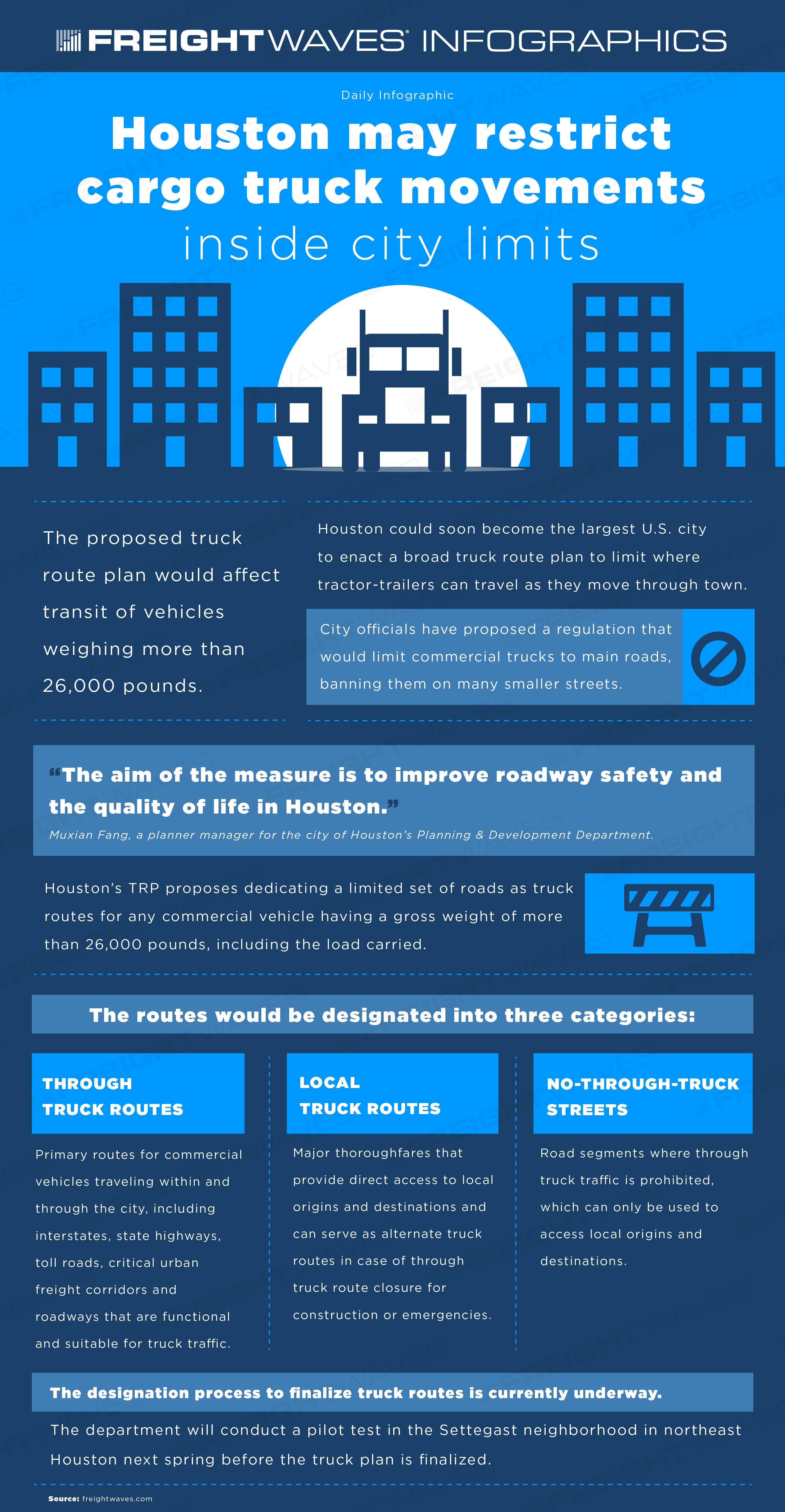
Houston may restrict cargo truck movements inside city limits

Ree Automotive: Business life during wartime

Startup Ree Automotive builds its drive-by-wire electric powertrains in the United Kingdom. Its future customer base is mostly in the U.S. But its headquarters is in Tel Aviv, where the Hamas-Israel war takes an emotional toll on employees and their families called to fight.

Israel-based businesses count on some portion of their workforces serving in defense of the country surrounded by enemies sworn to destroy it.

When war comes calling, as it did during the Oct. 7 surprise bombing of Israel by Hamas, that number rises dramatically.

“We don’t give out numbers because it might serve our enemies,” Ree Automotive CEO and co-founder Daniel Barel told me. “But I can say that there are quite a few out there. All of them are accounted for and safe for now. Some of our employees have been called, some of their  spouses or somebody in the family has been called. So, there is a larger circle that is affected.”

The outpouring of support and messages of concern touches Barel.

“I think we’ve received hundreds, if not thousands, of messages of support and queries from everybody, from customers, suppliers, partners and even people we’ve never worked with,” he said. “It’s been overwhelming to be honest.”

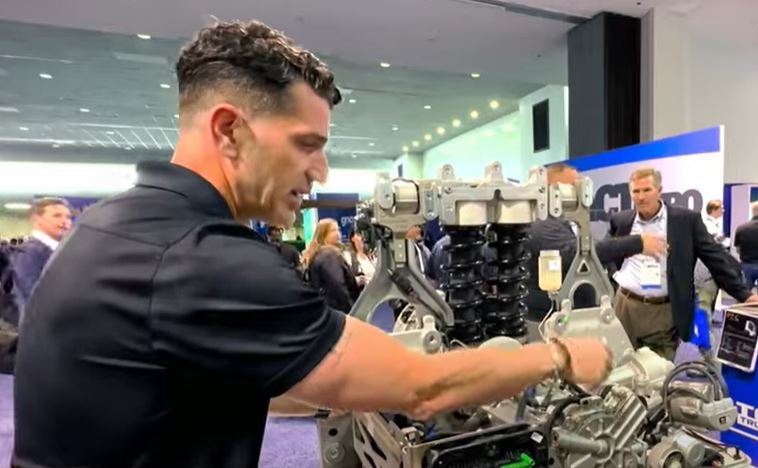
Daniel Barel, CEO and co-founder of Israel-based Ree Automotive. (Photo: Alan Adler/FreightWaves)

A wartime stock price hit?

At the same time, there’s a hard-to-prove correlation between the outbreak of the war and the prices of Israel-based stocks. In the days after the fighting started and Israel began a bombing campaign of Gaza, Ree’s price plummeted, trading as low as $2.40 a share on Oct. 25. It has recovered most of the losses, closing Wednesday at $4.47 following a 1:30 reverse stock split on Oct. 18.

“It might be a coincidence, but if you put the two together, you see some correlation,” Barel said.

Or the stock split — to stave off delisting from the Nasdaq — may have been a bigger factor.

Ree went public via a special purpose acquisition company merger with 10X Capital Venture Acquisition Corp. in July 2021 at a $3.1 billion valuation. Like many SPAC-born public companies, its price plummeted. The stock split inflated its share price. But it had no effect on the company’s underlying $38 million enterprise value.

Preparing for production

The wartime hit is less impactful to the business because Ree concentrates employment in the United Kingdom, where the Ree Corner electric powertrain is assembled. Contract assembly of Class 3-5 work trucks containing the drive-by-wire system comes to the U.S. in late 2024.

Ree continues on the path to commercialization of its integrated electric braking, steering and motors that sit at the four corners of a chassis. By packing electronically driven motors, braking and steering into a single module controlled by a central computing system, the Ree system could make mechanical components obsolete.

The Ree Corner system. (Photo: Alan Adler/FreightWaves)

Its order book stands at $40 million. Real orders, Barel said, not letters of intent and other squishy terms that would let customers walk away.

“I’m not passing judgment on anybody else’s business,” Barel said. “It’s just that we decided we’re not playing that game. When this game started at the beginning of the SPAC attack,  everybody started throwing [around] ridiculous numbers. That for me didn’t make sense. Nobody orders 1,000, 10,000 or 50,000 trucks without trying them first.”

Even if the numbers were real, there was no charging infrastructure to service them.

Caught inflating orders

Electric truck startups like Lordstown Motors, XL Fleet and hydrogen fuel cell maker Hyzon Motors drew Securities and Exchange Commission scrutiny and eventually faced fines related to inflating order numbers.

“We decided we’re only going to take binding orders,” Barel said. “We’ve doubled the order book in just a few months. Those orders are not cancelable. They’re not subject to anything other than us delivering a product.”

Incentives welcome but cannot save a business

The amount of incentive money available for Class 3-5 work trucks is welcome, but spiffs cannot sustain Ree’s business any more than they could keep Proterra’s transit bus business from selling for just $10 million during a recent bankruptcy auction.

“The business plan cannot rely on incentives. It simply cannot,” Barel said “Now, if there are incentives, by all means, we’re qualifying. But it’s not contingent on that at all.

Ree’s asset-light approach to work trucks involves a scant staff in Austin, Texas, where modules will be imported for incorporation by a yet-to-be-named body builder. Major fleets will receive a very small number of trucks for testing late this quarter. A year from now, Ree expects to begin production in the low hundreds of trucks.

Holding off on a contract manufacturer and building its first trucks internally allows Ree to pin down its material cost. The test trucks will lose money, but Barel foresees being break-even on materials when regular production begins. Positive earnings before interest, taxes, depreciation and amortization should follow a year later.

“We’ve designed our technology, the by-wire technology and our integration center to work on low capacity,” Barel said. “We don’t need to ramp up in order to get to economics of scale.”

The Ree Corner system on display at the Advanced Clean Transportation Expo in May 2022. (Photo: Alan Adler/FreightWaves)

A new chairman

Ree in September named longtime UPS executive Carlton Rose as chairman. He evaluated practically every electrification technology offered to fleets during a long career at UPS, where he last served as the president of global fleet maintenance and engineering.

“I have been around trucks my entire life, and I have a good understanding of what good looks like. Ree’s technology is a game changer in the industry,” Rose said. “I have been following Ree closely for the past four years and as I have always said, ‘better is before us,’ and Ree will be an essential part of achieving better.”


Briefly noted …

Mack Trucks has added charging infrastructure developers InCharge Energy and Blink Charging to its Turnkey Solutions program for electric vehicles.

Crowley’s land transportation group will work together in a pilot project for the Terraline EV500 test truck.

Schneider National has crossed the 1 million-mile mark in battery-electric-driven freight with its fleet of nearly 100 Freightliner eCascadias.

Schneider National has surpassed 1 million battery-electric miles of freight delivery. (Photo: Alan Adler/FreightWaves)

Truck Tech Episode 42: A future fuel cell scenario

This week’s episode features a visit with Matthias Jurytko, the CEO of the Daimler Truck-Volvo Group fuel cell joint venture cellcentric, followed by a discussion with Daimler Truck’s chief technology officer Andreas Gorbach.

That’s it for this week. Thanks for reading (and watching).  Click here to get Truck Tech via email on Fridays. And catch the latest in major events and hear from the top players on Truck Tech at 3 p.m. Wednesdays on the FreightWaves YouTube channel.

We value your feedback. Please write aadler@www.freightwaves.com with comments and story suggestions.

Daily Infographic: Houston may restrict cargo truck movements inside city limits


To view more FreightWaves infographics, click here

Will Supreme Court resolve conflicting rulings on broker liability?

Now the wait begins.

There is no clear timeline for when the U.S. Supreme Court will rule on a review petition filed earlier this month by Ying Ye, the widow of a man killed by a truck that was brokered by GlobalTranz.

The 7th U.S. Circuit Court of Appeals ruled in July that the Federal Aviation Administration Authorization Act (F4A) blocked GlobalTranz from being held liable for the death of Shawn Lin, Ye’s husband. Lin was riding a motorcycle in November 2017 when he collided with a truck driven by a driver for a company named Global Sunrise, which had been hired by Arizona-based GlobalTranz to move freight.

When the 7th Circuit decision was handed down, it created a split in the federal circuit court system over whether a broker could be held liable for such an accident, or whether the F4A  blocked that finding. In both the Ye case and the “guy named James” case involving Landstar in the 11th Circuit, the F4A was invoked by the ruling appellate panels to hold brokerages not liable.

But on the other side of the divide is the 9th Circuit’s decision from 2020 that held C.H. Robinson (NASDAQ: CHRW) liable for injuries suffered by Allen Miller in an accident involving a truck booked by Robinson. The giant brokerage company had asked the Supreme Court for review of the decision, but the court denied that request in June 2022.

The sharply different conclusions in the Ye and Landstar cases from the 9th Circuit decision in Miller set up the type of inconsistency in the circuits that can lead to a Supreme Court review.

“Even in what may seem like the best of circumstances, the odds of review by the U.S. Supreme Court, by definition, are always daunting — regardless of the merits,” Marc Blubaugh, head of the Benesch Law Firm’s transportation practice, said in an email to FreightWaves. “The Court receives over 7,000 requests for review every year, and the Court may only accept 100 cases for review, give or take.”

When the Supreme Court denied review of the Miller case in 2022, the reaction among what might be called the “trucking bar” was one of disappointment. But that was for a decision that went against a broker.

Now, there are two decisions in the circuit courts, as well as a recent lower court decision in Illinois regarding Coyote Logistics (NYSE: UPS), that are clearly in favor of brokers. So it isn’t clear that industry lawyers want to see the high court take up the issue after all.

Industry lawyers like the way the rulings have come down

“It’s a very favorable decision, at least to our brokerage clients,” Nathaniel Saylor, a partner with the trucking-focused Scopelitis law firm, said in an interview with FreightWaves. “So we’d like the 7th Circuit’s decision to just stand.”

The Miller case that went against C.H. Robinson “was the only decision for a while,” Saylor said. “So absolutely, we wanted it to be reviewed. We wanted it to be overturned. Since then, we’ve had the 7th and 11th Circuits come down favorably.”

If the Supreme Court denies review, Saylor said, the 7th Circuit decision in the Ye case and the 11th Circuit decision in Landstar (NASDAQ: LSTR) would set the precedent on F4A guidance in those jurisdictions. The Miller case would set the same for the 9th Circuit, putting brokers in more jeopardy in that region. As for the other lower courts and circuits, Saylor said, they can choose which precedent to look to should the issue of broker liability under F4A come before them.

The F4A prohibits state action that could impact a motor carrier’s “prices, routes or service.” There also is a safety exception in F4A, which permits legal action for improper safety management even if it could be seen to impact a price, route or service. It was the safety exception that ultimately led to C.H. Robinson’s loss in the Miller case.

Is a broker a motor carrier?

But that exception can only be found to be used against a motor vehicle or carrier. In the Ye case, GlobalTranz was not found to be a motor carrier, and its F4A arguments prevailed.

“If freight brokers cannot be held accountable for negligently hiring unsafe motor carriers, they will have reduced incentives to ensure that they are not hiring carriers that place unsafe motor vehicles on the road,” Ye’s attorneys write in their review request. “This reduction in safety will come at the expense of other drivers and their passengers, who are placed at risk of being injured or killed by motor vehicles when brokers negligently hire unsafe motor carriers to provide

motor vehicle transportation.”

And the Ye request goes after the decision on whether a broker does not fall under the safety exemption because it is not a motor carrier. “The Seventh Circuit erred in holding that personal injury claims against freight brokers based on the negligent hiring of an unsafe motor carrier are not sufficiently related to motor vehicles to fall within the safety exception,” the attorneys for consumer advocacy organization Public Citizen and the firm of Cowen Rodriguez write in their request.

And they cite language from the Miller decision: “The safe operation of a vehicle is necessarily connected to the vehicle’s operator, i.e., the motor carrier providing the motor vehicle transportation. The selection of a safe motor carrier therefore is logically a meaningful component of commercial motor-vehicle safety.”

With three decisions at the circuit level in conflict, the Supreme Court needs to weigh in, the attorneys argue. “A conflict now exists, and the time for this Court to consider the question presented thus has arrived,” the request states.

As far as when the request might be ruled on, the answer generally is: anytime. The court often hands down a long list of decisions on certiorari requests at the end of its term in June; that’s when it released its decision not only on Miller vs. Robinson but also the California Trucking Association case against independent contractor law AB5, which was denied review and is now back at the lower-court level. But there is no guarantee it won’t come down sooner.

“The circuit split is a highly favorable and important factor, particularly the split between the 9th and 7th Circuits,” Blubaugh said. “That said, a circuit split is not dispositive; it does not create an automatic path to review. After all, the United States has twelve federal appellate circuits.  SCOTUS sometimes waits for more circuits to examine and evaluate a particular issue before determining that a circuit split demands resolution.”

More articles by John Kingston

STB’s Oberman rips into Union Pacific CEO Vena

Estes execs recap hack experience in unusual video presentation 

C.H. Robinson has weak quarter as expected but productivity rises

CSX train derailment in Kentucky prompts evacuations, state of emergency declaration

Friday, 12 p.m. ET update: CSX has deployed containment measures as it removes damaged rail cars and remediates the area. The rail carrier will continue to monitor air and surface water quality as crews remove rail cars and materials from the derailment site.

Thursday, 4 p.m. ET update: CSX says “specialized equipment has been deployed to conduct air monitoring in the area and local authorities have determined it safe for residents to return to their homes.”

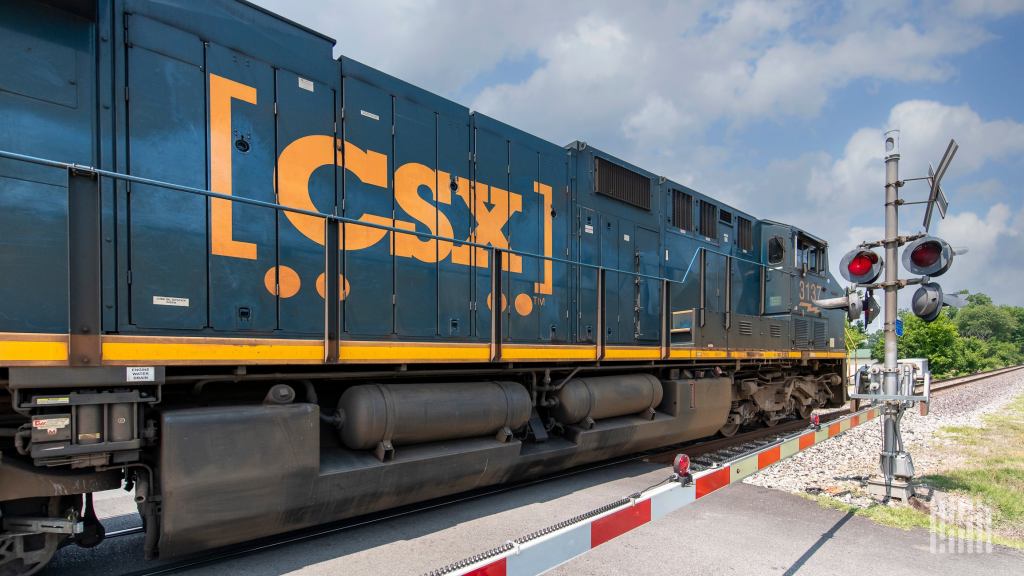
A CSX train carrying molten sulfur derailed in rural Kentucky on Wednesday afternoon, prompting a voluntary evacuation of nearby residents and a state of emergency declaration by Kentucky Gov. Andy Beshear.

The derailment, which occurred at 2:33 p.m. ET on Wednesday just north of Livingston, Kentucky, in Rockcastle County, involved 16 rail cars, two of which spilled molten sulfur, CSX (NASDAQ: CSX) confirmed Thursday. The derailment sparked a fire, which CSX and local responders extinguished as of Thursday afternoon.

Specialized equipment had been deployed to conduct air monitoring in the area as molten sulfur is known to release sulfur dioxide when it burns, CSX said.

Two cars carrying magnesium hydroxide were also involved, although there was no indication that those cars were breached, CSX also said. Other cars that had derailed were either empty or carrying non-hazardous products, such as grain or plastic. 

No injuries occurred as a result of the incident, and the cause of the derailment is under investigation. CSX said.

In response to the fire and the nature of materials that were spilled, Beshear declared a state of emergency, which allows the state of Kentucky to activate resources for community members, including Kentucky Emergency Management and the Kentucky National Guard, according to a Wednesday news release from Beshear’s office. The Rockcastle County judge/executive board also declared a state of emergency. 

Authorities also recommended that Levingston residents evacuate, according to CSX. 

Beshear said the state’s Emergency Operations Center has been activated, and the Kentucky Energy and Environment Cabinet Emergency Response Team is also on scene.

With the fire now extinguished, CSX is focusing on recovering product on the ground and removing the derailed cars. It will also be working with Rockcastle emergency responders and the Environmental Protection Agency to restore the area, CSX said.

“CSX is committed to recovering all product released and mitigating environmental impacts before rebuilding our track,” CSX said in a Friday update on the incident.

Subscribe to FreightWaves’ e-newsletters and get the latest insights on freight right in your inbox.

Click here for more FreightWaves articles by Joanna Marsh.

Canadian province gives Drivewyze rare new market for bypass tech

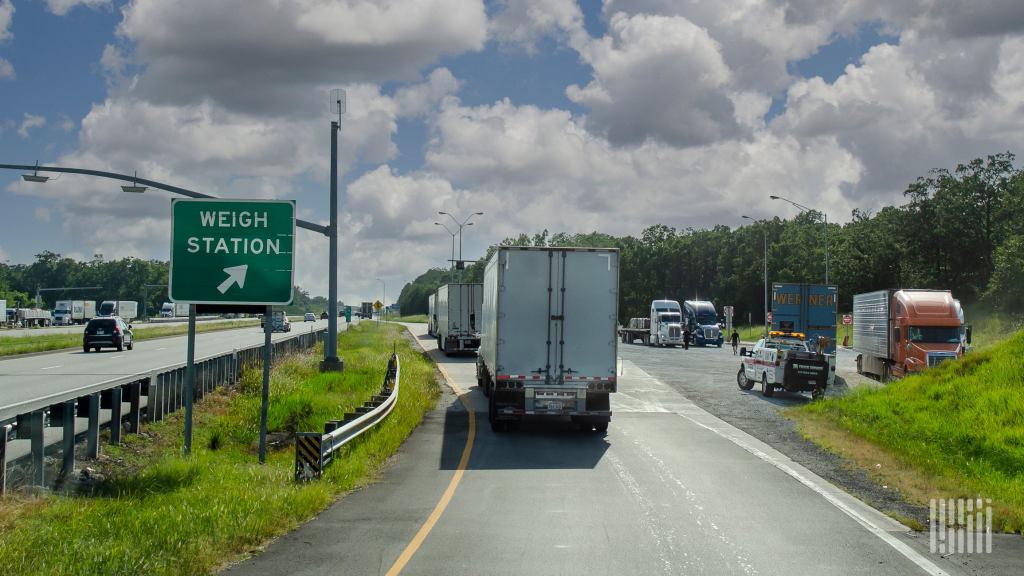
With all but two U.S. states wired for weigh station bypass technology, the fight now for market share shifts to Canada, where Drivewyze just added Newfoundland and Labrador to its network.

Drivewyze announced earlier this month that it had signed up the province for its PreClear bypass system, replacing conventional requirements that drivers pull their trucks in to weigh stations.

Bypass technology provides a weigh station a data stream of the driver and truck’s safety and maintenance history, which can then send back to the truck a message that it is cleared to pass the location without stopping.

Brian Mofford, Drivewyze’s vice president of government experience, told FreightWaves in an interview that getting weigh station bypass into Canada “has been a challenge for a while.” Drivewyze does have the technology in place in Ontario and Alberta.

Weigh station bypass technology has two significant players: Drivewyze and PrePass. The battle between them can be fierce, but it is rare that virgin territory opens up for competition.

Queries to PrePass were not responded to by publication time. 

According to Mofford, the only states that are not operating weigh station bypass technology are Georgia and New York. 

He said New York is part of the Norpass system — a cooperative agreement among states on weigh station bypass that also partners with Drivewyze and PrePass — but that its system is not operative.

Drivewyze is in 44 states, though many states work both with Drivewyze and PrePass. With the market in the U.S. saturated and with both systems in place in numerous locations, it means the Canadian provinces that are up for grabs are hot areas for organic growth.

Without weigh station technology, Mofford said, “if you’re driving back and forth past a weigh station several times a day, and you go past one particular weigh station, there’s no way for you to share your information upfront.” The result then is the need to pull in to the weigh station on each of those trips, since the normal process of the technology being able to provide safety clearance and avoidance of the weigh station stop would not be available.

Eliminating that requirement — as Mofford said, a driver might see a weigh station attendant three or four times in a single day — was a key motivation on the part of Newfoundland to move to bypass technology.

While weigh-in-motion (WIM) technology can be part of weigh station bypass services, where various technology tools can “weigh” a vehicle, WIM is not part of the Drivewyze deal with Newfoundland, Mofford said.

He hinted that the Newfoundland deal might kick off other contractual agreements in Canada soon. “We think we’re going to have some exciting announcements coming up with additional provinces,” he said. “Conversations” have started with all the provinces, he said.

“I think the challenge with turning on new provinces has not necessarily been just about the competition side of the business or whether or not it makes sense to do business in Canada,” Mofford said. “It’s just about the process of how to turn it on, how to make it work in Canada and to integrate with all these different data systems.”

In Canada, according to Mofford, the problem is that there is no Canadian equivalent of the Federal Motor Carrier Safety Administration. Each province maintains its own safety records, which could limit the impact of the technology if a province doesn’t know the history of a vehicle from another region.

Mofford said the data is “not freely shared” among provinces, “but it’s something that we’re kind of helping to bridge the gap now.” With three provinces signed up, Mofford said Drivewyze can provide that safety data in each of those regions so that the bypass technology can draw on a wider base of information than what is available from the home province. 

Mofford would not offer a specific timeline on how long discussions had been ongoing with Newfoundland. “We review our technology with them and try to find a way for it to be a fit for their particular program,” he said. “I think in the case of Newfoundland, it’s always been something of interest, and just finding a way forward with each agency can be totally different.”

More articles by John Kingston

STB’s Oberman rips into Union Pacific CEO Vena

Estes execs recap hack experience in unusual video presentation 

Freight rail execs seeing some green shoots for beleaguered sector

Israel-Hamas war impacts Freightos operations as losses persist

Image of depicting virtual river flows of info around a globe with containers.

Freightos, a digital marketplace for international ocean and air shipping, saw losses widen in the third quarter despite a cost initiative last summer while the freight sector’s prolonged downturn keeps a lid on revenues and the war in Gaza clouds its future.

The Israeli tech company posted an operating loss of $9.2 million for the three months ending Sept. 30 compared to $5.3 million in 2022. The loss was also greater than the $5.9 million in the second quarter. In July, Freightos laid off 13% of its staff, or about 50 people, and implemented other cost controls.

Freightos (NASDAQ: CRGO) operates a neutral platform that helps importers or exporters compare, book and manage shipments across multiple forwarders, who separately reserve space with international ocean carriers and airlines. The company makes money through a combination of flat fees and taking a small percentage of each transaction.

The company has lost about $26 million for the first nine months of the year.

On an adjusted basis, before stripping out taxes and other accounting costs, the company lost $4.1 million, down from the average $5.85 million loss in each of the prior two quarters but an increase from negative earnings of $3.4 million in the third quarter of 2022. The losses looked better using traditional U.S. accounting principles than the international standard, especially after excluding items such as severance costs and a large increase in share-based compensation. Freightos said the reorganization and other efficiencies boosted gross margin by 4.5 points to 69%.

The outlook is for full-year adjusted earnings before interest, taxes, depreciation and amortization just shy of negative $20 million compared to losses of $14.6 million and $12.4 million in 2022 and 2021, respectively. 

In addition to challenging market conditions, the Jerusalem-based tech company is trying to function in the middle of Israel’s war against Hamas, which continues to fire rockets into Israel. The Israeli economy is expected to slow as people and resources are devoted to the war effort. Freightos said in a securities filing that one manager and several other employees in the army reserve have been called to active duty. Several family members of employees have also been called to serve.

“Shelter-in-place and work-from-home measures, government-imposed restrictions on movement and travel and other precautions taken to address the ongoing conflict may temporarily disrupt our management and employees’ ability to effectively perform their daily tasks,” management said in the document.

The conflict has also caused tension between the team in Jerusalem and employees who operate from offices located in the West Bank towns of Ramallah and Nablus. 

“If the war with Hamas spreads to the West Bank, our team in Ramallah would likely be severely impacted. The Palestinian Authority, which governs the areas where the Ramallah and Nablus offices are, has recently called several general strikes during which our teams did not perform their duties. Should our teams in Ramallah be unable or unwilling to continue to perform their functions, whether due to violence, strikes or otherwise, the company will suffer significant negative effects that could adversely impact our results of operations, liquidity and cash flows,” Freightos said.

A company official, who asked not to be identified, told FreightWaves, “It’s business as usual, even if some of it happens after hours when kids are asleep. The reality outside our windows is heavy but deadlines are being met and the work is getting done.”

Freightos said it facilitated a record 269,000 transactions during the quarter, a 40% jump year over year that put it on track for 1 million transactions this year. The platform added about 870 individuals users across many logistics companies during the quarter. It has more than 17,300 total users, and management said the customer retention rate is extremely high.

Revenue was $5.1 million, up 9% from the prior year. The company lowered the high end of full-year guidance from $21.2 million, saying it now expects revenue to range from $20.1 million to $20.3 million. Revenue projections have contracted from $26.6 million in the summer of 2022.

Freightos’ revenue mix has shifted as a result of the efficiency plan, with platform revenue flat y/y while the business selling white-label booking engines to power freight forwarders’ websites grew 14% to $3.3 million.

Most of Freightos business so far is in air cargo, which is undergoing a painful cooldown after the market overheated during the pandemic. Demand began falling by double digits in September 2022. This year the rate of decline has gradually slowed until bottoming out in late summer. Global volumes were flat year over year during the third quarter and remain below 2019 levels, with some seasonal upticks evident in the current quarter.

“We’re encouraged by the progress toward profitability in the third quarter, which confirms the effectiveness of our operational efficiency plan launched in July,” said CFO Ran Shalev in the earnings announcement. “The third quarter’s results are a testament to our strategic balance of driving growth and managing expenses. This trend together with our solid cash position, keeps us on course to reach profitability with the capital on hand.”

The company, which raised $80 million by going public on the Nasdaq exchange in January through a reverse IPO, said it has $55 million in liquid assets versus $61 million in June.

Gross booking value, a metric Freightos promotes as indicating the scale of its platform and ability to generate revenue based on the value of freight moved plus fees, was $160.7 million, up 1% from the same 2022 period.

Two more air logistics companies  began selling freight space on Freightos’ WebCargo platform during the quarter: passenger airline Norse Atlantic Airways and charter broker Chapman Freeborn. There are now 39 cargo airlines and resellers that participate on WebCargo, which is a global distribution system freight forwarders use to access capacity the way travel agents use Amadeus to book airline tickets and hotels for customers. In the third quarter, more airlines offered shipments of pharmaceutical products.

Click here for more FreightWaves/American Shipper stories by Eric Kulisch.

RECOMMENDED READING: 

Uptick in airfreight rates creates mirage of market recovery

Cash burn saddles digital portal Freightos as shipping market sinks

Covenant Logistics to pay $700,000 to settle discrimination allegations

A Chattanooga, Tennessee-based trucking and logistics company has agreed to pay $700,000 to settle allegations by the U.S. Department of Justice that it routinely discriminated against noncitizen workers when checking their permission to work in the United States.

As part of the agreement, Covenant Logistics and its wholly owned subsidiary, Transport Management Services, also agreed to train their employees on the Immigration and Nationality Act’s anti-discrimination requirements, revise their employment policies and be subject to monitoring by the DOJ.

“Employers cannot discriminate against non-U.S. citizens by demanding specific or unnecessary documents from them to prove their permission to work,” said Assistant Attorney General Kristen Clarke of the Justice Department’s Civil Rights Division in a statement. “The Justice Department is committed to ensuring compliance with our federal civil rights laws so that non-U.S. citizens with permission to work can contribute their talents to our workforce.”

Tripp Grant, executive vice president and CFO of Covenant, provided the following statement to FreightWaves regarding the agreement:

“Covenant fully cooperated with the Department of Justice’s (DOJ) investigation. While we disagree with the DOJ’s assessment of the company’s practices, we reached this settlement to avoid costly and time-consuming litigation despite the DOJ not finding a single actual instance in which an employee was terminated or was refused employment related to our employment verification practices. Covenant is committed to maintaining an environment in which it does not discriminate against permanent residents or others.”

According to the settlement agreement, the DOJ’s Immigrant and Employee Rights (IER) Section notified Covenant in July 2021 that it had initiated an investigation to determine whether there had been any unfair employment practices prohibited under the anti-discrimination provision of the INA.

“IER concluded based upon its investigation that there is reasonable cause to believe that [Covenant and its subsidiary] engaged in a pattern or practice of unfair documentary practices … from January 2020 through at least August 2022,” the settlement agreement states.

During that time frame, the DOJ alleges that the companies “routinely discriminated against non-U.S. citizens by requiring lawful permanent residents to show their Permanent Resident Cards (known as green cards) and by requiring other non-U.S. citizens to show documents related to their immigration status,” the DOJ release states. “Federal law allows all workers to choose which valid, legally acceptable documentation to present to demonstrate their identity and permission to work, regardless of citizenship status, immigration status or national origin.”

Covenant was founded in January 1986 by David and Jacqueline Parker. The company became a publicly traded company (NASDAQ:CVLG) in 1994.

Do you have a news tip or story to share? Send me an email or message me @cage_writer on X, formerly known as Twitter. Your name will not be used without your permission.

Postal Service contractor to cut 450 jobs, close 2 facilities in California
CEO fails to pay employees, carriers after Elite Transit collapse
Montana-based brokerage, trucking affiliate file for bankruptcy liquidation
‘Fraud, theft and abuse’ force Texas freight brokerage to shut down

Happy Thanksgiving and go Lions!

Anyone motivated enough to read a FreightWaves newsletter the day before Thanksgiving is probably stuck at a very crowded airport, and would rather read about something more lighthearted than the situation in the Middle East, so I’ll start by saying safe travels, Happy Thanksgiving and go Lions! By now, you should know that the Detroit Lions play every Thanksgiving and are currently in first place in the NFC North. Maybe the last shall become first after all. If you have ever felt the urge to pull for an underdog, why not a team that has never been to the Super Bowl? Never mind the same is true of the Browns, Jaguars and Texans. The Silver and Blue have their best record since the Kennedy administration which really should be a much bigger story than who may be attending a Chiefs game, a team that wins so much it puts viewers to sleep. I know some of the Lions’ wins barely materialized, after home crowd booing, and at the expense of subpar teams like the Bears, but a win is a win. Last week when traveling, I actually saw two people decked out in Lions gear. That is two more than I’ve ever seen at airports before and shows there are, in fact, other Lions fans out there. I bet there are dozens of us, maybe even one or two The Stockout subscribers. And anyone who accuses me of being a bandwagon jumper should be prepared to receive a picture of my Barry Sanders jersey and/or my Starter jacket as evidence of my longtime misery, I mean fandom.

Big-box retailers’ concerning October

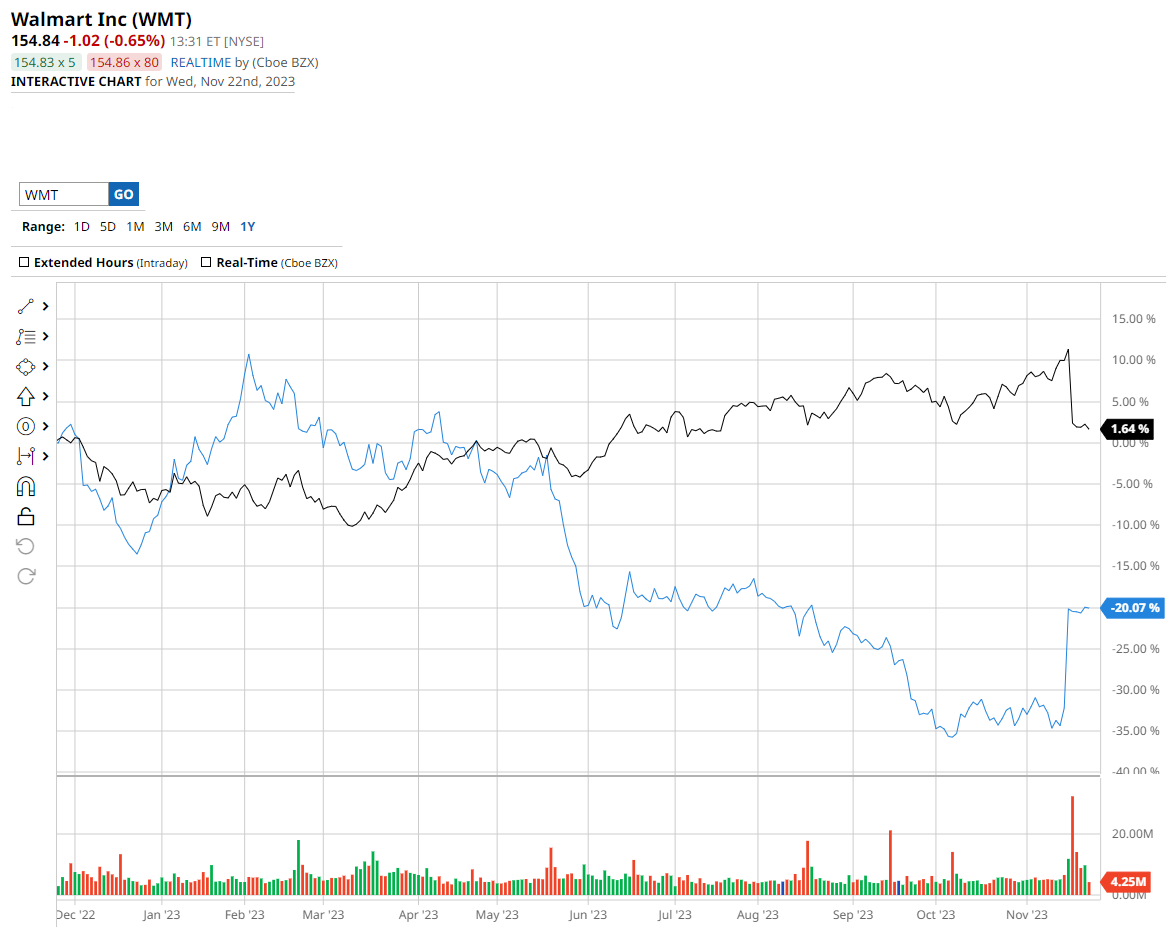
Target shares (blue) have greatly underperformed Walmart (black), but that gap partially closed in recent days following their respective third-quarter earnings reports. (Chart: Barchart.com Inc.)

There has been plenty of mixed data on the health of the consumer, suggesting that consumers are on either solid or poor footing, depending on which track a particular set of consumers are on. For example, overall spending levels are still strong, but auto delinquencies are up and credit card balances are hitting record highs. Last week, Walmart and Target reported their fiscal third-quarter earnings, and there were several cautious comments regarding consumer spending. Walmart experienced unexpected sales weakness in the back half of October, and management said it had become more cautious on consumer spending than it had been 90 days earlier. However, November sales have appeared more normal to the largest retailer, and it believes unusual weather patterns may have played a role in the tepid October. Apparently, the only thing that stops Americans from buying is cold or inclement weather.

Meanwhile, in Target’s earnings last week, it also highlighted continued sales weakness, although I have a hard time separating what Target’s results say about the state of the consumer versus the heavy overlap between Target’s and Amazon’s customer base. Target highlighted overall same-store sales are still tracking down mid-single digits. In the discretionary categories, it has now seen seven consecutive quarters of declines in both units and sales. Comparable sales in the discretionary categories have deteriorated from year-over-year declines in the high-single digits to the low-double digits. Overall, consumer caution may be related to a loosening in the labor markets — last week Walmart said it was overstaffed and Home Depot said it is no longer having issues with attrition.

For more detail, see Monday’s The Stockout show here.

Big-box retailers report disinflation in some categories, deflation in others


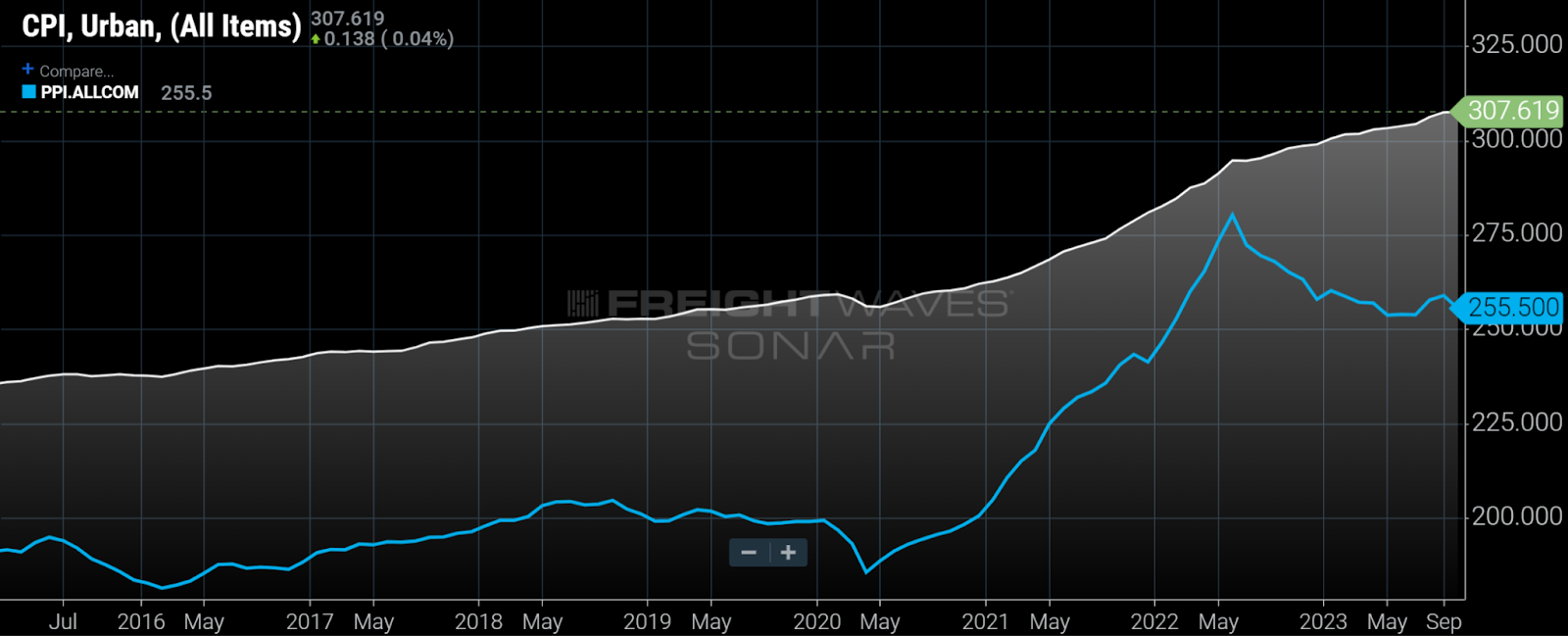
(SONAR: CPI.ALL, PPI.ALLCOM)

Aside from cautionary comments on consumer spending, and evidence of loosening labor markets, highlighted in the section above, the other major takeaways from retail earnings last week were related to more widespread disinflation or deflation, depending on category.

Walmart has seen the price level of the goods it is buying from suppliers come down broadly, with particular deflation in fresh foods as well as the broad, and typically discretionary, general merchandise category, which is showing mid-single-digit deflation. The prices of fresh and unprocessed foods are largely a pass-through of underlying commodities. Meanwhile, price levels for dry grocery and consumable items, which includes packaged food and most CPG items, have been slower to deflate. CPG companies attribute that to rising costs outside of underlying ingredients, such as for packaging and manufacturing. Walmart’s comments last week suggest that CPG price levels can only defy gravity for so long — the largest retailer expects prices in the dry and consumable categories to deflate in the coming weeks and months. That comment suggests that the retailer has already adjusted prices with many CPG suppliers for upcoming contractual periods.

Rail intermodal is a growth area again

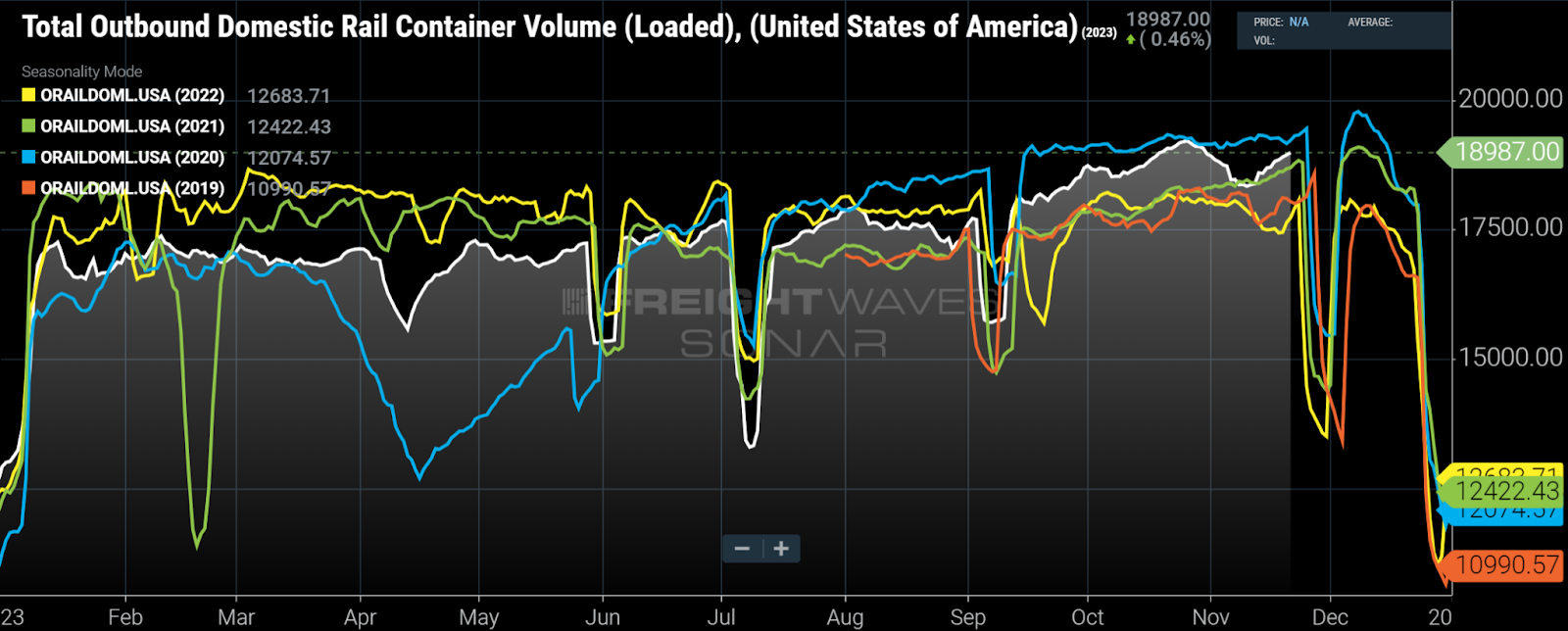
The latest domestic intermodal volume data contained in SONAR, illustrated below via the ORAILDOML.USA ticker which limits the data to loaded 53-foot containers, suggests that not only was there a mini-peak in mid-to-late October, but volume also continues to track nicely above 2020 and 2021 levels in November. 

Specifically, quarter-to-date loaded domestic volume is up 4.5%, year over year, including November volume that is up a similar 4.7% y/y. I attribute that to several factors, including: 

  • A pickup in overall freight volume, which can also be seen in other modes, as inventories have largely been right-sized.
  • Improvements in rail service levels relative to the past two years.
  • Aggressive pricing by the domestic intermodal carriers, particularly the asset-based ones, to keep their owned containers utilized.
  • Domestic intermodal carriers encouraging shippers that have not used intermodal in the past to do so. 

Barring a meltdown in either freight demand or rail service (possible this time of year if there were to be, for instance, a polar vortex in Chicago), I expect domestic intermodal volume to continue to show y/y growth through at least the first half of next year.

To subscribe to The Stockout, FreightWaves’ CPG and retail newsletter, click here.