Twin Express equipment going on auction block after $19M loan default
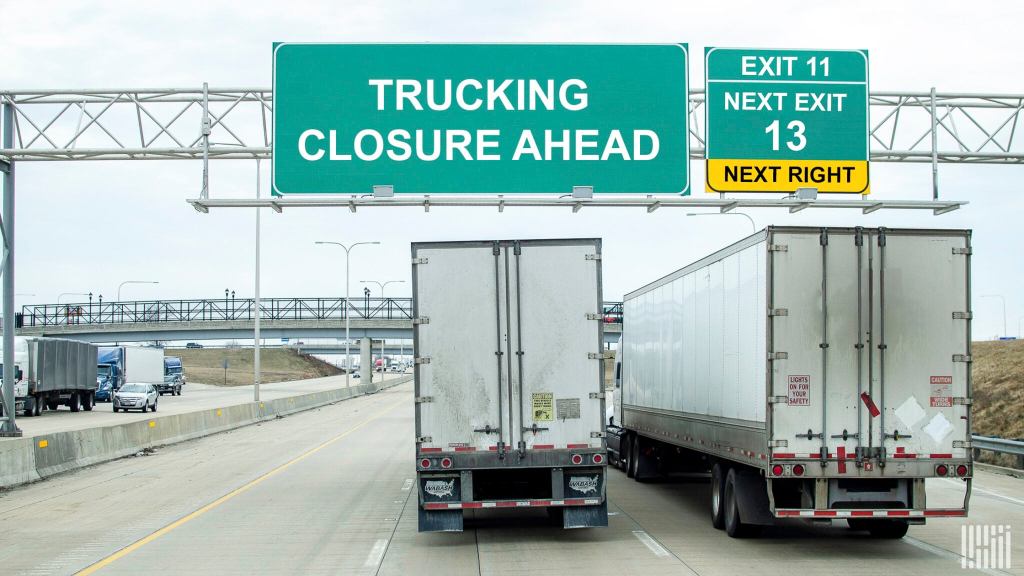
An online auction is slated for Tuesday to sell the assets of Minnesota-based Twin Express Inc., which had a reported 72 power units and 73 drivers, after the trucking company defaulted on a $19 million loan.
The move comes nearly three months after Judge Jamie L. Anderson in Hennepin County District Court in Minnesota granted Twin Express’ lender, Chicago-based CIBC Bank USA’s motion to name Novo Advisors, also headquartered in Chicago, as the receiver.
Anderson granted CIBC’s request for receivership in August after the 35-year-old general freight and refrigerated trucking company defaulted on its loan of nearly $19 million after recently purchasing around 26 new 2023 Kenworth tractors.
According to court filings, Dan K. Eberhart, managing director of Eberhart Capital LLC, a private investment firm headquartered in Scottsdale, Arizona, acquired Twin Express in October 2012. He is also the CEO of Canary LLC.
The Federal Motor Carrier Safety Administration’s SAFER website states that Twin Express’ contract and common carrier authorities were voluntarily revoked on Oct. 19. At the time of its closure, Twin Express listed 72 power units and 73 drivers, the FMCSA database states.
Over the past 24 months, Twin Express’ trucks had been inspected 77 times, and 28 had been placed out of service for a 36.4% out-of-service rate. That is much higher than the industry’s national average of around 23%, according to FMCSA data.
The company’s drivers had been inspected 181 times and three were placed out of service, resulting in a 1.7% out-of-service rate. The national average for drivers is about 6.7%.
The firm’s trucks have been involved in two injury crashes and six towaways over the past 24 months.
The court-ordered liquidation auction is being handled by Jeff Martin Auctioneers Inc. of Glencoe, Minnesota.
The online auction of more than 206 pieces of equipment owned by Twin Express includes 26 Kenworth 2023 T680 semi trucks and another 37 Kenworth trucks from 2020-2022.
As of publication, Eberhart had not responded to FreightWaves’ request seeking comment.
Do you have a news tip or story to share? Send me an email or message me @cage_writer on X, formerly known as Twitter. Your name will not be used without your permission.
EFW closes acquisition of Superior Brokerage Services
Estes Forwarding Worldwide (EFW) said Monday it had completed the acquisition of Superior Brokerage Services (SBS). The transaction was announced in September.
Financial terms were not provided but the deal doubles EFW’s annual revenue and its existing warehouse footprint.
Minneapolis-based SBS is a single-sourced supply chain services company specializing in domestic and international transportation, customs brokerage and warehousing.
The deal provides EFW with incremental capacity and control of the shipping process from Asian points of origin. SBS’ Asian operations are based in Taiwan.
“Working together to combine forces has been seamless and the cultural fit between our companies is evident,” said EFW CEO Scott Fisher. “Together, we are poised to offer even more agile services to our customers globally.”
The deal grows EFW’s head count by 350 to more than 1,100.
Paul Goff, the founder and president of SBS, is now serving as executive vice president at EFW.
“Joining the EFW family has been a significant milestone for us. Our combined strengths position us to serve our global customers even more effectively,” Goff said.
Richmond, Virginia-based EFW is a subsidiary of Estes, one of the largest less-than-truckload carriers and the largest private carrier in North America. EFW specializes in a full suite of logistics and freight forwarding services.
“As we reflect on our 20-year journey, nearing the $1 billion mark is a testament to our team’s dedication,” Fisher said. “Our collaboration with SBS is a significant milestone in our global expansion.”
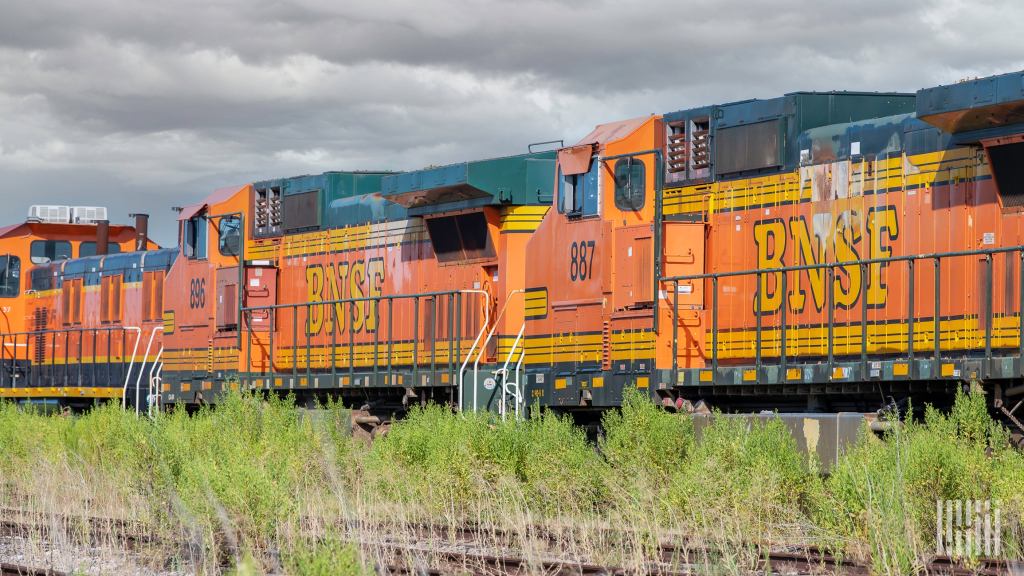
Declining grain exports and competition from lower spot rates in the trucking market were among the factors that led BNSF to post a 15% decline in net profits for the third quarter of 2023.
The Western U.S. Class I railroad, which is owned by Berkshire Hathaway (NYSE: BRK-B), reported net income of $1.22 billion for the third quarter of 2023, compared with $1.44 billion for the third quarter of 2022.
Freight revenues slipped 12% year over year (y/y) to $5.59 billion amid lower volumes, while average revenue per car/unit fell 7% on decreased rates and lower fuel surcharges but was offset by positive business mix, BNSF said. Overall operating revenues totaled $5.85 billion, down 13% from the third quarter of 2022.
Volumes for BNSF’s consumer products segment slipped 7% y/y amid lower West Coast imports, the loss of an intermodal customer and competition from lower spot rates in the trucking market, which impacted domestic intermodal demand, BNSF said in a news release issued over the weekend. But higher automotive volumes amid an increase in vehicle production partially offset the volume decline for consumer products.
Agricultural products volumes also fell, declining 3% y/y on lower grain exports. But increased grain consumption for domestic use helped offset the decline in export volumes.
Lower natural gas prices and weather-related impacts contributed to a 6% decline in coal volumes y/y.
But not all of BNSF’s segments posted volume losses. Industrial products volumes grew 1% on increased demand for construction products from infrastructure demand, partially offset by lower demand for plastics, chemicals and sand, BNSF said.
Meanwhile, BNSF’s operating income was $1.8 billion, down 14% y/y, while the operating ratio was 68.4%, compared with 67.7% for the third quarter of 2022. Investors sometimes use OR to gauge the financial health of a company, with a lower OR implying improved health.
Expenses were $4.04 billion for the third quarter, down 12% from nearly $4.59 billion a year ago and driven largely by a 32% decline in fuel expenses.
With brokerages closing and some filing for Chapter 11 protection, a major factoring company has published a white paper on how the bankruptcy process might leave carriers unpaid for services they already provided.
OTR Solutions’ paper, “Securing the Integrity of the Supply Chain: Safeguarding Carrier Payments Amidst Freight Broker Payments,” was released on Monday. Core to its message is the concern that some funds forwarded to brokers for later payment to carriers might get caught up in bankruptcy proceedings, with ultimate compensation tied up for months or disappearing altogether.
The paper says the freight industry has always operated on a “long-standing precedent, which has consistently guaranteed compensation to the end carriers for their services whether from the freight broker or the ultimate shipper of the freight.”
One widely known Chapter 11 filing by a significant brokerage is making its way through the court system: Surge Transportation, which filed for protection in July. Surge is not mentioned in the white paper, and it is possible that other bankruptcies caught OTR Solutions’ eye.
“Allowing brokers to complete a Chapter 11 restructuring by their payment obligations to carriers, while simultaneously removing the carriers’ right to collect from the shipper and attempting to justify the use of those carriers’ funds to ‘reorganize’ violates the bedrock rule” of the carriers always getting paid. “Even more worrisome, it threatens to disrupt the integrity of the supply chain if it becomes common practice.”
At its root, factoring is designed to get money into the hands of a carrier quickly, but for a fee that bankers and finance people colloquially refer to as a “haircut.”
Financing for freight brokers is structurally different than most other commercial finance arrangements, and that is the problem that OTR Solutions attempts to highlight. It identifies two specific types of financing vehicles, differentiated by whether funds are paid directly to the carrier that was booked by the 3PL or whether the lender advances money through the hands of the broker rather than directly to the carrier: supply chain finance (SCF) and asset-based lending (ABL), respectively.
OTR Solutions sees no issue with SCF. It is an effective solution to ensure carriers are paid timely, when there is an inconsistency between payment terms in the value chain, such as between broker and carrier and broker and shipper. While the funds can theoretically flow through a solvent broker without issue–bankruptcy of a broker is the key area of concern in the white paper–the more reliable scenario which protects all parties in the transaction, according to the white paper, is when “funds deployed are provided to the supplier, and in the world of freight brokerage, the suppliers are most often trucking companies.”
The other, more worrisome system identified by OTR Solutions is ABL.
In ABL, according to the white paper, financing is extended from a lender to brokers on the basis of “carrier payables.” ABL sees the funds that carriers will ultimately get paid by their shipper — the payables — as an asset that can be used as collateral. OTR Solutions says that the funds being extended by the lender are not assets as such. They are short-term liabilities for the broker because the 3PL still needs to pay the carrier.
“When carrier payables are advanced to the freight broker instead of to the carriers directly, it alters the SCF structure and creates an opportunity for mismanagement of carrier funds,” the paper explains. When that occurs, if the broker does not properly handle those funds and instead views it as a method of financing its larger business, there is a big risk for the carriers when it’s time for them to get paid.
“The broker must ensure that they are planning appropriately and reserving sufficient liquidity to pay their carriers when the time comes, because they’ve already pulled forward that cash flow previously,” OTR Solutions says. “The broker is borrowing against the carrier’s money today, with that invoice coming due at a later date.” That time period generally is 30 days, according to the white paper.
When freight markets are strong, ABL lending poses little risk, according to OTR Solutions. It’s when the market turns sour — like now — that problems can arise.
ABL has been growing in brokerage and factoring the past few years, OTR Solutions says. “When a freight broker is making money on every transaction, they accrue equity and can maintain positive cash flow, ensuring there is sufficient liquidity to pay their carriers, even while borrowing against those carriers’ funds,” the white paper says.
But in the current market, “the supplier funds being advanced to freight brokers have a very high likelihood of being improperly allocated toward covering those operating costs.” And given that costs in the current market often are not being covered by the transaction, it is possible that “there is no longer sufficient liquidity to pay motor carriers for the work they have completed.”
The issue could come to a head in a bankruptcy. The paper says there have been significant brokerage Chapter 11 filings, though it does not name them.
Ensuring that the funds advanced to the Chapter 11-hobbled brokerage ultimately make it into the wallets of the carriers they were intended for is at risk. “Legal maneuvers have been deployed aggressively in the bankruptcy proceedings, specifically aimed at impeding carriers from recovering payments for delivered freight from shipper customers of the now-bankrupt broker,” according to OTR Solutions.
The scenario could result in the finance company going through the bankruptcy court to claw back what it lent to the broker, “even though the carrier has not been paid.”
The white paper is stark in describing the current situation: It “poses a grave threat to our industry.” Carriers, especially smaller ones, “[rely] on the broker to absorb credit risk and provide timely payments so they can focus on successfully transporting freight.”
“In recent years, brokers have overleveraged themselves and utilized funds intended for carrier payments to support their growth,” the paper says. There have been losses already as a result of this, and without a reversal in fortune, there will be more, “jeopardizing the stability of many industry participants’ supply chains.”
The remedy recommended by OTR Solutions is for bankruptcy courts to understand that carriers in an action are not just creditors of a brokerage that has filed for Chapter 11. They are vital for that company to emerge from bankruptcy, because if carriers refuse to work with a particular broker because of payment issues, there’s no way the 3PL can climb out of its hole and be reborn as a going concern.
And the courts have that power, according to the paper. It cites a precedent from 1990 involving Eastern Airlines and its Ionosphere travelers clubs that allows a bankruptcy court to authorize payment of “pre-petition” debt if such a payment is needed “to facilitate the rehabilitation of the debtor.”
The OTR Solutions argument is that the debtor, which is the 3PL, can never be “rehabilitated” unless the carriers want to do business with them. And if the carriers aren’t getting paid for previous work because the lenders are trying to reclaim monies they financed to the 3PL, the brokerage will never be able to recover.
In an email to FreightWaves, Clayton Griffin, OTR executive vice president and chief strategy officer, said of the audience for the white paper that OTR Solutions is focusing on “making more industry participants aware of these topics, which will hopefully lead to productive conversation and action to address and remedy the concerns before they snowball into something bigger.”
“We as an industry need to have transparency into how these issues will be settled, so we can make appropriate decisions in our businesses, and visibility into the fact that these problems even exist will help us get to that place of transparency more quickly,” he said.
Daily Infographic: Manufacturers announce investments of over $500 million in more than 40 American-made electric charger plants
To view more FreightWaves infographics, click here
F3: Future of Freight Festival is coming to Chattanooga in November
This week, FreightWaves will host its biggest event yet, F3: Future of Freight Festival, packed with world-renowned speakers, educational sessions, award-winning musicians and much more.
This three-day event will take place Nov. 7-9 in Chattanooga, Tennessee — the heart of Freight Alley and home to FreightWaves.
Here’s some of what you’ll experience at this can’t-miss festival:
Unforgettable keynotes and speakers
We have gathered some of the greatest thought leaders in the world and within the freight industry to share insights about factors influencing the market, predict future trends and showcase emerging technology.
Over three days, attendees will hear from more than 70 freight industry experts, including Brad Jacobs, executive chairman of XPO, who is the featured keynote speaker. He will take to the main stage on Nov. 8.
Other keynotes include:
Alex Epstein, founder and president of the Center for Industrial Progress and author of “Fossil Future: Why Global Human Flourishing Requires More Oil, Coal, and Natural Gas – Not Less,” will discuss what it will take to ensure that living standards improve throughout the world.
Chris Voss is a former international FBI hostage negotiator and The Wall Street Journal bestselling author of “Never Split the Difference: Negotiating As If Your Life Depended On It.” He will share his methodology to build stronger relationships in a shorter period of time, enabling deal negotiations that never seemed possible. Voss applies his years of experience as former lead international kidnapping negotiator for the FBI, his expertise as a hostage negotiation representative for the National Security Council’s Hostage Working Group and his training with Scotland Yard and Harvard Law School to provide proven techniques used successfully in the business world.
Leland Miller, China Beige Book CEO, will provide market-leading insights derived directly from the organization’s nationwide proprietary data on the Chinese economy to help decision-makers stay ahead of critical market-moving trends in the world’s second-largest economy. Miller’s in-depth knowledge of the ongoing impact of geopolitical tensions on global supply chains will provide an interesting conversation and valuable, data-backed insights.
Michio Kaku, a theoretical physicist, professor and futurist with five New York Times bestsellers, including his latest, “The God Equation: The Quest for the Theory of Everything,” is one of the most influential physicists in the world.
Just like every FreightWaves event, we want you to have fun while you network and make new friends.
Here’s our music lineup this year:
David Nail is a Grammy-nominated, multi-platinum singer/songwriter who is known as an innovator and creative risk-taker.
Kenny Wayne Shepherd Band has sold millions of albums while throwing singles into the Top 10, shining a light on the rich blues of the past and forging ahead with a modern twist on a classic sound that has been featured on “The Tonight Show,” “The Late Show,” “Late Night,” in Rolling Stone, USA Today and more.
T.I., labeled “Jay-Z from the South” by Pharrell Williams, has more than 35 million followers on social media, three Grammy awards and five Top 10 hits.
Electric Avenue brings the ’80s to life through its musical performances, working with a variety of top-name musicians ranging from Kid Rock to Pat Benatar to Lionel Richie and many more.
DJ Mindubhas 32 years of extensive club, tour and private event experience for some of the nation’s top brands, along with opening for Carrie Underwood and Hunter Hayes.
The 7-minute showdown
FreightTech startups and incumbents will battle the clock in an effort to win the coveted Best in Show award.
These rapid-fire demos will showcase the latest industry advancements and technology by ensuring the most important details are covered as participants work against the clock.
How does it work? Presenters will have seven minutes to introduce the audience to their companies and products. Once the time is up, the lights go out and the audio is cut — no exceptions.
If your company would like to demo, there’s still time to sign up. Register here.
FedEx tells pilots to switch to American Airlines feeder operator
FedEx Express is encouraging pilots at its cargo airline to take jobs at a regional passenger carrier because there isn’t enough shipping demand to fill everyone’s flying schedules. It’s the latest step over the past 12 months to align FedEx’s air network with a sharp decline in package volumes and improve efficiency as the parcel sector settles to a lower post-pandemic baseline that could last years.
Pat DiMento, FedEx’s vice president of flight operations and training, said in a Friday memo to flight crews that the airline is “significantly overstaffed” and can’t guarantee pilots more than the minimum number of hours set in their contracts.
He urged pilots to consider taking a job with American Airlines (NASDAQ: AAL) subsidiary PSA Airlines, which is offering FedEx pilots an expedited interview process for a captain position, a $250,000 signing bonus, and a direct path to flying for American. Mainline U.S. passenger airlines have successfully replenished cockpit crews after the COVID crisis at the expense of feeder airlines, many of which have curtailed operations because of the shortfall in qualified pilots.
“While I understand this is not something that will appeal to every pilot, for those of you who are frustrated with current flight hours, career progression, or have just been on on the fence about available options, you may consider this unique opportunity enough of an incentive to make a move,” DiMento wrote. He said American Airlines has enjoyed good relations with FedEx for several years and understands the quality of FedEx pilots.
The memo was published on X, formerly known as Twitter, by aviation blogger JonNYC.
AA: "Not sure if you saw that, FedEx saying demand is down. AA will hire FedEx pilots onto PSA as Capt and flow to AA."
FedEx (NYSE: FDX) has about 5,800 pilots on its payroll. DiMento told Express crew members in July that the company has a surplus of about 700 pilots, according to reporting by the Wall Street Journal and confirmed by FreightWaves. The number of excess pilots is likely more than that now given the continued deterioration in the parcel and freight markets.
Pilots who sign on with PSA will fly Bombardier CRJ700 and CRJ900 aircraft with about 65-70 seats, and earn a starting wage of $150-$217 per hour, depending on seniority, according to the PSA recruiting page. PSA’s website says pilots can move up to American Airlines in five years. It’s not clear if FedEx pilots will be on an expedited track.
A FedEx pilot, speaking on condition of anonymity, called DiMento’s letter “incredibly insulting” to veteran crew members who can go straight to a large airline.
“For those of us who have been with the company before COVID, we are shocked at the level of mismanagement we see and management’s disdain for their pilots. Pat DiMento’s letter suggesting that pilots at the-once pinnacle of airline pilot jobs go to a regional airline for five years speaks volumes to their tone deafness about the situation they created. Someone flying for FedEx could go to a legacy flying job — Delta, United, American — and have a much higher quality of life and pay and benefits,” he said in an email exchange.
The source said pilots are making less money because flying hours have been drastically reduced in the face of lower volumes, with available flying slots spread thin among the pilot group. His regular pay has been cut back by 30% this year and pilots no longer can secure trips that pay a premium for working on a scheduled day off. The captain said he knows colleagues who have left for other airlines.
Under the existing contract, FedEx pilots are paid between $81 and $336 an hour based on factors such as the type of plane they fly and their seniority. Pilots typically have a minimum guaranteed 68 hours of work a month. A junior first officer will earn nearly $102,000 per year while a senior captain collects more than $363,000 in pay and benefits per year flying an average number of hours.
A captain who works 40 years at FedEx can expect to make slightly more than $20 million in pay, benefits and retirement over his or her career compared to the industry average of about $18.8 million, according to analysis by aviation analyst Kit Darby. But the total compensation now lags Alaska Airlines, Hawaiian Airlines, Delta Air LInes, American Airlines, United Airlines and UPS, where a pilot can make $24 million. The career value at FedEx for 30 years of service is better than Alaska, Delta and Hawaiian, but still behind the others.
Freight correction
The FedEx memo underscores how financially difficult the market has become for freighter operators in the past 18 months, with volumes and rates hovering at or below 2019 levels. Global air cargo volumes are down more than 8% since the first quarter of 2022 and rates were 40% to 50% lower for most of the year versus 2022 — a function of weak manufacturing, a slow drawdown of excess inventories, retailers’ reluctance to restock because of uncertainty about consumer behavior and macroeconomic crosswinds.
The squeeze is especially acute for many smaller all-cargo operators that don’t have the massive customer base, diversified business lines and strong balance sheet of a FedEx or UPS. Many small and mid-tier cargo airlines are coping with attrition as pilots switch to major passenger airlines.
FedEx management is prioritizing stringent cost controls across the company, with a goal of eliminating $4 billion in structural costs by June 2025, including $700 million in annual savings from flight operations. The cost initiative includes accelerating the retirement of aging MD11 freighters, reducing main deck cargo capacity flown by its purple tail fleet and outsourcing more activity to third parties, increasing point-to-point flying, downgauging aircraft size on certain routes and diverting more volume to the ground network. FedEx plans to phase out another 29 aircraft in the fiscal year ending May 31.
The combined moves are intended to give FedEx more operational flexibility and allow it to densify its hub-and-spoke system.
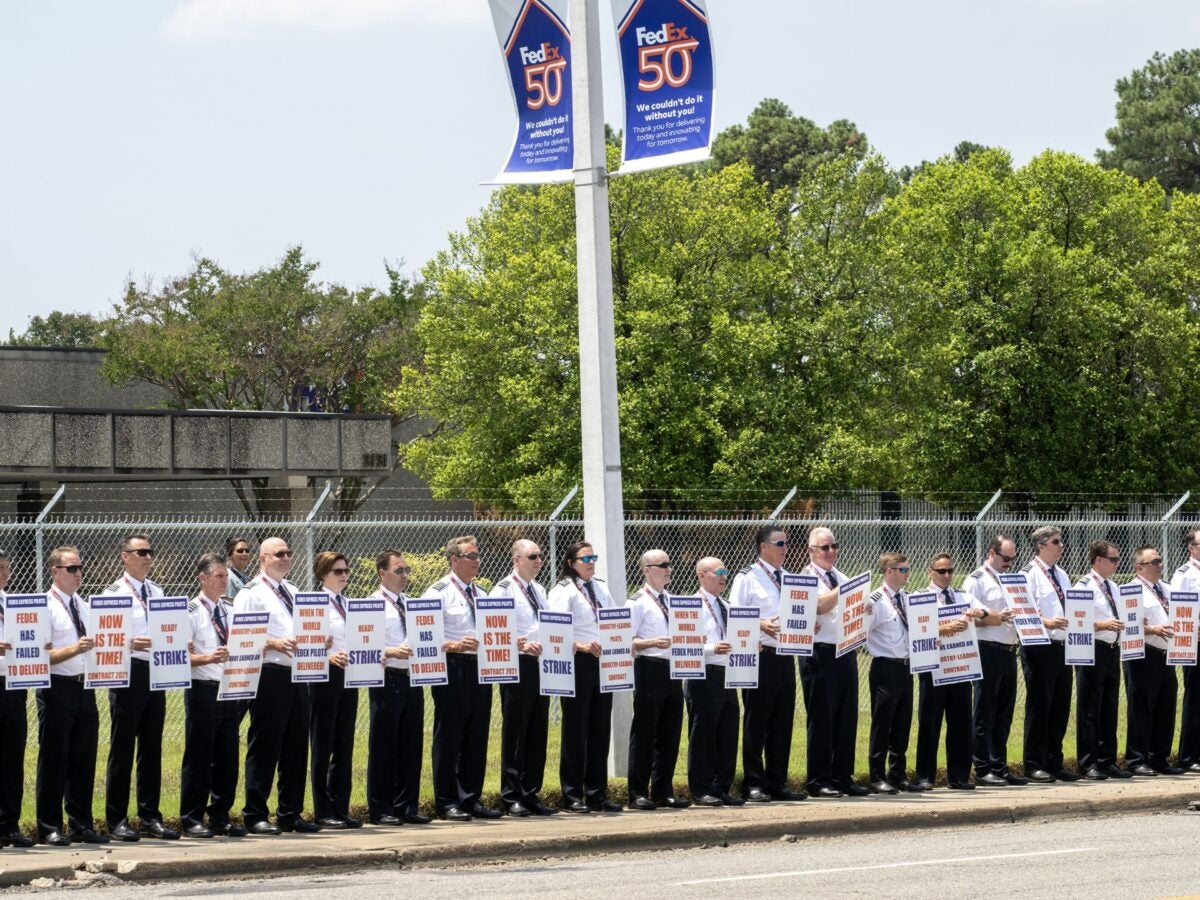
FedEx pilots picket earlier this year outside a company office in Memphis, Tennessee. (Photo: Air Line Pilots Association)
FedEx’s mainline jet fleet grew from 385 in 2018 to 417 in 2022 and now stands at 413, according to the latest company statistics. The airline continues to receive new 767 and 777 widebody freighters under a long-standing order with Boeing.
The pilot source blamed FedEx for taking on too many contracts during the pandemic boom and rapidly expanding infrastructure when it couldn’t maintain high service levels, a situation previously echoed by equity analysts.
FedEx and UPS domestic flight utilization underperformed against seasonal comparisons for September, according to research by Morgan Stanley transportation analyst Ravi Shanker. FedEx’s flight count tumbled 9% month over month vs. minus 7% on average and is down 11% year over year. UPS domestic flight activity fell 12%, double the normal September dip from August, and remains down 19% against 2022.
“A slowing economy, large customer contract negotiations and slowing pilot retirements with an already overmanned crew force have forced me to accept the fact that I might be seeing more folks that I once personally called to offer a position at FedEx accept offers elsewhere,” DiMento said in the memo. “I have no doubt that FedEx will continue to navigate the turbulent market conditions that are inherent in this business and will remain a great place to work for pilots and others in the long term.”
Contract talks restart
FedEx pilots in July rejected a tentative agreement on a new contract that would have increased pay by 30% over five years. Many pilots complained the deal offered weaker job protections, insufficient back pay, bad alternative pension options and pay increases below those recently achieved by pilots at American, Delta, Hawaiian and United airlines.
FedEx, for its part, has said the agreement addressed some quality-of-life issues and offered protections, including making it harder for the company to furlough pilots.
In late October, the FedEx Master Executive Council of the Air Line Pilots Association (ALPA) elected Capt. Billy Wilson as chairman through March 2025. He replaces Chris Norman, who stepped down after failing to push through the new labor agreement.
Norman, in a Sept. 14 letter to members, alluded to the poor state of relations between pilots and management.
“FedEx pilots do not trust FedEx when it comes to their job security due to a combination of factors, particularly management’s public statements concerning greater reliance on third-party lift. This concern will need to be addressed by developing new contractual language, the negotiation of which may be highly contentious. Beyond that, the FedEx pilots are very concerned about management’s attempt to drift away from providing a compensation and quality-of-life package that is competitive with those contracts reached this year at other major U.S. carriers,” he said.
“Instead of publishing PSA’s offer to entice pilots to end their FedEx career, why not make offers at the bargaining table that respect what FedEx pilots have done for the company? If management is comfortable with pilots leaving, they should instruct their bargainers to make proposals to entice pilots who are otherwise waiting to retire. UPS, a fully unionized company, made the smart business decision to offer buyouts of their most expensive pilots to help with possible overmanning issues,” he said.
ALPA and FedEx are scheduled to hold an initial bargaining session Nov. 6-7 in Memphis, Tennessee, under the auspices of the National Mediation Board, said union spokeswoman Courtney Bland.
Upon taking over as head of the governing body for FedEx’s unionized pilots, Wilson said a statement, “Our compensation should be commensurate with our peers while including excellent quality of life with our work rules and a retirement that will provide for pilots in the future. During COVID, FedEx pilots stood tall delivering for the company and the world while many of our pilots suffered in inhumane and substandard living conditions including lockdowns and exposure to unknown chemicals. We paid a heavy price for this while the company made historic profits.
“I am committed to bringing all of our pilots together as we reestablish negotiations capitalizing on our diverse views, which only make us stronger, as we move toward a contract we have earned.”
Scott Struminger, CEO of Aviation at FedEx, said in September at a freighter forum for aircraft buyers and sellers in Seattle, that FedEx offers better work conditions than commercial passenger airlines because they typically fly to a destination, rest for a few hours, and return instead of making multiple stops throughout the day.
The FedEx pilot who did not want to be identified said colleagues who were hired during the COVID boom feel misled about job perks and never needing to look for another job.
“They realize the hype surrounding this job wasn’t true and the quality of life and pay are not what they were sold. And because the process of switching airline jobs and dealing with the loss of seniority at the next airline is so onerous, many feel trapped and that they made a mistake coming to FedEx. I believe there’s a lot of regret, but many are keeping it to themselves because they don’t want to admit they made a career mistake,” he told FreightWaves.
As everyone in and associated with the trucking industry knows, most of the last two years have been very difficult ones for the industry.
Trucking companies large and small have gone out of business. There are too many trucks chasing too little freight. Rates on most lanes are at or below 2019 levels — another bad year for the industry.
Citizens Bank was a small state-chartered bank. Its loan portfolio was focused on “commercial and industrial loans,” according to Bank Reg Blog.
The blog reported on Nov. 3 that the Federal Deposit Insurance Corporation (FDIC) “announced that Citizens Bank, a $66 million asset nonmember bank … had failed.”
Supervised by the FDIC and the Iowa Department of Insurance and Financial Services, all of the deposits of Citizens Bank were assumed by Iowa Trust & Savings Bank, the blog reported.
Citizens Bank was a state-chartered bank that was closed by the Iowa Division of Banking on Nov. 3 and the FDIC was then appointed receiver. At the time of Citizens Bank’s closure, the FDIC estimated that the bank had losses of $14.8 million due to the bad loans.
To protect depositors, the FDIC entered into a purchase and assumption agreement with Iowa Trust & Savings Bank of Emmetsburg, Iowa. Iowa Trust & Savings assumed all the deposits and substantially all the assets of Citizens Bank, but not the bad loans.
Bad trucking industry loans?
The superintendent of the Iowa Division of Banking (IDOB), which is part of the department, also issued a statement, according to the blog, saying that in the course of a joint FDIC/IDOB examination, “examiners identified significant loan losses that had not previously been identified by the bank.”
In addition, the superintendent’s statement included information that Citizens Bank’s loan portfolio was concentrated in “out-of-territory and out-of-state loans to one industry.” The blog noted that “some of those loans had incurred heavy losses.” In the statement, the industry in question was not identified.
However, prior to the failure of Citizens Bank, the FDIC and IDOB entered into a consent order with it in August, the blog reported.
As part of the consent order, according to Bank Reg Blog, Citizens Bank was required to engage an “independent third-party loan consultant” with “requisite knowledge, skills, ability and workout experience.”
Additionally, the consent order focused on one loan portfolio, the blog reported. The consultant had “full authority and discretion to administer and service the Bank’s commercial trucking loan portfolio.”
Sac City’s population is just over 2,000 people; the population of Iowa is only about 3.2 million people. Citizen Bank’s assets were only $66 million.
Prices for new Class 8 trucks in 2023 vary by brand, as well as by the number and type of features and equipment. However, they are expensive; prices range between $150,000 for basic models to over $220,000 for models with custom features.
How or why a small state-chartered bank in the very small town of Sac City, Iowa, was making loans on expensive trucks is unknown, but doing so seems highly speculative.
Class 8 catch-up largely over as replacement iron drives orders
Pent-up demand for new Class 8 trucks in a slowing freight market has rebalanced equipment orders to replacement purchases.
This is not an altogether bad thing as manufacturers look to a slower quarter with more holidays.
“The Class 8 backlog should rise by around 3,400 units when full October data are released in mid-November,” Kenny Vieth, ACT Research president and senior analyst, said. “If those numbers hold, Class 8 backlogs will have ended October at around 165,000 units.”
That’s a healthy number of orders awaiting fulfillment. Some parts shortages in the supply chain continue to vex OEMs. But the whack-a-mole supply chain disruptions of a year ago have largely disappeared.
Class 8 ‘steadiness of supply has been improving’
“The steadiness of supply has been improving. But we certainly had some impacts from that,” Preston Feight, Paccar Inc. CEO, said on the company’s third-quarter earnings call on Oct. 24.
Preliminary net orders were 31,900 units in October compared to 36,900 units in September, the traditional opening of order books for the next year. Adjusted for seasonal factors, the count was 25,800, still the third-best number in the past 12 months, ACT reported.
“The overall picture for truck demand is steady,” said Eric Starks, chairman of FTR Transportation Intelligence. “Despite freight weakness, fleets continue to be willing to order new equipment, affirming our expectations of replacement demand during 2024.”
FTR pegged preliminary October orders at 28,000 units, down 10% from September, reflecting freight transportation weakness. Class 8 orders totaled 255,000 units over the past 12 months.
Class 8 pockets of strength
Less-than-truckload and vocational orders remain pockets of strength against slowing orders for over-the-road tractors, Feight said.
“The first quarter looks pretty good,” he said. “While there may be some moderation in truckload, people are trying to figure out how to think about the next three years.”
Fleets purchasing trucks with current emissions technology, a so-called pre-buy, is expected ahead of stricter regulations on nitrogen oxides (NOx) in 2027. Estimates on how large the pre-buy will be or when it will impact orders vary.
Elevated Class 8 tractor orders in 2022
The catch-up elevated long-haul tractor purchases to 52% of the market in 2022, Jonathan Randall, president of Mack Trucks North America, said Oct. 16 at the American Trucking Associations’ annual Management Conference and Exhibition.
“That market usually hovers in the 50% [range]; it is the engine that powers the train of the North American commercial truck market,” he said. “A couple of years ago, that number was 48%. When we had the real trial, that number was about 42% long-haul registrations. We’re not going to go down to 42% long haul. But you should probably see a little bit of a pullback.”
Without the large backlog cushion of the past two years, seasonal orders take on greater importance, Vieth said.
Mack strike impact unclear
A United Auto Workers strike at Mack Trucks enters its fourth week Monday with contract talks scheduled to resume Tuesday. It is unclear how much production Mack has lost. Sibling Volvo canceled two shifts last Monday because a Hagerstown, Maryland, engine plant that serves both OEMs is involved in the strike.
For Mack, catching up on strike-impacted units might be a greater priority than building on-highway trucks. It mostly services the off-highway vocation and refuse markets.