




WASHINGTON — House lawmakers have introduced bipartisan legislation to ease regulatory restrictions on haulers of dry goods such as flour and grain.
Reps. Rick Crawford, R-Ark., and Salud Carbajal, D-Calif., introduced this week the Variance Act, a bill that allows for a 10 percent shift in weight variance along the axles of trucks carrying dry-bulk cargo without an increase in the overall federal gross vehicle weight (GVW) limit.
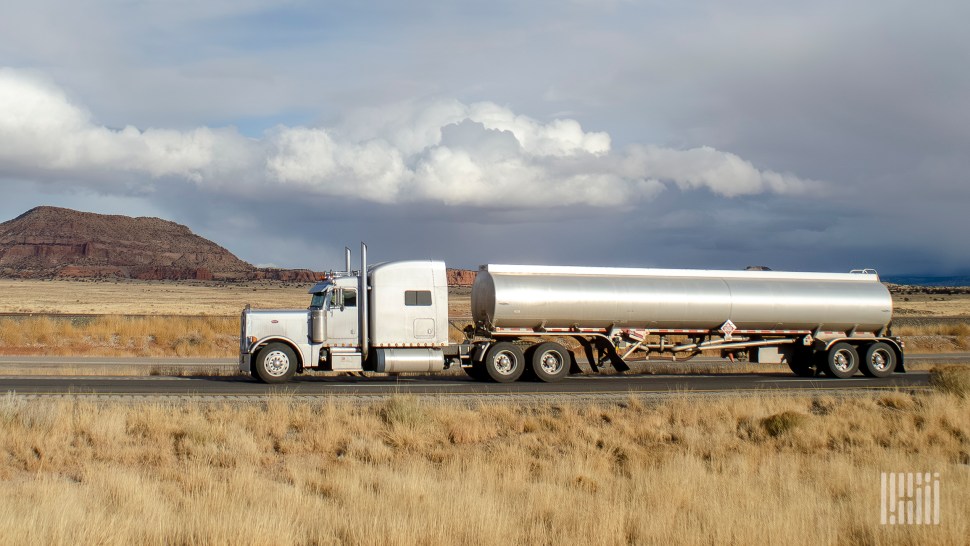
The bill primarily affects tank truck carriers, which the bills’ sponsors point out makes up only 3 percent of the trucking industry, and only 2 percent of those haul dry bulk commodities.
“These dry goods will inevitably shift in the transport process and current law must account for the unique characteristics of the goods being transported,” said Crawford.
“This legislation is a commonsense solution for truckers transporting dry bulk by giving more flexibility.”
In praising the bill, National Tank Truck Carriers President Ryan Streblow said the measure “has been an important legislative priority” for his association.
When trucks report at weigh stations, federal regulations require that the weight be evenly distributed among trucks’ axles. While federal law limits the maximum laden weight of commercial trucks to 80,000, most trailers transporting dry bulk goods are tandem axle, limiting the weight for each axle to 34,000 pounds, the bill’s sponsors explain.
“The force generated when braking compacts the cargo at the front end of the trailer but the relatively weaker forces from acceleration and forward movement fail to evenly redistribute the weight across axles,” they note.
“Even when the cargo is properly loaded, the truck’s natural motions cause the load to become improperly distributed. A 10% variance to individual axles would ensure that vehicles properly loaded with dry bulk goods remain within axle-weight limitations during transport.”
According to the bill’s language, eligibility of the increased flexibility is limited to “any homogeneous unmarked, unpackaged, nonliquid cargo being transported in a trailer specifically designed for that purpose.’’
Related articles:
Brokerage Compliance Symposium
The day before F3. Every compliance issue you face - fraud exposure, carrier liability, FMCSA rules, cargo theft, insurance gaps - navigated by attorneys and operators defining best practices in a changing industry.
F3 Awards Dinner
The night before F3. FreightTech100 companies honored. FreightTech 25 and Shipper of Choice winners revealed live. Cocktail reception into dinner and live music - 300 industry leaders in one purpose-built room.
F3: Future of Freight Festival
Industry-defining keynotes, rapid-fire technology demos, and industry leaders networking in experiences across Chattanooga - plus the inaugural F3 Awards Dinner featuring the FreightTech and Shipper of Choice reveals.
The day before F3. Every compliance issue you face - fraud exposure, carrier liability, FMCSA rules, cargo theft, insurance gaps - navigated by attorneys and operators defining best practices in a changing industry.
The Signal at Chattanooga Choo Choo • Chattanooga, TN Register NowThe night before F3. FreightTech100 companies honored. FreightTech 25 and Shipper of Choice winners revealed live. Cocktail reception into dinner and live music - 300 industry leaders in one purpose-built room.
The Signal at Chattanooga Choo Choo • Chattanooga, TN Register NowIndustry-defining keynotes, rapid-fire technology demos, and industry leaders networking in experiences across Chattanooga - plus the inaugural F3 Awards Dinner featuring the FreightTech and Shipper of Choice reveals.
The Signal at Chattanooga Choo Choo • Chattanooga, TN Register Now