Air cargo sector plays bigger role in CO2 emission reductions
Airlines are pushing governments and energy producers for more sustainable fuels. And the cargo sector is helping create more market demand for them.


New Cummins Inc. CEO Jennifer Rumsey talked about mentoring and reaching the company’s Destination Zero carbon goals in a FreightWaves interview.
Many argue that the disposal of electric vehicles’ lithium-ion batteries after maximizing their use could potentially be just as harmful to the environment as carbon emissions.
Renewable natural gas (RNG) is the leading low carbon solution that helps trucking companies and shippers reduce their carbon footprint and meet their sustainability goals.
Neste is supplying Cox Petroleum Transport with a fuel that can bring immediate emissions and cost savings: renewable diesel.
Buying a high-MPG vehicle saves you money at the pump – and there’s less carbon pollution too!
Surefront has introduced an end-to-end product lifecycle management tool that connects all steps in the product development and go-to-market process in a single virtual environment.
More than 7% of global greenhouse gas emissions come from the freight industry — an industry whose overwhelming reliance on fossil fuels makes its progress toward net-zero emissions a heightened priority for transportation companies and regulatory bodies. Because environmentally sustainable options haven’t been readily available and industry buy-in is still fragmented, the path forward is […]
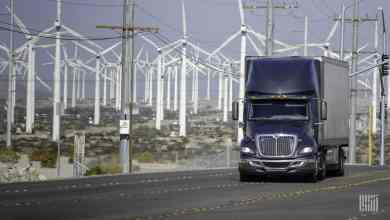
What is the Carbon Footprint of a Truck?
Learn some of the best ways to reduce your carbon footprint.
As companies purchase carbon credits to help meet net-zero emissions goals, AskWaves digs into the positives and negatives of carbon offsets.
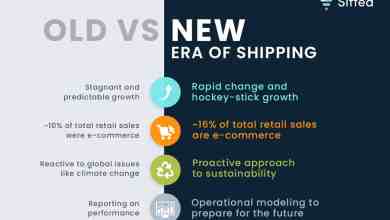
The once-stagnant logistics industry has undergone rapid change in recent years. The 2017 electronic logging device mandate sparked something of a technological revolution within the industry. This focus on tech — coupled with outside forces ranging from consumer demand to climate change — has fostered an environment of innovation. Companies that are slow to adapt to new expectations are likely to be left behind. Shippers are no exception.
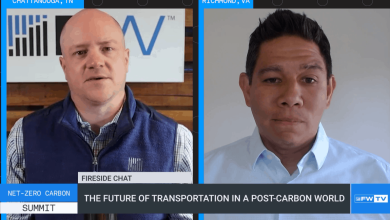
Craig Fuller, founder and CEO of FreightWaves, discusses the future of transportation as it transitions to a carbon neutral world with Danny Gomez, managing director of financial and emerging markets for FreightWaves.
FreightWaves discussed the new solution and how customers can reduce their carbon emissions with Loadsmart co-founder and President Felipe Capella.
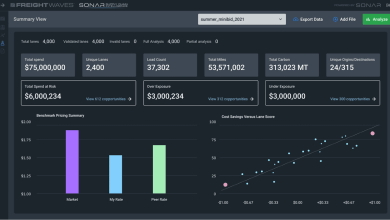
FreightWaves introduces FreightWaves Carbon Intelligence. Learn more here!
E-commerce fulfillment company ShipBob has partnered with data-driven carbon marketplace Pachama to offer brands a carbon-neutral shipping option.
Metal manufacturing is responsible for nearly 8% of global emissions. En+ Group is producing aluminum with virtually no carbon footprint while SSAB and Volvo collaborate for fossil-free steel.
Transportation is the third-largest global contributor to greenhouse gas (GHG) emissions. Here’s an overview of the impact of the sector’s carbon footprint.
Relying on fossil fuels to move people and goods creates a massive carbon footprint that the transportation industry is only starting to address.
The average truck’s carbon footprint is 201,834 kilograms or 223 tons of carbon dioxide per year.