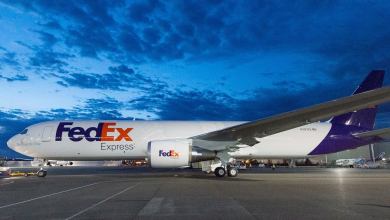
FedEx is now the world’s policeman, lawsuit says
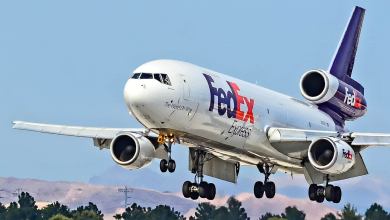
FedEx sues U.S. Department of Commerce claiming trade restrictions are difficult to meet and places additional burden on common carriers to ensure shippers comply.

The African Continental Free Trade Area (AfCFTA) will boost trade between African partner states by removing tariffs. This helps the U.S. improve trade relations as it takes out the need to draft separate trade agreements with individual African states.
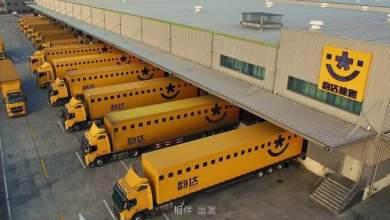
Although some Chinese economic indicators are flashing warning signals, Yunda, STO, YTO, and ZTO are still on fire.
While President Donald Trump and Chinese leader Xi Jinping have agreed to meet at the G20 Summit in Japan next week, the U.S. agriculture industry remains skeptical that the ongoing tariff battle between the two countries will end anytime soon.
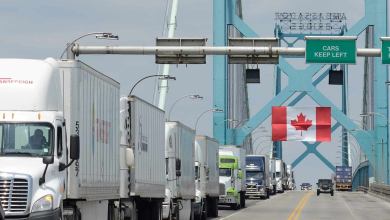
President Trump and Prime Minister Trudeau agree to implement agreement that has the potential to speed up the flow of goods between the two countries.
Shanghai Stock Exchange-listed China Merchants Energy Shipping (SSE:601872) is engaging in a new private share placement of up to 4.1 billion Chinese Yuan to fund a fleet renewal program.
Geopolitical and trade tensions are having an increasing effect on shipping rates.
The scale and growth of China’s domestic over-the-road trucking and international ocean container shipping trade has been revealed in new data from the country’s Ministry of Transport.
Laredo’s historic reign as the top United States trade port was short-lived, as the Port of Los Angeles rebounded from its lowest monthly total in three years, enabling it to once again lay claim to the number 1 ranking among U.S. ports. “In April, imports into the Port of Los Angeles recovered from the worst […]
The FedEx-Amazon divorce isn’t that big. AI to transform Indian transport. GLP out at the top of US logistics real estate market?
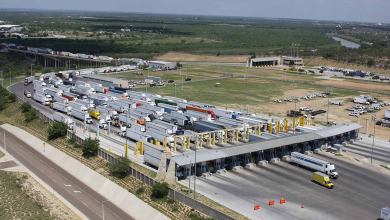
For the first time in its 168-year history, Port Laredo is No. 1. Laredo surpassed Los Angeles as the nation’s busiest trade hub, including airports, seaports and international border crossings. Port Laredo did $20.09 billion in trade during the month of March (according to the latest Census Bureau numbers available and analyzed by WorldCity), while […]
Trade war tariffs are hurting the competitiveness U.S. businesses working in China, according to the American Chamber of Commerce in China (AmCham China). Tariff troubles increased over the weekend as the latest round of Chinese tariffs on $60 billion of U.S. goods began on Saturday, June 1.
The logistics giant said it will “fully cooperate” with any investigation.
As U.S.-China trade tensions escalate, data appears to be pointing to a volume slowdown.
The supply chain has become a pawn in the battle over immigration, and freight businesses are the ones who will be hurt.
Trump’s tariffs might hurt the U.S. economy in the long run; Waymo is re-entering Arizona for autonomous truck testing; China might look to restrict rare-earth material export to the U.S. over trade war.
Beijing’s new dry bulk shipping regulations give the Chinese authorities powers to issue stop/suspend work, to redirect vessels and to prevent entry or exit from ports. There are a variety of monetary penalties for non-compliance.
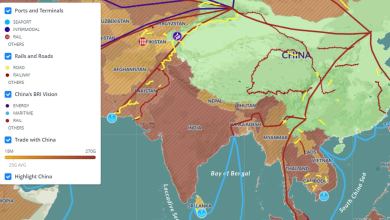
The Chinese Belt and Road Initiative aims to create seamless freight movement between Europe and Asia, but the sustainability aspect of the project is still unclear.
China’s ports have handled just under 4.3 billion tons of cargo between January to April. The country’s main seaports have also handled 82.3 million TEU.
As a major owner of Capesize bulkers, Golden Ocean is heavily exposed to events in Brazil.