Ready to roar: Lion Electric delivers first trucks next month
Canadian EV manufacturer Lion Electric plans to deliver its first battery-powered electric trucks in October as orders from Amazon and CN generate buzz.
Changes with significant impact on rail customers are taking place across New England.
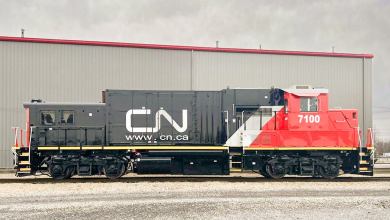
CN orders 50 electric trucks from Lion Electric Co. to support its intermodal operations in its largest urban markets in Canada.
Canadian Pacific and CN say the deepwater ports are key to gaining market share.
Wabtec’s former chief technology officer departs for CN; Wabtec appoints a new leader to the role.
Some volumes have been diverted to the Port of Halifax and other East Coast ports.
Canadian Pacific’s and CN’s estimates of grain they expect to haul in 2020-2021 is in line with past projections.
The funding will be for capital and maintenance projects in eight states.
The expectation that North American consumers will help drive intermodal traffic comes as the railway’s second-quarter volumes were hit by the coronavirus pandemic.
Unadjusted net income for the second quarter falls nearly 60% from the same period in 2019.
The C$230 million it will spend on the three provinces are on top of C$1.3 billion previously announced for five other provinces.
June grain volumes and second-quarter movements were records for both CN and CP.
CN lays out 2020 capex plans for Nova Scotia, railroad supply group’s head to depart, and Norfolk Southern makes changes to its demurrage and accessorial charges tariffs.
Rail traffic continued to build through June. U.S. intermodal traffic was only off 5% year-over-year in week 26.
The funding is part of CN’s capex budget for 2020.
The railway is working on infrastructure improvements amid lower market demand because of the coronavirus.
Class 1 railroads reiterate that some measures they took to cut costs because of the coronavirus could become permanent.
British Columbia seeks to ramp up its export capacity of propane at Canadian west coast ports, and CN is the only Class I railway serving the Port of Prince Rupert.
Investments in recent years to expand capacity along their western Canadian grain networks have paid off for Canadian Pacific and CN.
Sysco, Svitzer, Adnavem and AddSecure add industry all-stars
Freight haulers across transport modes join effort to raise awareness.
Reported deal to let Canadian National quietly route some freight around protests gets high marks from director of trucking company hit hard by the disruptions.
Ontario Provincial Police move to end blockades on a key stretch of CN’s rail network linking Toronto and Montreal after more than two weeks of protests that have disrupted Canada’s supply chain.
Canadian National begins “disciplined and progressive” shutdown of eastern network and plans to halt all transcontinental service in response to anti-pipeline protests as impact hits intermodal carriers.
Drop in imports and exports in November occurred as Canadian National network’s capacity declined by 90% amid an eight-day rail worker strike.
The Canada Infrastructure Bank (CIB) said it will provide up to $300 million to finance a new container terminal the Montreal Port Authority plans to open downriver in Contrecoeur. CIB is a crown corporation, or government-owned lender, that says it “uses financial instruments including loans, equity, and where appropriate, loan guarantees to deliver federal support […]
CNl estimates eight-day disruption will trim C$0.15 per share from profits as CEO assures that recovery plan is “delivering results.”
Federal minister urges Canadian National and Teamsters to reach agreement as walkout by 3,200 conductors, transpersons and yard workers continues.
Unionized Canadian drivers for CNTL approve four-year agreement that increases rates for wait times and mileage.
Railroad company must re-open Thunder Bay, Ontario, span to vehicles after lengthy legal battle.
Precision railroading has worked, but consistent success has been elusive.
Rail seems to be benefiting from higher diesel prices and capacity constraints with SONAR data suggesting more loads are shifting to intermodal in shorter lengths of haul.