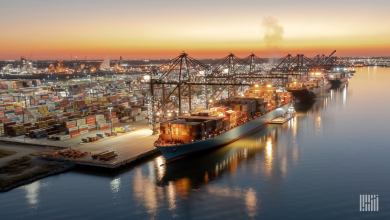
US imports sink in September, suffer steepest drop since 2020 lockdowns
Demand for Asian goods began dropping earlier this year. This is now having a delayed — and highly negative — effect on U.S. imports.
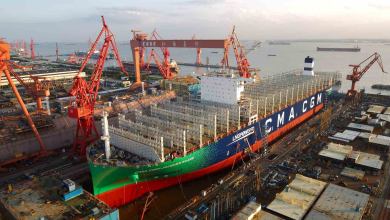
Shipping adheres to a time-honored tradition: When shipowners make exceptionally high profits, they order a lot of new vessels. When those newbuilds are delivered by the yards, it kills shipowners’ profits. Such boom-and-bust behavior has been de rigueur for over a century. As London shipbroker J.C. Gould, Angier & Co. wrote in 1894: “The philanthropy […]
Automaker Volkswagen is opening a new shipping hub in South Texas to import more than 140,000 vehicles a year.
The reefer market in Milwaukee is the primary driver behind its demand, and in the last year volumes are down 59%. Ocean spot rates from China to both U.S. coasts drop even further as the fourth quarter starts.
Measures of supply chain bottlenecks, cargo transit times, bookings and spot rates are all down, yet inflation remains historically high.
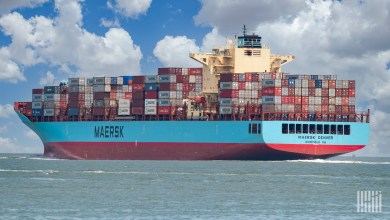
Supply-demand dynamics that supercharged pandemic-era rates are now “exactly the opposite,” says Maersk CEO Soren Skou.
Steamship lines sometimes offer an included chassis for trucking companies. Similarly, non-vessel operating common carriers sometimes offer a chassis program linked to the chassis pools for their carrier partners. While these offers may sound attractive, is a typical “chassis deal” really a deal at all?
The EU is going to ban imports of Russian crude and petroleum products. It still has a long way to go to find replacement supplies.
The G-7 plan to squeeze Russia’s oil profits hinges on the EU revising its own sanctions. Those revisions face opposition.
East and Gulf coast ports handled more volume than ever before in August, pulling far ahead of West Coast rivals.
Container lines are pulling back fast from the ship-leasing market, signaling less confidence in future freight income.
A 7.7 magnitude earthquake rocked Mexico’s Pacific Coast region, where the country’s largest container port is located.
Container shipping rates — particularly from Asia to the U.S. — are still falling hard and show no sign of finding a floor.
U.S. containerized imports are still near record highs, but not in Los Angeles, where they’ve fallen sharply.
“Right now, shipping companies around the world are looking at this and scratching their heads,” says sanctions expert Bruce Paulsen.
Tanker stocks are proving to be a shelter from the Wall Street storm as demand grows for ships that transport oil and natural gas.
Spot container rates for U.S.-bound cargoes are falling fast, yet import numbers at U.S. ports remain near their peak.
Shipping volumes are weakening in and out of China. Is this a temporary pullback or a sign of more serious trouble ahead?
Container and dry bulk shares soared last year, leaving tanker stocks behind. This pattern has now reversed.
If the U.S. curbed gasoline and diesel exports, tankers would sail longer distances to replace lost volumes — a plus for tanker earnings.