





Greg Miller
Monday, May 13, 2019
Shipping caught in crossfire as trade dispute escalates
China’s new list more than doubles the tariff on LNG, but it’s the dry bulk stocks that are feeling the pain.
China’s new list more than doubles the tariff on LNG, but it’s the dry bulk stocks that are feeling the pain.

Stocks of publicly listed ship owners, particularly in the dry bulk sector, are feeling the fallout of trade tensions.

The final part of the FreightWaves series on the Panama Canal focuses on dry bulk transits. The two trends: US agribulk cargo to Asia is down, Colombian coal to the west coast of South America and Asia is up.
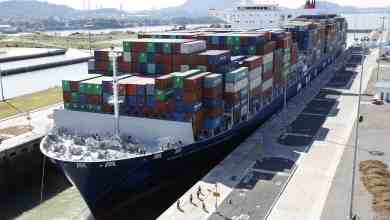
In the second-part of its series on the Panama Canal, FreightWaves interviews a canal authority executive on trends for container-ship transits and expectations for ship size growth in the years ahead.
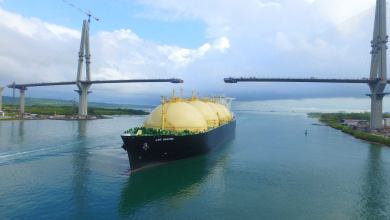
A top executive of the Panama Canal Authority outlines the prospects for LNG, LPG and crude/product tanker transits through the larger locks of the waterway.

The annual deficit in goods and services increased by $68.8 billion, or 12.5 percent, according to Commerce Department data released today.
Talks between the U.S. and China have made significant progress over the last several weeks, and the two sides appear to be closer to a deal than at any time over the past several months. However, while the restoration of positive trade relations will help the trade outlook, other factors are likely to keep trade growth subdued going forward.
A 25 percent tariff on $200 billion worth of Chinese goods destined for the U.S. may get delayed again, but supply chain uncertainty persists.

Thousands of retail stores to shutdown this year; Amazon’s Whole Foods increases grocery prices citing inflation; U.S. retail sales record worst drop since 2009.

Stifel’s head of equity strategy thinks the stock market will be weak for the next decade and that the federal government will default on debt unless it can force access into Chinese markets.
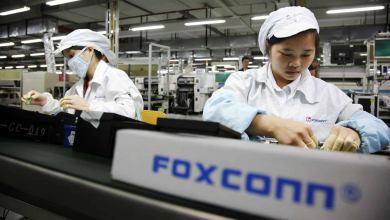
Foxconn Technology Group (OTC US: FXCNY) created more uncertainty for its suppliers on Friday when it announced that it’s recommitting to building a liquid crystal display monitor (LCD) factory in Mount Pleasant, Wisconsin according to the Wall Street Journal.
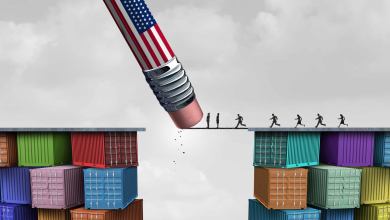
Upheaval caused by the U.S.-China trade war has some freight interests uneasy about giving Trump more tariff power.

Apple’s manufacturing partner Foxconn Technology Group, which assembles Apple’s iPhone product in China, announced on Saturday that it has raised over $213 million for what it described as a “mega-development” in India.
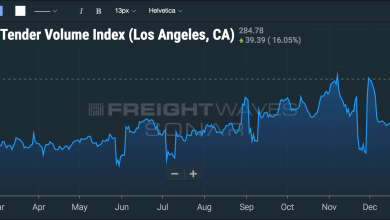
The U.S. – China trade war continues to disrupt freight movements into the new year.

Among news of poor performance in the Chinese economy, one of the most distressing signals for foreign retailers and manufacturers is Apple’s announcement on Wednesday that the company had reduced revenue expectations due to poor iPhone sales in China.

The two sides traced out an agreement that would involve a commitment by China to increase purchases of American goods and services by $1.2 trillion over the next several years.
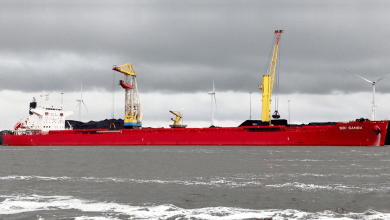
Dry bulk carriers outperformed the S&P 500 by a significant margin today, with Star Bulk Carriers, the largest publicly traded fleet in the segment, gaining 5.1% on the day.

It seemed like the stuff of posturing and hot air. It was hard to see anything substantive changing from the weekend meetings of the G20 nations in Argentina. Will something more than kicking-the-can come from the concessions?

Trump government looks to phase out IMO2020 sulfur cap regulations; Shanghai Composite Index crashes by 3%; Amazon revisting cities for finalizing HQ2.

Despite an exceptionally strong year for trailer orders, Wabash National’s stock took a hit when the company guided downward for its Q3 results, blaming higher input costs and labor issues.