




WASHINGTON — The Trump administration has formally rescinded an Obama-era policy that effectively kills emissions standards that have loomed over the heavy-duty trucking industry since 2011.
By finalizing the repeal the 2009 “endangerment finding” – which classified greenhouse gases as pollution that endanger public health – the U.S. Environmental Protection Agency removed its authority to enforce GHG-related emissions regulations, including the aggressive Phase 3 greenhouse gas standards finalized in 2024 under the Biden administration that has been characterized as an electric vehicle mandate for truckers.
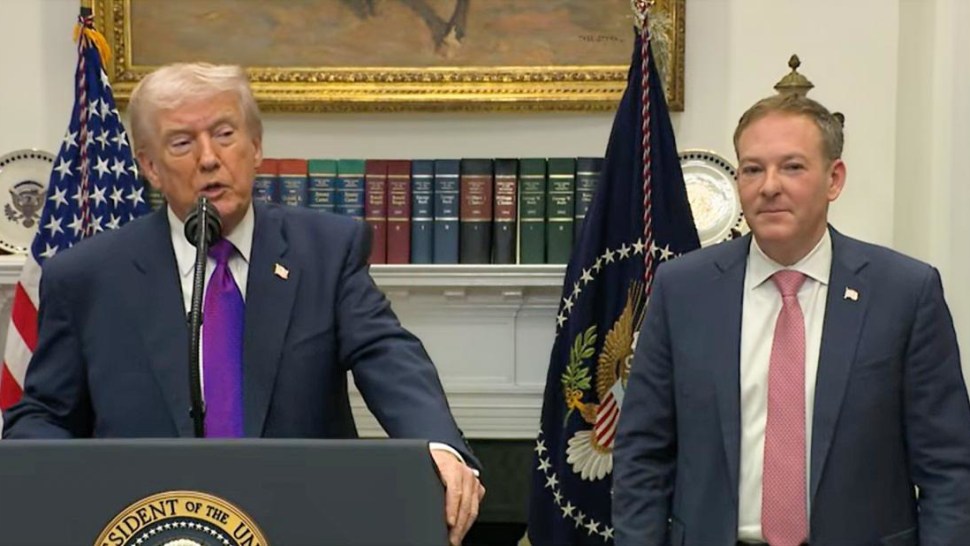
“Today the single largest act of deregulation in the history of the United States – over $1.3 trillion dollars – is signed, sealed, and delivered,” said EPA Administrator Lee Zeldin at a White House signing ceremony on Thursday, alongside President Trump.
“The 2009 Obama-era endangerment finding and all greenhouse gas emissions standards on light, medium, and heavy duty vehicles that followed is eliminated.”
During a 52-day public comment period held last year by the Trump administration on the proposed rescission, industry groups like the Owner-Operator Independent Drivers Association argued that the Biden administration’s reliance on the 2009 finding ignored the practical costs of the regulations: high sticker prices for new trucks and a “pre-buy” frenzy that flooded the market with older, less efficient equipment.
Finalizing the policy change, the group contends, will directly affect equipment purchasing decisions and operating costs for small trucking companies.
“Electric commercial trucks remain prohibitively expensive and impractical for small carriers due to the upfront cost, reliability concerns, and lack of charging infrastructure,” said OOIDA President Todd Spencer, commenting on EPA’s announcement.
“Equipment affordability and uptime are essential to keeping small trucking businesses operational. We will continue working with EPA to address other nonsensical rules requiring faulty DEF [diesel exhaust fluid] systems that have sidelined small-business truckers for too long.”
For heavy-duty trucking, the cost savings cited by Zeldin are expected to translate into lower acquisition costs for new internal combustion engines and the elimination of EV sales quotas required of truck makers.
Critics and environmental groups will likely challenge the rescission in court, arguing that climate change science remains settled.
However, EPA’s legal strategy relies on recent Supreme Court rulings that limit the power of federal agencies to promulgate economically significant regulations without congressional approval.
Related articles:
Brokerage Compliance Symposium
The day before F3. Every compliance issue you face - fraud exposure, carrier liability, FMCSA rules, cargo theft, insurance gaps - navigated by attorneys and operators defining best practices in a changing industry.
F3 Awards Dinner
The night before F3. FreightTech100 companies honored. FreightTech 25 and Shipper of Choice winners revealed live. Cocktail reception into dinner and live music - 300 industry leaders in one purpose-built room.
F3: Future of Freight Festival
Industry-defining keynotes, rapid-fire technology demos, and industry leaders networking in experiences across Chattanooga - plus the inaugural F3 Awards Dinner featuring the FreightTech and Shipper of Choice reveals.
The day before F3. Every compliance issue you face - fraud exposure, carrier liability, FMCSA rules, cargo theft, insurance gaps - navigated by attorneys and operators defining best practices in a changing industry.
The Signal at Chattanooga Choo Choo • Chattanooga, TN Register NowThe night before F3. FreightTech100 companies honored. FreightTech 25 and Shipper of Choice winners revealed live. Cocktail reception into dinner and live music - 300 industry leaders in one purpose-built room.
The Signal at Chattanooga Choo Choo • Chattanooga, TN Register NowIndustry-defining keynotes, rapid-fire technology demos, and industry leaders networking in experiences across Chattanooga - plus the inaugural F3 Awards Dinner featuring the FreightTech and Shipper of Choice reveals.
The Signal at Chattanooga Choo Choo • Chattanooga, TN Register Now