




UPS is turning to an alternate playbook for when freight operations don’t go according to plan, leaning on partner airlines and its ground network during the year’s busiest shipping period to make up for lost capacity from the mandatory grounding of its MD-11 freighter fleet following the deadly crash of a sister aircraft this month.
The integrated parcel logistics giant has secured additional lift by wet leasing several aircraft, consolidated flight routes to maximize air capacity, and reconfigured truck routes to move more packages through its ground network, spokeswoman Michelle Polk told FreightWaves.
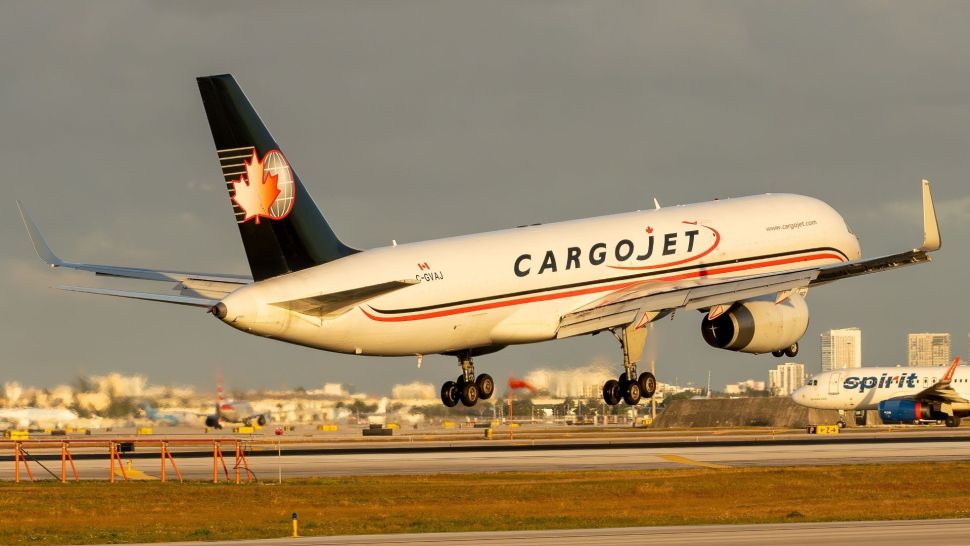
It is UPS (NYSE: UPS) policy not to identify vendors that are under contract. But analysis of aircraft trips on tracking site Flightradar24 shows that Canada-based Cargojet is operating four Boeing 757-200 freighters between UPS’s global air hub in Louisville, Kentucky, and its base at the Hamilton International Airport near Toronto. The initial aircraft was deployed on Thursday and Cargojet has since assigned three additional freighters to shuttle parcels and freight between the U.S. and Canada.
Aviation news site Cargo Facts first reported that UPS had booked dedicated charter capacity with Cargojet for an undetermined period of time, with initial reporting that two aircraft were involved.
Amerijet, a smaller all-cargo operator based in Miami, is flying one Boeing 767 freighter in the UPS network through December to support UPS’s domestic air network, Amerijet CEO Joe Mozzali confirmed in an email. The aircraft is currently shuttling each day between Louisville and Houston.
UPS has also engaged Wilmington, Ohio-based ABX Air and Air Transport International to provide peak season support, with three or four Boeing 767 aircraft, a source at parent company Air Transport Services Group said. He characterized the flying as a routine event that occurs each year for about a three-week period when parcel shipping demand spikes for the holidays. But Flightradar 24 data shows an ABX Air freighter began operating between Louisville and Miami on Nov. 13 and an ATI jet shuttling between Louisville and Dallas-Fort Worth International Airport since Nov. 14, suggesting the short-term contract was pulled forward in response to the MD-11 capacity gap.
Cargo Facts previously reported on the dedicated transportation arrangement between UPS and ABX/ATI.
UPS is the primary air cargo operator for the U.S. Postal Service, which is experiencing disruptions in mail and parcel delivery due to the deactivation of UPS’s MD-11 fleet, Postmaster General David Steiner said at a board of governors’ meeting on Friday. He said First-Class mail deliveries will be slower this quarter because of grounding and the cancellation of some commercial flights during the government shutdown, but that the impact is expected to be temporary.
The UPS moves are similar to contingency plans implemented by FedEx (NYSE: FDX) to replace the MD-11 cargo aircraft that were pulled from service until inspections of the entire fleet are conducted. FedEx CFO John Dietrich last week said the carrier has activated spare aircraft, postponed scheduled maintenance on certain aircraft that still have green time before they are due for checks, and transferring some cargo to other commercial carriers and its ground network.
FedEx and UPS routinely add air capacity from partner airlines during the peak shipping season leading up to the holidays. Amerijet, for example, provided supplemental lift to UPS last year as well.
The Federal Aviation Administration ordered a flight stoppage and inspections for all tri-engine MD-11 aircraft following the Nov. 4 crash of Flight 2976. The UPS MD-11 slammed into an industrial area immediately after clearing the runway at Louisville Mohammad Ali International Airport, killing 14 people. A major focus of the investigation is why the engine and engine pylon separated from the left wing as the plane moved down the runway.
UPS had about 27 MD-11s in active service at the time and FedEx operated 25 MD-11s.
“UPS MD-11 aircraft will not return to service until each one has passed an FAA-approved inspection process, and any necessary corrective actions are completed. We will take the time needed to ensure that every aircraft is safe. There is no rush to return the fleet to service,” Polk said.
Dietrich said FedEx will reactivate aircraft one by one after they successfully complete inspections, meaning there is no requirement for all inspections to be completed before any can start flying again. He suggested that inspections could be completed relatively quickly.
UPS Supply Chain Solutions outage
Meanwhile, a large UPS Supply Chain Solutions warehouse located in the crash zone remains closed, along with other businesses in the area. The left main landing gear of the UPS freighter aircraft tore through part of the building’s roof, leaving a large gash, before hitting the ground on the other side of the street, according to satellite images of the scene.
The National Transportation Safety Board is still collecting evidence for its investigation and recovery efforts are still underway. The utility company and various agencies are controlling access to the area until electric and gas power are fully hooked up, roads are repaired, environmental hazards have been eliminated and buildings are deemed safe for occupancy, according to local officials and media reports.
Ceva Logistics operates a small ground and rail facility near the Louisville airport, but it didn’t experience any damage, spokeswoman Alison Jahn said. Red Bull also operates a distribution center near the UPS building.
“We are having conversations with the customers that have product in there. We are being as transparent as possible about the process, but we can’t tell them anything about timing” because authorities haven’t notified UPS when the industrial park will reopen for business, said Polk.
(Correction: An earlier version of the story incorrectly stated that the wing of the plane struck the UPS warehouse.)
Click here for more FreightWaves/PostalMag stories by Eric Kulisch.
RELATED READING:
Brokerage Compliance Symposium
The day before F3. Every compliance issue you face - fraud exposure, carrier liability, FMCSA rules, cargo theft, insurance gaps - navigated by attorneys and operators defining best practices in a changing industry.
F3 Awards Dinner
The night before F3. FreightTech100 companies honored. FreightTech 25 and Shipper of Choice winners revealed live. Cocktail reception into dinner and live music - 300 industry leaders in one purpose-built room.
F3: Future of Freight Festival
Industry-defining keynotes, rapid-fire technology demos, and industry leaders networking in experiences across Chattanooga - plus the inaugural F3 Awards Dinner featuring the FreightTech and Shipper of Choice reveals.
The day before F3. Every compliance issue you face - fraud exposure, carrier liability, FMCSA rules, cargo theft, insurance gaps - navigated by attorneys and operators defining best practices in a changing industry.
The Signal at Chattanooga Choo Choo • Chattanooga, TN Register NowThe night before F3. FreightTech100 companies honored. FreightTech 25 and Shipper of Choice winners revealed live. Cocktail reception into dinner and live music - 300 industry leaders in one purpose-built room.
The Signal at Chattanooga Choo Choo • Chattanooga, TN Register NowIndustry-defining keynotes, rapid-fire technology demos, and industry leaders networking in experiences across Chattanooga - plus the inaugural F3 Awards Dinner featuring the FreightTech and Shipper of Choice reveals.
The Signal at Chattanooga Choo Choo • Chattanooga, TN Register Now