




The U.S. Postal Service is investing in next-generation package sorting machines to improve efficiency and reduce operating costs.
Two systems being deployed are based on similar technology, but differ in scale.
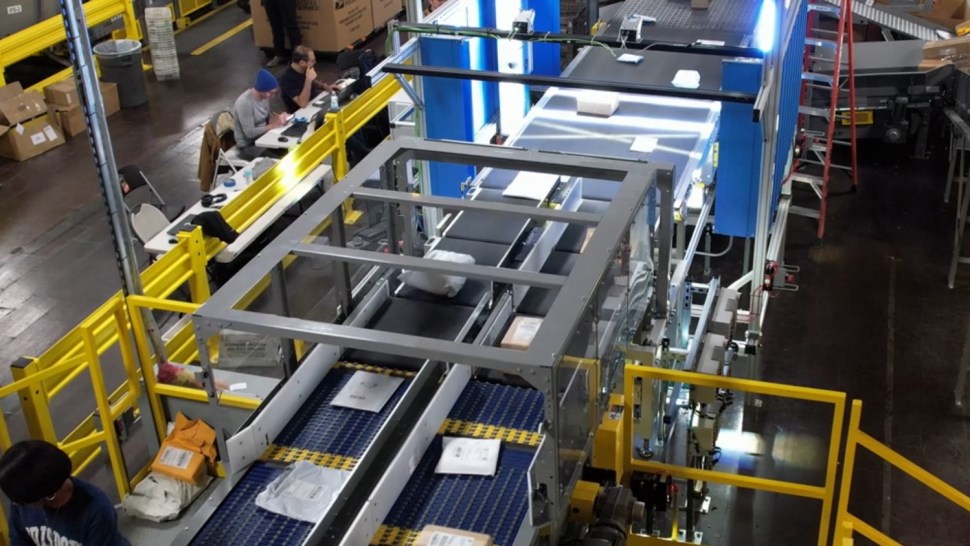
The quasi-independent agency recently completed testing a prototype package sorter that will enable it to increase processing capacity and retire some of its older machines.
The parallel induction linear sorter (PILS) has processed 12 million packages during the first 10 months of use at the Dulles, Virginia, processing and distribution center, near Washington, D.C., according to an article on the Postal Service’s daily news site for employees.
The machine can process 7,000 packages an hour, double the rate of single induction package sorters currently in use. The new sorter picks up containers of parcels and unloads them onto a conveyor belt, which then feeds them onto a conveyor system. A six-sided camera system allows it to read addresses.
Dulles was chosen as the PILS test site because it handles a large volume of packages. The machine was built from the ground up inside the facility in less than seven months.
The new sorters will soon be added at other processing centers, the Postal Service said.
Arizona facility gets massive automated sorter
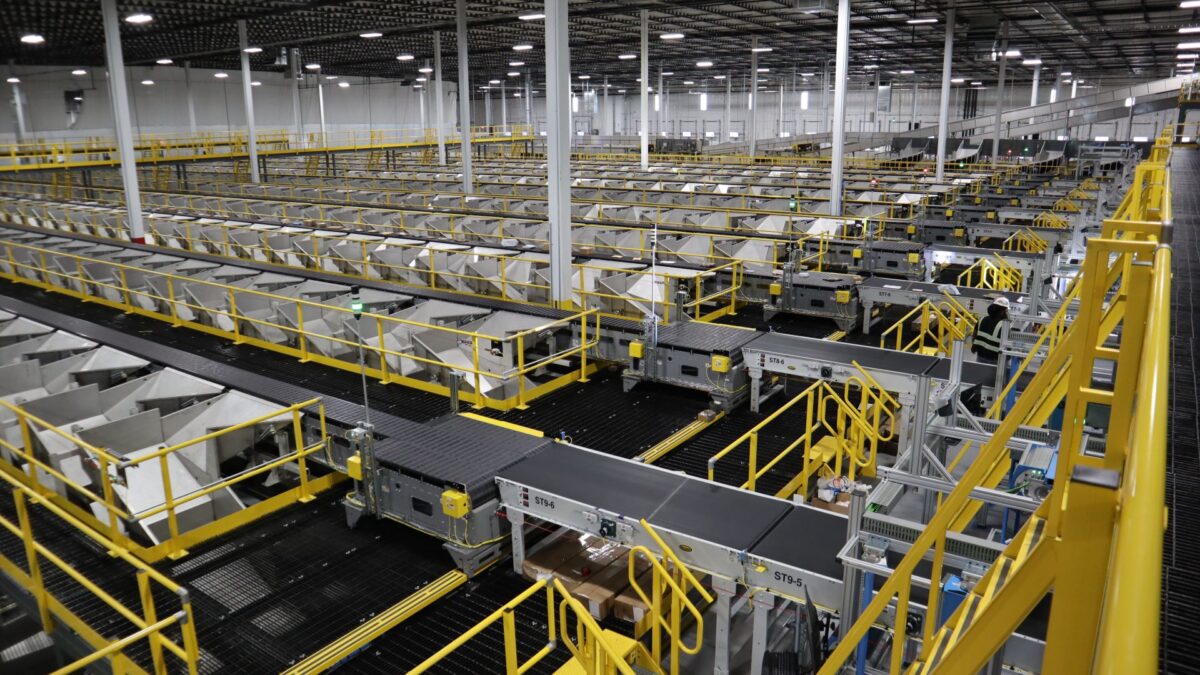
Meanwhile, the Postal Service last month unveiled a high-tech package sorting machine at a regional processing and distribution center in Avondale, Arizona. The new Matrix East/West Sorter (MEWS) can process up to 50,000 packages per hour — more than 1 million daily — doubling the facility’s capacity and increasing efficiency by 75%, the agency said in a news release.
The high-speed system — nearly the size of three football fields — is part of the Postal Service’s 10-year transformation plan, which includes $40 billion in investments to upgrade facilities, improve delivery speed and strengthen service reliability across the country. Time saved on processing can help the U.S. Postal Service compete with FedEx, UPS, Amazon and others in the parcel delivery sector.
“Innovations like the MEWS system help us work smarter, faster and more reliably than ever before,” said Sunny Kuruvilla, executive plant manager.
Currently, the system processes about 500,000 packages per day, but that amount is expected to increase during the busy holiday shipping season.
After bins full of packages are poured onto a conveyor belt, employees use long sticks to spread the packages onto the belts, according to the Arizona Republic, which participated in a media tour. The packages then move upward on the multilevel machine. From there, the packages are scanned and sorted as they move across conveyor belts and slide down a series of chutes. At the end of the line, packages are diverted to bins designated by destinations, such as Los Angeles and Las Vegas, for delivery by trucks. The Avondale processing center utlimately reaches 790 routes through the local distribution centers.
The backbone technology for the MEWS and PILS systems is very similar. Both utilize active roller belt equipment from Intralox, although the controls for the MEWS system were provided by a third part, USPS spokesman Albert Ruiz, told FreightWaves in an email.
The MEWS essentially is a massively scaled up version of the PILS with 10 parallel induction lines. The system has additional components to facilitate the higher throughput requirements and operation, he explained. It is designed for regional transfer hubs that don’t require significant amounts of parcel separation. The Avondale facility, for example, routes packages to about 15 destinations, while the Dulles facility has 200 separations.
The machines eliminates much of the by-hand sorting that employees previously did, is safer and puts less physical burden on workers, the Postal Service said.
The RPDC in Avondale is one of many postal facilities receiving major upgrades as part of the plan to reduce costs, modernize infrastructure and improve service. To date, the Postal Service has invested nearly $19 billion in its processing, transportation and delivery networks.
Click here for more FreightWaves/American Shipper stories by Eric Kulisch.
Write to Eric Kulisch at ekulisch@freightwaves.com.
RELATED STORIES:
Canada Post letter carriers refuse to deliver direct marketing mail
Brokerage Compliance Symposium
The day before F3. Every compliance issue you face - fraud exposure, carrier liability, FMCSA rules, cargo theft, insurance gaps - navigated by attorneys and operators defining best practices in a changing industry.
F3 Awards Dinner
The night before F3. FreightTech100 companies honored. FreightTech 25 and Shipper of Choice winners revealed live. Cocktail reception into dinner and live music - 300 industry leaders in one purpose-built room.
F3: Future of Freight Festival
Industry-defining keynotes, rapid-fire technology demos, and industry leaders networking in experiences across Chattanooga - plus the inaugural F3 Awards Dinner featuring the FreightTech and Shipper of Choice reveals.
The day before F3. Every compliance issue you face - fraud exposure, carrier liability, FMCSA rules, cargo theft, insurance gaps - navigated by attorneys and operators defining best practices in a changing industry.
The Signal at Chattanooga Choo Choo • Chattanooga, TN Register NowThe night before F3. FreightTech100 companies honored. FreightTech 25 and Shipper of Choice winners revealed live. Cocktail reception into dinner and live music - 300 industry leaders in one purpose-built room.
The Signal at Chattanooga Choo Choo • Chattanooga, TN Register NowIndustry-defining keynotes, rapid-fire technology demos, and industry leaders networking in experiences across Chattanooga - plus the inaugural F3 Awards Dinner featuring the FreightTech and Shipper of Choice reveals.
The Signal at Chattanooga Choo Choo • Chattanooga, TN Register Now