




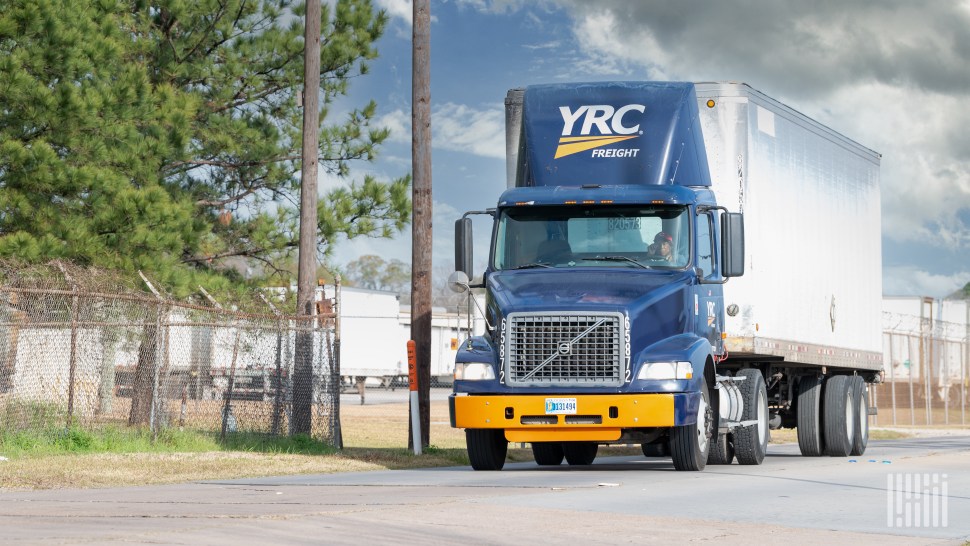
An effort from defunct Yellow Corp. and its majority shareholder MFN Partners to overturn a ruling requiring it to pay pension withdrawal liabilities was shot down in a federal appeals court on Tuesday.
The U.S. Court of Appeals for the Third Circuit ruled with a federal bankruptcy court in Delaware, saying the fact that various pension funds Yellow once contributed to received federal bailout money doesn’t absolve the former less-than-truckload carrier from liabilities tied to its abrupt shutdown and exit from those plans.
Employers party to multiemployer pension plans (MEPPs) are required to pay their allocable share of unfunded vested benefits when exiting a plan.
Withdrawal liability claims attached to Yellow once totaled more than $6.5 billion, roughly $4.8 billion of which were held by Central States Pension Fund. Yellow argued that the plans are now fully funded following a 2021 pension fund bailout package and that it owes little to nothing to the plans that covered roughly 22,000 of its union employees.
The American Rescue Plan (ARP) Act gave pension insurer Pension Benefit Guaranty Corp. the authority to craft guidelines to make sure bailout money would only be used to cover plan benefits and costs, and keep employers from skirting withdrawal liability.
Pension Benefit Guaranty Corp. created two key regulations. The first said special financial assistance awarded to the MEPPs wouldn’t be recognized as a plan asset until the money was actually received. The second mandated the recognition of the funds would be phased in over time even though they were distributed in a lump sum.
The group said the goal was to keep other contributing employers from using the bailout to exit the plans. Immediate recognition would mean the MEPPs are fully funded, removing any unfunded vested benefits and consequently an employer’s withdrawal liability, potentially leading to a mass exodus from the plans.
The appeals court agreed with the bankruptcy court that PBGC acted within its authority when it created the rules.
The appeals court also upheld the lower court’s ruling that Yellow is required to honor an agreement with Teamsters funds in New York and Western Pennsylvania. Yellow reentered those plans in 2013 under a deal allowing it to contribute just 25% of the usual rate. However, it agreed to repay any future withdrawal liabilities as if it had been making payments at 100% of the contribution rate.
A monthly operating report for July showed Yellow had $623 million in cash. A separate filing showed the estate had liquidated all but 11 of the carrier’s more than 325 terminals.
The cash will be used to settle the outstanding claims, including those from the pension plans, employees and other creditors.
A waterfall plan before the Delaware court has designated some of the claims like those from employees as “priority.” Those claims would be paid in full, subject to a cap of $15,150, according to a recent Teamsters memo. Many of the withdrawal liability claims fall in the general unsecured claims pool.
Brokerage Compliance Symposium
The day before F3. Every compliance issue you face - fraud exposure, carrier liability, FMCSA rules, cargo theft, insurance gaps - navigated by attorneys and operators defining best practices in a changing industry.
F3 Awards Dinner
The night before F3. FreightTech100 companies honored. FreightTech 25 and Shipper of Choice winners revealed live. Cocktail reception into dinner and live music - 300 industry leaders in one purpose-built room.
F3: Future of Freight Festival
Industry-defining keynotes, rapid-fire technology demos, and industry leaders networking in experiences across Chattanooga - plus the inaugural F3 Awards Dinner featuring the FreightTech and Shipper of Choice reveals.
The day before F3. Every compliance issue you face - fraud exposure, carrier liability, FMCSA rules, cargo theft, insurance gaps - navigated by attorneys and operators defining best practices in a changing industry.
The Signal at Chattanooga Choo Choo • Chattanooga, TN Register NowThe night before F3. FreightTech100 companies honored. FreightTech 25 and Shipper of Choice winners revealed live. Cocktail reception into dinner and live music - 300 industry leaders in one purpose-built room.
The Signal at Chattanooga Choo Choo • Chattanooga, TN Register NowIndustry-defining keynotes, rapid-fire technology demos, and industry leaders networking in experiences across Chattanooga - plus the inaugural F3 Awards Dinner featuring the FreightTech and Shipper of Choice reveals.
The Signal at Chattanooga Choo Choo • Chattanooga, TN Register Now