




(UPDATED 10:30 p.m. ET)
Air Canada will gradually resume operations after reaching a tentative settlement with unionized flight attendants on a new contract, ending a work stoppage that forced the airline to halt flights for three days, both sides announced on Tuesday.
The agreement, overseen by a federal mediator, means the airline’s 10,000 flight attendants will immediately return to work at Air Canada and Air Canada Rouge. Members of the Canadian Union of Public Employees must still ratify the agreement.
Air Canada (TSX: AC) said the first flights are scheduled to begin Tuesday evening, but advised that a return to full, regular service may require seven-to-10 days as aircraft and crew are out of position within the global network. Additionally, mandatory maintenance checks are required because planes sat unused for more than three days. During the restart process, some flights will be cancelled until the schedule is stabilized.
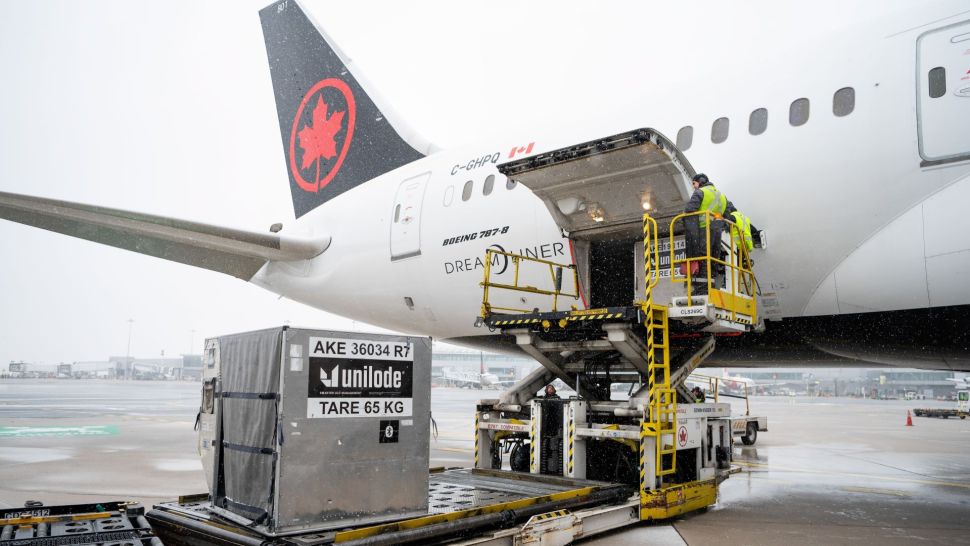
The resumption of service is welcome news for cargo customers, who face shipping delays or headache finding alternative transportation to avoid disruptions to their supply chains. The Canadian Chamber of Commerce and the Canadian Federation of Independent Businesses had welcomed government intervention, saying a shutdown of the airline would interrupt delivery of needed supplies and cause financial harm. Air Canada has continued to operate its six Boeing 767-300 freighters during the strike, but with a modified schedule.
During the recovery period, Air Canada Cargo will continue to operate a modified freighter schedule, including temporary service to Europe. As passenger flights resume, the freighter schedule will also return to normal, and temporary restrictions will be gradually lifted.
“Restarting a major carrier like Air Canada is a complex undertaking. Full restoration may require a week or more, so we ask for our customers’ patience and understanding over the coming days. I assure them that everyone at Air Canada is doing everything possible to enable them to travel soon,” said Michael Rousseau, president and CEO of Air Canada, in a statement.
Air Canada previously offered a 38% increase in total compensation for flight attendants over four years, with more than half of the increase in the first year, which the union called insufficient. Flight attendants had sought pay for boarding passengers and other tasks conducted on the ground. Under the current system, work time is calculated after the cabin doors are closed.
The new four-year deal offers a 40% increase in total compensation, including ground pay. Under the agreement, ground pay includes 60 minutes per flight on narrow-body aircraft and 70 minutes on widebody aircraft, starting with 50% of hourly pay in year one and rising to 70% by year four, according to an unconfirmed report from BMO Capital Markets analyst Fadi Chamoun.
In an interview on the Bloomberg News Network, Rousseau said it was forced to make concessions and get a deal when the government didn’t enforce its back-to-work order, which is authorized under Canadian labor law.
Striking flight attendants on Sunday ignored a back-to-work order by the Canadian Industrial Relations Board. The CUPE union condemned the government intervention as illegal and a betrayal of worker’s rights. Negotiators returned to the bargaining table Monday night and hammered out a deal.
“Unpaid work is over. We have reclaimed our voice and our power. When our rights were taken away, we stood strong, we fought back — and we secured a tentative agreement that our members can vote on,” CUPE said in a statement.
Terms of the collective bargaining agreement have not been disclosed yet.
Click here for more FreightWaves/American Shipper stories by Eric Kulisch.
Write to Eric Kulisch at ekulisch@freightwaves.com.
RELATED READING:
Air Canada flight attendants defy federal back-to-work order
Air Canada to restart operations after government blocks strike
Supply chain disruptions feared as Air Canada prepares for strike
Brokerage Compliance Symposium
The day before F3. Every compliance issue you face - fraud exposure, carrier liability, FMCSA rules, cargo theft, insurance gaps - navigated by attorneys and operators defining best practices in a changing industry.
F3 Awards Dinner
The night before F3. FreightTech100 companies honored. FreightTech 25 and Shipper of Choice winners revealed live. Cocktail reception into dinner and live music - 300 industry leaders in one purpose-built room.
F3: Future of Freight Festival
Industry-defining keynotes, rapid-fire technology demos, and industry leaders networking in experiences across Chattanooga - plus the inaugural F3 Awards Dinner featuring the FreightTech and Shipper of Choice reveals.
The day before F3. Every compliance issue you face - fraud exposure, carrier liability, FMCSA rules, cargo theft, insurance gaps - navigated by attorneys and operators defining best practices in a changing industry.
The Signal at Chattanooga Choo Choo • Chattanooga, TN Register NowThe night before F3. FreightTech100 companies honored. FreightTech 25 and Shipper of Choice winners revealed live. Cocktail reception into dinner and live music - 300 industry leaders in one purpose-built room.
The Signal at Chattanooga Choo Choo • Chattanooga, TN Register NowIndustry-defining keynotes, rapid-fire technology demos, and industry leaders networking in experiences across Chattanooga - plus the inaugural F3 Awards Dinner featuring the FreightTech and Shipper of Choice reveals.
The Signal at Chattanooga Choo Choo • Chattanooga, TN Register Now