




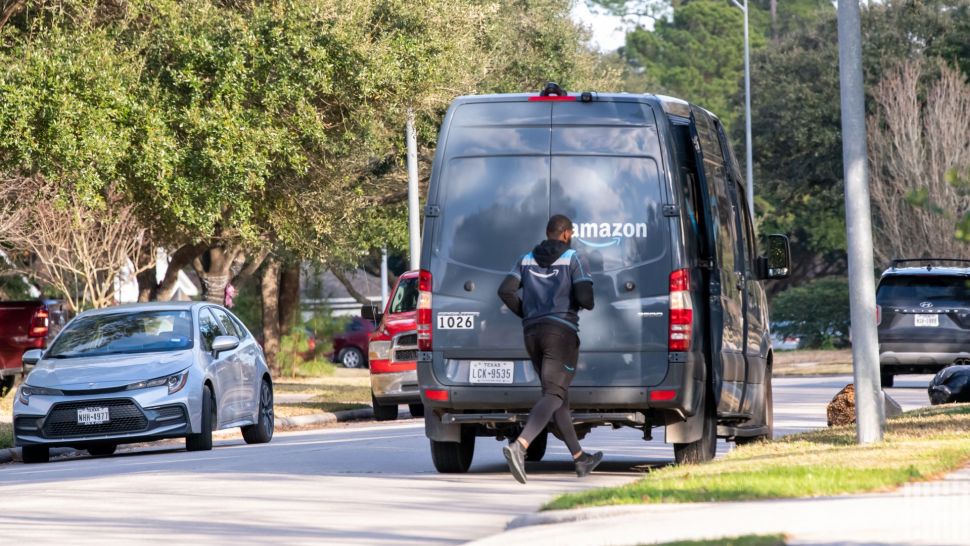
Amazon customers in dozens of U.S. cities will be able to get orders delivered in 30 minutes or less as the Amazon Now service expands from a limited pilot phase to a wide-scale commercial offering, the company announced on Tuesday.
Amazon (NASDAQ: AMZN) last year began testing ultra-fast delivery in parts of Seattle and Philadelphia and currently offers it in nine countries, including the United Arab Emirates. The service essentially competes with DoorDash, Instacart and Uber Eats, which have expanded beyond food delivery into merchandise, as well as Walmart.
Amazon Now operates out of strategically located, urban micro-fulfillment centers, where on-demand workers will pick up packaged orders. The facilities are about the size of a Walgreens retail outlet, stock about 3,500 fresh grocery, personal care products, electronics and household items. The centers position essential products close to neighborhoods and work districts, utilizing advanced inventory systems that optimize product selection based on hyperlocal demand to maximize efficiency and speed. They also reduce the distance delivery associates need to travel and enable faster delivery times.
Thirty-minute delivery now widely available in Atlanta, Dallas-Fort Worth, Philadelphia and Seattle, and is rapidly expanding in dozens more cities such as Austin, Texas; Houston; Minneapolis; Orlando, Florida; Phoenix; Denver and Oklahoma City. The company said it plans to expand the service to tens of millions of shoppers in these and other cities by the end of the year.
Ultra-fast delivery is the latest move to increase delivery speed and keep customers buying on Amazon’s marketplace by offering extreme convenience. Amazon also offers one-hour and three-hour delivery on more than 90,000 products and same-day delivery on millions of items. Amazon has also promised to significantly scale up its Prime Air drone delivery service, which will offer a much wider selection than Amazon Now. Prime Air delivery in under 60 minutes is available in nine U.S. locations so far.
Amazon’s success training consumers to expect same-day delivery, and now near-instant delivery, has proved costly to other retailers and delivery companies that try to match its services. Amazon is raising the delivery bar again when competitors like Walmart and Target are dealing with tariff pressure, higher fuel costs and thinner margins, said Joshua Ketter, global CEO of marketplace seller Spreetail, in an email.
Some retailers are trying to buck the trend by offering deferred delivery service for customers that aren’t in a rush. In fact, a McKinsey survey last year found that 90% of customers are willing to wait at least two to three days for their deliveries if the shipping is free.
Walmart, however, is rapidly expanding its same-day delivery capabilities by leveraging its more than 4,600 stores as local fulfillment centers. The number of orders delivered in under three hours increasing more than 60% in 2025, President and CEO John Furner said during the company’s earnings call in February. At Walmart U.S., 35% of store-fulfilled orders were delivered in under three hours in the fourth quarter. And the company is averaging delivery in less than an hour when customers opt for express delivery.
Where Amazon Now is available, customers will see a “30-Minute Delivery” option in the banner on the Amazon app or homepage, and see Amazon Now offers as they search and shop. Prime members pay a discounted delivery fee of $3.99 per order, while customers without a Prime membership pay $13.99. An additional small order fee of $1.99 for Prime members and $3.99 for customers without a Prime membership applies to orders below $15.
In most areas where it’s available, Amazon Now serves customers 24 hours a day. It should be noted that Amazon doesn’t guarantee delivery in 30 minutes, but says it will provide updates on the arrival time.
Last year, more than 13 billion items worldwide were delivered to Prime Members the same day or next day. In the U.S., Prime members received over eight billion items the same or next day, an increase of more than 30% from 2024, with groceries and everyday essentials making up half the total of items, according to the retailer.
Click here for more FreightWaves/American Shipper stories by Eric Kulisch.
Write to Eric Kulisch at ekulisch@freightwaves.com.
RELATED STORIES:
Alaska Airlines upgrades Amazon cargo contract
Amazon partner Sun Country Airlines prepares to deploy 2 new cargo jets
Amazon expands same-day grocery delivery to businesses
Amazon rebrands third-party logistics arms as unified supply chain service
Postal Service hires former UPS exec as chief strategy officer
Brokerage Compliance Symposium
The day before F3. Every compliance issue you face - fraud exposure, carrier liability, FMCSA rules, cargo theft, insurance gaps - navigated by attorneys and operators defining best practices in a changing industry.
F3 Awards Dinner
The night before F3. FreightTech100 companies honored. FreightTech 25 and Shipper of Choice winners revealed live. Cocktail reception into dinner and live music - 300 industry leaders in one purpose-built room.
F3: Future of Freight Festival
Industry-defining keynotes, rapid-fire technology demos, and industry leaders networking in experiences across Chattanooga - plus the inaugural F3 Awards Dinner featuring the FreightTech and Shipper of Choice reveals.
The day before F3. Every compliance issue you face - fraud exposure, carrier liability, FMCSA rules, cargo theft, insurance gaps - navigated by attorneys and operators defining best practices in a changing industry.
The Signal at Chattanooga Choo Choo • Chattanooga, TN Register NowThe night before F3. FreightTech100 companies honored. FreightTech 25 and Shipper of Choice winners revealed live. Cocktail reception into dinner and live music - 300 industry leaders in one purpose-built room.
The Signal at Chattanooga Choo Choo • Chattanooga, TN Register NowIndustry-defining keynotes, rapid-fire technology demos, and industry leaders networking in experiences across Chattanooga - plus the inaugural F3 Awards Dinner featuring the FreightTech and Shipper of Choice reveals.
The Signal at Chattanooga Choo Choo • Chattanooga, TN Register Now