




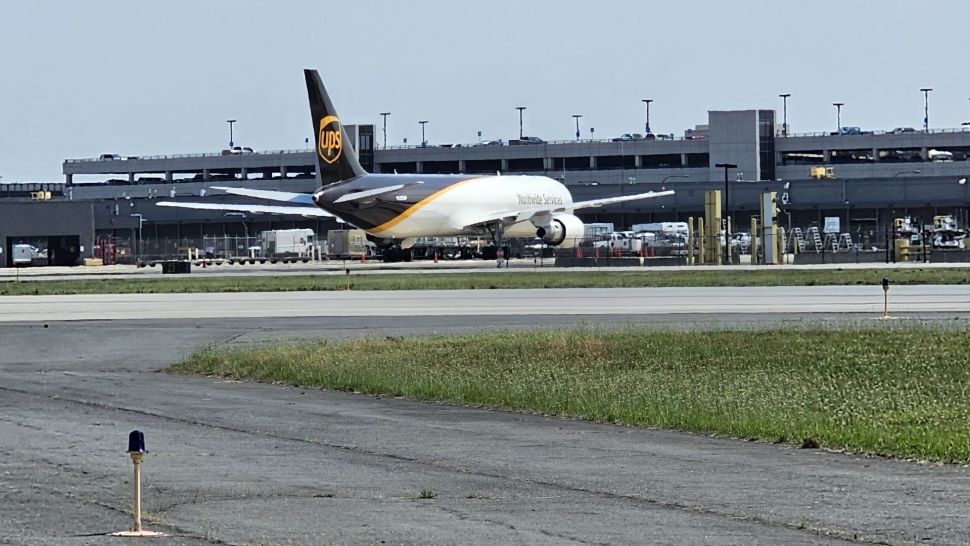
Businesses using passenger aircraft for domestic freight transportation could experience some shipping delays from the Federal Aviation Administration’s order for airlines to reduce their schedules at the nation’s busiest airports starting Friday because of the government shutdown, but the impact on all-cargo carriers is expected to be minimal, according to air logistics professionals.
Freighter operators won’t be heavily exposed to flight reductions because the mandate applies to flights from 6 a.m. to 10 p.m., outside the time when a lot of express cargo operations are scheduled, and exempts international flights — which are responsible for the majority of cargo movement in the United States — air cargo officials said.
The FAA order directs airlines in high-volume markets to temporarily reduce traffic by 10% across 40 domestic airports to alleviate strain on the system and maintain flying safety as air traffic controllers take sick leave or complain of being overworked during the shutdown. The government has required essential workers to report to work during the shutdown, now in its 37th day, but they are not being paid. This past weekend, there were 2,740 delays at various airports, according to the agency.
At a news conference on Wednesday, FAA Administrator Brian Bedford said 20% to 40% of controllers were not showing up for work at the top 30 airports.
The flight reductions will be gradually implemented, with a 4% reduction in operations taking effect Friday, ramping up to 6% by Tuesday, 8% by Thursday and 10% next Friday. Cargo airlines on Thursday worked, in collaboration with the FAA, to determine how to adjust operations and to mitigate any potential impacts on their customers, industry representatives said. The onus will mostly rest with airlines that operate large numbers of flights at the targeted airports. Airlines with limited numbers of flights at targeted airports likely will not be expected to cut their schedules, they added.
“We are monitoring the FAA’s plans to adjust flight capacity across the U.S. and are developing the necessary operational modifications to ensure our shipments continue to move safely and swiftly through our network,” FedEx said in a statement to FreightWaves. “Our contingency plans will flex our integrated air and ground network to help protect time-sensitive, critical shipments such as lifesaving pharmaceuticals, medical devices, and other products moving through our network.”
Among the 40 airports designated for capacity cutbacks are seven cargo-dominant air hubs: Memphis, Tennessee (home base for FedEx Airlines); Louisville, Kentucky (UPS’s global hub); Cincinnati-Northern Kentucky International Airport (the largest hub in North America for Amazon Air and DHL Express); Anchorage, Alaska (a major refueling station for carriers operating across the Pacific Ocean); Indianapolis and Oakland, California (FedEx regional hubs); and Ontario, California (a regional hub for FedEx and UPS, and where Amazon has a smaller operation.
All-cargo airlines also regularly fly to large metropolitan airports such as those in Chicago, New York and Miami.
DHL Express is evaluating any potential impact to its network and will activate contingency plans if any flights must be canceled, a spokesperson said.
“Because most U.S. domestic air freight moves in the bellies of passenger aircraft versus cargo planes, reductions in commercial routes will tighten air capacity in those markets. So the domestic air market could see temporary constraints and longer transit times,” said Mike Short, president of global forwarding at logistics services giant C.H. Robinson, in an email message. “Truckload and expedited ground networks can absorb some displaced volume, but not without challenges given that short-term surges drive spot rate volatility and equipment repositioning.”
The FAA mandate is expected to mostly impact flights operated by regional airlines and mainline flights that don’t travel between the major carriers’ hubs, which further reduces the potential for cargo disruption since few shipments are moved on smaller aircraft. American Airlines said it will cancel about 220 flights out of more than 6,000 through Monday. Delta is canceling about 170 flights.
“United’s long-haul international flying and our hub-to-hub flying will not be impacted. Schedule reductions will be focused on regional flying and domestic mainline flights that do not travel between our hubs,” United Cargo said in a customer notice on Friday.
Domestic air transport is typically used for high-value, time-critical shipments such as automotive components, semiconductors, medical devices, pharmaceuticals, energy equipment and defense materials.
“Our customers in these industries typically can’t afford downtime or freight delays given how their businesses operate. After the FAA announcement, our teams were immediately on the phone with customers to implement contingency plans — analyzing inventory and shifting freight to charters and expedited ground,” said Short. “We’re not just looking at the impacted freight but also determining how existing inventory can be” tracked and rerouted from one customer facility to another to ensure no production downtime.
The reduction in U.S. aviation capacity could compound delays at UPS, which is still recovering from a deadly crash of a widebody freighter on departure from its global hub in Louisville, Kentucky, on Tuesday. UPS resumed operations Wednesday night after a one-day pause, but has relaxed standards for on-time delivery of express products through Friday. Louisville airport is operating with two of its three runways. The third runway is closed while authorities continue their accident investigation.
Click here for more FreightWaves/PostalMag stories by Eric Kulisch.
RELATED READING:
UPS restarts Louisville air hub operations for Thursday deliveries
NTSB crash investigators try to minimize disruptions for UPS
Southwest Airlines’ $28M investment expands cargo capacity in Denver
Brokerage Compliance Symposium
The day before F3. Every compliance issue you face - fraud exposure, carrier liability, FMCSA rules, cargo theft, insurance gaps - navigated by attorneys and operators defining best practices in a changing industry.
F3 Awards Dinner
The night before F3. FreightTech100 companies honored. FreightTech 25 and Shipper of Choice winners revealed live. Cocktail reception into dinner and live music - 300 industry leaders in one purpose-built room.
F3: Future of Freight Festival
Industry-defining keynotes, rapid-fire technology demos, and industry leaders networking in experiences across Chattanooga - plus the inaugural F3 Awards Dinner featuring the FreightTech and Shipper of Choice reveals.
The day before F3. Every compliance issue you face - fraud exposure, carrier liability, FMCSA rules, cargo theft, insurance gaps - navigated by attorneys and operators defining best practices in a changing industry.
The Signal at Chattanooga Choo Choo • Chattanooga, TN Register NowThe night before F3. FreightTech100 companies honored. FreightTech 25 and Shipper of Choice winners revealed live. Cocktail reception into dinner and live music - 300 industry leaders in one purpose-built room.
The Signal at Chattanooga Choo Choo • Chattanooga, TN Register NowIndustry-defining keynotes, rapid-fire technology demos, and industry leaders networking in experiences across Chattanooga - plus the inaugural F3 Awards Dinner featuring the FreightTech and Shipper of Choice reveals.
The Signal at Chattanooga Choo Choo • Chattanooga, TN Register Now