SmartWay honors carriers, shippers with Excellence Awards
The Environmental Protection Agency’s (EPA) SmartWay program has recognized 48 carriers, retailers, manufacturers and logistics companies with its SmartWay Excellence Awards.
Fuel prices and developments affect the entire supply chain, and can place a lot of pressure on carriers. Check back here for news and information related to fuel prices and the gas sector, plus insights and analysis on trends and issues impacting the industry.
The Environmental Protection Agency’s (EPA) SmartWay program has recognized 48 carriers, retailers, manufacturers and logistics companies with its SmartWay Excellence Awards.
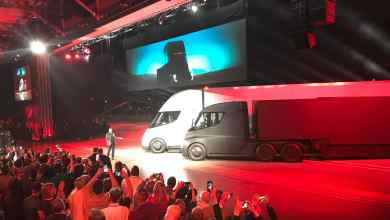
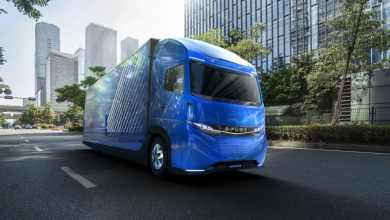
Former Tesla shareholder Daimler seems intent on upstaging the upstart with its own electric truck program, reports Bloomberg. Weeks before Tesla is set to unveil its own electric vehicle, Daimler introduced its own model, the E-Fuso Vision One.
Two bills introduced in the U.S. House last week could potentially change the classification of port truckers, requiring them to become employee drivers.
Californians are about to see huge increases in the fuel taxes they pay at the pump. California’s Road Repair and Accountability Act of 2017, was signed into law by Gov. Jerry Brown (D) in April and will begin taking effect this Wednesday with a 12 cent jump in the gasoline base excise tax and a 20 cent spike in the diesel fuel base excise tax.
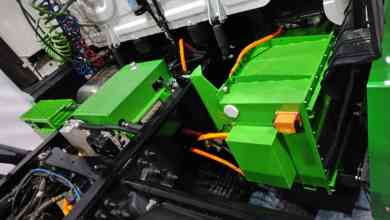
Hyliion announced the availability of its tractor electrification system at the American Trucking Associations’ MCE show in Orlando this week. The system uses regenerative braking to collect energy and store it for later use by the tractor.
The provincial government of Sichuan in China is pulling out all the stops to promote development of alternative energy vehicles even as sales of heavy trucks in the country climb to record highs.
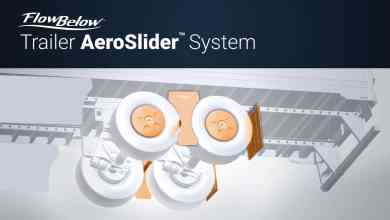
As its Tractor AeroKit continues to gain acceptance – it is now installed at the factory by three truck OEMs – FlowBelow has continued to look for new ways to improve aerodynamic performance of tractor-trailer units.
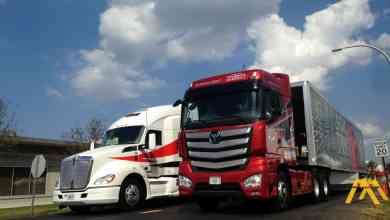
Foton Motor Company and Cummins have reached a deal to build a “Super Truck” for China designed to reduce fuel usage and improve productivity.
General Motors has advanced its next-generation fuel cell system, which is part of its concept SURUS (Silent Utility Rover Universal Superstructure) platform that was shown last week at the fall meeting of the Association of the United States Army. Whether commercial transportation is willing to adopt fuel cell technology, though, remains a question.
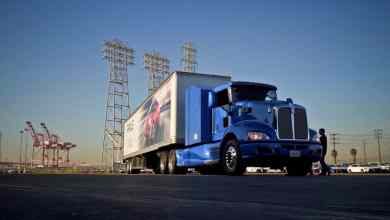
After first acknowledging it was a developing a fuel-cell powered heavy-duty truck in the spring, Toyota is now set to unveil its Project Portal truck to the public through a demonstration program at the Port of Los Angeles that starts Oct. 23.
The California Air Resources Board (CARB), through chairperson Mary Nichols, has revealed the state’s interest in banning vehicles that produce carbon emissions, Bloomberg News reports. Governor Jerry Brown has called Nichols to ask why the CARB has not moved forward on this idea, Nichols told Bloomberg.
The world is going electric, and according to a McKinsey Energy Insights report, it is leaving the U.S. behind. According to the report authored by Chrsiter Tryggestand, Namit Sharma, Jasper van de Staaij and Arjan Keizer, because of market dynamics, the U.S. and China are lagging in the development and cost parity needed to make electric trucks viable.
An entirely new generation of technological change is now occurring in the transportation industry, and it’s called the autonomous truck, or what design specialists refer to as “intelligent engineering.” But what are some of the benefits, and risks, associated with the technology?
Ford is following that of other automakers and investing in electrification and connectivity. The company also said it would redirect $7 billion from car production to increase SUV and truck production.
GM announced yesterday that it will stop developing new gas-powered vehicles and instead will invest in electric and fuel-cell vehicles, including a truck platform that could potentially serve as a package delivery vehicle in last-mile operations.
All week at the North American Commercial Vehicle Show in Atlanta, nearly every presenter has mentioned electric trucks and the growing electrification of the trucking industry. So, it was no surprise when solar company eNow noted how it too could help with these growing electric needs.
It may seem like a small product enhancement, but the “quick-release” option now available on FlowBelow’s Tractor AeroKit system could save fleets thousands of dollars.
Ryder System will install automatic tire inflation systems on its vehicles through an agreement with Aperia Technologies. Aperia’s Halo Tire Inflators will be included as a standard spec on Ryder’s heavy-duty rental fleet.
Bosch may be well known for its automotive technology, but it is less known for its commercial vehicle technologies here in the United States. That is starting to change as Bosch is investing in technologies that will be part of the electric and autonomous future many are predicting for the industry.
Customer experience and uptime are two of the focus areas that Volvo Trucks North America (VTNA) addressed when designing its new lineup of VNL and VNR tractor models – both launched earlier this year at separate events.