




Noi Mahoney
Wednesday, October 6, 2021
OceanWaves: Why aren’t ports 100% digitally connected?
Ports around the world often suffer from digital communication blackouts, inhibiting the real-time tracking of trade flows.
Ports around the world often suffer from digital communication blackouts, inhibiting the real-time tracking of trade flows.

Shipping Asia-U.S. via regular ocean service and rail? “I would bet your goods will not arrive in time for Christmas,” says Flexport’s Nerijus Poskus.

FreightWaves’ Anthony Smith talks about the ways shippers are building reliant supply chains with Nate Shutes, VP of global fulfillment and logistics at Blu Dot, during FreightWaves’ OceanWaves Summit.

NYSHEX can help untrusting shippers and carriers find common ground to improve contract performance.
Ports and inland transportation connections are choking on ocean imports. A top economist says don’t blame ocean carriers.
The NS terminal will serve “strong growth in the Louisville intermodal market.”

Amazon aggregator Perch’s international transportation manager John Esborn explains how the company secures shipping capacity during FreightWaves’ OceanWaves Summit.
Los Angeles is at the front line of the port congestion crisis. Its executive director outlines his strategy to clear anchorages.
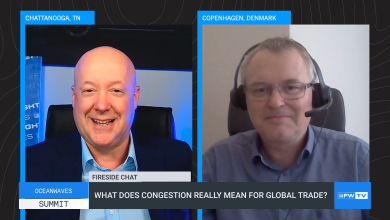
“If I’m optimistic, you’re looking six months into the future” before congestion and capacity challenges start to subside, says Vespucci Maritime CEO Lars Jensen.
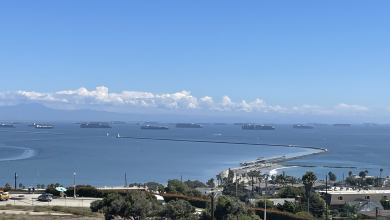
How will public view ships anchored off Los Angeles/Long Beach if one of them is tied to Huntington Beach spill?
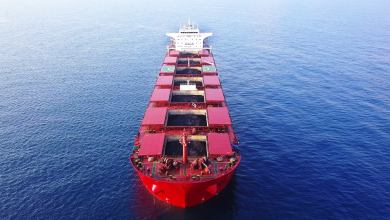
Capesize bulkers haven’t earned this much since 2009, and freight futures just made “monstrous” move up.
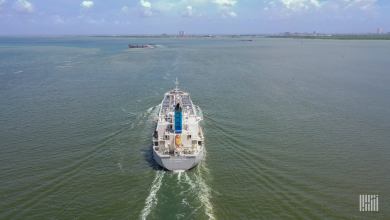
The Sustainable Shipping Initiative’s recent report on marine fuels urges the inclusion of all aspects of sustainability, such as air quality, human rights, water, social equity, land use and of course, greenhouse gas emissions.
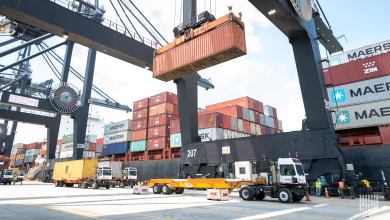
Third-party logistics provider Unique Logistics filed for a public offering, which is expected to raise at least $35.5 million in net proceeds.
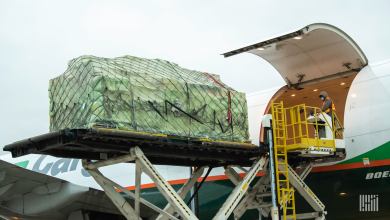
There are two ways to transport goods overseas: ocean or air. Port congestion and shipping delays are forcing companies to shift to faster air transport, which releases more emissions, costs more per unit and has its own capacity constraints.
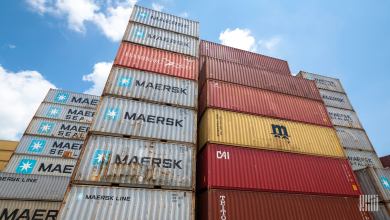
With no end in sight for global supply chain crisis, importers warned to brace for high costs throughout next year.
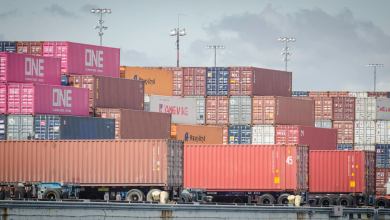
According to customs data, the share of empty exports to total exports leaving the Port of Los Angeles is up over 10% and leaving at a faster rate compared to pre-pandemic levels.

FreightWaves founder and CEO Craig Fuller analyzes inflation in the supply chain.
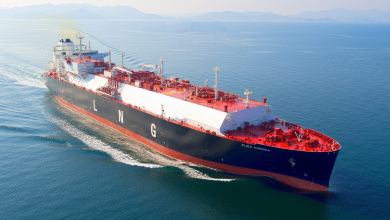
Containerized exports continue to struggle but overall, U.S. exports are rising. Sales are at record levels for some commodities.
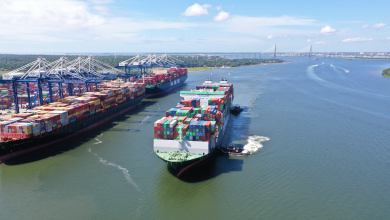
“The major thing that a port can do to positively influence its emissions is to make sure trucks get in and out fast,” said Newsome.
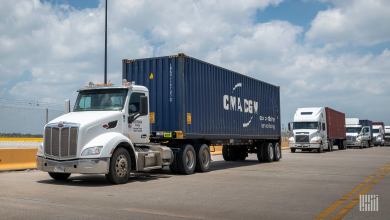
With disruptions likely to linger well into 2022, intermodal equipment provider DCLI sees the labor shortfall as the biggest hurdle in the supply chain.